The Glow-Up That Hurt: What It’s Really Like to Get Skin Needling
Micro-needling promises glow and firmness, but timing can make all the difference.
 4 min
4 min
In the glossy world of skincare and wellness, we often hear about the benefits of skin needling: tighter pores, improved texture, and that elusive post-treatment glow. What’s less discussed? Timing. More specifically, how the hormonal fluctuations of your menstrual cycle can impact the experience and your pain threshold, far more than the skincare forums let on.
I thought I had it all timed perfectly. I’ve done enough microneedling sessions to know that it’s not exactly a walk in the park – especially if you, like me, are the kind of person who winces at a deep tissue massage and cries a little during a bikini wax. So I planned carefully. I booked it during what I believed was a “safe” window, comfortably out of the PMS zone and well before Day One of my cycle.
Of course, my body had other plans. I woke up the morning of the appointment, cramps in tow, and immediately considered cancelling. That is, until I reread the clinic’s policy: 50% fee for rescheduling within 24 hours. And just like that, I found myself at the door, clutching my water bottle and whispering affirmations like I was about to sit an
Pain, Periods, and the Myth of the High Threshold
Let’s get one thing straight: we all have different pain thresholds. Some women breeze through labour with little more than a grimace. Others (hi, me) need to mentally prepare for eyebrow threading. But regardless of your usual threshold, during menstruation, everything changes.
As estrogen and progesterone levels drop in the days leading up to and during your period, the body becomes more inflamed, more sensitive, and, for many women, less tolerant of discomfort. You’re more prone to pain, your skin is more reactive, and even your emotional resilience takes a bit of a dip. These aren’t mood swings — they’re chemical fluctuations. And they affect everything.
That’s why, in hindsight, getting hundreds of tiny needles rolled into my face on the day my hormones hit rock bottom felt… intense.
But I wasn’t going to back out. I chose to stay. And to my own surprise, it became a moment of real resilience — not in a “push through the pain” way, but in a mindful, grounded, intentional way.

Breathing Through the Sting: A Masterclass in Mindfulness
As I lay back on the table, my therapist adjusted the pressure slightly and reminded me to breathe deeply, something I’ve heard in yoga studios a hundred times, but rarely applied to skincare.
At first, I distracted myself with light conversation – anything to keep my mind away from what was happening on my face. But when the more sensitive areas (cheeks, upper lip, forehead) were being treated, distraction didn’t quite cut it. That’s when I tapped into mindfulness.
I began to sync my breath with the pace of the roller: in for four counts, hold for two, out for four. I imagined breathing into the places that hurt, allowing the breath to soften the resistance. I reminded myself that pain is a wave — it rises, peaks, and passes.
And in that moment, I found something surprising: calm.
I wasn’t numbing myself or trying to “tough it out.” I was being incredibly present. Noticing the sensations, naming them (“sharp, hot, tingling”), and then letting them go. It felt like a meditation. One I hadn’t planned, but one I very much needed.
Wellness Beyond the Pretty
When we talk about wellness, we often imagine smooth transitions and well-curated rituals. But sometimes, wellness is uncomfortable. It’s showing up on a day you feel emotionally fragile and physically sore. It’s adjusting expectations, grounding into your body, and offering yourself compassion in real time.
That’s what this treatment became for me. Yes, I wanted clearer, more radiant skin – and I got that, eventually. But what I didn’t expect was to walk away with a deeper understanding of how connected my physical and emotional states really are. What we label as “low pain threshold” is often our body trying to communicate something important. And that there’s strength — a quiet, powerful kind — in choosing to stay present in discomfort.
So, Would I Recommend It?
Getting skin needling during your period isn’t ideal. Your skin is more sensitive, the inflammation response is heightened, and yes, it will likely hurt more. If you can reschedule without consequence, do it. But if you can’t, or if you choose to go ahead with it anyway, go in prepared.
Hydrate. Take paracetamol, not ibuprofen. Let your therapist know, so they can adjust their technique. And most importantly, take care of your emotional self as much as your physical one. Use breathwork to anchor you. Allow yourself to rest afterwards. And recognise that what you just did — despite the timing, despite the discomfort — was a form of self-care that goes beyond skincare.
Because wellness isn’t just about looking better. It’s about knowing yourself, trusting yourself, and supporting yourself through every phase — hormonal highs, lows, and everything in between.
Leticia Estrada Rahme is a writer, mother, and former TV journalist based in Bondi Beach. She explores beauty, mental health, and identity through the lens of storytelling and lived experience.
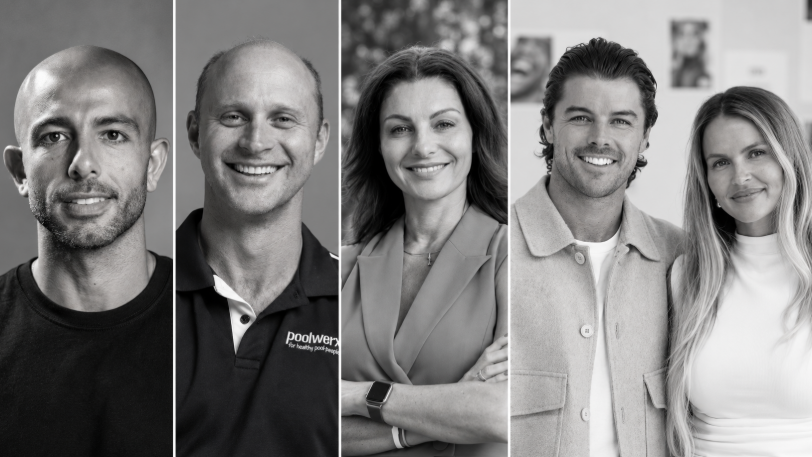
From making unpopular decisions to learning when to listen, leaders from five businesses reveal what nobody prepared them for — and how running a company has challenged their expectations.
Technology and semiconductor shares fell sharply as investors questioned the debt financing the AI infrastructure boom and confronted higher rates and Chinese competition.

Elon Musk is exploring a potential merger between Tesla and SpaceX, a deal that could reshape the future of AI, robotics, autonomous vehicles and space technology. With a combined valuation potentially reaching $3.5 trillion, the move could bring Musk’s vision of an interconnected technology ecosystem closer to reality, although a deal remains uncertain.
5 min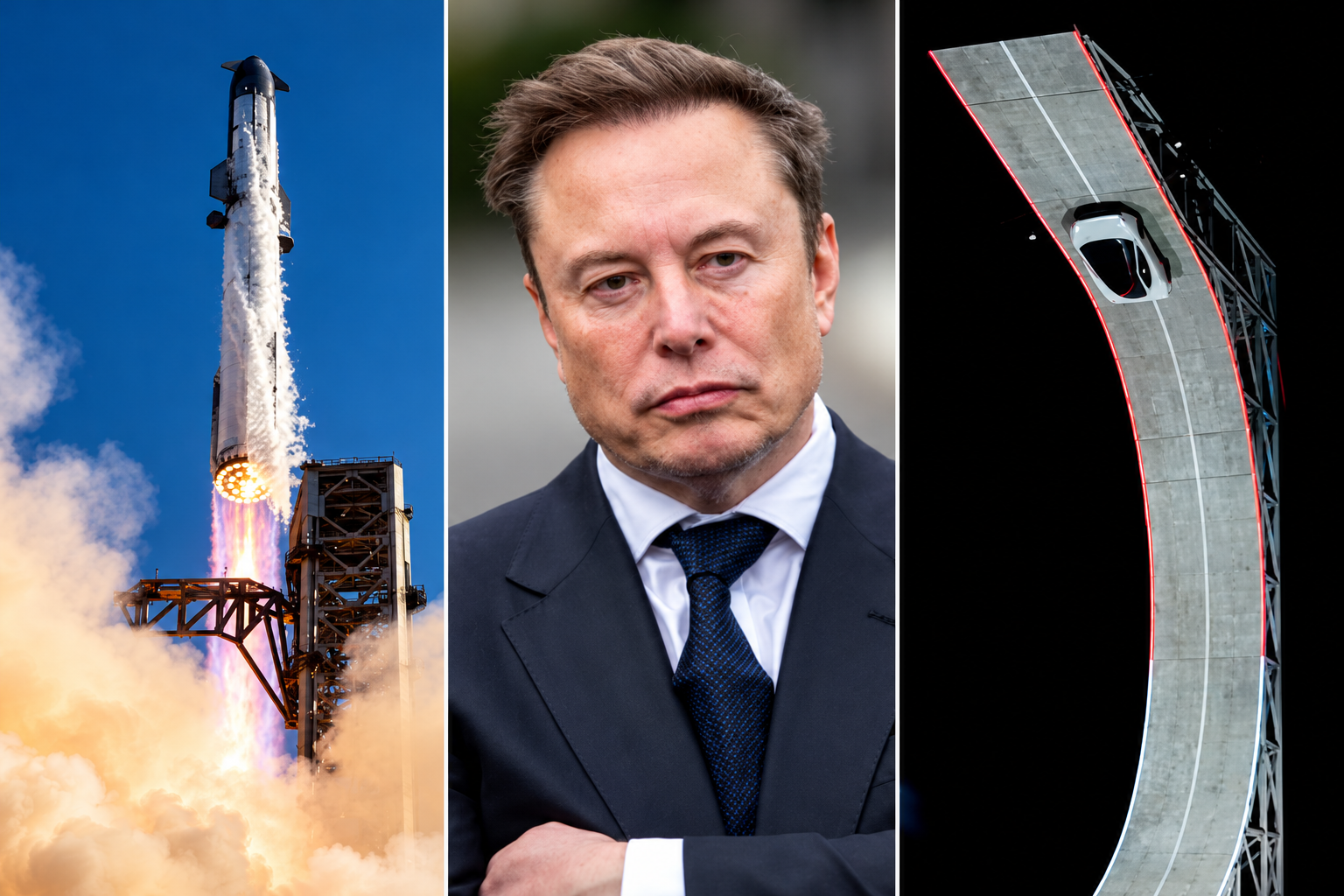
Elon Musk has engineered ties between Tesla TSLA 3.41%increase; up pointing triangle and SpaceX SPCX 7.79%increase; up pointing triangle that are hard to break, and now he wants to fuse them together permanently.
Musk has run both Tesla and SpaceX concurrently over the past two decades, using a schedule that dictated which days he spent focused on each business.
The companies have often shared resources and personnel, signaling their close ties. Last year, SpaceX looked into creating a spacesuit for Tesla’s humanoid robot Optimus, a person familiar with the matter said. Tesla last week showed off its new Roadster, a vehicle featuring SpaceX rocket thrusters that it hopes to soon bring to market.
And in recent months, Musk has repositioned both companies by expanding beyond their core operations toward a shared mission centered on artificial intelligence.
The world’s richest man on Tuesday signaled his interest in tying up SpaceX and Tesla, marking what would be the biggest corporate merger of all time. Because he serves as chief executive of SpaceX and Tesla, Musk said committees of independent directors at both companies are evaluating a possible deal, adding that a transaction might not come to fruition.
The committees will likely evaluate, with lawyers and bankers, how each company would fare in a potential deal and how a deal might best be structured. They then present their conclusions to their respective boards, who typically vote on whether to proceed.
“It’s an odd Kabuki dance where two groups of people are talking and I can’t be in the conversation,” Musk told SpaceX investors on Tuesday in response to an analyst’s question about a potential deal.
For Musk, the merger supports his vision of a world full of autonomous cars, humanoid robots and weekly rocket launches, as well as the data centers and satellites required to keep the whole thing running.
Some investors and analysts said they expect a transaction would be structured as an all-stock deal, with SpaceX potentially paying a modest premium for Tesla shares.
SpaceX, which has a market value of about $2 trillion, said it is seeing sharp growth in revenue across its businesses, which include operating data centers, launching rockets and operating satellite networks such as the internet service Starlink. Tesla is valued at about $1.5 trillion and is expanding its operations beyond its automotive and energy business. Shares in both companies traded higher following the news Tuesday.
Musk’s substantial ownership stakes in both companies, along with voting control at SpaceX, has enabled him to set the deal in motion. Analysts and investors said the deal will probably face regulatory scrutiny internationally, though some see Musk’s close relationship with the Trump administration as an asset to getting approval.
Blurred lines
The companies haven’t said which directors are on the special committees evaluating a potential deal. Several SpaceX and Tesla board members have either personal or business ties to Musk. And like Musk, venture capitalist Ira Ehrenpreis sits on both boards.
In a filing this week, Tesla outlined millions of dollars in business agreements with SpaceX and its subsidiaries last year, including $143 million in car sales to SpaceX, $3.3 million in advertising that it bought on the social-media platform X and $430 million in revenue from the sale of Megapack batteries for SpaceX’s data centers.
The companies also split the cost of resources including the use of Musk’s SpaceX jet and the bill for his personal security, which he runs through a private company.
Employees at both companies routinely move between companies to work on special projects, and some executives have dual roles, including Charles Kuehmann, vice president of materials engineering at both SpaceX and Tesla, and Ashok Elluswamy, the vice president of AI software at Tesla who runs a joint venture with SpaceX called Digital Optimus.
Over the years, Musk has launched new startups within his empire, including brain-implant company Neuralink, underground-tunnel developer the Boring Company and xAI, the AI startup that merged with SpaceX in February.
It is that AI business that Musk thinks can serve a market worth tens of trillions of dollars, justifying the need for a merger.
The business case goes like this: Tesla is developing robotaxis and robots, which it calls “physical AI.” SpaceX is working on the back end of physical AI: the data-center capacity and internet connection required for those robotaxis and robots to operate continuously.
“I don’t see what the value of Tesla is if it’s not merged with SpaceX,” said investment adviser Ross Gerber, a former Tesla bull turned critic invested in both companies. “If they don’t merge, the brains of everything that runs Tesla is owned by another company.”
On top of it all, both companies face constraints on the supply chains they need to make this world a reality, particularly when it comes to chips. To address this, Musk earlier this year announced a joint venture between Tesla, SpaceX and Intel to design and manufacture chips in Texas. “The most epic chip-building exercise by far,” he has said.
Musk at the wheel
For Musk, a merger would also solve two problems: demands on his attention and his lack of control at Tesla.
Tesla for years was Musk’s only public company, a status that came with greater scrutiny. There, Musk reports to a public board, as well as individual investors who make up around 30% of Tesla’s voting power, according to FactSet.
The question of Musk’s attention became a particular focus for investors and the board in recent years after he acquired Twitter in 2022 and launched xAI in 2023, and again in 2025 as he spent time in Washington, D.C., running the Department of Government Efficiency in the early months of President Trump’s second term.
As Tesla’s car business suffered in 2025, Musk threatened to take his AI ambitions outside the company if he wasn’t granted 25% voting control. Last November, Tesla shareholders approved a new pay package for Musk, which created a path for him to vastly expand his stake.
As of Sept. 30, Musk owned a roughly 20% stake in Tesla, according to the company’s proxy filing.
The SpaceX IPO gave Musk a different path. When SpaceX went public in June, the deal’s structure enabled him to have more than 80% voting power at the company—so much that he can’t be fired and decisions can’t be made without his support.
If SpaceX acquires Tesla, he will likely stay in control.

Two coming 2027 models – the first of the “Neue Klasse” cars coming to the U.S. early next year – have been revealed.
BNW Developments has established a Sydney presence, joining Arada and Sobha Realty among the growing number of UAE developers pursuing Australian buyers and development opportunities.