How to Pick the Perfect Souvenir When Travelling
It’s easy to buy clunkers when you’re caught up in the moment. But regrettable purchases aren’t inevitable.

 4 min
4 min
Trying to buy just the right souvenir on a trip is a risky business. You can wind up with a lifetime treasure—or an albatross you feel stuck with forever.
Consider the giant painting of a chicken flying out of Cuba that has been hanging over our couch in Palos Verdes, Calif., for the past 15 years. Buying it cheaply seemed to make sense when we were in Havana, since my husband’s family had fled the country after the revolution.
But the flying chicken just didn’t seem as, well, poignant by the time we returned home and hung the 4-by-7-foot painting. No guest has ever said a word about it. “I can’t help you with the chicken,” an art dealer told me long ago when I asked for help in selling it.
So, how do you find the right souvenir? Or is there even any such thing?
An everyday reminder
For many people, the answer to the second question is an unqualified “No,” and they have stopped trying. “Souvenirs never look as enticing or beautiful as they did at the time of purchase once you get them home,” warns Patricia Schultz, the author of “1,000 Places to See Before You Die.”
After collecting rugs on her trips, then Christmas ornaments, before running out of room at home for both, Schultz says, “I have gone cold turkey. I collect memories.”
But for others, surrendering just won’t do. “It’s intrinsic when people travel that they wind up bringing a keepsake of the journey,” says Rolf Potts, the author of “Souvenir,” a book that traces the history of travel souvenirs back to the earliest recorded journeys.
“It can be a way to show off,” he says. “Much like the envy-inducing travel posts on Instagram.” But for many people, he says, “It’s proof you were there, not only to show other people but also for yourself.”
For those who lean in this direction, there are ways to help avoid regrets. Tara Button , founder of the Buy Me Once website, and the author of “A Life Less Throwaway: The Lost Art of Buying for Life,” suggests focusing on practical items that fit your lifestyle and double as mementos.
As an example, she once bought a “very affordable” baby blanket made from alpaca fiber on a trip to Peru and now uses it every day. The blanket not only reminds her of “the time pre-children when I was traveling,” she says. “It goes over my 2-year-old son every night. It’s always soft and always gorgeous.”
She has a friend who collects one cup from each destination. “Those are perfect memory keepers,” she says. “A small item that is used every day.”
Finding the right scale
One obstacle to finding the right souvenir is that it can be hard to think practically when you are swept up in the excitement of a new culture. Consider the Burmese puppet, 15 inches tall, that has spent about two decades in the closet of Liz Einbinder , head of public relations for Backroads, an adventure-tour company.
“We saw a lot of puppets everywhere and just got caught up in all of the Burmese art and culture,” she says. Now she wonders, “Why did I bring this back? It sits in the back of my closet and I can’t seem to get rid of it. It creeps me out when I see it.”
When that buying urge sweeps over you, Button and other travel experts suggest pausing to consider your lifestyle, taste, needs, and the scale of your home—you’re going back to the reality of your everyday life, after all.
But that doesn’t necessarily mean being entirely practical. Einbinder collects miniatures, mostly miniature houses, from every country, and has more than a hundred. Most are in storage, but she keeps a little London bus and a little Egyptian pyramid on her desk. For her, souvenirs aren’t just about memories, they’re also about the hunt. “It gives me something to search for” on each trip, she says. “That’s half the fun.”
Ignore the hard sell
Another way travelers often go wrong is by giving in to pressure, or at least persistence, from salespeople.
When Kimba Hills, an interior designer, went to Morocco, she hired a guide who took her to a rug store in Fez, where the dealers delivered a whirlwind sales pitch while serving tea. She wound up buying a $4,000 flat-weave Turkish rug, measuring about 13 feet by 9 feet.
“No one in my group could believe I got seduced,” she says.
When the rug finally arrived at her home in Santa Monica, “It smelled like cow dung,” she says. Washing the rug was going to change the color.
When she called the dealer in Fez and demanded her money back, he refused, offering to send her a different rug instead. “We got into a yelling match,” says Hills. “All my skills went out the window.”
Looking back, she says, “You are in a buying mode because you are there and feel like you should buy something.” On a recent trip to Mexico, she bought nothing, explaining, “I’m wiser.”
Sometimes, magic
Spontaneity can cut both ways. There’s the chicken painting. But waiting for inspiration to strike, rather than planning to go home with a souvenir, can still help.
Henry Zankov, a sweater designer, says that when he travels, he explores his destinations with the idea that he won’t buy anything unless he comes across something he loves. He still buys plenty, but says “I don’t have regrets.” At his home in Brooklyn, he has ceramics, vases and glassware from shops he found randomly in Spain, Greece, and Italy. “I buy what I have to have,” he says.
There are times he doesn’t find anything. “So I just give up,” he says. “It’s OK.”
Some souvenirs do become the treasure of a lifetime.
Annie Lucas , the co-owner of MIR, which offers tours to less-traveled destinations, became captivated by a mirror on a trip to Morocco. It was made with hand-pounded silver and pieces of camel bones.
She went back to the store three or four times, debating the cost and whether she would regret it once she got home. It was heavy and measured 24 inches by 40 inches.
“That was 15 years ago, and I still treasure it,” she says. “If I had to get out of my house and had only five minutes to pack, I would grab that off the wall.”
 Copyright 2020, Dow Jones & Company, Inc. All Rights Reserved Worldwide. LEARN MORE





Australian shares fell on Thursday as Wall Street weakness, rising oil and persistent rate concerns weighed on most of the market. The S&P/ASX 200 declined 0.72 per cent to 8,702. The All Ordinaries lost 0.66 per cent to finish at 8,897. Mining stocks were hit particularly hard, while real estate also dragged on the index. …
Continue reading “ASX falls 0.7 per cent as miners and property stocks retreat”

Borrowers cannot control the Reserve Bank, but they can control how exposed their household budget is to its next decision. The RBA meets on 29 September with inflation concerns still elevated and major-bank economists increasingly bringing forward their rate-rise calls. Fixed mortgage rates have also been moving, reducing the value of waiting for perfect certainty. …
Continue reading “What mortgage holders should do before the next RBA decision”

 2 min
2 minAustralian shares fell on Thursday as Wall Street weakness, rising oil and persistent rate concerns weighed on most of the market.
The S&P/ASX 200 declined 0.72 per cent to 8,702. The All Ordinaries lost 0.66 per cent to finish at 8,897. Mining stocks were hit particularly hard, while real estate also dragged on the index.
Energy was the notable exception, gaining more than one per cent as Brent crude traded above US$103 a barrel. Oil had moved higher amid uncertainty surrounding potential US diesel-export restrictions and broader geopolitical supply risks. The move supported energy producers but renewed concern about inflation inputs across transport and the wider economy.
Gold shares were weak even as spot bullion remained historically elevated. The All Ordinaries Gold index fell about 2.25 per cent, showing that equity performance can diverge from the commodity because of valuation, currency, operating and company-specific factors.
Zip was a prominent loser, falling 11.38 per cent after the company reported short sales after the previous close. Nine Entertainment also weakened after UBS analysts warned of near-term revenue challenges associated with its advertising-supported subscription tier.
Premier Investments led larger winners despite caution about the retail environment. Breville, in which Premier owns a significant stake, also appeared among leading movers. In the broader ASX 300 screen, Myer gained 11.43 per cent and MAAS Group rose 7.93 per cent, while Lotus Resources fell 10.53 per cent. These percentage moves should be checked against company announcements and trading liquidity before attributing causes.
The Australian dollar was broadly flat at US70.38 cents. Spot gold was around US$4,280 an ounce, Brent crude approximately US$103.08 a barrel and iron ore near US$96.90 a tonne late in the session.
The rate outlook remains the central domestic catalyst. Labour-market weakness has not eliminated the possibility of an RBA increase next week, leaving banks, listed property and other rate-sensitive sectors exposed to changing expectations.
Market dashboard
S&P/ASX 200: 8,702, down 0.72 per cent.
All Ordinaries: 8,897, down 0.66 per cent.
Best sector: Energy, up more than one per cent.
Weakest areas: Real estate and materials were the major drags; confirm final sector percentages before publication.
Material winner: Premier Investments led the large-company gainers. Confirm its final closing move from the ASX before publication.
Material loser: Zip, down 11.38 per cent.
ASX 300 percentage leader: Myer, up 11.43 per cent.
ASX 300 percentage laggard: Zip, down 11.38 per cent.
AUD/USD: Approximately US$0.7038, broadly flat.
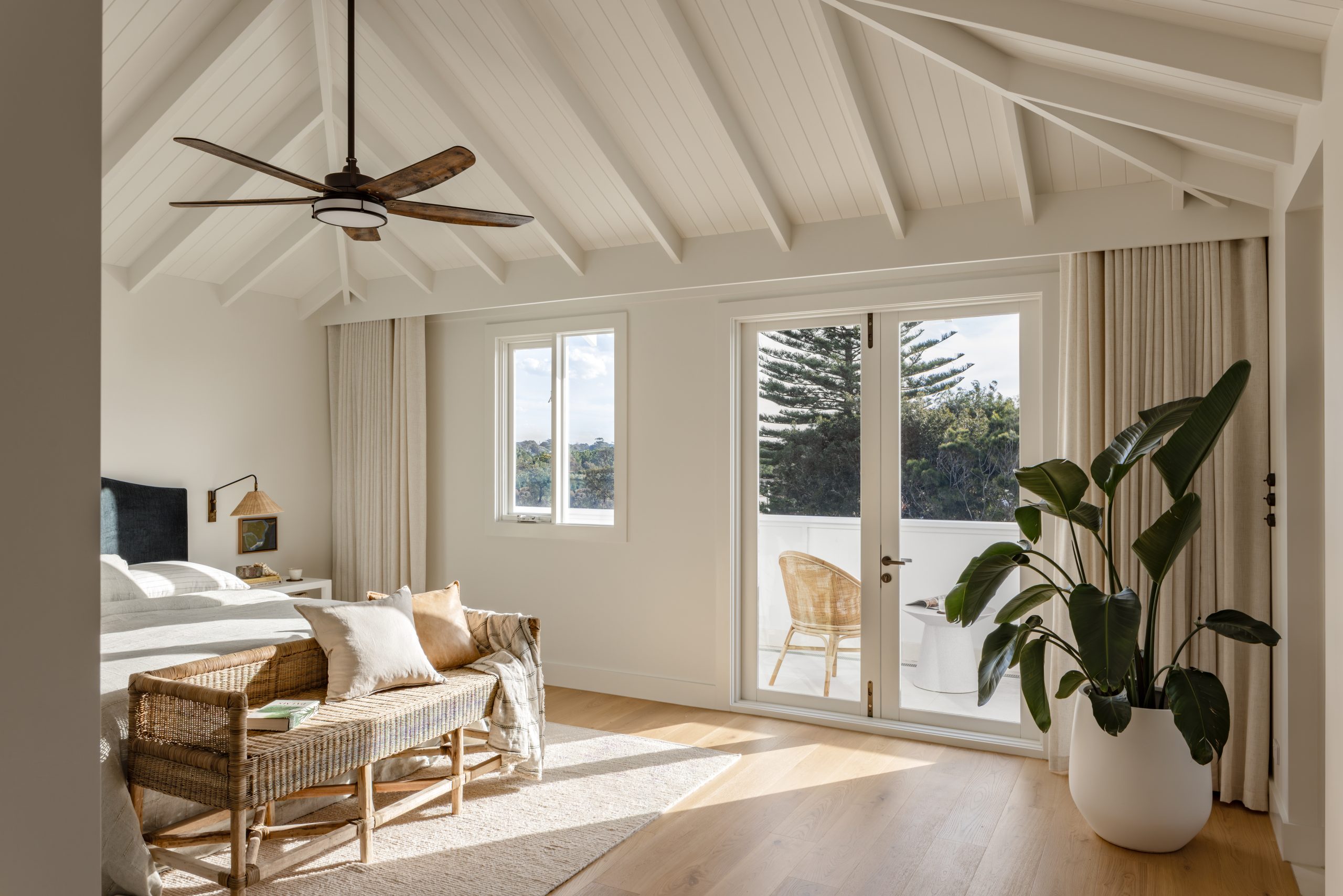
From warmer neutrals to tactile finishes, Australian homes are moving away from stark minimalism and towards spaces that feel more human.

From Tokyo backstreets to quiet coastal towns and off-grid cabins, top executives reveal where they holiday and why stepping away makes the grind worthwhile.