Does Warren Buffett Know Something That We Don’t?
Berkshire Hathaway is hoarding cash in a pattern seen before the financial crisis, but it has a new reason this time

 4 min
4 min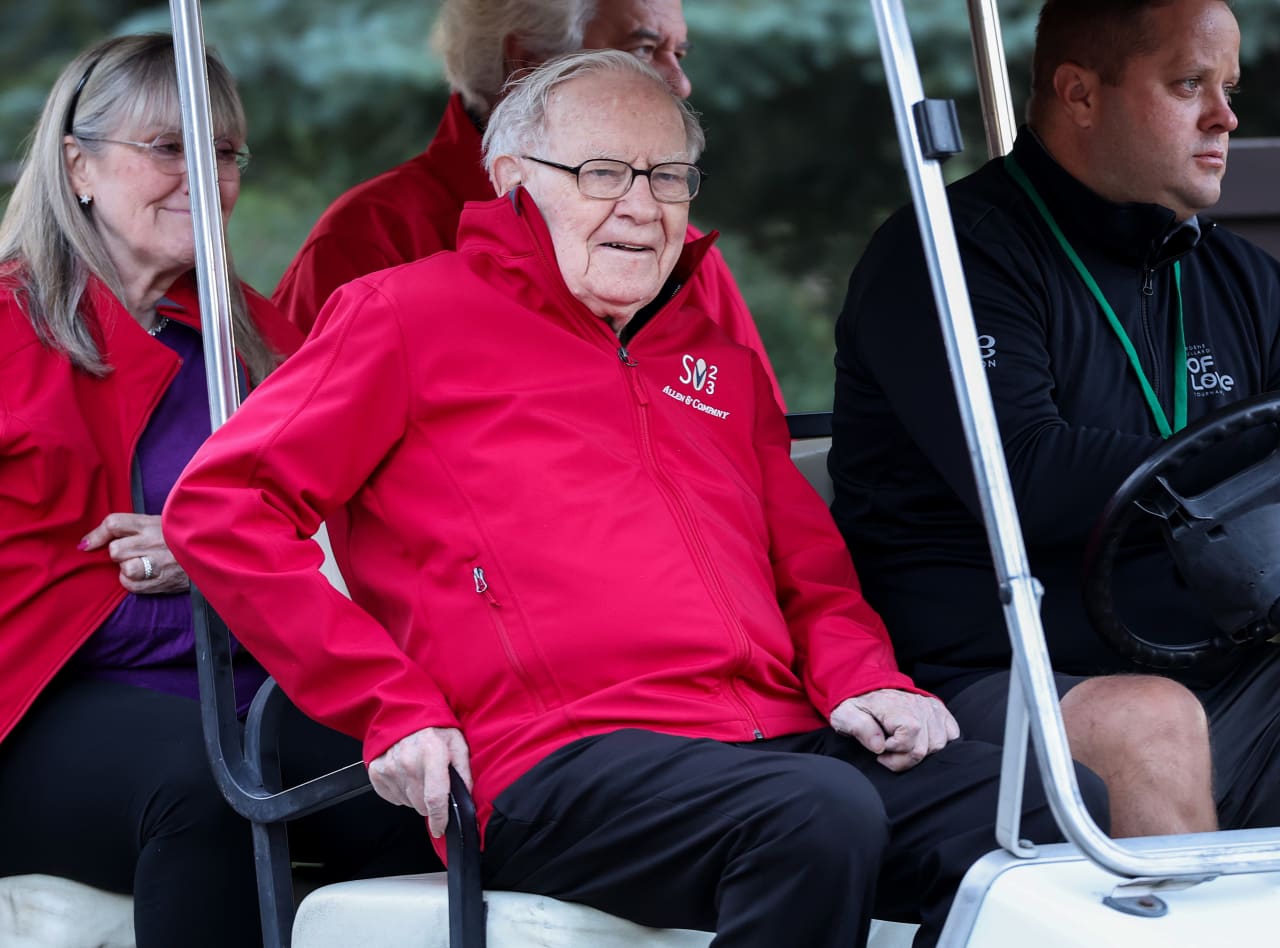
When the world’s most-followed investor doesn’t feel comfortable investing, should the rest of us be worried?
Warren Buffett , who has quipped that his favourite holding period for a stock is “forever,” continues to have substantial money at work in American companies. But he has never taken this much off the table either—a whopping $325 billion in cash and equivalents, mostly in the form of Treasury bills.
To appreciate the immensity of that hoard, consider that it would allow Berkshire to write a check, with change left over, for all but the 25 or so most-valuable listed U.S. corporations—iconic ones such as Walt Disney, Goldman Sachs , Pfizer, General Electric or AT&T. In addition to letting the dividends and interest pile up on its balance sheet, the conglomerate has aggressively sold down two of its largest shareholdings, Apple and Bank of America, in the past several months. And, for the first time in six years, it has stopped buying more of the stock it knows best— Berkshire Hathaway.
Does that mean mere investing mortals should be cautious about the market? Maybe, but it tells us even more about Berkshire.
Buffett and his late business partner Charlie Munger didn’t outperform the stock market 140-fold by being market-timers. Probably Munger’s most famous quote is his first rule of compounding: “Never interrupt it unnecessarily.” Investors who follow Berkshire closely and hope for a bit of its magic to rub off on their portfolios pay very close attention to what it is buying and selling, but much less to when.

Yet the seemingly always optimistic and patient Buffett has turned cautious before, famously shutting his extremely successful partnership in 1969 when he said markets were too frothy and also building up substantial cash in the years leading up to the global financial crisis—money he deployed opportunistically.
“He’s cognisant of the fact that markets gyrate and go to extremes,” says Adam J. Mead, a New Hampshire money manager and Buffetologist who is the author of “The Complete Financial History of Berkshire Hathaway.”
Stock values being stretched doesn’t mean they are on the precipice of a crash or even a bear market. Instead, zoom out and look at what today’s valuations say about returns over the next several years, which will include both good and bad periods. Goldman Sachs strategist David Kostin predicted recently that the S&P 500’s return over the next decade would average just 3% a year—less than a third of the postwar pace.
Kostin’s report went over like a record scratch at a time of high investor optimism, but it is consistent with other forecasts. Giant asset manager Vanguard recently predicted an annual return range of 3% to 5% for large U.S. stocks and just 0.1% to 2.1% for growth stocks over a decade. And Prof. Robert Shiller ’s cyclically adjusted price-to-earnings ratio is consistent with an average return of about 0.5% a year after inflation —similar to Kostin’s projection.
Then there is the even simpler “Buffett Indicator,” which the Oracle of Omaha once called “probably the best single measure of where valuations stand at any given moment.” There are variants on the theme, but it is basically a ratio of all listed stocks to the size of the U.S. economy. Taking the Wilshire 5000 Index as a proxy it is now around 200%, which would leave it more stretched than at the peak of the tech bubble.
With T-bills now yielding more than the prospective return on stocks, it might seem that Buffett has taken as many chips off of the table as possible since there is no upside in risky stocks. But he is on record saying that he would love to spend it.
“What we’d really like to do is buy great businesses,” he said at Berkshire’s 2023 annual meeting. “If we could buy a company for $50 billion or $75 billion, $100 billion, we could do it.”
With Berkshire now worth $1 trillion, it would take a deal of that size to move the needle. Mead explains that a transaction matching acquisitions like 2010’s Burlington Northern Santa Fe deal or the 1998 acquisition of insurer General Re would be worth $100 billion scaled to today’s balance sheet.
Could it also mean that Buffett sees value in keeping dry powder ahead of the next crisis or general froth in the market? Yes, but he isn’t saying, and individual investors also have more options than he does. First of all, we don’t have to pay a 20% or more premium to the market price to invest in a business like Berkshire would in a takeover. We also can sail in much shallower waters and smaller ponds. For example, Vanguard’s 10-year projections range from 7% to 9% a year for non-U.S. developed market stocks and 5% to 7% for U.S. small capitalisation stocks. Other than a very profitable bet on Japanese trading companies in recent years, though, Buffett has kept his money mostly stateside and likely will continue to do so.
Changes at Berkshire are inevitable, though—and not just because the 94-year-old is nearing the end of his remarkable career. Buffett hasn’t hesitated to return cash to shareholders, almost exclusively through stock buybacks, yet he clearly deems even his own stock too pricey for that.
Berkshire also has reached a size at which it can’t replicate its long-run record of deploying its profits and handily beating the market. It is going to have to hand money back somehow—probably through a dividend, reckons Mead. Eventually it becomes necessary to interrupt compounding.
 Copyright 2020, Dow Jones & Company, Inc. All Rights Reserved Worldwide. LEARN MORE




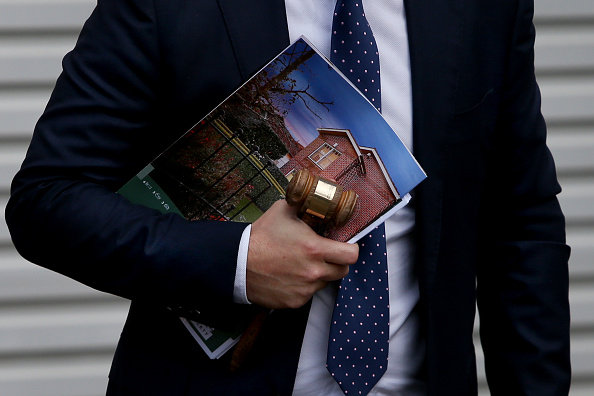
Victorian auction buyers will soon receive a piece of information that has traditionally been withheld until bidding reaches it: the vendor’s reserve price. Under new property-sale and underquoting laws, agents must publish the agreed reserve at least seven days before an auction or fixed-date sale. Most changes begin on 1 October 2026 and apply to …
Continue reading “Victoria’s New Auction Rules Will Force Reserve Prices Into the Open”

Four decks, 34.5 metres and a made-to-measure interior: step aboard the new Custom Line Navetta 35, unveiled at Cannes.
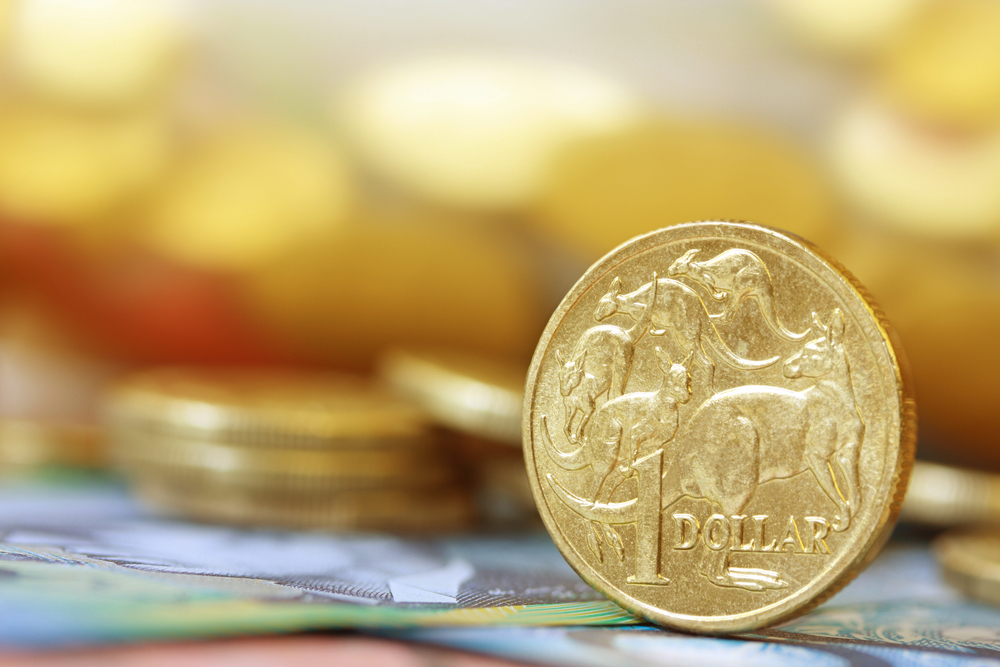
The ASX 200 rose about 0.27% as energy and materials advanced. Woodside and gold miners gained while financials and technology weakened.
2 min
The Australian sharemarket rebounded from its lowest close in three months on Wednesday, with energy and materials companies leading a cautious recovery.
The S&P/ASX 200 finished approximately 23 points, or 0.27 per cent, higher at 8,695.6 on 16 September. A second data source placed the closing index at 8,696.5, up 24 points or 0.28 per cent. The official close should be confirmed through a licensed feed before publication.
The broader All Ordinaries added 25.2 points, or 0.28 per cent, to 8,874.5.
Energy was the strongest sector, rising 2.19 per cent as Australian producers reflected the previous overnight increase in global oil prices. Woodside gained 2.84 per cent. Brent had settled near US$108.75 a barrel before the local session, although it later traded around US$107.68.
Materials advanced 1.28 per cent and provided the largest positive contribution to the index. Gold producers featured prominently among the strongest stocks, with Pantoro rising 9.3 per cent and St Barbara gaining 8.18 per cent. BCI Minerals added 7.48 per cent.
Financials fell 0.37 per cent, detracting from the benchmark despite earlier strength. Rate expectations remained a significant influence after Westpac joined the other major banks in forecasting a possible Reserve Bank increase in November. Higher rates can expand bank margins in some circumstances but also raise funding costs and increase the risk of loan stress and slower credit growth.
Technology remained weak. Life360 declined 5.46 per cent, while healthcare names that had rallied during Tuesday’s sell-off gave back ground. 4DMedical lost 5.35 per cent and Telix Pharmaceuticals fell 4.96 per cent.
James Hardie dropped 5.23 per cent. Codan moved against the weaker technology tone, gaining 7.51 per cent.
The session produced positive breadth, with more advancers than decliners among the largest 250 stocks, but the broader backdrop remains unsettled. Oil prices have revived inflation concerns, bond yields are elevated and investors are assessing the prospect of further monetary tightening in Australia and the United States.
The rebound therefore recovered only part of Tuesday’s 0.9 per cent decline. For Thursday, investors will be watching overnight central-bank developments, energy markets and whether gains can broaden beyond resources.
Market dashboard — 16 September 2026
S&P/ASX 200* Approximately 8,695.6, up 23.1 points or 0.27 per cent; verify the official closing print
All Ordinaries: 8,874.5, up 25.2 points or 0.28 per cent
Best-performing sector: Energy, up 2.19 per cent
Materials: Up 1.28 per cent
Weak sector: Financials, down 0.37 per cent
Leading mover: Pantoro, up 9.30 per cent
Notable large-cap mover: Woodside, up 2.84 per cent
Notable loser: Sunrise Energy Metals, down 6.22 per cent
Life360: Down 5.46 per cent
Australian dollar: About US71.3 cents in the preceding market snapshot
Gold: Approximately US$4,375 an ounce in the afternoon snapshot
Brent crude: Approximately US$107.68 a barrel in the afternoon snapshot

With two waterfronts, bushland surrounds and a $35 million price tag, this Belongil Beach retreat could become Byron’s most expensive home ever.

Powerhouse real estate couple Avi Khan and Kaylea Sayer welcome their daughter while balancing record-breaking careers, proving success and family can grow side by side.