These Baby-Chasing Grandparents Are Turbocharging Demographic Shifts
From Austin, Texas, to Charleston, S.C., golf and grandbabies beckon

 4 min
4 min
Gillian Held wanted her daughter to grow up around her grandparents. But moving from suburban Orlando back to New Jersey would have meant downsizing. So last year, Gillian’s parents sold their house and relocated to Florida several months before baby Nora was born.
“I said, ‘I don’t want to be Grandpa on a screen,’” said David Held, a retired New York City police officer who now helps watch his 7-month-old granddaughter two days a week.
Baby chasers are one of the cuddlier demographic trends contributing to America’s southward migration, a shift that is shaping everything from home building to municipal finance. Retirees have long sought out Southern states’ warmer weather and year-round golfing. Lower living costs and ample jobs have prompted a decade-long population boom in the South, and now those states boast a new attraction for many older Americans: their grandchildren.
Decades of rising stock prices and home values have left older Americans with much of the nation’s wealth, Federal Reserve data show. High mortgage rates are no obstacle to longtime homeowners who can sell their paid-off houses and buy new ones without a mortgage. In an era of more-flexible work, relocation doesn’t have to mean retirement. When grandparents live nearby, families can spend less on child care—and eldercare.
Housing-research firm Zonda publishes a yearly Baby Chaser Index ranking cities by growth in residents 25 to 44 and 60 to 79. Austin, Texas, Charleston, S.C., and Jacksonville, Fla., topped last year’s list. Ali Wolf , the firm’s chief economist, first heard about the trend six or seven years ago from home builders: “They would say, ‘We sold a house to a millennial and then we sold a house to their parents.’”
It all started in the 1960s, when baby boomers became the first generation to routinely move hundreds of miles for school or work, said Andrew Carle, who oversees a program in senior-living administration at Georgetown University. For much of the 20th century, parents in the U.S. raised their children close to where they grew up—at least those parents who hadn’t emigrated to escape persecution or dire poverty.
“We went away to college, we moved multiple times for our jobs,” said Carle, who is in his mid-60s. “We could move anywhere but we are choosing to move closer to our adult kids.”

A new job and lower home prices prompted Alonzo Emery ’s daughter and son-in-law to move with their two children from San Mateo, Calif., to the Austin area a decade ago. Emery, a retired vocational training program administrator, and his wife, Mary, followed two years later after a third grandchild was born needing medical treatment.
Texas’ culture and weather have been an adjustment for the couple, and they miss their son and son-in-law in California. But Emery, a former Arizona State University running back, gets to attend his 14-year-old grandson’s football games. He and Mary are learning dance moves from their 11-year-old granddaughter. “She’s put us on video,” said Emery, 73.
Moves like the Emerys’ have wide-ranging impacts for home building and even city budgets. The nation’s fastest-growing city is now the Austin suburb of Georgetown, Texas, where almost a fifth of the population lives in a single massive age-restricted housing community. This year, the city nabbed a triple-A bond rating.
The median age of repeat home buyers hit 61 this year, a four-decade high, according to the National Association of Realtors, with the most commonly cited reason for selling being the desire to be closer to family or friends. Twenty-one of last year’s 50 fastest-selling planned communities have built or are building age-restricted areas inside larger all-ages developments, according to consultant RCLCO.
Nashville, Tenn.-based Kinloch Partners, which rents out homes near large corporate offices in the Southeast, estimates that the retired parents of newly transferred executives live in around 10% of them.
“They have a guaranteed income. They don’t trash the house,” said Chief Executive Bruce McNeilage. Some pay a year of rent upfront.
For young families, the value of a nearby grandparent keeps growing. Child-care costs are up 6.4% over the past two years to a median monthly price of around $1,500 in major metro areas. The share of mothers with a child under 3 who work has risen over the past three decades to 66% last year from 58%, according to the Labor Department.
Gillian Held and her husband, Jordan, employ a nanny three days a week. Her parents take Tuesdays and Wednesdays, staying overnight at the couple’s home, where they have their own bedroom.
“We fully talk to them like they’re employees,” said Gillian, 32. “It’s an ongoing joke that when they want to go on vacation they have to take PTO.”

David and Cynthia Held , both 62, had long toyed with the idea of retiring to Florida. New Jersey’s cold winters and high living costs were wearing on them. Then in 2019, the Helds lost their son, Gillian’s brother Craig, to suicide at age 30. Living close to their daughter came to feel even more important.
By the end of 2022, Gillian and Jordan were married and talking about becoming parents. Home values where the Helds lived in Monmouth County, N.J., had shot up 27% over the previous two years, according to Zillow . David and Cynthia sold their house and moved in with Gillian in October 2023. A few months later, Cynthia fell in love with a place in a 55-and-over community in Port St. Lucie. They paid in cash.
The economics can be tougher for would-be baby chasers with grandchildren in the Northeast. Retired professor and author Michelle Herman and her husband are planning a move from Columbus, Ohio, to the New York City area to help raise future grandchildren. “Financially it makes zero sense,” she said.
There can be other snags. Herman contributes to a parenting advice column and recently counselled families considering a move to come to a clear understanding about how much child care the grandparents will provide. Grandparents should also do their own soul-searching before they relocate and have realistic expectations, she said.
“I actually have known people who’ve done this and came back because it didn’t work out,” Herman said.
—Nicole Friedman contributed to this article.
 Copyright 2020, Dow Jones & Company, Inc. All Rights Reserved Worldwide. LEARN MORE





The Swiss watchmaker’s first collaboration with Atlassian Williams F1 Team produces two sporting Laureato models inspired by the team’s 2026 racing car.

Victorian auction buyers will soon receive a piece of information that has traditionally been withheld until bidding reaches it: the vendor’s reserve price. Under new property-sale and underquoting laws, agents must publish the agreed reserve at least seven days before an auction or fixed-date sale. Most changes begin on 1 October 2026 and apply to …
Continue reading “Victoria’s New Auction Rules Will Force Reserve Prices Into the Open”
The Swiss watchmaker’s first collaboration with Atlassian Williams F1 Team produces two sporting Laureato models inspired by the team’s 2026 racing car.
3 minGirard-Perregaux has revealed the first watches created through its partnership with Atlassian Williams F1 Team, bringing the British racing team’s colours to one of Switzerland’s most recognisable integrated-bracelet designs.
The collaboration comprises two 42mm steel watches: the time-and-date Laureato Williams Edition and the more technical Laureato Chronograph Williams Edition.
Both retain the familiar architecture of the Laureato, including its octagonal bezel, integrated bracelet and mix of polished and satin-finished surfaces. The influence of Williams is comparatively restrained, appearing through colour, discreet branding and details inspired by the team’s current Formula 1 car.
It is a welcome departure from the oversized logos and literal automotive references that can characterise motorsport watches.
The Williams FW48 inspires the dial
The centrepiece of both models is a blue Clous de Paris dial informed by the livery of the Williams FW48, the car being campaigned by the team during the 2026 Formula 1 season.
A small Williams “W” replaces the conventional marker at 12 o’clock, while the team emblem appears on the sapphire crystal caseback. Red accents echo the keyline used on the FW48 without overwhelming the established Laureato design.

The three-hand model offers the quieter interpretation. Baton-shaped, rhodium-plated hands and hour markers are filled with white-emitting luminescent material, while a date window sits at three o’clock.
The chronograph creates a more obvious connection with motorsport. Three subdials are framed by rhodium-plated rings, with red appearing on the small-seconds hand and the tip of the central chronograph seconds hand.
Both watches measure 42mm across and are water resistant to 100 metres. The standard Laureato has a case thickness of 10.68mm, while the additional mechanics of the chronograph increase its profile to 12.16mm.
Two in-house automatic movements
The Laureato Williams Edition is powered by Girard-Perregaux’s self-winding GP01800 calibre. The movement provides hours, minutes, central seconds and the date, with a minimum power reserve of 54 hours.
The Laureato Chronograph Williams Edition uses the automatic GP03300 calibre, which combines its chronograph functions with a date display and offers a minimum power reserve of 46 hours.
Both movements operate at 28,800 vibrations per hour and can be viewed through their sapphire crystal casebacks.

Their decoration provides a more traditional counterpoint to the Formula 1 association. Finishing techniques include Côtes de Genève, circular graining, bevelling, mirror polishing, satin finishing, engraving and snailing.
The result is less about reproducing the appearance of a racing car than identifying the common ground between two mechanical disciplines: precision, incremental development and the considerable work hidden beneath the finished product.
Parallel histories
The timing of the partnership draws attention to the remarkably similar ages of its two protagonists.
Girard-Perregaux introduced the original Laureato in 1975, establishing an integrated-bracelet sports watch with a distinctive octagonal bezel. Williams entered Formula 1 two years later in 1977.
Both have evolved continuously across the five decades since. The Laureato has moved through different sizes, materials and complications, while retaining its central design language. Williams, meanwhile, has remained one of Formula 1’s most historically significant teams.
That gives the collaboration greater credibility than a simple licensing exercise. Girard-Perregaux and Williams are not being connected solely through the familiar language of speed. Their stronger link is a shared dependence on engineering, testing and the accumulation of specialist knowledge.
The watches are described as the beginning of a longer collaboration, suggesting further Williams editions may follow.
Girard-Perregaux’s international website lists the Laureato Williams Edition at US$16,200 and the Laureato Chronograph Williams Edition at US$20,900. Australian pricing has not been announced.
Specifications
Girard-Perregaux Laureato Williams Edition 42mm
Reference: 81010-11-3680-1GM
Case: Steel
Diameter: 42mm
Thickness: 10.68mm
Crystal: Anti-reflective sapphire crystal
Dial: Blue Clous de Paris pattern
Movement: Automatic GP01800
Functions: Hours, minutes, central seconds and date
Power reserve: Minimum 54 hours
Water resistance: 100 metres
Bracelet: Integrated steel bracelet with triple-folding clasp
International price: US$16,200
Girard-Perregaux Laureato Chronograph Williams Edition 42mm
Reference: 81020-11-3681-1GM
Case: 904L steel
Diameter: 42mm
Thickness: 12.16mm
Crystal: Anti-reflective sapphire crystal
Dial: Blue Clous de Paris pattern with three chronograph counters
Movement: Automatic GP03300
Functions: Chronograph, hours, minutes, small seconds and date
Power reserve: Minimum 46 hours
Water resistance: 100 metres
Bracelet: Integrated 904L steel bracelet with triple-folding clasp
International price: US$20,900
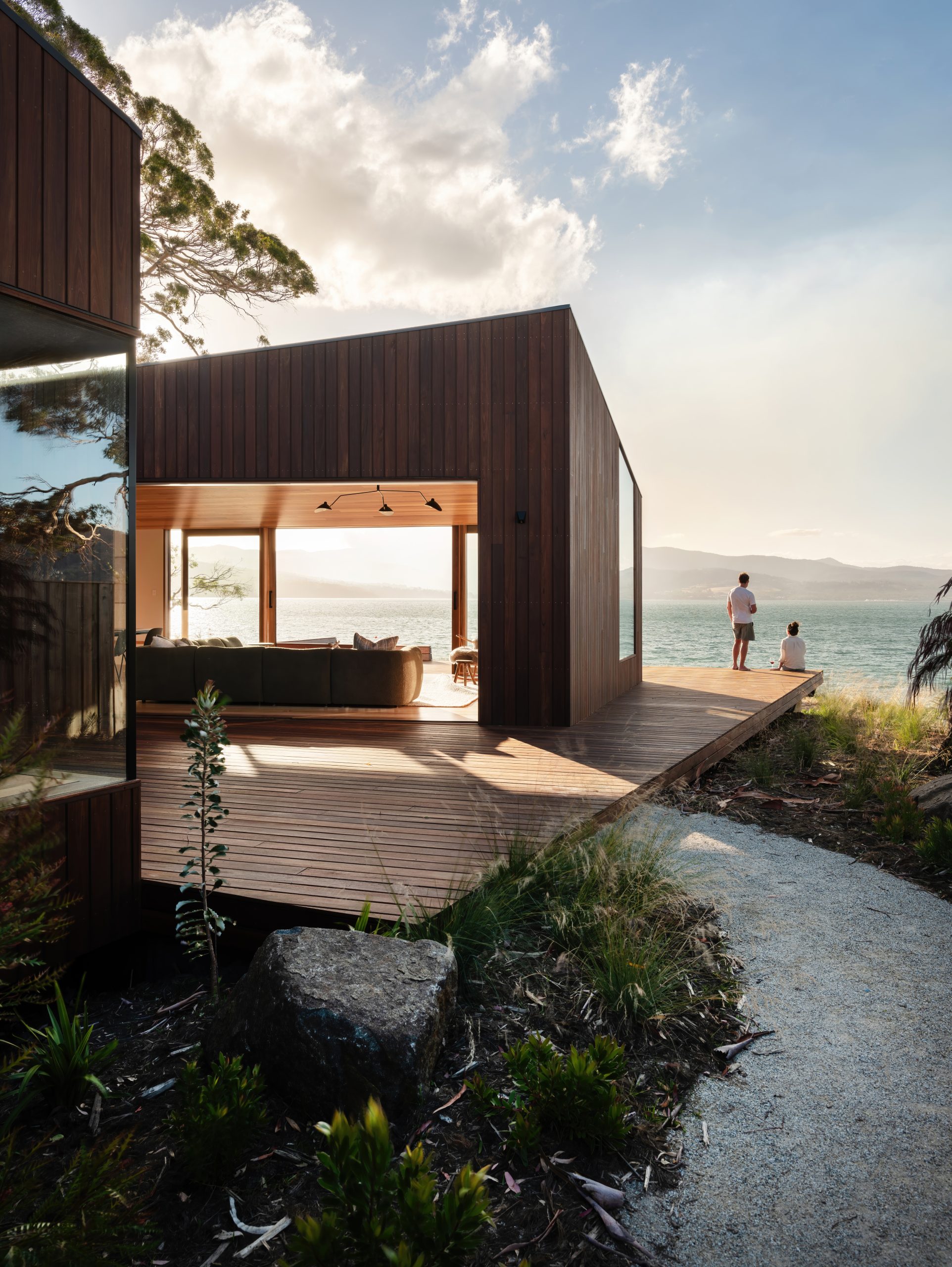
From the shacks of yesterday to the sculptural sanctuaries of today, Australia’s coastal architecture has matured into a global benchmark for design.
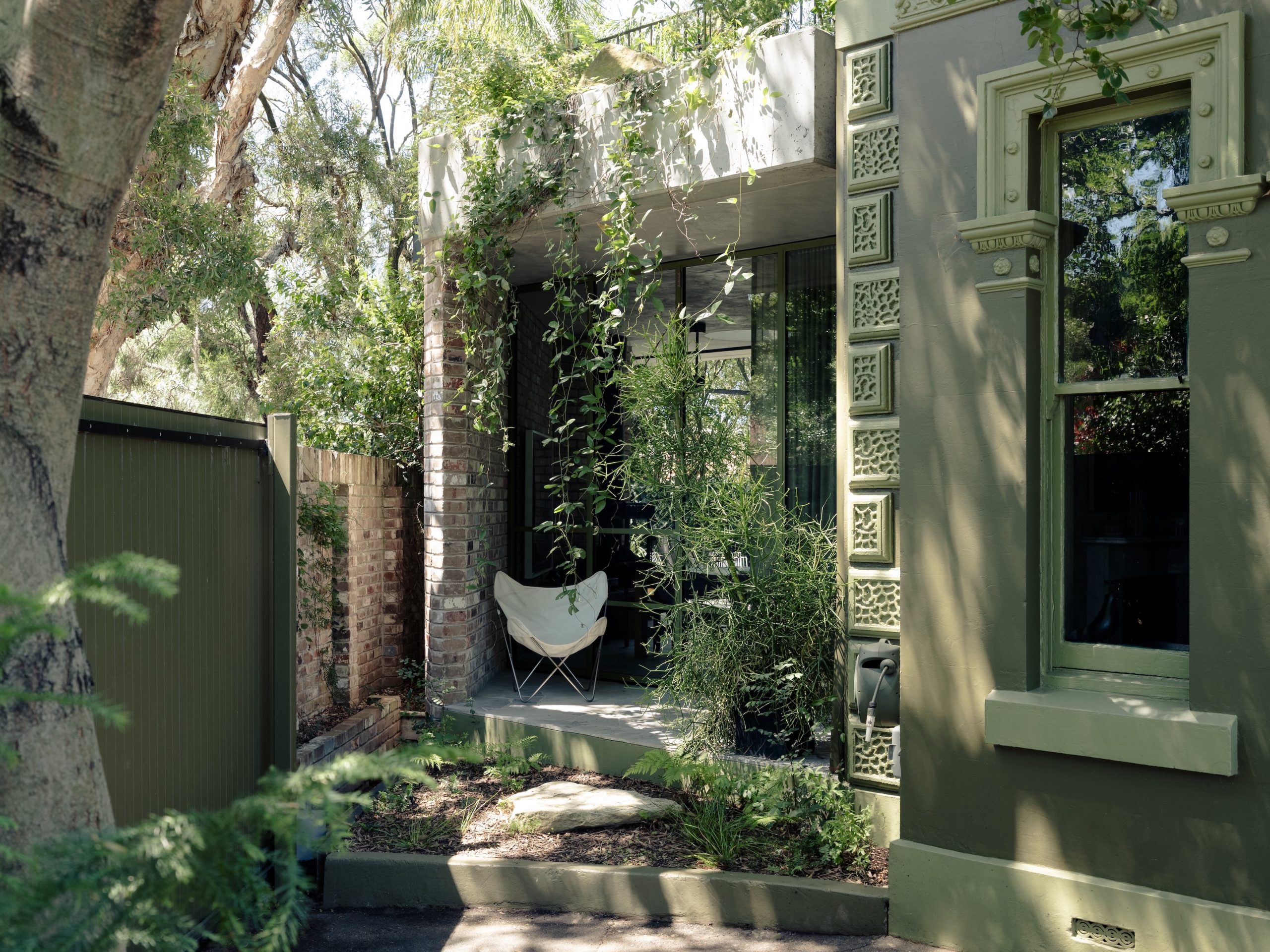
From bushland greens to valley reds, the country’s most awarded designers are proving that the best colour palette was never on a swatch card; it was outside the window all along.