Trump and SoftBank Promise to Create 100,000 AI Jobs. It Won’t Be Easy.

 2 min
2 min
SoftBank Group CEO Masayoshi Son stood besides President-elect Donald Trump at Mar-a-Lago on Monday, and announced a commitment to invest $100 billion in the U.S. over the next four years—and create 100,000 jobs. The investments will be concentrated in AI.
“My confidence level to the economy of the United States has tremendously increased with his victory,” Son said at the news conference.
SoftBank is an investment holding company with a range of technology investments all over the world, but especially in the U.S. At the end of September, the total value of its investments was $136 billion, so the new commitment would represent a substantial expansion of SoftBank’s balance sheet.
Raising that sort of money may prove difficult, but the bigger obstacle could be the commitment on jobs—the focus on AI companies, in particular, complicates the goal. AI companies spend a lot on salaries, but these are some of the most expensive employees in the world right now. And they don’t tend to employ a lot of people overall
OpenAI, which has raised $18 billion and has a private market value of $157 billion, has 1,372 employees. To fulfill Trump and Son’s commitment, in other words, the investments would have to create 73 AI companies on the scale of OpenAI.
“A lot of advanced tech these days, including AI, is capital intensive and also highly dependent on high-paid skilled workers,” labor economist Guy Berger of the Burning Glass Institute told Barron’s . “I’m not sure how much head count $100 billion spread out over four years gets you.”
A selection of a dozen AI start-ups with valuations over a billion dollars reveals the uphill climb to the 100,000 jobs goal. These companies have raised a combined $42 billion and have an aggregate private market value of $309 billion, according to FactSet. Anthropic, which has raised almost $12 billion, has only 425 employees. All told, these companies employ less than 10,000 workers, an average of 785 workers per start-up.
Databricks, a data analytics start-up with a valuation of $43 billion, accounts for almost half of those employees. Excluding Databricks, the per start-up employee count falls to 399.
Other barriers in the labor market exist, as well. The overall unemployment rate is 4.2%, but narrow that down to workers with masters and doctoral degrees who are most likely to be AI employees, and the rate drops to 2.0% and 1.0%, respectively. In all, there are only 483,000 workers with advanced degrees looking for work, and most of them aren’t AI engineers.
“The labor market is not super loose right now,” Berger said. “A lot of gross jobs created here might simply involve reallocating people who already have jobs.”
Monday’s press conference recalled a similar one from 2016, when Trump and Son stood in the lobby of Trump Tower and promised $50 billion in U.S. investment and 50,000 jobs. SoftBank didn’t reply to a request for comment about the progress of that 2016 commitment.
 Copyright 2020, Dow Jones & Company, Inc. All Rights Reserved Worldwide. LEARN MORE




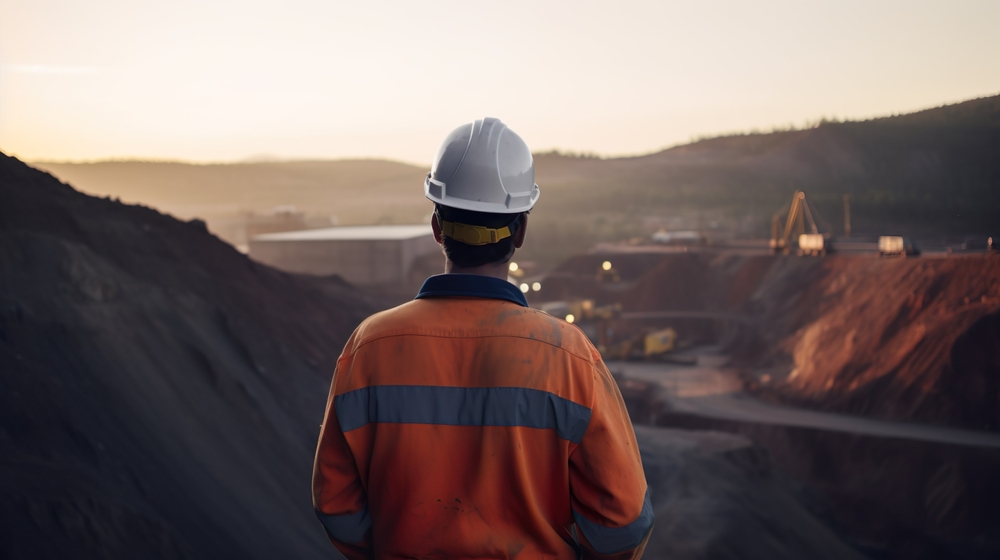
Australian shares fell on Thursday as Wall Street weakness, rising oil and persistent rate concerns weighed on most of the market. The S&P/ASX 200 declined 0.72 per cent to 8,702. The All Ordinaries lost 0.66 per cent to finish at 8,897. Mining stocks were hit particularly hard, while real estate also dragged on the index. …
Continue reading “ASX falls 0.7 per cent as miners and property stocks retreat”

Borrowers cannot control the Reserve Bank, but they can control how exposed their household budget is to its next decision. The RBA meets on 29 September with inflation concerns still elevated and major-bank economists increasingly bringing forward their rate-rise calls. Fixed mortgage rates have also been moving, reducing the value of waiting for perfect certainty. …
Continue reading “What mortgage holders should do before the next RBA decision”

 2 min
2 minAustralian shares fell on Thursday as Wall Street weakness, rising oil and persistent rate concerns weighed on most of the market.
The S&P/ASX 200 declined 0.72 per cent to 8,702. The All Ordinaries lost 0.66 per cent to finish at 8,897. Mining stocks were hit particularly hard, while real estate also dragged on the index.
Energy was the notable exception, gaining more than one per cent as Brent crude traded above US$103 a barrel. Oil had moved higher amid uncertainty surrounding potential US diesel-export restrictions and broader geopolitical supply risks. The move supported energy producers but renewed concern about inflation inputs across transport and the wider economy.
Gold shares were weak even as spot bullion remained historically elevated. The All Ordinaries Gold index fell about 2.25 per cent, showing that equity performance can diverge from the commodity because of valuation, currency, operating and company-specific factors.
Zip was a prominent loser, falling 11.38 per cent after the company reported short sales after the previous close. Nine Entertainment also weakened after UBS analysts warned of near-term revenue challenges associated with its advertising-supported subscription tier.
Premier Investments led larger winners despite caution about the retail environment. Breville, in which Premier owns a significant stake, also appeared among leading movers. In the broader ASX 300 screen, Myer gained 11.43 per cent and MAAS Group rose 7.93 per cent, while Lotus Resources fell 10.53 per cent. These percentage moves should be checked against company announcements and trading liquidity before attributing causes.
The Australian dollar was broadly flat at US70.38 cents. Spot gold was around US$4,280 an ounce, Brent crude approximately US$103.08 a barrel and iron ore near US$96.90 a tonne late in the session.
The rate outlook remains the central domestic catalyst. Labour-market weakness has not eliminated the possibility of an RBA increase next week, leaving banks, listed property and other rate-sensitive sectors exposed to changing expectations.
Market dashboard
S&P/ASX 200: 8,702, down 0.72 per cent.
All Ordinaries: 8,897, down 0.66 per cent.
Best sector: Energy, up more than one per cent.
Weakest areas: Real estate and materials were the major drags; confirm final sector percentages before publication.
Material winner: Premier Investments led the large-company gainers. Confirm its final closing move from the ASX before publication.
Material loser: Zip, down 11.38 per cent.
ASX 300 percentage leader: Myer, up 11.43 per cent.
ASX 300 percentage laggard: Zip, down 11.38 per cent.
AUD/USD: Approximately US$0.7038, broadly flat.

French luxury-goods giant’s results are a sign that shoppers weren’t splurging on its collections of high-end garments in the run-up to the holiday season.

Porsche has revealed a one-off 911 GT2 RS that brings the extraordinary silhouette of its 935/78 “Moby Dick” racing car onto the road. Created by Porsche Sonderwunsch with Manthey, the commission began with a near-new GT2 RS. The owner requested greater performance, a Slantnose profile and a rear wing influenced by the limited 911 GT3 …
Continue reading “Porsche Builds a Road-Going “Moby Dick” From a 911 GT2 RS”