





The Best Investment to Make in 2023 Is in Yourself
From learning new skills to cultivating interests and relationships, investments of time and money now can pay off in the years ahead

 3 min
3 min
Want your stock to rise in 2023?
The same principles investors use to build wealth can be applied to enriching yourself in other ways. Just as we buy stocks and bonds to generate financial growth, we can build a portfolio of how we spend our time and money now that pays off in the months and years ahead.
Investments in ourselves, or what economists call our human capital, can be a more productive way to frame efforts for bettering our lives. Diane Ring, interim dean and professor of law at Boston College, has previously researched new developments in human capital investments and the sharing economy. She points to three major categories of growth that can be nurtured by investing in ourselves: professional, personal and health.
“Those buckets are all connected,” she said. “Think of it as wanting different kinds of returns for yourself. They’re all slightly different, but still moving toward stability, with the aim to retire in a way that seems to make sense for ourselves and our plans.”
You can use the same ideas that guide your personal finance goals to invest in your career, well-being and happiness. By focusing on these three buckets, you can make strides on your 2023 goals.
Set a long time horizon
Investing in your long-term success goes beyond one-and-done actions like joining a gym or stocking your closet with professional attire. These goals for the future require management and attention to develop rewards later on—just like managing your stock portfolio.
“Investment means, at the core, planting a seed and then getting returns down the road,” said Megan McCoy, assistant professor of personal financial planning at Kansas State University. “It has to be a path.”
To do this, Prof. McCoy said it is best to envision your investment as a long road with multiple steppingstones. Each step helps you visualise yourself one step closer to the end goal. These same steps also provide opportunities to check in and ask yourself the big questions about how your investment is performing.
“Everyone is so over scheduled, and I feel like everybody is just surviving rather than saying, ‘What is giving me intellectual stimulation? What is my purpose? What is my passion? What am I doing any of this for?’” Prof. McCoy said. “Make time to develop these internal maps.”
Don’t forget to diversify
Just as you wouldn’t want to over invest in a single stock, Prof. Ring said, neither would you want to put too much energy toward a single goal at the expense of your other interests.
Divide your time and attention equally among the career and financial investment, personal investment and investment in health. Over investing in one bucket may weaken the other two, just as when putting all too much money into a single company or industry can hurt your overall stock portfolio.
In self-investment, we have to safeguard ourselves against burning out too soon, Prof. Ring said.
“If we’re pushing so hard on the financial side, maybe picking up an extra job on the weekends, ask, ‘Does this put a strain on the personal and health side of things? That could impact your ability to perform at work,’” she said.
Pay yourself dividends
Research shows people are much more successful at accomplishing a goal when they build in rewards and other incentives along the way, said Katy Milkman, professor of operations, information and decisions at the University of Pennsylvania.
In a 2021 study, Prof. Milkman and her colleague Angela Duckworth, a professor who co-directs the Behavior Change for Good Initiative at the University of Pennsylvania with Prof. Milkman, looked at how incentive programs affected gym attendance. In one finding, gym goers who missed a workout received an extra incentive—bonus points they could convert to cash—if they returned after a missed workout. Compared with a placebo control group, this incentive program increased gym visits by 27%.
Rewards help turn a long-term goal—such as starting a new hobby to enrich your retirement years or more carefully considering how you use your working hours—into a series of short-term pursuits.
Prof. Milkman calls this strategy “temptation bundling.” Combining certain tasks with a reward can help them feel less like chores, she said.
“If you are bundling it with something that’s super fun for you, like saying ‘I only get to open my favourite bubbly wine when I’m making a fresh meal for my family’ or ‘I am only allowed to binge watch my favourite TV show when I’m at the gym,’ you see more success.”
This strategy also allows us to reframe these aspirations as fun things, rather than financial chores or burdensome tasks.
Bringing friends, joining a group or finding a way to make a long-term commitment more social helps more people see their goal through to completion, Prof. Milkman said. Even after you’ve accomplished several steps, you may find that sharing your progress with others and playing the role of “advice giver” leads to progress on your own goals.
“When we coach other people on something we’re also hoping to achieve, we also see better outcomes in ourselves,” she said. “So advice giving helps the advice giver.
 Copyright 2020, Dow Jones & Company, Inc. All Rights Reserved Worldwide. LEARN MORE





From making unpopular decisions to learning when to listen, leaders from five businesses reveal what nobody prepared them for — and how running a company has challenged their expectations.

Technology and semiconductor shares fell sharply as investors questioned the debt financing the AI infrastructure boom and confronted higher rates and Chinese competition.

Technology and semiconductor shares fell sharply as investors questioned the debt financing the AI infrastructure boom and confronted higher rates and Chinese competition.
4 minA sharp technology sell-off has exposed a new anxiety on global markets: whether the enormous borrowing behind the artificial-intelligence infrastructure boom can generate sufficient returns as interest rates rise and Chinese competition intensifies.
The artificial-intelligence investment boom has powered technology shares, semiconductor manufacturers and data-centre operators to extraordinary heights. Last week, investors were given a reminder that much of this expansion is being built with borrowed money.
The technology-heavy Nasdaq Composite fell 4.5 per cent over the week ended October 16, its weakest performance since late June. Semiconductor shares suffered an even deeper correction, with the Philadelphia Semiconductor Index losing about 11.4 per cent.
The selling spread quickly through global markets. Micron Technology fell 14.6 per cent over the week, while South Korea’s Samsung Electronics and SK Hynix dropped approximately 18 per cent and 24 per cent respectively.
This was more than a routine bout of profit-taking. Investors were reassessing three interconnected risks: higher interest rates, the rapidly expanding debt burden attached to AI infrastructure and the prospect of stronger competition from Chinese memory-chip manufacturers.
The debt behind the AI build-out
Artificial intelligence requires a physical infrastructure network of enormous scale. Data centres must be built, advanced processors purchased, power supplies secured and cooling systems installed before customers begin generating meaningful revenue from them.
Technology companies are increasingly supplementing their own cash with corporate bonds, syndicated loans, equipment leases, private credit and project-level financing.
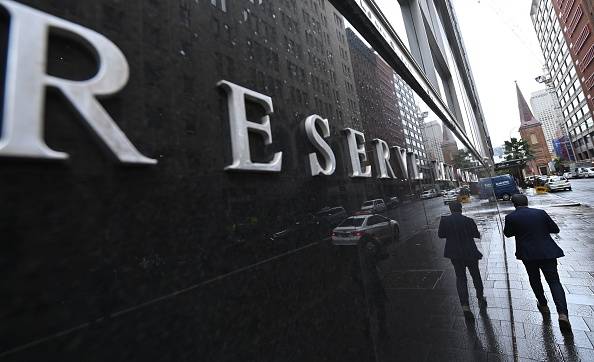
JPMorgan describes the emerging funding model as a combination of conventional corporate borrowing and project finance tied to individual data-centre assets. In Australia, the Reserve Bank estimates that syndicated loans accounted for approximately three-quarters of data-centre financing during 2025 and 2026 to date.
The numbers are becoming large enough to affect broader credit markets. The Federal Reserve Bank of Dallas has cited Wall Street estimates suggesting AI-related investment-grade bond issuance could approach US$300 billion in 2026 alone.
That borrowing is not automatically problematic. Debt can be an efficient way to finance long-lived infrastructure when future revenue is sufficiently predictable. The concern is that AI technology, customer demand and computing economics are changing much faster than the repayment schedules attached to the assets.
A data centre financed today may carry debt for years. Investors must therefore make assumptions about future utilisation rates, electricity prices, chip performance, customer concentration and the amount businesses will ultimately pay for AI computing.
When interest rates rise, those assumptions become less forgiving.
Inflation changes the calculation
September’s US inflation data intensified the pressure. Consumer prices increased 3.7 per cent over the year, ahead of market expectations and up from 3.4 per cent in August.
The hotter reading reduced confidence that interest rates would fall quickly and pushed bond yields higher. That matters particularly for companies whose valuations depend on profits expected well into the future, as well as highly leveraged infrastructure operators that may need to refinance.
CoreWeave has emerged as a closely watched test case. The specialist cloud-computing company has accumulated substantial debt and lease obligations to build AI capacity, while relying on a concentrated group of large technology customers.
Its shares fell sharply during the sell-off, while the cost of insuring its debt against default climbed. CoreWeave has argued that its contracted backlog more than covers its obligations and that financial markets do not always understand its business model. Nevertheless, its securities have become a proxy for investor confidence in debt-funded AI infrastructure.
Oracle, another major investor in AI computing capacity, fell 8.8 per cent in Friday trading, while CoreWeave dropped 15.5 per cent.
The question is shifting from how much AI infrastructure can be built to how profitably it can be operated.
China adds another source of pressure
Interest rates were not the only catalyst. Reports of advances by Chinese memory-chip producer ChangXin Memory Technologies raised concerns that lower-cost Chinese products could increase competition across the global semiconductor industry.
Memory chips are essential to AI systems, but the industry is historically cyclical. Periods of tight supply and high pricing can encourage rapid investment, eventually producing oversupply and falling margins.
The prospect of a well-funded Chinese competitor expanding its technological capabilities unsettled investors in Samsung, SK Hynix and Micron. It also demonstrated that AI-related demand does not insulate chipmakers from conventional competitive pressures.
That combination—slower rate cuts, more expensive financing and potentially cheaper supply—challenged the assumption that every company exposed to AI would enjoy continually expanding margins.
A reset rather than the end of the boom
The sell-off does not establish that the AI boom is ending. Demand for computing power remains strong, the largest technology companies continue to generate formidable cash flows and many infrastructure projects are backed by long-term customer contracts.
What has changed is the market’s willingness to overlook the price and financing structure of that growth.
The most resilient companies are likely to be those able to fund investment from operating cash flow, secure long-duration customers and demonstrate that new capacity will earn returns comfortably above its financing costs.
More speculative operators may face greater scrutiny, particularly where debt is expensive, customers are concentrated or expected revenue depends on demand that has not yet materialised.
For Australian investors, the lesson extends beyond US technology shares. Local data-centre operators, infrastructure funds, electricity suppliers and property groups are increasingly exposed to the same investment cycle.
Artificial intelligence may remain one of the defining growth themes of the decade. But last week’s correction showed that enthusiasm for the technology does not eliminate financial discipline.
The next stage of the AI boom will be judged not only by computing power, model performance or demand for chips, but by something more traditional: whether the assets being financed can generate enough cash to repay the money borrowed to build them.
Fact box
Nasdaq Composite: Down 4.5 per cent for the week ended October 16, 2026
Philadelphia Semiconductor Index: Down approximately 11.4 per cent
Micron Technology: Down approximately 14.6 per cent
Samsung Electronics: Down approximately 18 per cent
SK Hynix: Down approximately 24 per cent
US September inflation: 3.7 per cent annually
Estimated 2026 AI-related investment-grade issuance: Approximately US$300 billion

Australia’s market is on the move again, and not always where you’d expect. We’ve found the surprise suburbs where prices are climbing fastest.

For Central Element, the start of work at Pearl represents another step in the company’s growing eastern suburbs pipeline.


