Stella McCartney to Ralph Lauren Have Ventured Into Vegan Leather—Meet Their Supplier

 3 min
3 min
As plant-based materials increasingly replace leather in luxury goods, NFW is one of the companies working behind the scenes to bring vegan materials to fashion brands like Ralph Lauren, Patagonia, and Stella McCartney
This self-proclaimed “material innovations company,” whose name stands for Natural Fiber Welding, is a leader in the wave of vegan materials. NFW’s founder and CEO is Luke Haverhals, who has a PhD in chemistry from the University of Iowa, but always had an interest in economics.
“I asked myself, ‘What is a reasonable way to replace the entire plastics industry, economically speaking?’” Haverhals says. “I was on a quest to make sure humans were less dependent on carbon high toxin materials, I thought what I could do to solve this problem?”
The answer was in plants. Haverhals founded Peoria, Ill.-based NFW in 2015, envisioning a plastic-free future.
“People think plastics are cheap, but they’re among the most expensive and toxic things that humans ever tried to create,” he says.
THE ITEM
NSW provides fabrics for many brands, including Stella McCartney’s MIRUM-made handbags, which are 100% recyclable and circular—meaning at the end of their life, the material can be reused to make something else.
The name of this fabric comes from the Latin word for “miracle,” Haverhals says. “We don’t call it ‘leather,’ but it’s a leather-like material. It allows us to work with fashion designers and brands and we aim to start well, stay clean, and end well with regenerative materials. We don’t add bioplastics or polyurethane.”
The collection of NFW’s Mirum-fabric includes the Falabella MIRUM Tiny Tote Bag and the Frayme bag. They were launched at the Fall/Winter 2023 runway show at Paris Fashion Week in spring of 2023, and are available for pre-order, shipping out this month. They’re the world’s first luxury handbags crafted from this new vegan, plastic-free alternative.
McCartney aims to source 100% of her products from recyclables by 2025. “McCartney has been instrumental to NFW, she is a guiding light to the industry,” Haverhals says. “If we can get more luxury brands onboard, it will be better for others to get clean materials into their products, as well.”
The collection is a “call-to-action to take a stand for our planet,” McCartney said in a statement. “I have long dreamed of the day when we would see a plant-based alternative to leather that does not kill a single creature and can be easily given back to Mother Earth, without creating waste.”
(NFW is also funded by the Collab SOS Fund, a US$200 million fund which invests in companies that power a more sustainable economy. McCartney is one of its co-founders).
THE PRICE
As an example of the luxury goods NFW provides materials for, the Falabella Mirium Tiny Tote Bag sells for US$1,170.
WHAT’S THE GOOD?
NFW uses natural ingredients like vegetable oil and citric acid. “They can easily be turned into natural polymers when they break down,” Haverhals says. “We use natural rubber, cotton, we source regenerative cotton, we use cork, leftover from wine bottles, we use rice hulls, which are thrown out, a lot of things that are overlooked in the supply chain.”
WHAT’S NEXT
The company is gearing up for a launch with Ralph Lauren. It recently opened a factory in Peoria, as part of their expansion, and plans to expand to Europe, Southeast Asia, Sri Lanka, and China. “It’s important for us to be in China and we are proud to be partnering with them, helping take care of people and animals on the planet we share,” Haverhals says.
More than 1,500 brands reach out to NFW. “Everyone wants to better their brand,” he says. “When you think of shoes, bags and apparel, we are cleaning up the supply chain,” Haverhals says. “That’s our mission—to enable the world in a transparent, traceable way—where we don’t have any polyurethane goblins hiding in the closet.”
 Copyright 2020, Dow Jones & Company, Inc. All Rights Reserved Worldwide. LEARN MORE




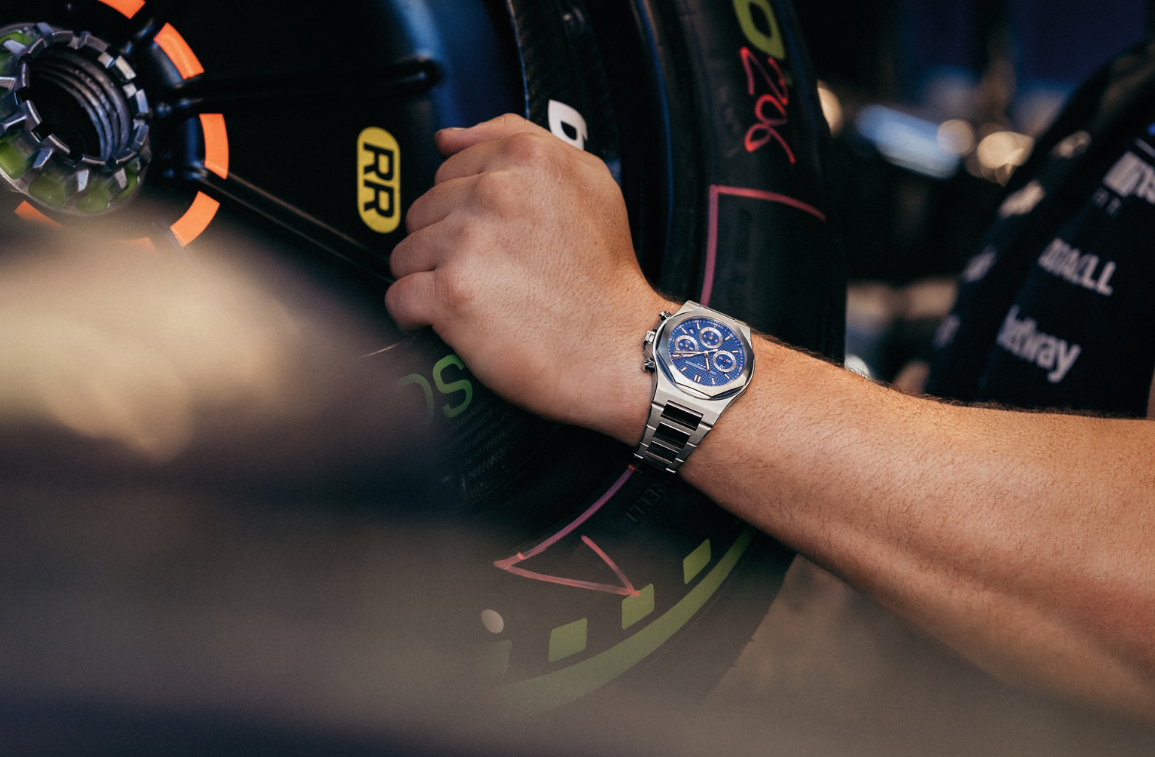
The Swiss watchmaker’s first collaboration with Atlassian Williams F1 Team produces two sporting Laureato models inspired by the team’s 2026 racing car.

Victorian auction buyers will soon receive a piece of information that has traditionally been withheld until bidding reaches it: the vendor’s reserve price. Under new property-sale and underquoting laws, agents must publish the agreed reserve at least seven days before an auction or fixed-date sale. Most changes begin on 1 October 2026 and apply to …
Continue reading “Victoria’s New Auction Rules Will Force Reserve Prices Into the Open”
The Swiss watchmaker’s first collaboration with Atlassian Williams F1 Team produces two sporting Laureato models inspired by the team’s 2026 racing car.
3 minGirard-Perregaux has revealed the first watches created through its partnership with Atlassian Williams F1 Team, bringing the British racing team’s colours to one of Switzerland’s most recognisable integrated-bracelet designs.
The collaboration comprises two 42mm steel watches: the time-and-date Laureato Williams Edition and the more technical Laureato Chronograph Williams Edition.
Both retain the familiar architecture of the Laureato, including its octagonal bezel, integrated bracelet and mix of polished and satin-finished surfaces. The influence of Williams is comparatively restrained, appearing through colour, discreet branding and details inspired by the team’s current Formula 1 car.
It is a welcome departure from the oversized logos and literal automotive references that can characterise motorsport watches.
The Williams FW48 inspires the dial
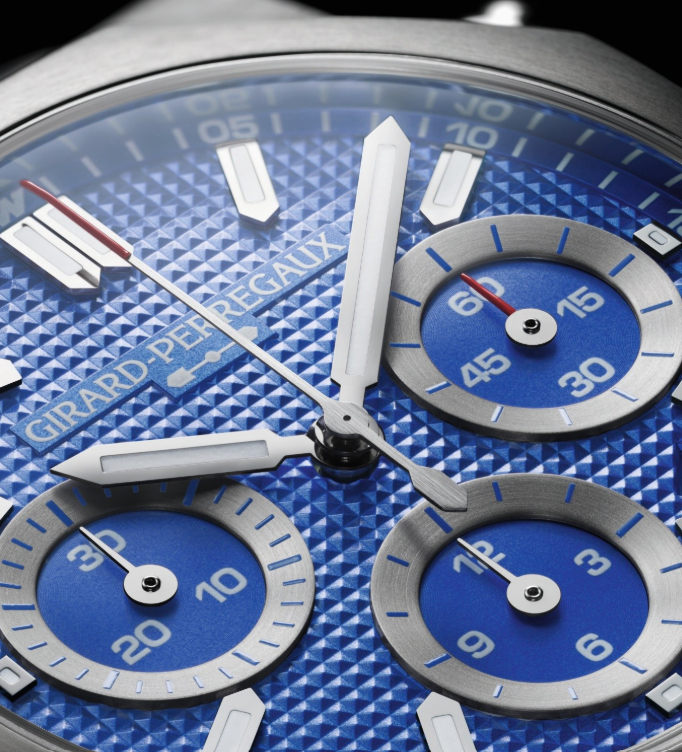
The centrepiece of both models is a blue Clous de Paris dial informed by the livery of the Williams FW48, the car being campaigned by the team during the 2026 Formula 1 season.
A small Williams “W” replaces the conventional marker at 12 o’clock, while the team emblem appears on the sapphire crystal caseback. Red accents echo the keyline used on the FW48 without overwhelming the established Laureato design.
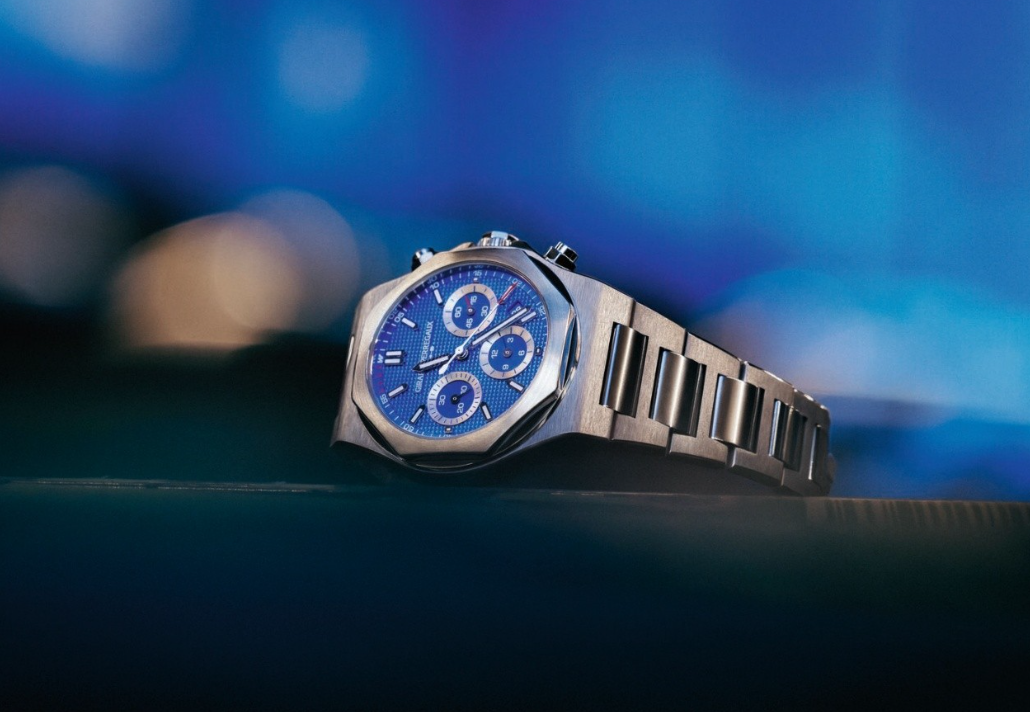
The three-hand model offers the quieter interpretation. Baton-shaped, rhodium-plated hands and hour markers are filled with white-emitting luminescent material, while a date window sits at three o’clock.
The chronograph creates a more obvious connection with motorsport. Three subdials are framed by rhodium-plated rings, with red appearing on the small-seconds hand and the tip of the central chronograph seconds hand.
Both watches measure 42mm across and are water resistant to 100 metres. The standard Laureato has a case thickness of 10.68mm, while the additional mechanics of the chronograph increase its profile to 12.16mm.
Two in-house automatic movements
The Laureato Williams Edition is powered by Girard-Perregaux’s self-winding GP01800 calibre. The movement provides hours, minutes, central seconds and the date, with a minimum power reserve of 54 hours.
The Laureato Chronograph Williams Edition uses the automatic GP03300 calibre, which combines its chronograph functions with a date display and offers a minimum power reserve of 46 hours.
Both movements operate at 28,800 vibrations per hour and can be viewed through their sapphire crystal casebacks.
Their decoration provides a more traditional counterpoint to the Formula 1 association. Finishing techniques include Côtes de Genève, circular graining, bevelling, mirror polishing, satin finishing, engraving and snailing.
The result is less about reproducing the appearance of a racing car than identifying the common ground between two mechanical disciplines: precision, incremental development and the considerable work hidden beneath the finished product.
Parallel histories
The timing of the partnership draws attention to the remarkably similar ages of its two protagonists.
Girard-Perregaux introduced the original Laureato in 1975, establishing an integrated-bracelet sports watch with a distinctive octagonal bezel. Williams entered Formula 1 two years later in 1977.
Both have evolved continuously across the five decades since. The Laureato has moved through different sizes, materials and complications, while retaining its central design language. Williams, meanwhile, has remained one of Formula 1’s most historically significant teams.
That gives the collaboration greater credibility than a simple licensing exercise. Girard-Perregaux and Williams are not being connected solely through the familiar language of speed. Their stronger link is a shared dependence on engineering, testing and the accumulation of specialist knowledge.
The watches are described as the beginning of a longer collaboration, suggesting further Williams editions may follow.
Girard-Perregaux’s international website lists the Laureato Williams Edition at US$16,200 and the Laureato Chronograph Williams Edition at US$20,900. Australian pricing has not been announced.
Specifications
Girard-Perregaux Laureato Williams Edition 42mm
Reference: 81010-11-3680-1GM
Case: Steel
Diameter: 42mm
Thickness: 10.68mm
Crystal: Anti-reflective sapphire crystal
Dial: Blue Clous de Paris pattern
Movement: Automatic GP01800
Functions: Hours, minutes, central seconds and date
Power reserve: Minimum 54 hours
Water resistance: 100 metres
Bracelet: Integrated steel bracelet with triple-folding clasp
International price: US$16,200
Girard-Perregaux Laureato Chronograph Williams Edition 42mm
Reference: 81020-11-3681-1GM
Case: 904L steel
Diameter: 42mm
Thickness: 12.16mm
Crystal: Anti-reflective sapphire crystal
Dial: Blue Clous de Paris pattern with three chronograph counters
Movement: Automatic GP03300
Functions: Chronograph, hours, minutes, small seconds and date
Power reserve: Minimum 46 hours
Water resistance: 100 metres
Bracelet: Integrated 904L steel bracelet with triple-folding clasp
International price: US$20,900
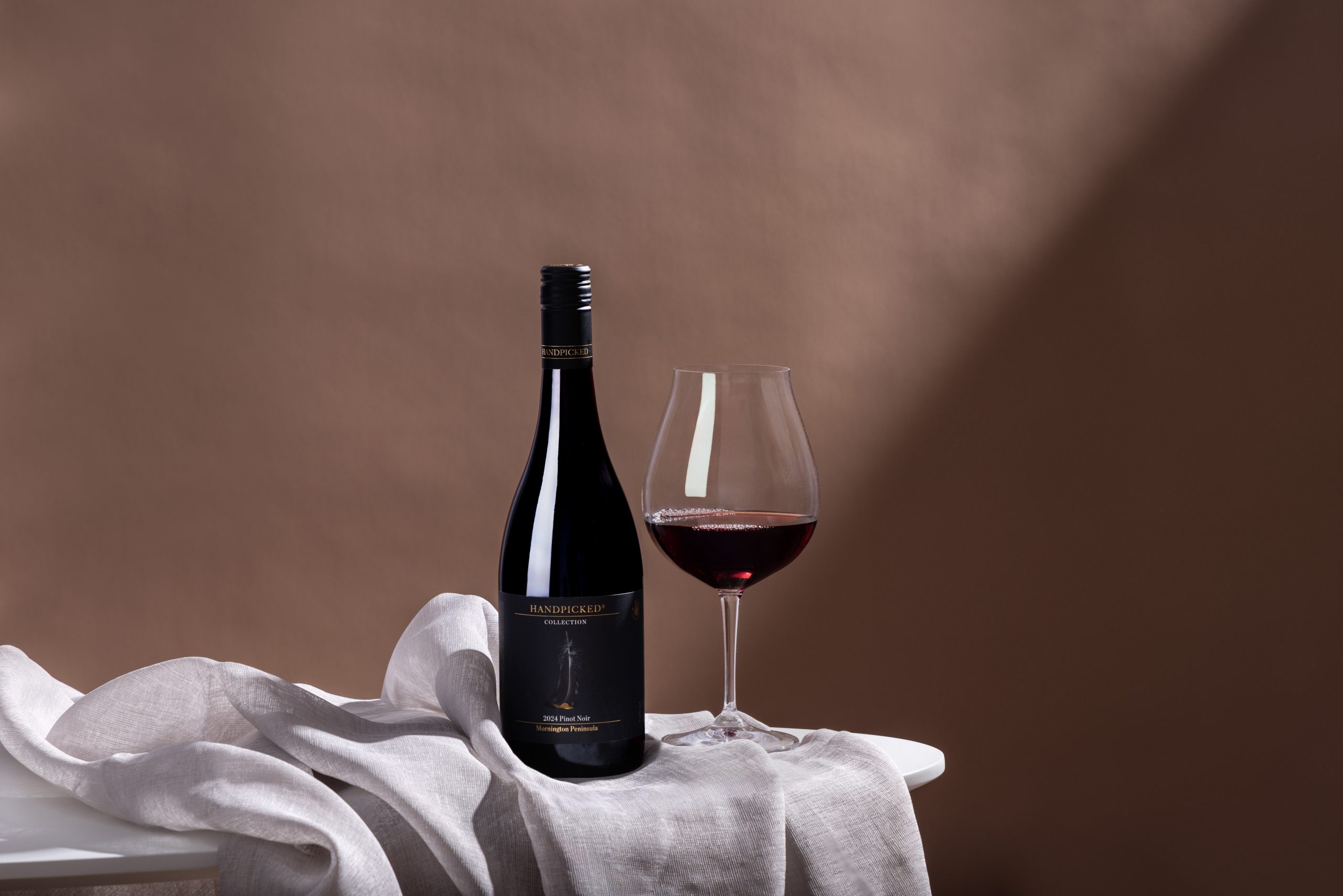
As the season turns, Handpicked Wines’ latest Pinot Noir and Chardonnay releases reveal how subtle shifts in place shape what ends up in the glass.
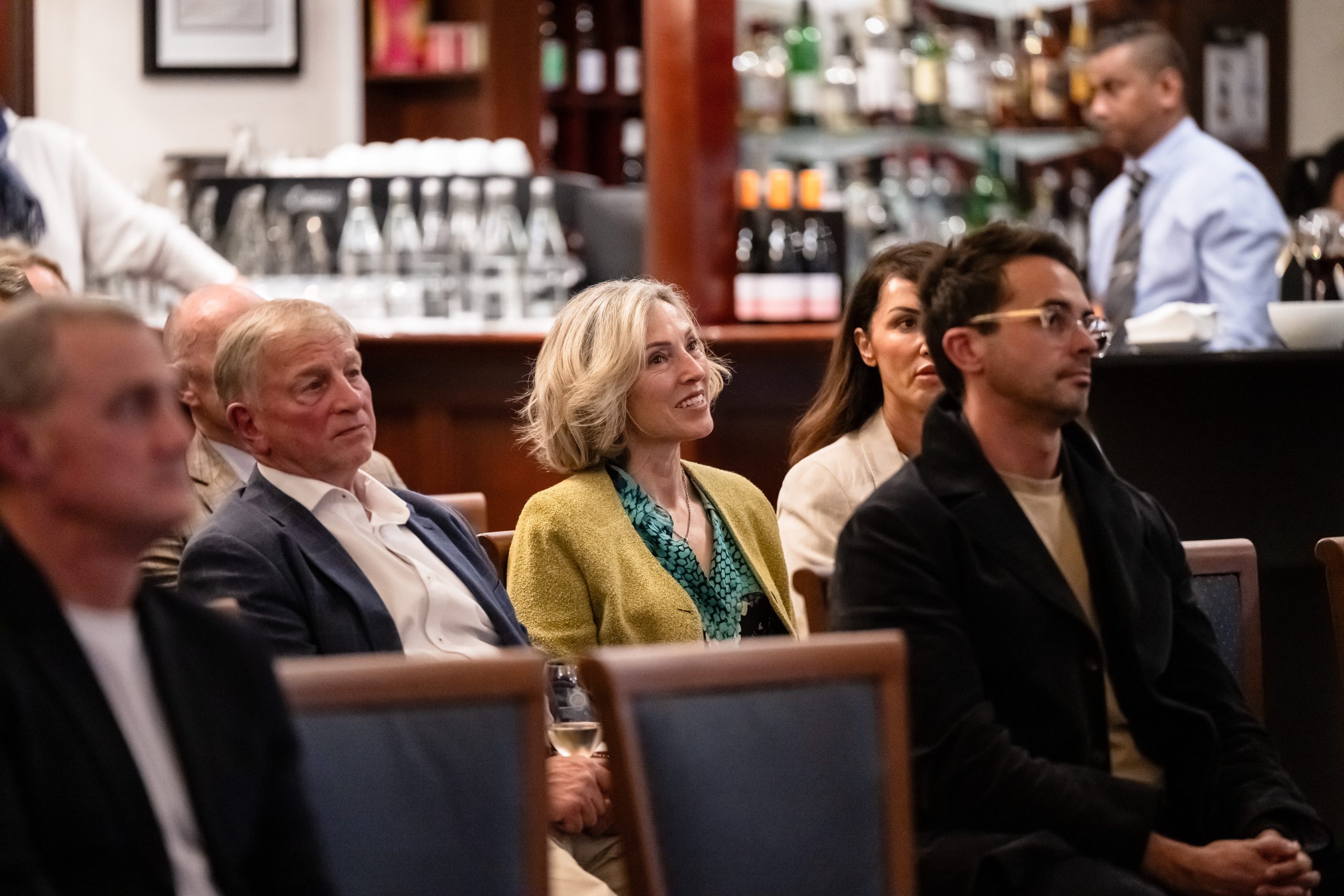
International AI strategist Justin Kabbani will headline the Kanebridge Property Summit in Sydney on June 18, with tickets selling fast.