





Pininfarina Reveals Its Radical ‘Luxury Utility Vehicle’ Complete With Glass Dome and 1950s Inspiration

 3 min
3 min
There are many advantages to unveiling high-end cars this week at Pebble Beach this week, where the average attendee will find the vehicles well within their means. And so it is with the venerable Italian coachbuilder-turned-automaker Pininfarina, founded by Battista “Pinin” Farina in 1930.
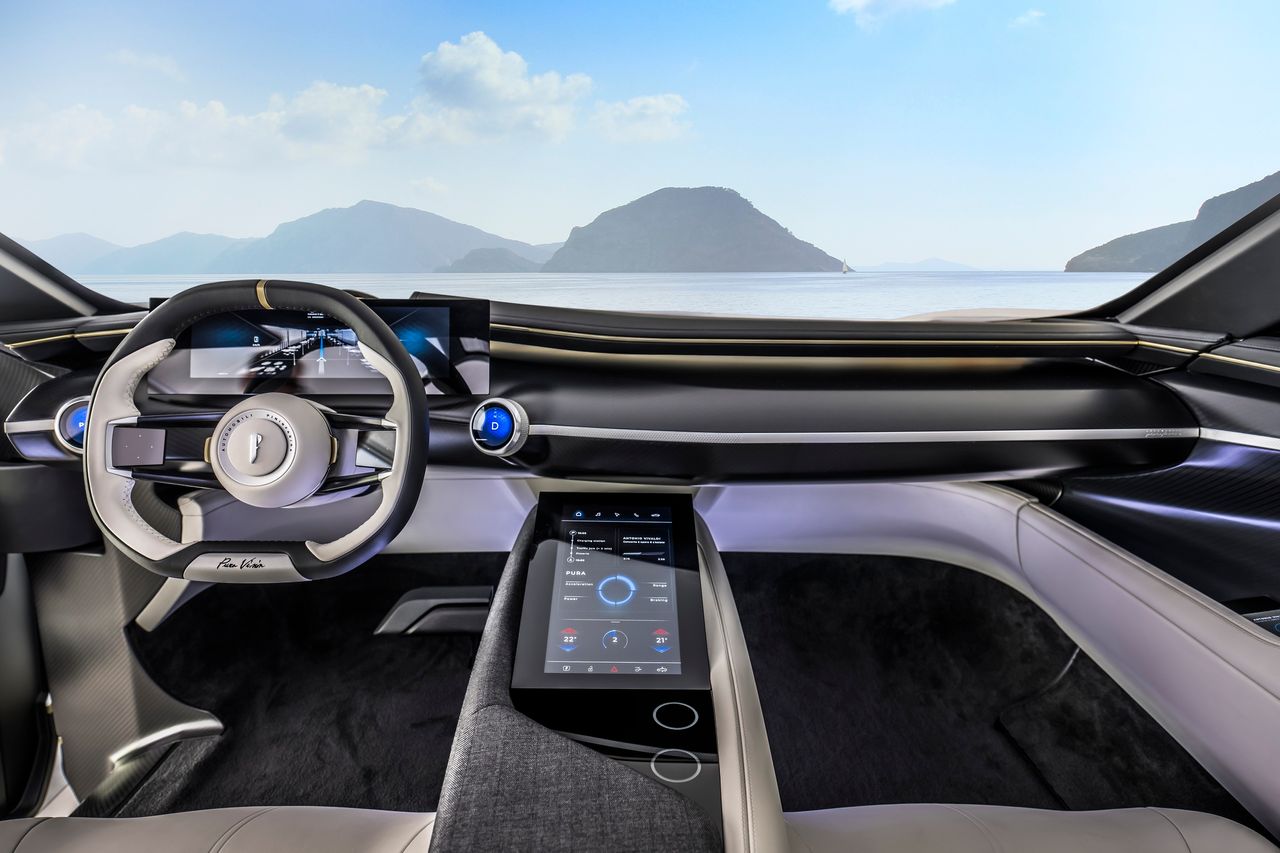
The PURA Vision design concept to be shown at Pebble was developed in-house at Pininfarina. Most onlookers would call it an SUV, or at least SUV-adjacent, but Pininfarina calls it a Luxury Utility Vehicle (e-LUV). The first design element to capture the eye is the glass dome that sees the door glass and windshield flowing uninterrupted into the roof. The side glass opens up in gullwing fashion but the doors stay put and open in “suicide” fashion, with the rear doors rear hinged to allow easy access to the back seat.
The PURA Vision looks like no other car, or at least no recent one. It sits high on huge 23-inch wheels, with slab sides and a low and aerodynamic “pillbox” upper body that recalls some chopped 1950s customs. And a 1950s design was an inspiration, the Lancia Florida I and II concepts of 1955 and 1957 respectively. The Florida I sedan also had suicide doors and no vertical roof support structure between the doors, known as a “B” pillar. Another inspiration, the gorgeous Pininfarina-designed 1953 Alfa Romeo 6C 3000 Superflow concept, had a similar glass dome roof and a futuristic look. There are very slim horizontal LED lights at the back that extend into the curved rear hatch. The interior is relatively simple, with controls on a console-mounted tablet.
Dan Connell, the chief brand officer for Pininfarina, describes the car as “beautiful, but in an unexpected form.”
Currently, Pininfarina offers the Batista, a US$2.2 million electric supercar based on the ultra-fast Rimac Nevera, and in the process of developing the PURA Vision, the company “kept the Battista owners and other admirers of the brand close,” Connell says. “We had a private showing for them, and some were skeptical—but their minds were blown by what they saw.”
The company’s second production vehicle, code-named B95, is the first Pininfarina to reflect the PURA Vision design philosophy, Connell says. Details will be revealed during B95’s formal debut at the Quail: A Motorsports on Saturday. It’s sure to be a very exclusive car with a big price tag.
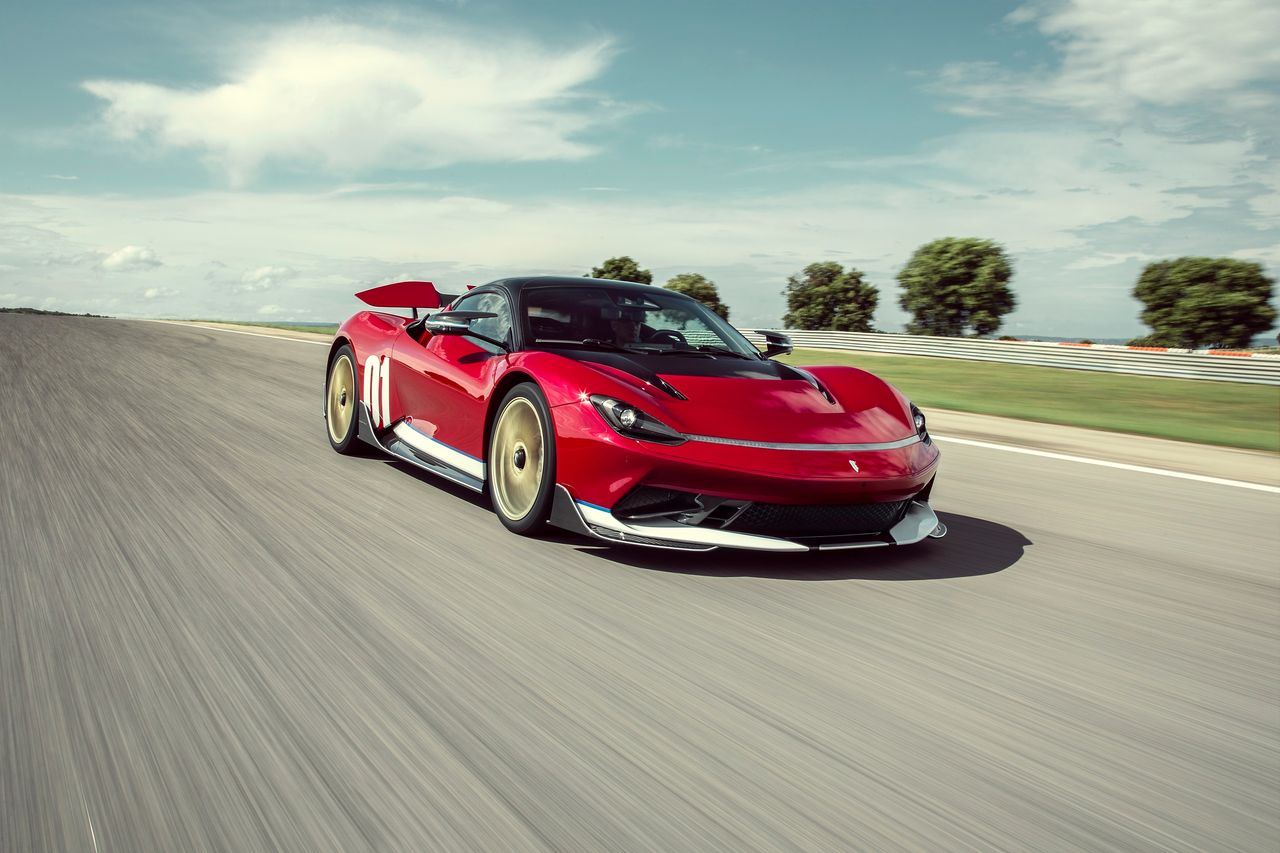
Pininfarina will also have the Battista Edizione Nino Farina on its stand at Pebble. First shown at the Goodwood Festival of Speed in England last July, it’s a special edition of the Battista presented as a tribute to the first Formula One World Champion, Nino Farina, who was Battista Farina’s nephew. Setting it apart are unique paint colors, special gold wheels, and body side graphics. An aluminium door plate celebrates the younger Farina’s racing wins. Only five of the high-end electric cars will be built. It’s the second limited-edition Battista, after the Anniversario model.
Pebble Beach is always a parade of new model reveals. The “House of Maserati” is celebrating the 75th anniversary of the GranTurismo (GT) model. Both the electric Folgore GT and the Trofeo versions, powered by a three-litre twin-turbo Nettuno V6, are to be sold in the U.S. Two one-of-a-kind GTs, the Luce and Prisma, will be on display at the Quail. Also seen will be the MC20-based Maserati MCXtrema, with 730 horsepower and a build of just 62 cars. Lotus will be giving rides in the 2024 Emira sports car, the final gas-powered Lotus with both four-cylinder and V6 power. Prices start at US$77,100. Rolls-Royce will show a one-of-a-kind car created for a customer.
Other cars to be shown at Pebble include: the Acura ZDX electric crossover, a “world-first new model” from Aston Martin, the Bugatti Chiron Super Sport Golden Era, the Hennessey Venom Revolution Roadster (with a 17-pound removable carbon fiber hardtop), the world premiere of the new Mercedes-AMG GT, the second Lamborghini electric concept, and the Infiniti QX Monograph Concept.
 Copyright 2020, Dow Jones & Company, Inc. All Rights Reserved Worldwide. LEARN MORE





Borrowers cannot control the Reserve Bank, but they can control how exposed their household budget is to its next decision. The RBA meets on 29 September with inflation concerns still elevated and major-bank economists increasingly bringing forward their rate-rise calls. Fixed mortgage rates have also been moving, reducing the value of waiting for perfect certainty. …
Continue reading “What mortgage holders should do before the next RBA decision”

Australian shares finished higher on Tuesday, September 22, as a technology rally and lower oil prices outweighed weakness in energy companies and continued anxiety about domestic interest rates. The S&P/ASX 200 closed 25.9 points, or 0.30 per cent, higher at 8,757.8. The All Ordinaries gained 0.36 per cent to 8,951.0, while the All Technology index …
Continue reading “ASX Wrap: Technology lifts the ASX as falling oil relieves inflation pressure”
 2 min
2 minAustralian shares finished higher on Tuesday, September 22, as a technology rally and lower oil prices outweighed weakness in energy companies and continued anxiety about domestic interest rates.
The S&P/ASX 200 closed 25.9 points, or 0.30 per cent, higher at 8,757.8. The All Ordinaries gained 0.36 per cent to 8,951.0, while the All Technology index rose 1.71 per cent.
Information technology was the strongest major sector, up 2.67 per cent. Megaport gained 4.3 per cent, NextDC rose 3.8 per cent and Life360 added 2.9 per cent, according to the ABC’s closing market report. The move followed a record Nasdaq close and reflected renewed demand for growth assets as oil prices eased.
Consumer discretionary gained 1.29 per cent, while real estate and healthcare each rose 0.76 per cent. The simultaneous strength of technology, discretionary shares and listed property was consistent with a modest easing in market inflation anxiety, although it did not erase expectations of a possible RBA increase at the 29 September meeting.
Energy was the clear laggard, down 1.16 per cent, after Brent crude briefly fell below US$100 a barrel overnight. Origin Energy dropped about 4 per cent, Woodside lost 2.4 per cent and AGL declined 2.3 per cent. Utilities were the weakest sector overall, down 2.03 per cent.
Among larger and liquid movers, Telix Pharmaceuticals rebounded 6.85 per cent after the previous session’s sharp acquisition-related decline. IDP Education jumped 20.67 per cent and was the largest percentage gainer in the ASX 300 screen, while Catalyst Metals fell 14.37 per cent. Those moves should be checked against company announcements before publication; percentage rankings alone do not establish cause or index impact.
Mining performance was mixed. Sunrise Energy Metals rose 12.71 per cent, FireFly Metals added 5.7 per cent and Bellevue Gold gained 4.8 per cent, while Resolute Mining lost 4.44 per cent.
The Australian dollar traded near US71.18 cents late in the session. Oil remained volatile as markets assessed potential US–Iran talks, making energy prices a continuing input into inflation expectations, bond yields and the RBA outlook.
For Wednesday, investors will watch oil, offshore technology leads, Australian bond yields and any new evidence that changes the probability of a September rate rise.
Market dashboard
S&P/ASX 200: 8,757.8, up 25.9 points or 0.30 per cent.
All Ordinaries: 8,951.0, up 0.36 per cent.
Best sector: Information Technology, up 2.67 per cent.
Weakest sector: Utilities, down 2.03 per cent. Energy fell 1.16 per cent.
Material winner: Telix Pharmaceuticals, up 6.85 per cent. Megaport rose 4.3 per cent and NextDC rose 3.8 per cent.
Material loser: Origin Energy, down about 4 per cent. Woodside fell 2.4 per cent.
ASX 300 percentage leader: IDP Education, up 20.67 per cent. Confirm announcement context before publication.
ASX 300 percentage laggard: Catalyst Metals, down 14.37 per cent. Confirm announcement context before publication.
AUD/USD: Approximately US$0.7118 late in the session.
Next catalyst: RBA policy decision on 29 September, oil-price volatility and offshore technology trading.
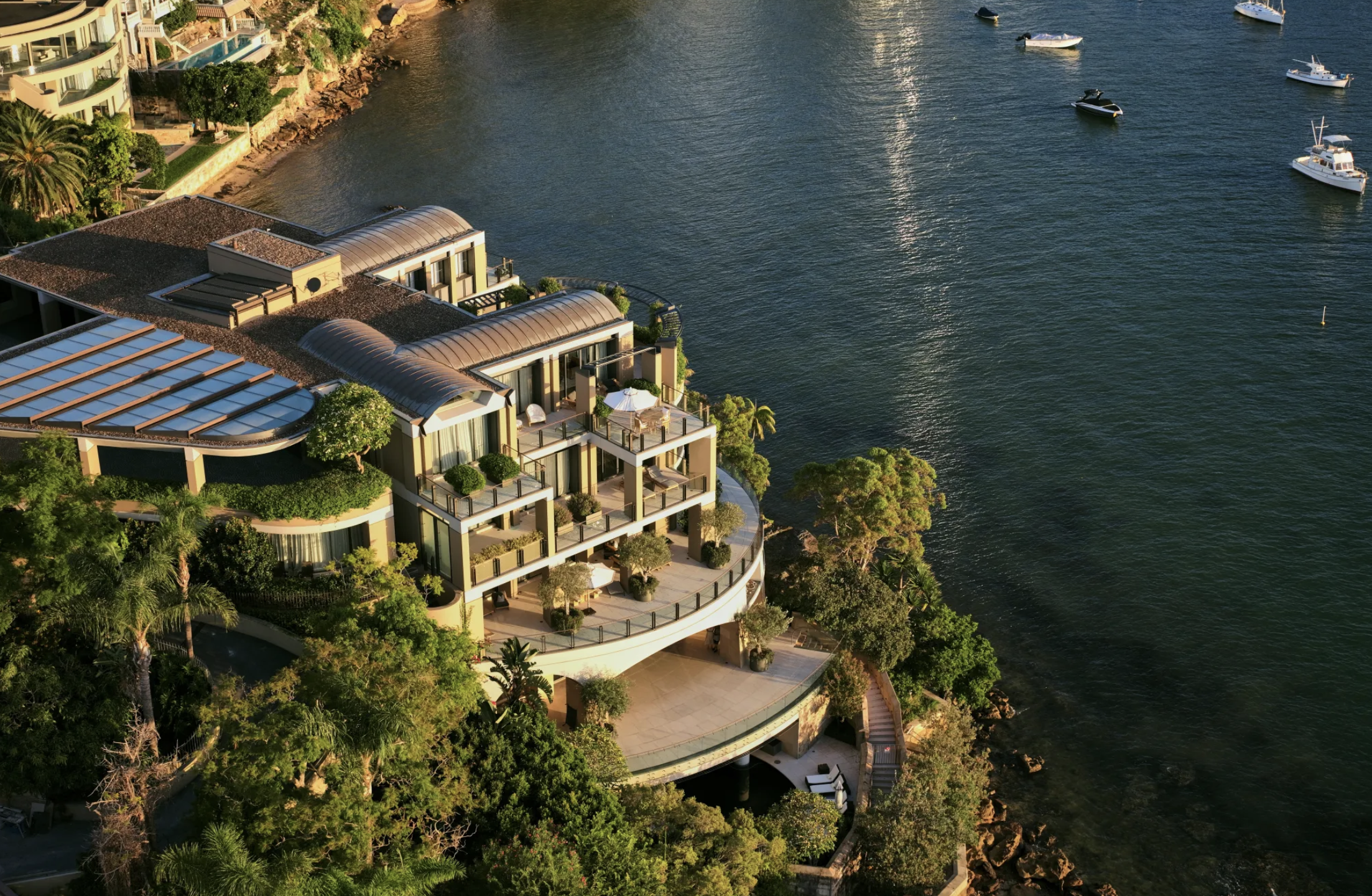
Records keep falling in 2025 as harbourfront, beachfront and blue-chip estates crowd the top of the market.

High-end homeowners are choosing to upgrade rather than relocate, investing in bespoke design, premium finishes and long-term lifestyle value.


