Three Ways to Travel Around the World
There’s the fast way, the posh way and the slow way. Here’s what to know about each.

 4 min
4 min
Five countries and four continents in under two weeks? Or how about seeing the Taj Mahal, the Pyramids and Machu Picchu in one mad 25-day marathon? As travel rebounds in 2023, that staple of bucket lists and reality TV shows—the journey around the world—is back in vogue.
“Since international borders reopened, we’ve seen demand coming back in a big way,” says Christine Drpich, manager of e-commerce at the Star Alliance airline network founded by United and Lufthansa.
In the past six months, she says, the group has noticed a “significant surge” in searches for the round-the-world itineraries it offers on its site. Oneworld, another aviation fraternity anchored by American and British Airways, recently launched an AI-driven planning tool that helps guide fliers through all the possible routings for circling the globe, with suggested itineraries like a Jules Verne-inspired circumnavigation that can be done in far less time than the 80 days of his novel.
There is a long history of adventurers and daredevil pilots making the trip, but it became far more attainable when Pan Am launched its first scheduled round-the-world flights from the U.S. after World War II, says David Mink, a businessman who is president of the 120-year-old Circumnavigators Club based in New York (past members include Harry Houdini, John Philip Sousa, Arthur Ashe and Sally Ride).
Pan Am’s daily Flights One and Two, departing from San Francisco (later Los Angeles) and New York, helped to bring a lot more people into the club, he says.
What counts as a true round-the-world trip? To join his club, Mink says you need to travel in one direction only (no backtracking allowed), cross every meridian and return to the same place you departed from. (Some purists say you must also cross the equator and cover more distance than the circumference of the earth, or more than 24,901 miles.) That aside, any mode of travel counts, from small sailboats to hot-air balloons. “We have members who have done it in very strange ways,” says Mink. “One man traveled the entire world under the sea in a submarine.”
For those seeking a tamer version of these exploits, here are three—fairly easy—ways to travel around the world.
1. The fast way: one ticket that covers everything
Pan Am may be gone, but the latter-day version of its globe-circling flights are the “RTW” air tickets offered by the alliance airlines that let you customize a trip selecting from dozens of carriers and destinations.
Star Alliance and Oneworld can handle the entire itinerary with a single ticket; each has a global network of airline partners to fill out their route maps. They can tailor trips by distance, number of stops and class of service. This gives you the option to mix ultra-long-haul flights (those in the air for more than 16 hours) with shorter hops. And the price is generally less than if you simply booked a series of one-way tickets. You can do the trip in as little as 10 days, or take up to a full year.
The cheapest tickets through Star Alliance start at around $5,000 for a journey in coach, or $11,000 in business class, with three to five stops covering 26,000 miles. The price goes up with the number of flights and continents visited, up to 15 destinations and 39,000 miles. More than half of the RTW tickets sold by the Star group are in business or first class. It can be tough to redeem frequent-flier miles for these tickets, although member carrier ANA does offer an around-the-globe award ticket that’s popular with some high-mile fliers.
You can also cobble together a string of one-way flights, but that is more expensive than the single-ticket method—unless you follow the example of one Noel Philips, a British travel reporter with a large YouTube following, who recently flew around the world in 80 hours exclusively on low-cost airlines. He stopped in five countries on four continents, and his total airfare was under $3,000.
2. The posh way: chartered jets and luxury digs
For a price tag in the six figures, you can fly around the planet in comfort on a chartered aircraft, enjoying catered meals, flowing Champagne and swanky digs on the ground. With an all first-class layout, the jets used for these jaunts typically have a capacity of around 50 passengers, and demand is such that flights tend to sell out fairly quickly, according to Pamela Lassers, media-relations director at Abercrombie & Kent, the high-end tour operator known for its African safaris. The company is offering three RTW trips in 2024 of 25 or 26 days, via a Boeing 757, and just added a new wildlife-focused trip which stops in Hawaii, Fiji, Tasmania, Bali, Sri Lanka, Zambia and Brazil.
And there are other advantages to the private route, according to Diana Hechler, president of D. Tours Travel in Larchmont, N.Y. “You can get to some out-of-the-way places, like Easter Island,” she says, and “you avoid the delays and airport hassles we associate with flying today.”
TCS World Travel, another luxury private-jet specialist, is adding departures for its round-the-world tours—with 10 trips scheduled from October this year to December 2025. One culture and history itinerary includes Easter Island and East Africa and requisite wonders of the world from Egypt to India—via a 52-seat Airbus A321—all in under four weeks.
The cost: from $168,000 per person for A&K’s 26-day Wildlife & Nature Around the World trip, $130,000 for TCS’s 25-day tour.
3. The slow way: cruising the high seas
The reopening of the world has revived interest in circling the globe by the oldest form of intercontinental travel—ship.
Cruise lines were virtually shut down during much of the pandemic, but now business is booming, and at least a dozen lines offer a round-the-world voyage, which usually takes at least three to four months. Several lines are reporting that 2024 sailings are already sold out.
The cost: Prices range from around $20,000 to more than $100,000 per person. One example is a 128-day voyage aboard Holland America Line’s MS Zuiderdam departing Fort Lauderdale Jan. 3. The price—including all meals—starts at $23,600 per person, based on double occupancy.
At the higher end is Regent Seven Seas Cruises’ 132-night trip aboard the Seven Seas Mariner, round trip from Miami, with calls at ports in Costa Rica, Australia, Indonesia, India and Israel. Rates start at $91,000 all-inclusive, and there is already a wait list for some cabin categories on the first 2024 voyage departing Jan. 6.
 Copyright 2020, Dow Jones & Company, Inc. All Rights Reserved Worldwide. LEARN MORE





From making unpopular decisions to learning when to listen, leaders from five businesses reveal what nobody prepared them for — and how running a company has challenged their expectations.

Technology and semiconductor shares fell sharply as investors questioned the debt financing the AI infrastructure boom and confronted higher rates and Chinese competition.

Elon Musk is exploring a potential merger between Tesla and SpaceX, a deal that could reshape the future of AI, robotics, autonomous vehicles and space technology. With a combined valuation potentially reaching $3.5 trillion, the move could bring Musk’s vision of an interconnected technology ecosystem closer to reality, although a deal remains uncertain.
5 min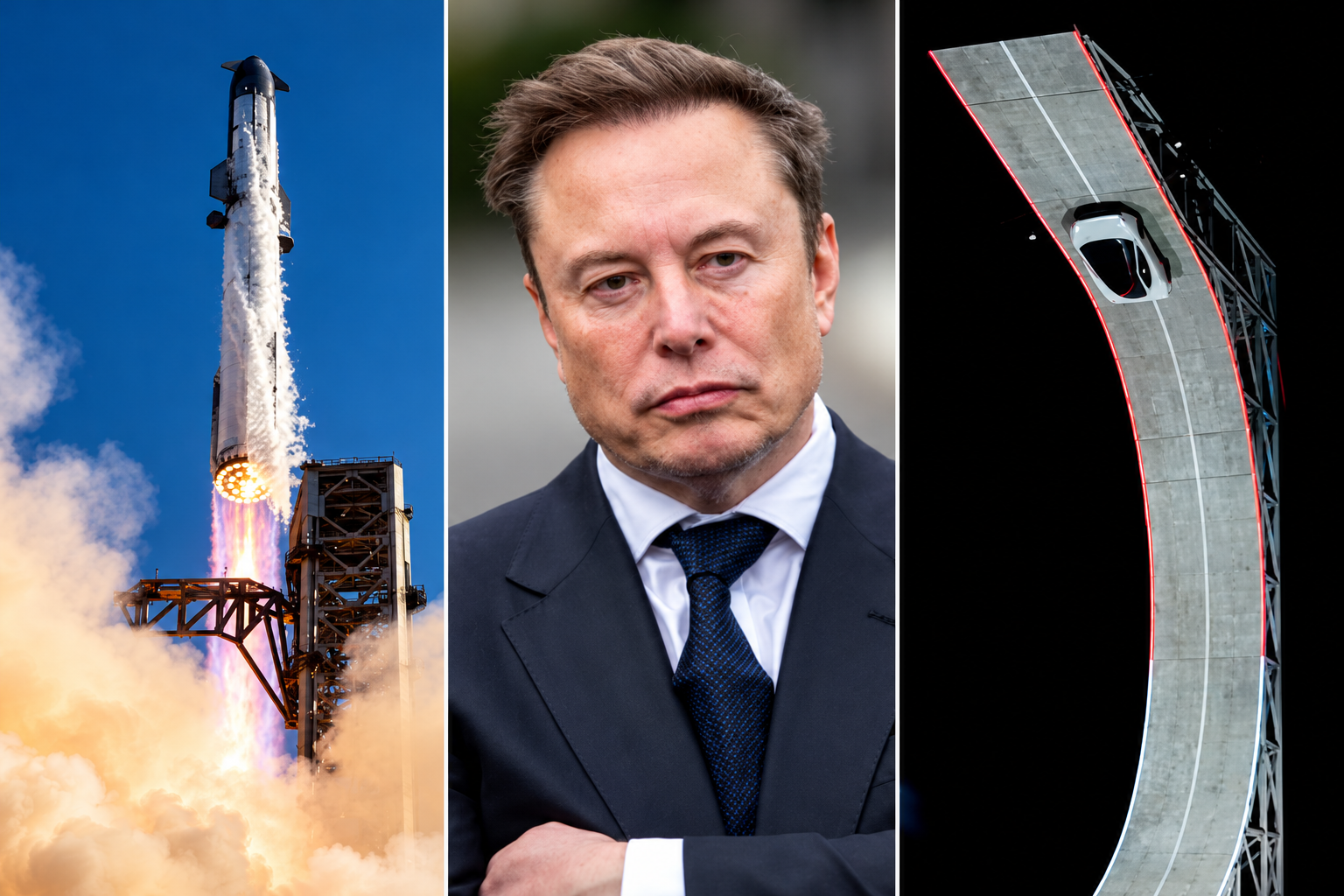
Elon Musk has engineered ties between Tesla TSLA 3.41%increase; up pointing triangle and SpaceX SPCX 7.79%increase; up pointing triangle that are hard to break, and now he wants to fuse them together permanently.
Musk has run both Tesla and SpaceX concurrently over the past two decades, using a schedule that dictated which days he spent focused on each business.
The companies have often shared resources and personnel, signaling their close ties. Last year, SpaceX looked into creating a spacesuit for Tesla’s humanoid robot Optimus, a person familiar with the matter said. Tesla last week showed off its new Roadster, a vehicle featuring SpaceX rocket thrusters that it hopes to soon bring to market.
And in recent months, Musk has repositioned both companies by expanding beyond their core operations toward a shared mission centered on artificial intelligence.
The world’s richest man on Tuesday signaled his interest in tying up SpaceX and Tesla, marking what would be the biggest corporate merger of all time. Because he serves as chief executive of SpaceX and Tesla, Musk said committees of independent directors at both companies are evaluating a possible deal, adding that a transaction might not come to fruition.
The committees will likely evaluate, with lawyers and bankers, how each company would fare in a potential deal and how a deal might best be structured. They then present their conclusions to their respective boards, who typically vote on whether to proceed.
“It’s an odd Kabuki dance where two groups of people are talking and I can’t be in the conversation,” Musk told SpaceX investors on Tuesday in response to an analyst’s question about a potential deal.
For Musk, the merger supports his vision of a world full of autonomous cars, humanoid robots and weekly rocket launches, as well as the data centers and satellites required to keep the whole thing running.
Some investors and analysts said they expect a transaction would be structured as an all-stock deal, with SpaceX potentially paying a modest premium for Tesla shares.
SpaceX, which has a market value of about $2 trillion, said it is seeing sharp growth in revenue across its businesses, which include operating data centers, launching rockets and operating satellite networks such as the internet service Starlink. Tesla is valued at about $1.5 trillion and is expanding its operations beyond its automotive and energy business. Shares in both companies traded higher following the news Tuesday.
Musk’s substantial ownership stakes in both companies, along with voting control at SpaceX, has enabled him to set the deal in motion. Analysts and investors said the deal will probably face regulatory scrutiny internationally, though some see Musk’s close relationship with the Trump administration as an asset to getting approval.
Blurred lines
The companies haven’t said which directors are on the special committees evaluating a potential deal. Several SpaceX and Tesla board members have either personal or business ties to Musk. And like Musk, venture capitalist Ira Ehrenpreis sits on both boards.
In a filing this week, Tesla outlined millions of dollars in business agreements with SpaceX and its subsidiaries last year, including $143 million in car sales to SpaceX, $3.3 million in advertising that it bought on the social-media platform X and $430 million in revenue from the sale of Megapack batteries for SpaceX’s data centers.
The companies also split the cost of resources including the use of Musk’s SpaceX jet and the bill for his personal security, which he runs through a private company.
Employees at both companies routinely move between companies to work on special projects, and some executives have dual roles, including Charles Kuehmann, vice president of materials engineering at both SpaceX and Tesla, and Ashok Elluswamy, the vice president of AI software at Tesla who runs a joint venture with SpaceX called Digital Optimus.
Over the years, Musk has launched new startups within his empire, including brain-implant company Neuralink, underground-tunnel developer the Boring Company and xAI, the AI startup that merged with SpaceX in February.
It is that AI business that Musk thinks can serve a market worth tens of trillions of dollars, justifying the need for a merger.
The business case goes like this: Tesla is developing robotaxis and robots, which it calls “physical AI.” SpaceX is working on the back end of physical AI: the data-center capacity and internet connection required for those robotaxis and robots to operate continuously.
“I don’t see what the value of Tesla is if it’s not merged with SpaceX,” said investment adviser Ross Gerber, a former Tesla bull turned critic invested in both companies. “If they don’t merge, the brains of everything that runs Tesla is owned by another company.”
On top of it all, both companies face constraints on the supply chains they need to make this world a reality, particularly when it comes to chips. To address this, Musk earlier this year announced a joint venture between Tesla, SpaceX and Intel to design and manufacture chips in Texas. “The most epic chip-building exercise by far,” he has said.
Musk at the wheel
For Musk, a merger would also solve two problems: demands on his attention and his lack of control at Tesla.
Tesla for years was Musk’s only public company, a status that came with greater scrutiny. There, Musk reports to a public board, as well as individual investors who make up around 30% of Tesla’s voting power, according to FactSet.
The question of Musk’s attention became a particular focus for investors and the board in recent years after he acquired Twitter in 2022 and launched xAI in 2023, and again in 2025 as he spent time in Washington, D.C., running the Department of Government Efficiency in the early months of President Trump’s second term.
As Tesla’s car business suffered in 2025, Musk threatened to take his AI ambitions outside the company if he wasn’t granted 25% voting control. Last November, Tesla shareholders approved a new pay package for Musk, which created a path for him to vastly expand his stake.
As of Sept. 30, Musk owned a roughly 20% stake in Tesla, according to the company’s proxy filing.
The SpaceX IPO gave Musk a different path. When SpaceX went public in June, the deal’s structure enabled him to have more than 80% voting power at the company—so much that he can’t be fired and decisions can’t be made without his support.
If SpaceX acquires Tesla, he will likely stay in control.
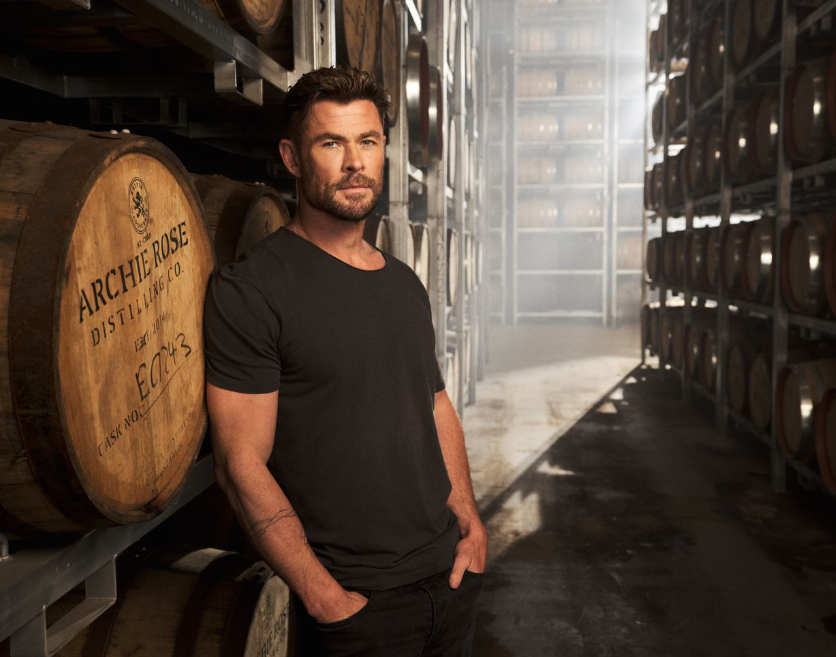
Australian actor Chris Hemsworth has joined Archie Rose Distilling Co. as co-owner and strategic business partner as the Sydney spirits company prepares to enter the United States. The partnership brings Hemsworth together with Archie Rose founder Will Edwards, with the pair aiming to build greater international recognition for Australian whisky. Founded in Sydney in 2014, …
Continue reading “Chris Hemsworth Joins Archie Rose as Co-Owner Ahead of Global Expansion”
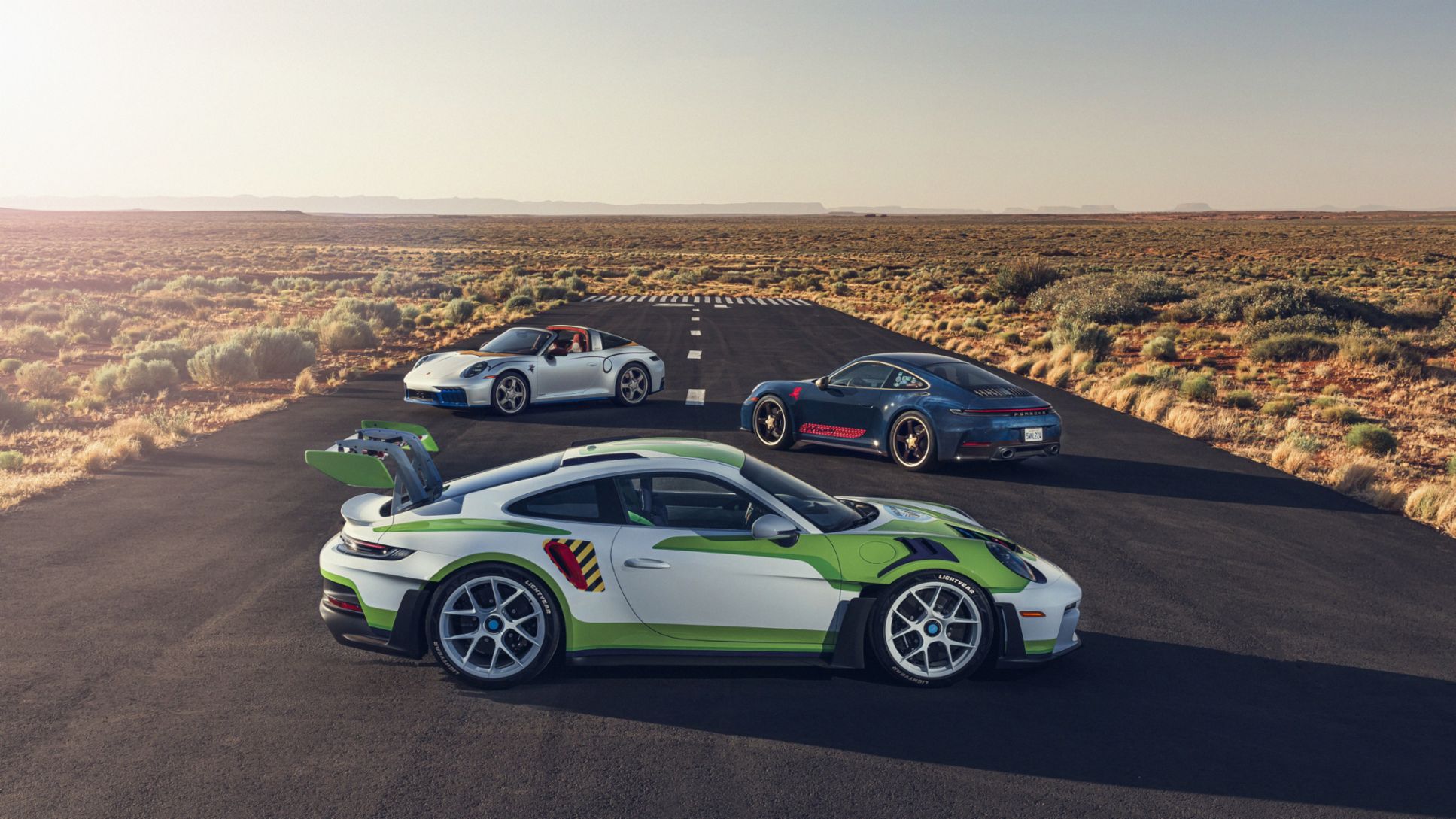
All three vehicles will form part of a broader charitable initiative benefiting Big Brothers Big Sisters of America, the American Red Cross and Starlight Children’s Foundation