Here Are the Top 1200 US Financial Advisors of 2025

 3 min
3 min
The nation’s Top 1,200 Financial Advisors grew their way to a new milestone.
The advisory teams that made it into this year’s ranking reported total assets under management of $6.1 trillion, for an average of $5.1 billion per team—both record highs for the dozen years during which Barron’s has ranked the Top 1,200. Last year’s ranking had $5.6 trillion in total AUM and $4.6 billion average AUM per team. In the past decade, the 1,200 cohort has increased its total AUM by 135% and its average revenue by 147%.
Amid all the growth, several advisors made big moves in this year’s rankings, including W Janet Dougherty of Cresset in Chicago, who re-entered the ranking at No. 37 in Illinois after moving from J.P. Morgan . Meanwhile, Ash Chopra of Syon Capital in San Francisco jumped 47 spots in California to No. 47; Hillary Cullen of UBS Private Wealth Management in New York rose 20 spots to No. 77; and Jon Neuhaus of Morgan Stanley Private Wealth Management in Los Angeles moved up 14 spots to No. 6 in California. Fourteen percent of the Top 1,200 advisors didn’t appear in the ranking last year.
Teams Are a Trend
Top advisory practices have ridden a wave of healthy markets, but that is only part of the growth story. Whereas a decade ago many of the best advisors were sole practitioners with modest support staff, now advisors are working in increasingly complex team configurations.
These teams are allowing advisors to provide an array of wealth management services in addition to the investing expertise that usually sits at the heart of their offerings. As teams acquire more skill in estate planning, taxes, lending, and other value-adds, they are attracting and retaining more business.
For investors looking for a new financial advisor, the trend toward expansive teams is good news. For starters, larger teams have built-in redundancy that helps with succession in the event that advisors depart the practice. A team structure also creates a great training environment for younger, more diverse wealth managers—a wellspring of workers who will be sorely needed in the coming years.
As many of the advisors who built the nation’s best teams enter the late innings of their careers, an advisor shortage is brewing. A recent McKinsey study says the advisor workforce may be short 100,000 advisors by 2034.
How We Do It
The Top 1,200 is Barron’s largest advisor ranking, and it’s actually 51 individual rankings—one for each state plus Washington, D.C., with the number of advisors represented in each determined by its relative population and wealth. Advisors who wish to be considered for the ranking complete a 100-plus-question survey about their businesses, and this year’s ranking had more than 7,600 applicants, up 16% from last year.
Like all of Barron’s advisor rankings, this Top 1,200 list uses both quantitative and qualitative measures . Client assets managed by an advisor, along with the growth of those assets, are a good signifier of the general health of a practice. We also use advisors’ revenue numbers as a proxy for client satisfaction—clients vote on the way advisors are serving them with the fees they’re willing to pay. Last, we evaluate a range of qualitative elements, including regulatory records, advanced credentials and designations on a team, and the nature and structure of an advisor’s team.
We hope this year’s list will give investors a great starting point for finding the best advisor for their needs.
Corrections & Amplifications : Jack Taylor of Truist Investment Services is No. 6 in North Carolina in Barron’s 2025 Top 1,200 Financial Advisors ranking. The advisor originally listed in that spot was removed from the ranking. All the other advisors ranked in that state moved up one place, and R. Neil Stikeleather of Merrill Wealth Management was added to the list at No. 30. Read more about our ranking and see a link to the corrected list at barrons.com/AdvisorRanks .
 Copyright 2020, Dow Jones & Company, Inc. All Rights Reserved Worldwide. LEARN MORE





From making unpopular decisions to learning when to listen, leaders from five businesses reveal what nobody prepared them for — and how running a company has challenged their expectations.

Technology and semiconductor shares fell sharply as investors questioned the debt financing the AI infrastructure boom and confronted higher rates and Chinese competition.

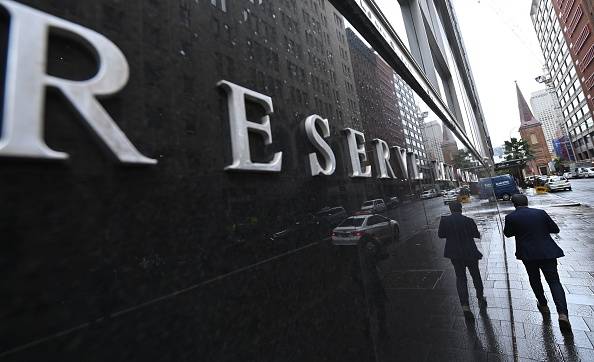
Technology and semiconductor shares fell sharply as investors questioned the debt financing the AI infrastructure boom and confronted higher rates and Chinese competition.
4 minA sharp technology sell-off has exposed a new anxiety on global markets: whether the enormous borrowing behind the artificial-intelligence infrastructure boom can generate sufficient returns as interest rates rise and Chinese competition intensifies.
The artificial-intelligence investment boom has powered technology shares, semiconductor manufacturers and data-centre operators to extraordinary heights. Last week, investors were given a reminder that much of this expansion is being built with borrowed money.
The technology-heavy Nasdaq Composite fell 4.5 per cent over the week ended October 16, its weakest performance since late June. Semiconductor shares suffered an even deeper correction, with the Philadelphia Semiconductor Index losing about 11.4 per cent.
The selling spread quickly through global markets. Micron Technology fell 14.6 per cent over the week, while South Korea’s Samsung Electronics and SK Hynix dropped approximately 18 per cent and 24 per cent respectively.
This was more than a routine bout of profit-taking. Investors were reassessing three interconnected risks: higher interest rates, the rapidly expanding debt burden attached to AI infrastructure and the prospect of stronger competition from Chinese memory-chip manufacturers.
The debt behind the AI build-out
Artificial intelligence requires a physical infrastructure network of enormous scale. Data centres must be built, advanced processors purchased, power supplies secured and cooling systems installed before customers begin generating meaningful revenue from them.
Technology companies are increasingly supplementing their own cash with corporate bonds, syndicated loans, equipment leases, private credit and project-level financing.
JPMorgan describes the emerging funding model as a combination of conventional corporate borrowing and project finance tied to individual data-centre assets. In Australia, the Reserve Bank estimates that syndicated loans accounted for approximately three-quarters of data-centre financing during 2025 and 2026 to date.
The numbers are becoming large enough to affect broader credit markets. The Federal Reserve Bank of Dallas has cited Wall Street estimates suggesting AI-related investment-grade bond issuance could approach US$300 billion in 2026 alone.
That borrowing is not automatically problematic. Debt can be an efficient way to finance long-lived infrastructure when future revenue is sufficiently predictable. The concern is that AI technology, customer demand and computing economics are changing much faster than the repayment schedules attached to the assets.
A data centre financed today may carry debt for years. Investors must therefore make assumptions about future utilisation rates, electricity prices, chip performance, customer concentration and the amount businesses will ultimately pay for AI computing.
When interest rates rise, those assumptions become less forgiving.
Inflation changes the calculation
September’s US inflation data intensified the pressure. Consumer prices increased 3.7 per cent over the year, ahead of market expectations and up from 3.4 per cent in August.
The hotter reading reduced confidence that interest rates would fall quickly and pushed bond yields higher. That matters particularly for companies whose valuations depend on profits expected well into the future, as well as highly leveraged infrastructure operators that may need to refinance.
CoreWeave has emerged as a closely watched test case. The specialist cloud-computing company has accumulated substantial debt and lease obligations to build AI capacity, while relying on a concentrated group of large technology customers.
Its shares fell sharply during the sell-off, while the cost of insuring its debt against default climbed. CoreWeave has argued that its contracted backlog more than covers its obligations and that financial markets do not always understand its business model. Nevertheless, its securities have become a proxy for investor confidence in debt-funded AI infrastructure.
Oracle, another major investor in AI computing capacity, fell 8.8 per cent in Friday trading, while CoreWeave dropped 15.5 per cent.
The question is shifting from how much AI infrastructure can be built to how profitably it can be operated.
China adds another source of pressure
Interest rates were not the only catalyst. Reports of advances by Chinese memory-chip producer ChangXin Memory Technologies raised concerns that lower-cost Chinese products could increase competition across the global semiconductor industry.
Memory chips are essential to AI systems, but the industry is historically cyclical. Periods of tight supply and high pricing can encourage rapid investment, eventually producing oversupply and falling margins.
The prospect of a well-funded Chinese competitor expanding its technological capabilities unsettled investors in Samsung, SK Hynix and Micron. It also demonstrated that AI-related demand does not insulate chipmakers from conventional competitive pressures.
That combination—slower rate cuts, more expensive financing and potentially cheaper supply—challenged the assumption that every company exposed to AI would enjoy continually expanding margins.
A reset rather than the end of the boom
The sell-off does not establish that the AI boom is ending. Demand for computing power remains strong, the largest technology companies continue to generate formidable cash flows and many infrastructure projects are backed by long-term customer contracts.
What has changed is the market’s willingness to overlook the price and financing structure of that growth.
The most resilient companies are likely to be those able to fund investment from operating cash flow, secure long-duration customers and demonstrate that new capacity will earn returns comfortably above its financing costs.
More speculative operators may face greater scrutiny, particularly where debt is expensive, customers are concentrated or expected revenue depends on demand that has not yet materialised.
For Australian investors, the lesson extends beyond US technology shares. Local data-centre operators, infrastructure funds, electricity suppliers and property groups are increasingly exposed to the same investment cycle.
Artificial intelligence may remain one of the defining growth themes of the decade. But last week’s correction showed that enthusiasm for the technology does not eliminate financial discipline.
The next stage of the AI boom will be judged not only by computing power, model performance or demand for chips, but by something more traditional: whether the assets being financed can generate enough cash to repay the money borrowed to build them.
Fact box
Nasdaq Composite: Down 4.5 per cent for the week ended October 16, 2026
Philadelphia Semiconductor Index: Down approximately 11.4 per cent
Micron Technology: Down approximately 14.6 per cent
Samsung Electronics: Down approximately 18 per cent
SK Hynix: Down approximately 24 per cent
US September inflation: 3.7 per cent annually
Estimated 2026 AI-related investment-grade issuance: Approximately US$300 billion

Brickworks has enlisted acclaimed architecture studio Kennedy Nolan to explore how homes could become more adaptable, energy-efficient and connected to community.

A divide has opened in the tech job market between those with artificial-intelligence skills and everyone else.