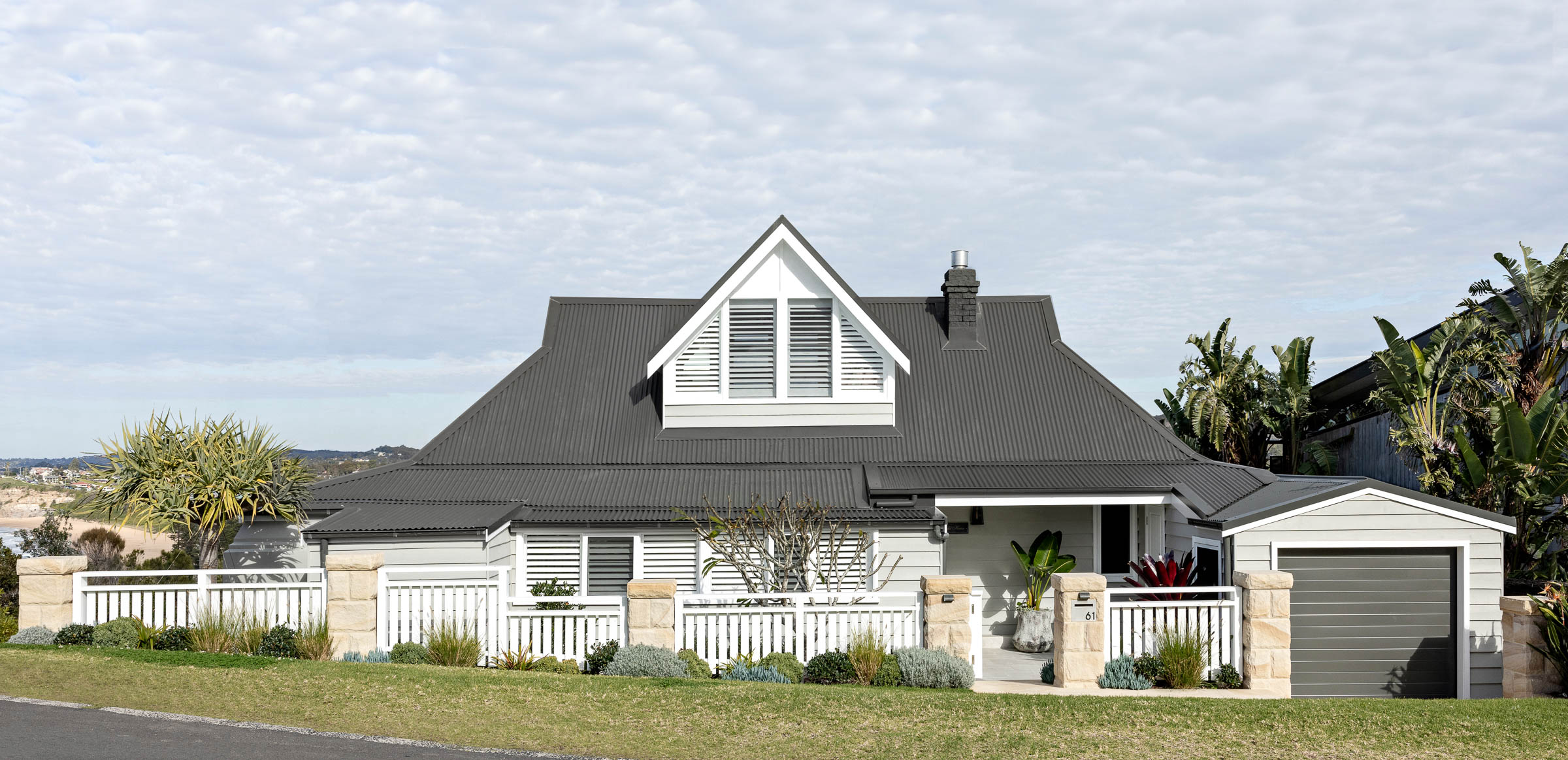
How to build a portfolio that generates passive income without over-leveraging
Building a property portfolio can fast-track wealth creation, but only with the right strategy. Here is how to balance income, growth and risk from the start.
 3 min
3 min
Property prices are rising, and buyer confidence is improving, making it an appealing time to start building a property portfolio.
But while the idea of owning multiple properties is attractive, many investors chase passive income without a clear strategy.
This can lead to over-leveraging and financial stress when interest rates rise or market conditions shift.
A smarter approach is to build a balanced portfolio that considers income, capital growth and risk.
Here are six key factors to weigh up before you begin.
Start with your current position
The foundation of any successful portfolio is understanding where you stand.
Before buying your first or next property, be clear on how much capital you have, your borrowing capacity and the level of risk you can comfortably manage.
Too many investors rush into high-yield assets without considering whether they suit their circumstances.
The result can be properties that look good on paper but prove difficult to hold.
Knowing your financial position helps determine whether to focus on cash-flow-positive properties, growth assets or a balanced mix of both.
Target assets that deliver real value
Not all properties are equal. When building a portfolio designed to generate income, quality matters more than headline yield.
In the commercial sector, smaller retail assets can offer a practical entry point.
They are often more affordable than large industrial properties while still delivering solid rental returns and value-add potential.
A tenancy leased below market rates, for example, can become a strategic purchase. When the lease is reviewed, bringing rent in line with market levels can lift both income and capital value.
Simple improvements such as updated fit-outs, better amenities or modest refurbishments can also increase tenant demand and justify higher rents.
Focusing on assets where you can influence performance helps create sustainable income and build equity for future investments.

Residential properties still play an important role
Residential property remains a core component of a balanced portfolio, offering stability to complement commercial holdings.
Long-term capital growth is largely driven by land value, so buying in areas with limited supply and strong demand can support future appreciation.
Dual-income strategies can also strengthen returns.
Adding a granny flat or secondary dwelling to a house can increase rental income without the need to purchase another property.
This approach can boost cash flow while keeping debt exposure manageable.
Use leverage carefully
Leverage can accelerate portfolio growth, but it also increases risk.
Before taking on additional debt, stress-test each purchase.
Consider whether you could comfortably hold the property if interest rates rose by several percentage points, and ensure you have buffers for vacancies or unexpected costs.
For business owners and SMSF investors, borrowing can provide access to assets that might otherwise be out of reach.
However, decisions should be based on what you can sustainably manage, not simply on how much a lender is willing to approve.
Diversify across and within asset classes
A resilient portfolio is built on diversification across locations, asset types and ownership structures.
Investing across different states can help manage land tax thresholds and take advantage of varying property cycles.
Within commercial property, combining retail, medical and selected office assets can reduce reliance on a single sector.
In residential markets, balancing growth-focused properties with income-producing assets can improve performance across changing conditions.
Ownership structures also matter. Whether property is held personally, in a trust or through an SMSF should align with long-term tax planning and wealth objectives.
Professional advice can help ensure the portfolio is positioned for sustainable growth.

Focus on creating income, not just finding it
One of property’s advantages is the ability to actively improve returns.
Renovations, secondary dwellings and reviewing under-market leases can increase both rental income and capital value.
These strategies allow investors to generate equity and strengthen cash flow without relying solely on market growth.
The goal is not to own the most properties, but to own the right ones.
A small number of well-selected, well-managed assets often outperform a scattered portfolio built without a clear strategy.
Financial independence is more likely when a portfolio supports itself and delivers a steady, reliable income stream.
Abdullah Nouh is the founder of Mecca Property Group, a boutique buyer’s agency in Melbourne helping Australians build wealth through strategic property investment.

Two coming 2027 models – the first of the “Neue Klasse” cars coming to the U.S. early next year – have been revealed.

A&K Sanctuary unveils Kitirua Plains Lodge, a sustainability-focused luxury property shaped by landscape, local craft and contemporary safari architecture.


The lunar flyby would be the deepest humans have traveled in space in decades.
4 min
It’s go time for the highest-stakes mission at NASA in more than 50 years.
On April 1, the agency is set to launch four astronauts around the moon, the deepest human spaceflight since the final Apollo lunar landing in 1972.
The launch window for Artemis II , as the mission is called, opens at 6:24 p.m. ET.
National Aeronautics and Space Administration teams have been preparing the vehicles to depart from Florida’s Kennedy Space Center on the planned roughly 10-day trip. Crew members have trained for years for this moment.
Reid Wiseman, the NASA astronaut serving as mission commander, said he doesn’t fear taking the voyage. A widower, he does worry at times about what he is putting his daughters through.
“I could have a very comfortable life for them,” Wiseman said in an interview last September.
“But I’m also a human, and I see the spirit in their eyes that is burning in my soul too. And so we’ve just got to never stop going.”
Wiseman’s crewmates on Artemis II are NASA’s Victor Glover and Christina Koch, as well as Canadian Space Agency astronaut Jeremy Hansen.

What are the goals for Artemis II?
The biggest one: Safely fly the crew on vehicles that have never carried astronauts before.
The towering Space Launch System rocket has the job of lofting a vehicle called Orion into space and on its way to the moon.
Orion is designed to carry the crew around the moon and back. Myriad systems on the ship—life support, communications, navigation—will be tested with the astronauts on board.
SLS and Orion don’t have much flight experience. The vehicles last flew in 2022, when the agency completed its uncrewed Artemis I mission .
How is the mission expected to unfold?
Artemis II will begin when SLS takes off from a launchpad in Florida with Orion stacked on top of it.
The so-called upper stage of SLS will later separate from the main part of the rocket with Orion attached, and use its engine to set up the latter vehicle for a push to the moon.
After Orion separates from the upper stage, it will conduct what is called a translunar injection—the engine firing that commits Orion to soaring out to the moon. It will fly to the moon over the course of a few days and travel around its far side.
Orion will face a tough return home after speeding through space. As it hits Earth’s atmosphere, Orion will be flying at 25,000 miles an hour and face temperatures of 5,000 degrees as it slows down. The capsule is designed to land under parachutes in the Pacific Ocean, not far from San Diego.

Is it possible Artemis II will be delayed?
Yes.
For safety reasons, the agency won’t launch if certain tough weather conditions roll through the Cape Canaveral, Fla., area. Delays caused by technical problems are possible, too. NASA has other dates identified for the mission if it doesn’t begin April 1.
Who are the astronauts flying on Artemis II?
The crew will be led by Wiseman, a retired Navy pilot who completed military deployments before joining NASA’s astronaut corps. He traveled to the International Space Station in 2014.
Two other astronauts will represent NASA during the mission: Glover, an experienced Navy pilot, and Koch, who began her career as an electrical engineer for the agency and once spent a year at a research station in the South Pole. Both have traveled to the space station before.
Hansen is a military pilot who joined Canada’s astronaut corps in 2009. He will be making his first trip to space.
Koch’s participation in Artemis II will mark the first time a woman has flown beyond orbits near Earth. Glover and Hansen will be the first African-American and non-American astronauts, respectively, to do the same.
What will the astronauts do during the flight?
The astronauts will evaluate how Orion flies, practice emergency procedures and capture images of the far side of the moon for scientific and exploration purposes (they may become the first humans to see parts of the far side of the lunar surface). Health-tracking projects of the astronauts are designed to inform future missions.
Those efforts will play out in Orion’s crew module, which has about two minivans worth of living area.
On board, the astronauts will spend about 30 minutes a day exercising, using a device that allows them to do dead lifts, rowing and more. Sleep will come in eight-hour stretches in hammocks.
There is a custom-made warmer for meals, with beef brisket and veggie quiche on the menu.
Each astronaut is permitted two flavored beverages a day, including coffee. The crew will hold one hourlong shared meal each day.
The Universal Waste Management System—that’s the toilet—uses air flow to pull fluid and solid waste away into containers.
What happens after Artemis II?
Assuming it goes well, NASA will march on to Artemis III, scheduled for next year. During that operation, NASA plans to launch Orion with crew members on board and have the ship practice docking with lunar-lander vehicles that Elon Musk’s SpaceX and Jeff Bezos’ Blue Origin have been developing. The rendezvous operations will occur relatively close to Earth.
NASA hopes that its contractors and the agency itself are ready to attempt one or more lunar landing missions in 2028. Many current and former spaceflight officials are skeptical that timeline is feasible.

An opulent Ryde home, packed with cinema, pool, sauna and more, is hitting the auction block with a $1 reserve.

Hand-built in Melbourne and limited to just 10 cars a year, the Zeigler/Bailey Z/B 4.4 is reshaping what a modern collector car can be.