BMW’s Electric i3 and iX3 Raise the EV Standard With a 400-Plus-Mile Range
Two coming 2027 models – the first of the “Neue Klasse” cars coming to the U.S. early next year – have been revealed.

 2 min
2 min
The current BMW i5 electric sedan has an official range of 278 to 310 miles, and it might be closer to 250 to 270 in the real world.
That is why the coming 2027 BMW i3 50 xDrive—the first of the “Neue Klasse” cars coming to the U.S. early next year and just revealed to the world—is such a game changer.
The range is estimated at 440 miles, beating most EVs on the road now, and it is coupled with exciting performance, including zero-to-60 estimated at 3.8 seconds and an impressive 463 horsepower (with 476 pound-feet of torque) from a pair of electric motors, delivering xDrive to all four wheels.
A single-motor version is down the road. The price isn’t out yet, but it is likely to begin between US$55,000 and $65,000.
If sedans aren’t your thing, the electric 3-Series will also be offered as an approximately $60,000 iX3 crossover SUV, which has a similar powertrain and performance.
The twin-motor iX3 50 xDrive has a slightly lower 400 miles of range, due in part to its less-aerodynamic shape compared with the i3. It is also not quite as speedy, getting to 60 mph in 4.7 seconds.
BMW design has been iffy lately, and virtually no one loves the cars with the huge kidney grilles, but the “Neue Klasse” turns the page, and the i3 and iX3 are both strikingly handsome.
The i3 isn’t a particularly lightweight vehicle, at approximately 4,850 pounds, which is why both the i3 and iX3 need a huge 108-kilowatt-hour battery pack.
The drawback could be longer charge times, but up to 400-kilowatt plug ins are available here.
At a DC fast charger, a charge from 10% to 80% should take only 21 minutes.
A 19.2-kilowatt home charger is available. The pack supports standard bidirectional charging, which means it could theoretically provide power to your home during an outage.
A bonus is that the big battery can also supply 3,700 watts for whatever you have in mind, from tailgating to camping.
The cars share basic suspension, but on the sedan an adaptive M-branded suspension is available.
Both BMWs introduce the new Panoramic iDrive, which features an 18-inch touch screen angled at the driver.
Early users say it is incredibly responsive. Inside, the standard trim features Econeer upholstery that is 100% fabricated from recycled PET bottles.
M Design cars upgrade to black Veganza (aka vegan leather). The top trim is BMW Individual with black Merino leather.
It is standard for automakers to introduce their fully loaded models out of the gate, with the more bread-and-butter versions appearing later.
BMW is certainly doing that here, but i3s and iX3s priced below $50,000 are expected fairly soon.
The momentum for electrics has certainly slowed, but cars like these—offering performance, dynamics and features superior to the conventional alternatives—should help EVs get back on track.
 Copyright 2020, Dow Jones & Company, Inc. All Rights Reserved Worldwide. LEARN MORE





From making unpopular decisions to learning when to listen, leaders from five businesses reveal what nobody prepared them for — and how running a company has challenged their expectations.

Technology and semiconductor shares fell sharply as investors questioned the debt financing the AI infrastructure boom and confronted higher rates and Chinese competition.
Tesla’s new Roadster used suction technology and SpaceX-derived thrusters to jump and flip—but production, price and road legality remain unresolved.
3 min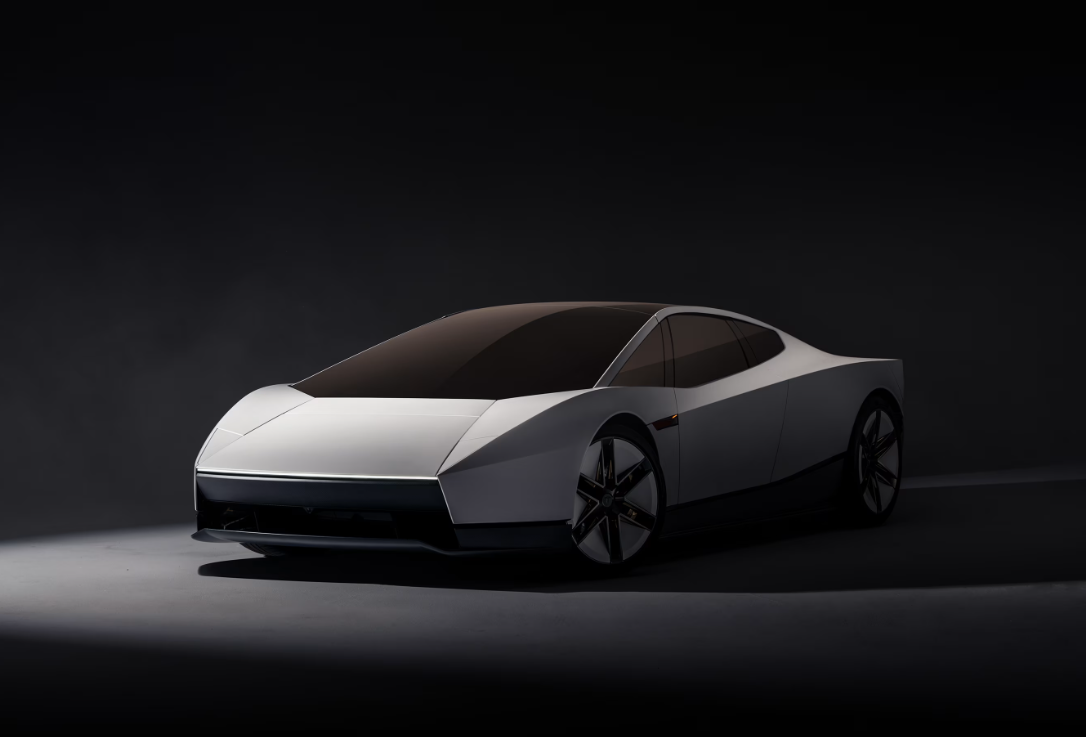
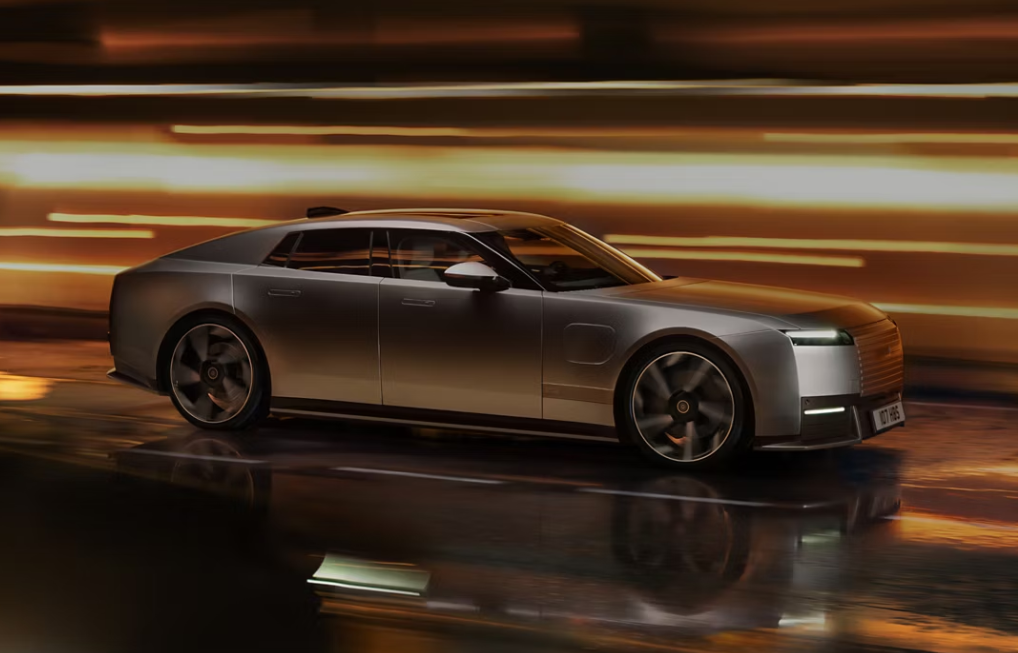
Tesla has finally revealed its radically redesigned Roadster—and delivered the airborne spectacle Elon Musk has been promising for years.
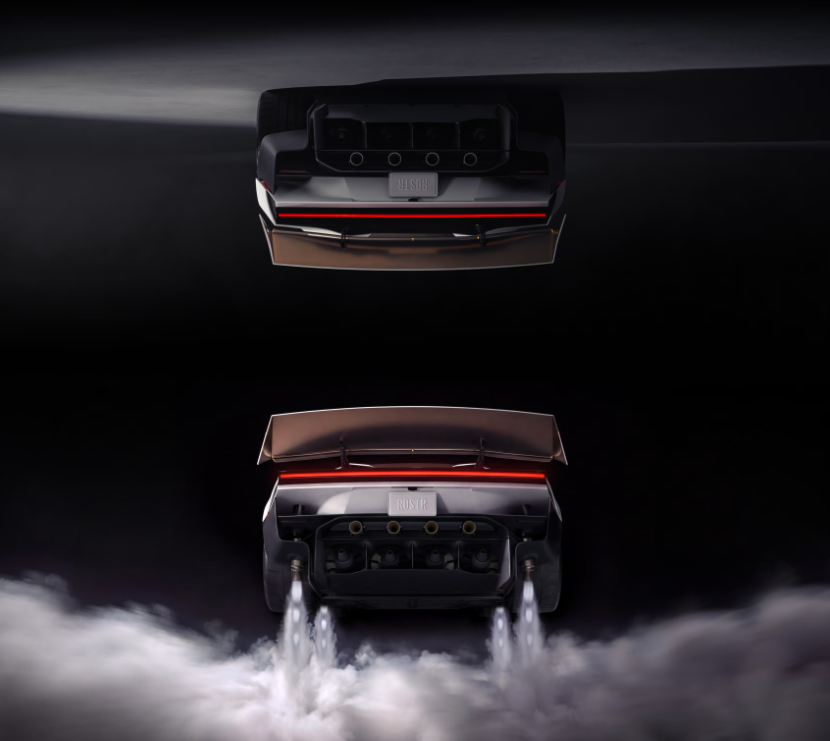
Unveiled at a SpaceX testing facility near Waco, Texas, the new electric supercar drove onto a steeply curved ramp, used a suction system to cling to its underside and launched into the air. Cold-gas thrusters stabilised the vehicle as it rotated and returned to the ground.
In another demonstration, the Roadster cleared a line of Tesla vehicles that included a Semi, Cybertruck, Cybercab, Model Y and Model 3.
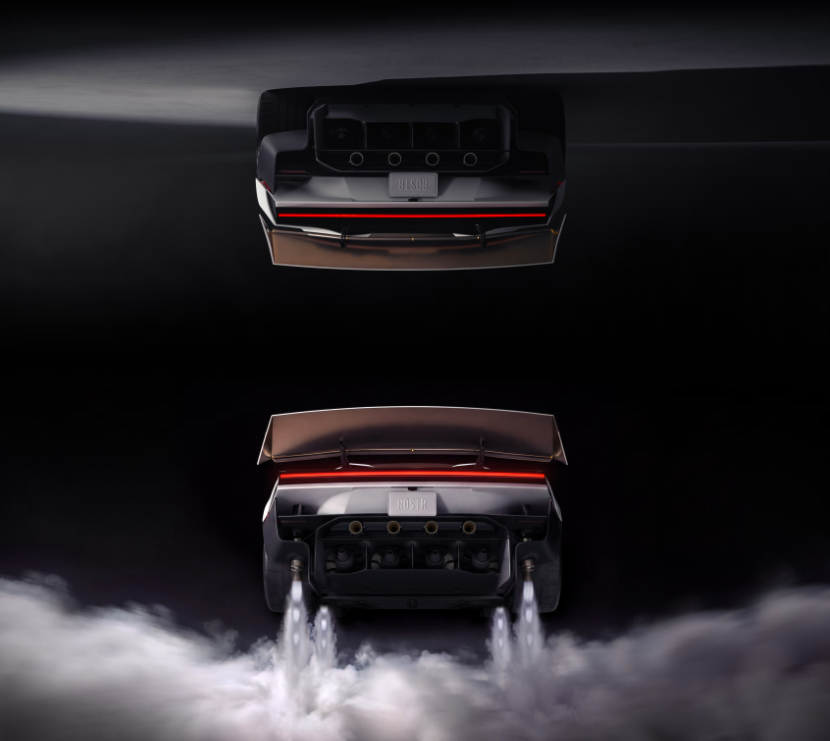
It was an extraordinary stunt. Whether it proved Tesla has created a genuine flying car is another matter.
The vehicle did not demonstrate sustained, controlled flight of the kind associated with an aircraft or electric vertical take-off and landing vehicle. Its thrusters instead produced brief powered leaps, rotation and landing control.
“We’re not talking about sustained flight,” Smithsonian National Air and Space Museum curator Roger Connor told CNN. “We are literally talking about hopping.”
How does it work?
Tesla has outlined three intended Roadster configurations.
The two-seat Performance model is the comparatively conventional version, although little about it sounds ordinary. It uses active aerodynamics and what Tesla calls a multi-mode suction system to increase downforce and allow the car to adhere to steep or inverted surfaces.
The two-seat Thrust adds rear-mounted cold-gas thrusters, designed to deliver acceleration from zero to 60mph—approximately 97km/h—in less than one second.
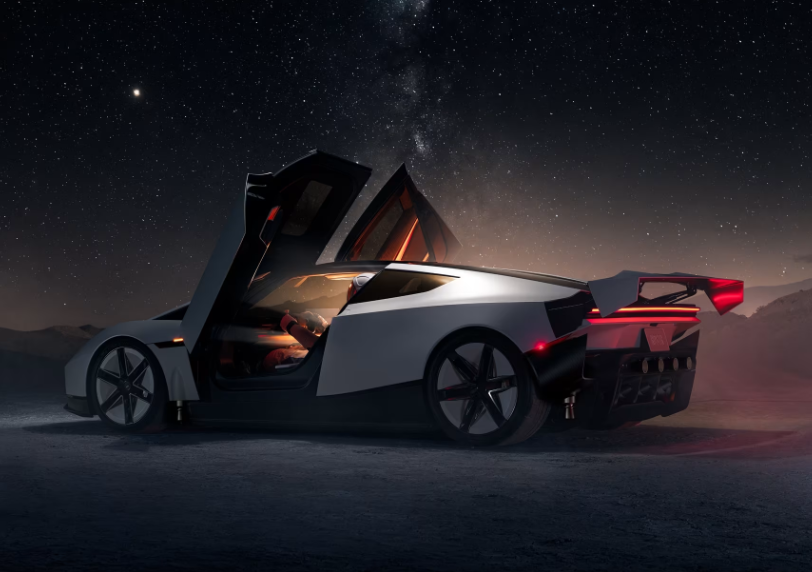
At the top is the single-seat Rocket, equipped with 10 thrusters positioned around the vehicle. This is the version intended to perform the airborne manoeuvres demonstrated in Texas.
Tesla engineering vice-president Lars Moravy said the system uses approximately 600 litres of compressed air. Carbon-fibre-wrapped pressure vessels occupy available spaces throughout the car, supplying the thrusters used for acceleration, lift and directional control.
The technology is more closely related to a rocket reaction-control system than a conventional flying-car powertrain. Rather than producing continuous lift through wings or propellers, it releases highly pressurised gas to generate short bursts of thrust.
Tesla says all three versions will offer approximately 300 miles—or 483 kilometres—of driving range and a top speed exceeding 230mph, equivalent to about 370km/h.
These remain company claims rather than independently verified production specifications.
Can buyers order one?
Reservations have reopened in selected markets. According to reporting from the launch, Tesla is seeking US$50,000 to reserve the Performance variant and US$250,000 for the Thrust. Access to the Rocket is described as invitation-only.
No final purchase price was announced, and Tesla has not confirmed Australian pricing, delivery timing or regulatory approval.
Musk said production would begin in 2028. That should be treated as an ambition rather than a settled delivery date.
The second-generation Roadster was originally unveiled in 2017 and was expected to reach customers within several years. The program was subsequently delayed in 2020, 2021, 2023 and 2024. Some customers have consequently held substantial reservations for close to a decade.
There are also formidable regulatory questions. A road-registered vehicle capable of deliberately leaving the ground, rotating and landing among other traffic does not fit neatly within existing vehicle standards. Its compressed-air system, pressure vessels and unconventional manoeuvres would require extensive safety assessment.
The more plausible outcome is that Tesla produces the Performance and perhaps Thrust versions for road and track use, while tightly restricting the Rocket’s airborne functions—or reserving them for controlled environments.
Tesla has produced a genuine moving prototype capable of remarkable stunts. It has not yet demonstrated that customers will be permitted to repeat them on public roads.
For now, the Roadster is real enough to jump. Whether it becomes a car people can buy, register and use as demonstrated remains the more consequential test.
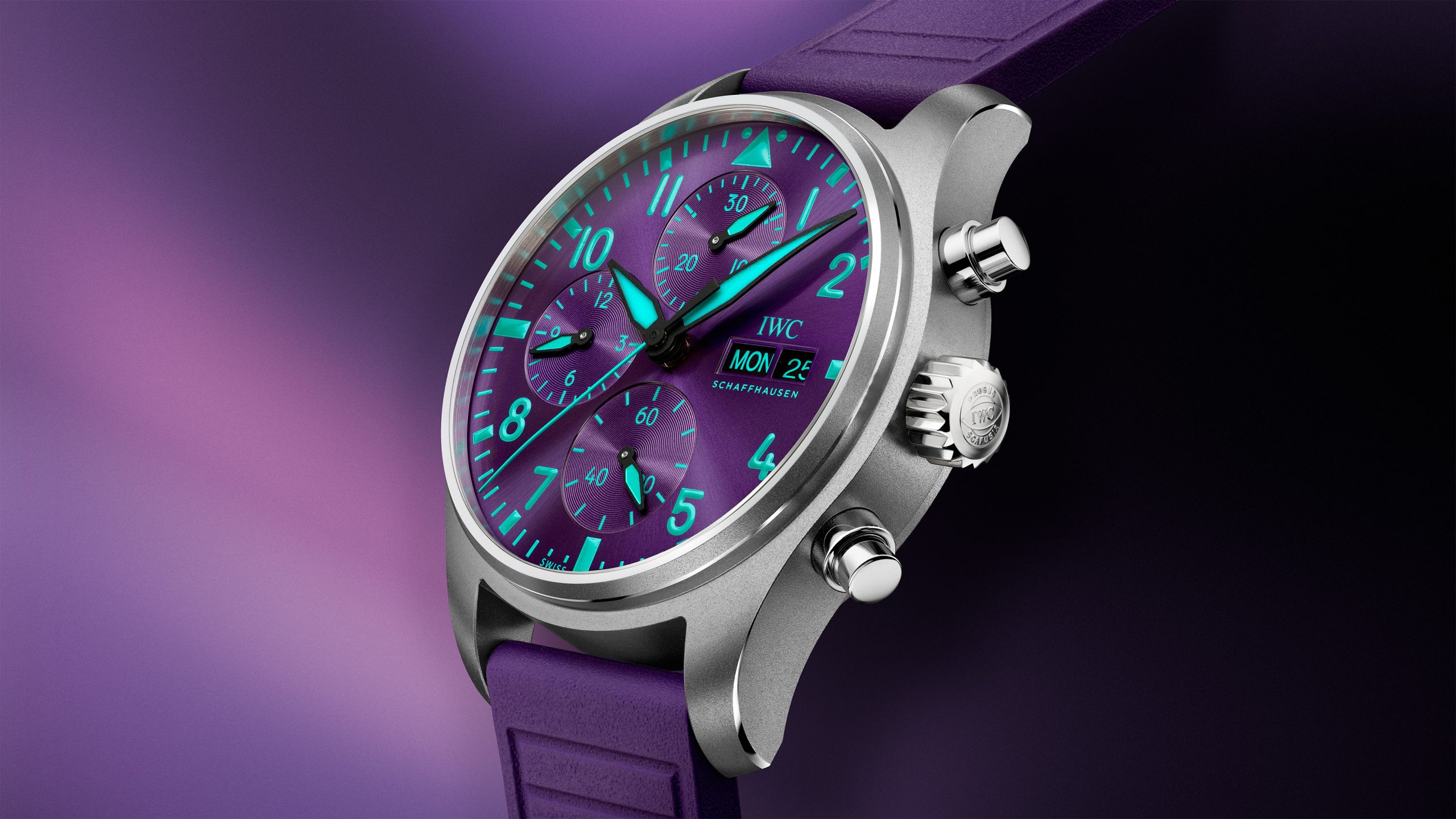
Singapore’s Formula 1 weekend has always looked different. Held beneath floodlights on the Marina Bay Street Circuit, the race transforms the city into a nocturnal spectacle of speed, heat and saturated colour. It is this distinctive atmosphere — and one of Singapore’s most important natural symbols — that has shaped IWC Schaffhausen’s latest motorsport-inspired watch. …
Continue reading “IWC’s purple Formula 1 chronograph pays tribute to Singapore after dark”

Once a sleepy surf town, Noosa has become Australia’s prestige property hotspot, where multi-million dollar knockdowns, architectural showpieces and record-setting sales are the new normal.