Want to Network in Silicon Valley? Bring a Bathing Suit
Instead of bars and restaurants, saunas are the new place for investors and founders to socialise and raise money

 3 min
3 min
When tens of thousands of software engineers, tech enthusiasts and salesmen descended on San Francisco for the annual Salesforce megaconference in September, startup founder Jari Salomaa had an idea: What if he rented out a sauna?
Salomaa was looking to pitch his startup Valo, which has built an artificial-intelligence tool that helps users on Salesforce’s platform. But an anti-alcohol movement that’s sweeping through the tech industry is disrupting work gatherings that revolve around drinking or eating. That’s leading Salomaa and others to try “social saunas,” where networking happens inside a steamy 200-degree box. In bathing suits.
The experience can take some getting used to. Bathrobes and bikinis can be distracting. It’s also very sweaty.
But investors and venture capitalists say it’s refreshing to have someplace other than a bar to gather and that business is getting done everywhere from a pop-up sauna in a Napa vineyard, to an 80-person sauna in New York.
Salomaa, 46, grew up in Finland where the sauna was part of everyday life and at his first job for Nokia in Helsinki, saunas were built inside the offices.
“There are more saunas than cars in Finland,” he said. “As many saunas as toilets.”
Still, he worried how Americans would react to hanging out in their bathing suits for a corporate event. “Scandinavians are more at ease with body images than the average American,” he said.
He thought about having one event for women and another for men, but the planning soon got complicated. In the end, Salomaa decided on a sort of social experiment: a coed gathering in San Francisco. He wound up with a wait list of 100 guests.
Salomaa imposed some sauna etiquette—bathing suits required and stay hydrated. And he started the event like any other investor pitch, by giving a PowerPoint presentation to an audience clad in bathrobes.
Attendees shared images of the event on social media, and soon Salomaa was fielding calls from friends in the tech industry, asking how they could do a similar event. He’s eager to help, but maintains some reservation about moving too much work inside the sauna.
“If it’s all talk about work, it kind of kills the vibe,” he said.
New social saunas have popped up in San Francisco, New York and Colorado this year.
They are built with stadium seating to fit more people—usually around 20 to 40 people—and conversation is often encouraged.
At Othership, a new sauna facility that opened in New York City’s Flatiron district in July, the sauna can fit up to 90 people. Lined with ambient lighting that can switch from warm red to neon pink, the sauna looks more like a nightclub than a place of tranquility.
Founder Robbie Bent, 40, said young tech founders make up a large part of his clientele. “They want to be healthier, meet like-minded people, and often don’t want to be out late,” he said.
The company hosts founder nights, as well as events for investors and founders to mingle. Othership says tech companies big and small are considering offering its services as a benefit to employees.
Othership has also offered to organise complimentary “team sweats” as team-building exercises. But according to Bent, they received pushback from human resources at companies across tech and Wall Street. Colleagues congregating in bathing suits wasn’t going to fly.
In response to these critiques, Bent designed a “corporate swimsuit”—basically a full-body rashguard for people to wear in the sauna.
Will Drescher, 29, built a social sauna in Boulder, Colo., after going to one in Minneapolis this year. “Neither me nor my co-founder drink,” said Drescher. “And we just thought, why don’t we have this?”
They built Portal, a “more DIY” option than the saunas popping up in New York and San Francisco, said Drescher.
“We wanted to bridge what’s happening in the coasts with what we’re seeing in the middle of the country,” said Drescher.
Venture investor Helene Servillon, 35, proposed a meeting with a founder of a tech company at Portal.
The meeting lasted an hour, which allowed them to cycle in and out of the sauna for three sessions. After learning more about the startup, Servillon said she plans to invest in it soon.
“VCs socialise a lot. If we only have two options—have a drink or a meal—that can just get really exhausting,” she said. When founders or investors ask to meet for happy hour these days, she will often counter-propose with a sauna or a hike.
Fintech investor Sheel Mohnot, 42, co-hosted an August social sauna event in San Francisco and attended an investor event in Napa, where a mobile sauna was wheeled on to the vineyard.
“The reality is there are always chances for people to feel uncomfortable, and more people are feeling that way about drinking,” Mohnot said. “We just didn’t have great sauna options here before.”
Not all tech workers have bought in. Laila Danielsen, chief executive of an AI software company, was invited to a social sauna event in October. She enjoyed the event and the environment it provided to have conversations, but she didn’t go into the hotbox.
“I don’t know if I’d necessarily put on my bikini to go out and pitch a VC, you know what I mean?” the 55-year-old said. “I’ll consider meeting them at the sauna after we close the deal.”
 Copyright 2020, Dow Jones & Company, Inc. All Rights Reserved Worldwide. LEARN MORE




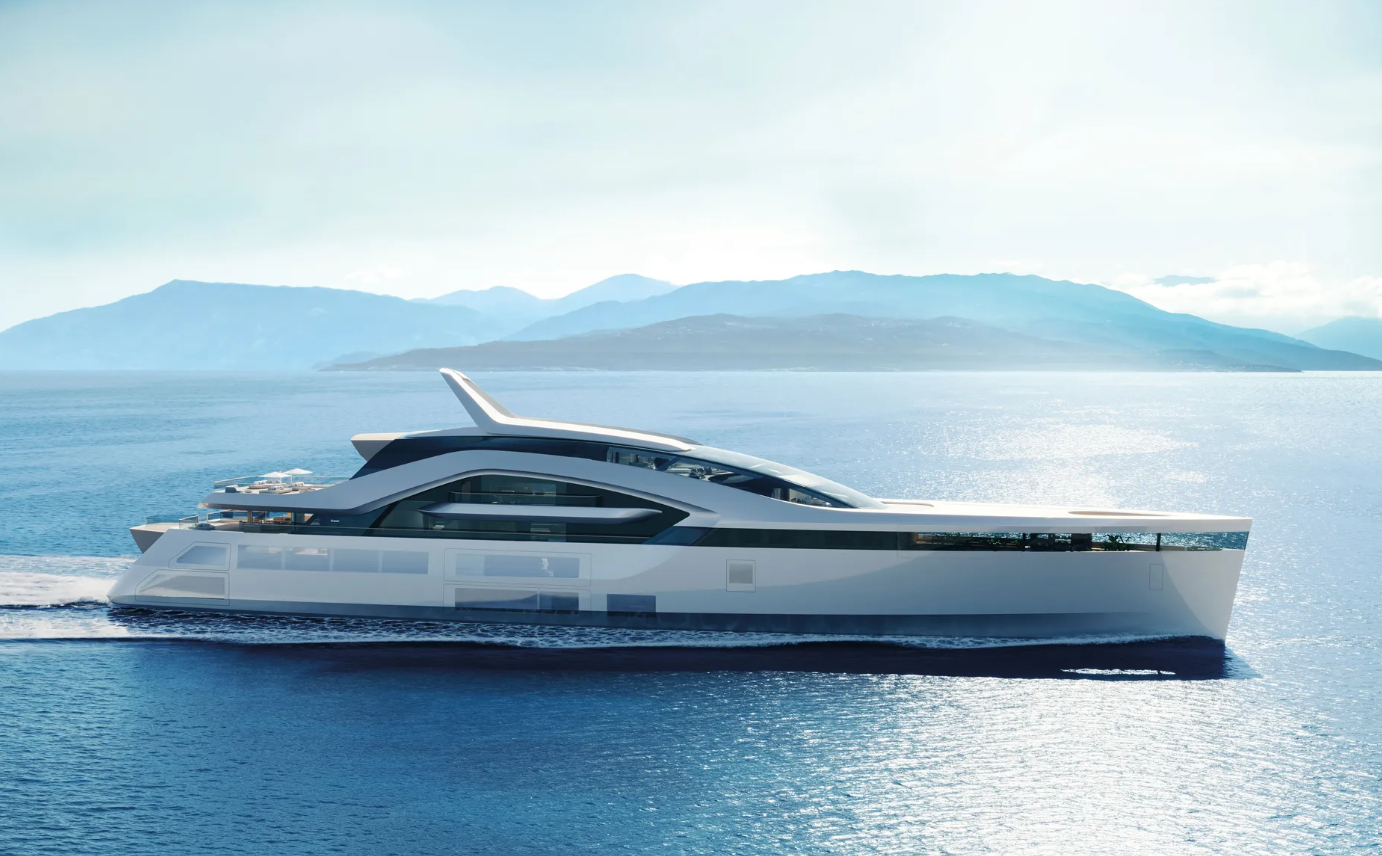
On the owner’s deck, a 20-metre swimming pool incorporates Feadship’s patented ContraWave technology and extends indoors as a suspended, glass-bottomed infinity pool.

Automobili Lamborghini is turning its attention to something considerably more difficult to define: what makes Italian excellence uniquely Italian?
Technology and semiconductor shares fell sharply as investors questioned the debt financing the AI infrastructure boom and confronted higher rates and Chinese competition.
4 min
A sharp technology sell-off has exposed a new anxiety on global markets: whether the enormous borrowing behind the artificial-intelligence infrastructure boom can generate sufficient returns as interest rates rise and Chinese competition intensifies.
The artificial-intelligence investment boom has powered technology shares, semiconductor manufacturers and data-centre operators to extraordinary heights. Last week, investors were given a reminder that much of this expansion is being built with borrowed money.
The technology-heavy Nasdaq Composite fell 4.5 per cent over the week ended October 16, its weakest performance since late June. Semiconductor shares suffered an even deeper correction, with the Philadelphia Semiconductor Index losing about 11.4 per cent.
The selling spread quickly through global markets. Micron Technology fell 14.6 per cent over the week, while South Korea’s Samsung Electronics and SK Hynix dropped approximately 18 per cent and 24 per cent respectively.
This was more than a routine bout of profit-taking. Investors were reassessing three interconnected risks: higher interest rates, the rapidly expanding debt burden attached to AI infrastructure and the prospect of stronger competition from Chinese memory-chip manufacturers.
The debt behind the AI build-out
Artificial intelligence requires a physical infrastructure network of enormous scale. Data centres must be built, advanced processors purchased, power supplies secured and cooling systems installed before customers begin generating meaningful revenue from them.
Technology companies are increasingly supplementing their own cash with corporate bonds, syndicated loans, equipment leases, private credit and project-level financing.
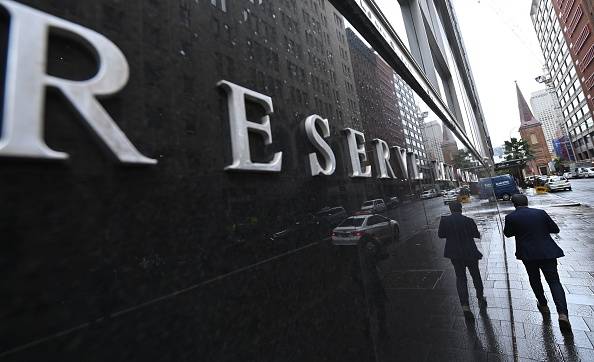
JPMorgan describes the emerging funding model as a combination of conventional corporate borrowing and project finance tied to individual data-centre assets. In Australia, the Reserve Bank estimates that syndicated loans accounted for approximately three-quarters of data-centre financing during 2025 and 2026 to date.
The numbers are becoming large enough to affect broader credit markets. The Federal Reserve Bank of Dallas has cited Wall Street estimates suggesting AI-related investment-grade bond issuance could approach US$300 billion in 2026 alone.
That borrowing is not automatically problematic. Debt can be an efficient way to finance long-lived infrastructure when future revenue is sufficiently predictable. The concern is that AI technology, customer demand and computing economics are changing much faster than the repayment schedules attached to the assets.
A data centre financed today may carry debt for years. Investors must therefore make assumptions about future utilisation rates, electricity prices, chip performance, customer concentration and the amount businesses will ultimately pay for AI computing.
When interest rates rise, those assumptions become less forgiving.
Inflation changes the calculation
September’s US inflation data intensified the pressure. Consumer prices increased 3.7 per cent over the year, ahead of market expectations and up from 3.4 per cent in August.
The hotter reading reduced confidence that interest rates would fall quickly and pushed bond yields higher. That matters particularly for companies whose valuations depend on profits expected well into the future, as well as highly leveraged infrastructure operators that may need to refinance.
CoreWeave has emerged as a closely watched test case. The specialist cloud-computing company has accumulated substantial debt and lease obligations to build AI capacity, while relying on a concentrated group of large technology customers.
Its shares fell sharply during the sell-off, while the cost of insuring its debt against default climbed. CoreWeave has argued that its contracted backlog more than covers its obligations and that financial markets do not always understand its business model. Nevertheless, its securities have become a proxy for investor confidence in debt-funded AI infrastructure.
Oracle, another major investor in AI computing capacity, fell 8.8 per cent in Friday trading, while CoreWeave dropped 15.5 per cent.
The question is shifting from how much AI infrastructure can be built to how profitably it can be operated.
China adds another source of pressure
Interest rates were not the only catalyst. Reports of advances by Chinese memory-chip producer ChangXin Memory Technologies raised concerns that lower-cost Chinese products could increase competition across the global semiconductor industry.
Memory chips are essential to AI systems, but the industry is historically cyclical. Periods of tight supply and high pricing can encourage rapid investment, eventually producing oversupply and falling margins.
The prospect of a well-funded Chinese competitor expanding its technological capabilities unsettled investors in Samsung, SK Hynix and Micron. It also demonstrated that AI-related demand does not insulate chipmakers from conventional competitive pressures.
That combination—slower rate cuts, more expensive financing and potentially cheaper supply—challenged the assumption that every company exposed to AI would enjoy continually expanding margins.
A reset rather than the end of the boom
The sell-off does not establish that the AI boom is ending. Demand for computing power remains strong, the largest technology companies continue to generate formidable cash flows and many infrastructure projects are backed by long-term customer contracts.
What has changed is the market’s willingness to overlook the price and financing structure of that growth.
The most resilient companies are likely to be those able to fund investment from operating cash flow, secure long-duration customers and demonstrate that new capacity will earn returns comfortably above its financing costs.
More speculative operators may face greater scrutiny, particularly where debt is expensive, customers are concentrated or expected revenue depends on demand that has not yet materialised.
For Australian investors, the lesson extends beyond US technology shares. Local data-centre operators, infrastructure funds, electricity suppliers and property groups are increasingly exposed to the same investment cycle.
Artificial intelligence may remain one of the defining growth themes of the decade. But last week’s correction showed that enthusiasm for the technology does not eliminate financial discipline.
The next stage of the AI boom will be judged not only by computing power, model performance or demand for chips, but by something more traditional: whether the assets being financed can generate enough cash to repay the money borrowed to build them.
Fact box
Nasdaq Composite: Down 4.5 per cent for the week ended October 16, 2026
Philadelphia Semiconductor Index: Down approximately 11.4 per cent
Micron Technology: Down approximately 14.6 per cent
Samsung Electronics: Down approximately 18 per cent
SK Hynix: Down approximately 24 per cent
US September inflation: 3.7 per cent annually
Estimated 2026 AI-related investment-grade issuance: Approximately US$300 billion
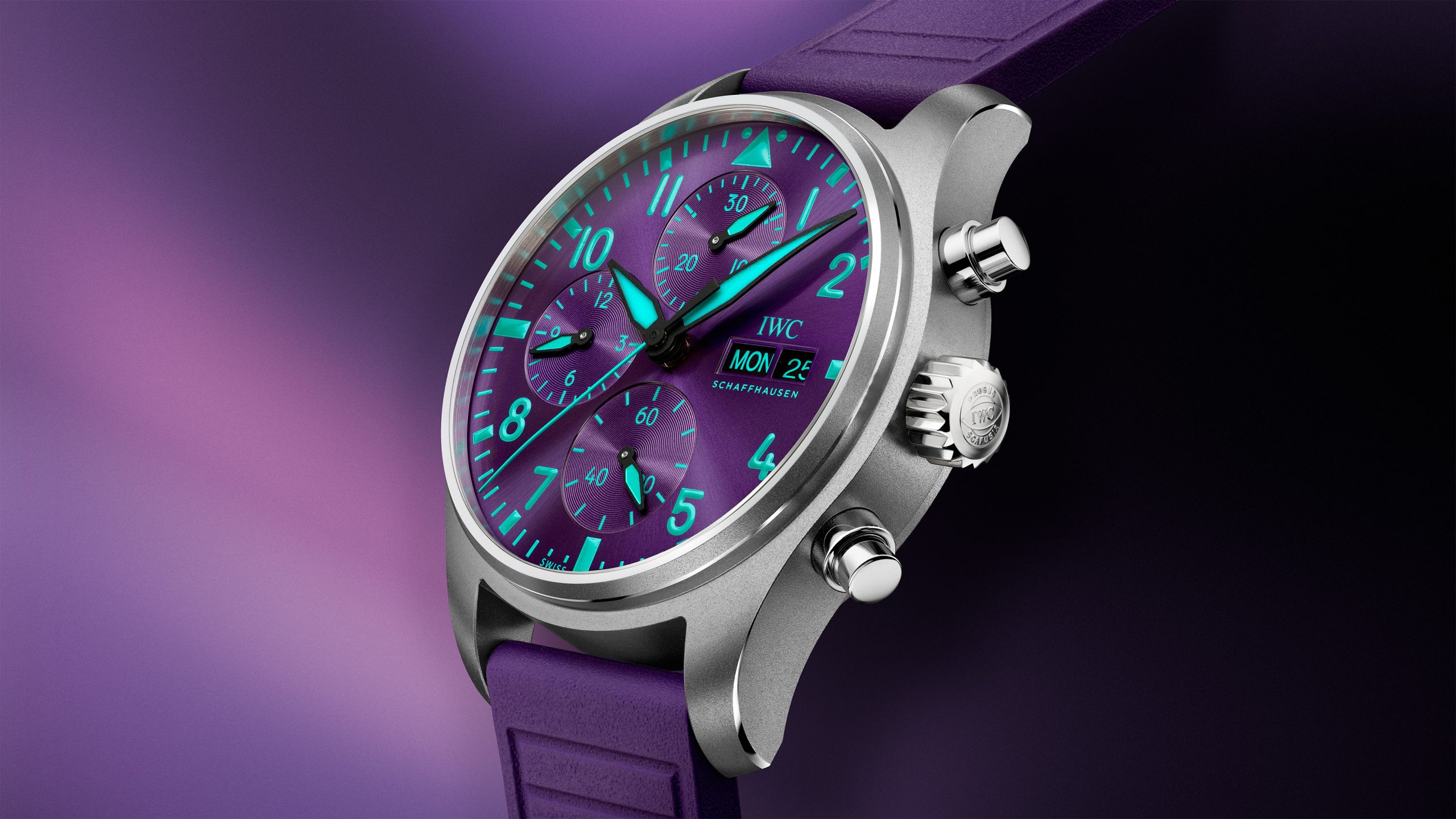
Singapore’s Formula 1 weekend has always looked different. Held beneath floodlights on the Marina Bay Street Circuit, the race transforms the city into a nocturnal spectacle of speed, heat and saturated colour. It is this distinctive atmosphere — and one of Singapore’s most important natural symbols — that has shaped IWC Schaffhausen’s latest motorsport-inspired watch. …
Continue reading “IWC’s purple Formula 1 chronograph pays tribute to Singapore after dark”

From gorilla encounters in Uganda to a reimagined Okavango retreat, Abercrombie & Kent elevates its African journeys with two spectacular lodge transformations.