Rivian Stock Is Flying After EV Maker Unveils Its R2 and R3 Models
Rivian Automotive stock was surging after the company introduced its new vehicle platform on Thursday.

 3 min
3 min
Rivian Automotive stock was surging after the company introduced its new vehicle platform on Thursday.
Investors knew the car was coming, but the electric vehicle start-up sprinkled a couple of extra surprises in its presentation to the delight of its shareholders.
As its name suggests, R2—unveiled Thursday afternoon—is Rivian’s second vehicle platform. It’s a lower-cost product that should enable the company to widen its addressable market with a cheaper price tag. The R2 will start at around $45,000, and is slated to hit the streets in 2026.
The timing was the first surprise. CEO R.J. Scaringe said the car will ship in the first half of 2026. That brings some certainty for investors and, of course, the sooner the better.
“I’m so excited about this vehicle,” said Scaringe. “I’m so excited about what it represents for us as a company in terms of achieving scale.”
Rivian’s first platform, R1, is the base for the R1T pickup truck and R1S SUV. Those two vehicles start at around $75,000.
The R2 SUV shown at the event has Rivian’s trademark look. The vehicle—which could be called the R2S if Rivian sticks with its first platform’s naming conventions—is a smaller version of the R1S. The wheelbase is a little shorter than that of the R1S.
The R2’s per-charge range will exceed 300 miles and there will be a tri-motor version that goes from zero to 60 miles an hour in about three seconds.
The second surprise was another vehicle—the R3 and sportier trim called the R3X. It’s another vehicle that will be built on the platform. Pricing and timing for the R3 weren’t part of Scaringe’s prepared remarks. Rivian didn’t immediately respond to a request for comment.
Rivian shares were up 13.8% in late trading at $12.55, while the S&P 500 and Nasdaq Composite were up about 0.9% and 1.4%, respectively.
The stock had gotten a lift even before the R2 launch event, which started around 1 p.m. ET Thursday, thanks to a new call to buy the shares on Wall Street.
Earlier Thursday, Jefferies analyst Philippe Houchois launched coverage of Rivian with a Buy rating and a $16 price target.
“Rivian has looked closest to Tesla in spirit, with its own software stack, strong brand identity, global potential, and similar growth pain,” wrote the analyst.
(Product launch events weren’t what Houchois was referring to, looked a little like a Tesla product launch event run by Elon Musk.)
The cost of the new platform will be key, the analyst said.
Rivian “is facing two critical if not existential tests this year: (1) deliver a $35,000-to-$40,000 reduction in unit production costs from redesign, purchasing, and manufacturing efficiency; and (2) demonstrate the R2 model can be developed at a significantly lower cost than R1,” wrote Houchois in his coverage launch report.
The new vehicle and Buy rating should come as a relief for investors. Coming into Thursday trading, Rivian stock was down about 53% so far in 2023. Slowing demand growth for EVs, along with disappointing production guidance from Rivian, has pushed down shares.
Rivian expects to produce about 57,000 units in 2024, roughly the same amount produced in 2023. But Houchois sees a silver lining there.
“Slower EV demand and planned second-quarter [plant] shutdowns will constrain growth this year but could also help deliver the sharp $20,000 reduction in unit costs to achieve positive gross margin exiting 2024,” wrote Houchois.
Rivian hasn’t achieved the scale required yet to generate positive profits and cash flow. It delivered about 50,000 unit to customers in 2023. Tesla wasn’t producing consistent profits until it was delivering roughly four times that amount.
Wall Street expects Rivian to use about $4.3 billion in cash in 2024. It ended 2023 with about $9.4 billion in cash, and $10.5 billion in total liquidity.
Overall, 55% of analysts covering Rivian stock have Buy ratings, according to FactSet. The average Buy-rating ratio for stocks in the S&P 500 is about 55%. The average analyst price target for Rivian stock is about $17.
 Copyright 2020, Dow Jones & Company, Inc. All Rights Reserved Worldwide. LEARN MORE




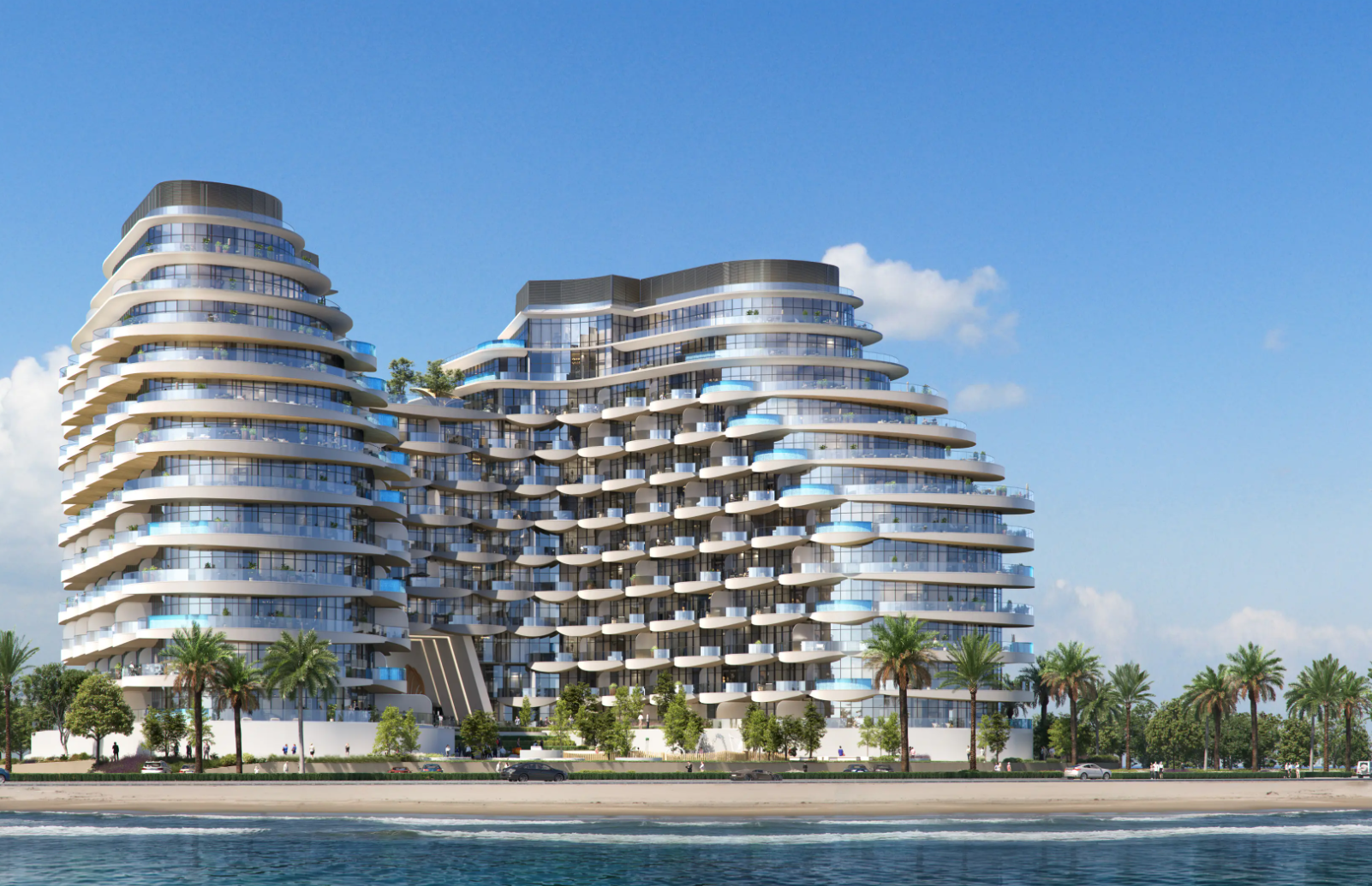
BNW Developments has established a Sydney presence, joining Arada and Sobha Realty among the growing number of UAE developers pursuing Australian buyers and development opportunities.

Australian shares fell on Thursday as Wall Street weakness, rising oil and persistent rate concerns weighed on most of the market. The S&P/ASX 200 declined 0.72 per cent to 8,702. The All Ordinaries lost 0.66 per cent to finish at 8,897. Mining stocks were hit particularly hard, while real estate also dragged on the index. …
Continue reading “ASX falls 0.7 per cent as miners and property stocks retreat”

 2 min
2 minAustralian shares fell on Thursday as Wall Street weakness, rising oil and persistent rate concerns weighed on most of the market.
The S&P/ASX 200 declined 0.72 per cent to 8,702. The All Ordinaries lost 0.66 per cent to finish at 8,897. Mining stocks were hit particularly hard, while real estate also dragged on the index.
Energy was the notable exception, gaining more than one per cent as Brent crude traded above US$103 a barrel. Oil had moved higher amid uncertainty surrounding potential US diesel-export restrictions and broader geopolitical supply risks. The move supported energy producers but renewed concern about inflation inputs across transport and the wider economy.
Gold shares were weak even as spot bullion remained historically elevated. The All Ordinaries Gold index fell about 2.25 per cent, showing that equity performance can diverge from the commodity because of valuation, currency, operating and company-specific factors.
Zip was a prominent loser, falling 11.38 per cent after the company reported short sales after the previous close. Nine Entertainment also weakened after UBS analysts warned of near-term revenue challenges associated with its advertising-supported subscription tier.
Premier Investments led larger winners despite caution about the retail environment. Breville, in which Premier owns a significant stake, also appeared among leading movers. In the broader ASX 300 screen, Myer gained 11.43 per cent and MAAS Group rose 7.93 per cent, while Lotus Resources fell 10.53 per cent. These percentage moves should be checked against company announcements and trading liquidity before attributing causes.
The Australian dollar was broadly flat at US70.38 cents. Spot gold was around US$4,280 an ounce, Brent crude approximately US$103.08 a barrel and iron ore near US$96.90 a tonne late in the session.
The rate outlook remains the central domestic catalyst. Labour-market weakness has not eliminated the possibility of an RBA increase next week, leaving banks, listed property and other rate-sensitive sectors exposed to changing expectations.
Market dashboard
S&P/ASX 200: 8,702, down 0.72 per cent.
All Ordinaries: 8,897, down 0.66 per cent.
Best sector: Energy, up more than one per cent.
Weakest areas: Real estate and materials were the major drags; confirm final sector percentages before publication.
Material winner: Premier Investments led the large-company gainers. Confirm its final closing move from the ASX before publication.
Material loser: Zip, down 11.38 per cent.
ASX 300 percentage leader: Myer, up 11.43 per cent.
ASX 300 percentage laggard: Zip, down 11.38 per cent.
AUD/USD: Approximately US$0.7038, broadly flat.

Two coming 2027 models – the first of the “Neue Klasse” cars coming to the U.S. early next year – have been revealed.

Wealthy Aussies are swapping large family homes for high-end apartments, with sales of prestige units tripling over the past decade.