There Are Now a Record Number of Billionaires—With Taylor Swift and 19-Year-Old Brazilian Heiress Livia Voigt Joining the List

 3 min
3 min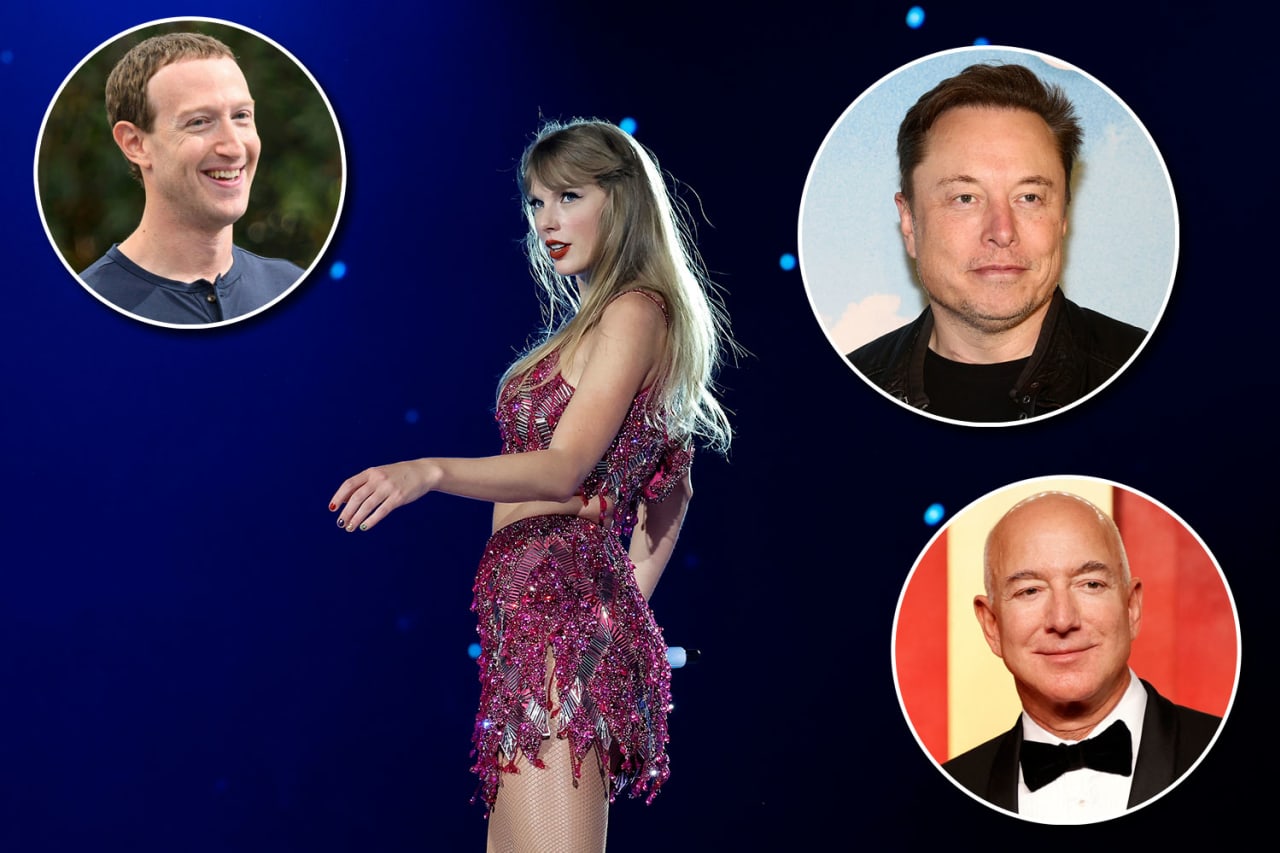
For celebrities like Taylor Swift, Rihanna, Tiger Woods, and Steven Spielberg, fame is bringing fortune.
They’re among 14 performers, athletes, and entertainment moguls―along with Oprah Winfrey, Tyler Perry, and Michael Jordan― on the 2024 Forbes World’s Billionaires List, which the media company released this week. The annual ranking “has seen an explosion in celebrity billionaires in recent years,” Forbes said in a statement.
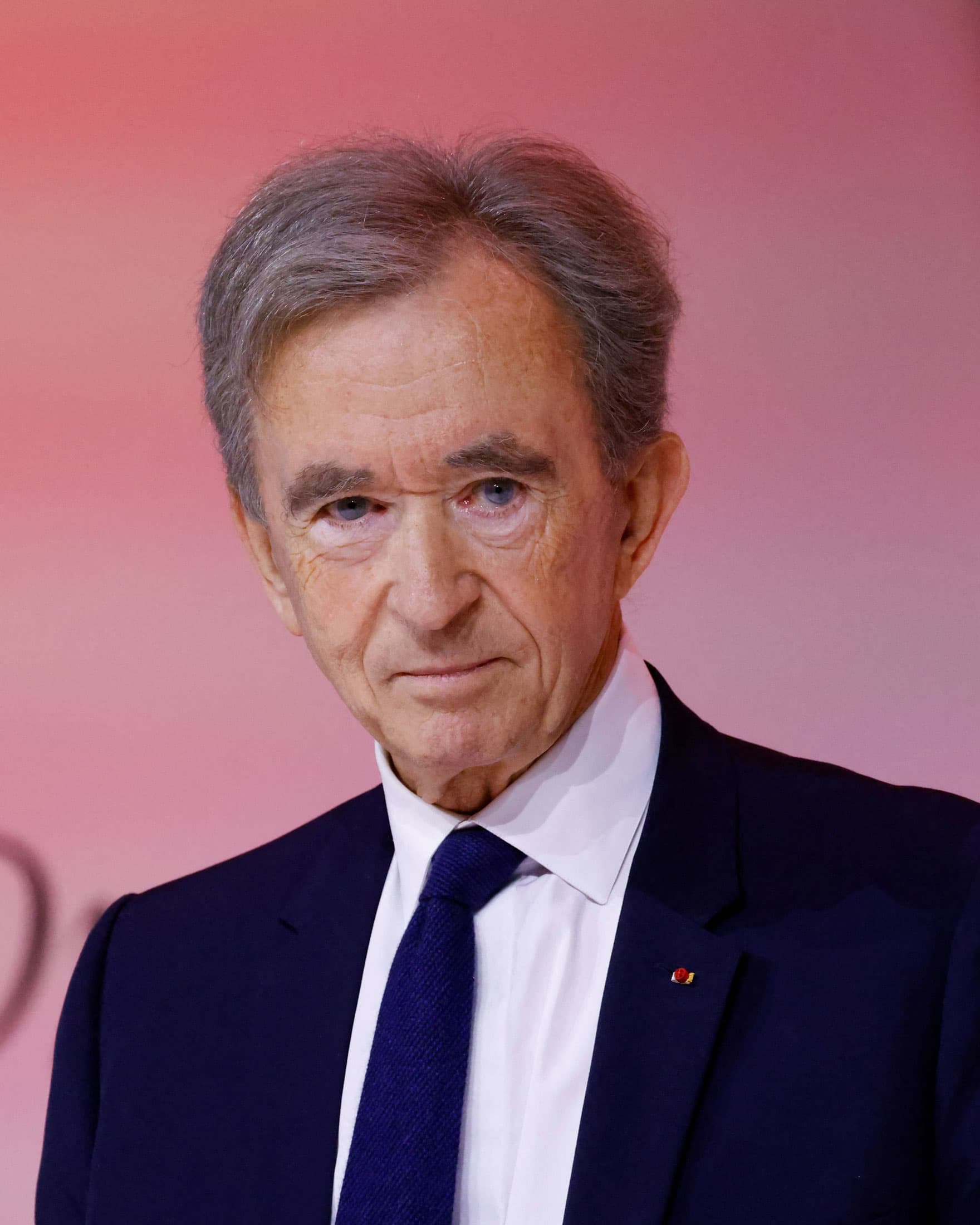
Topping the roster of fortunes: LVMH CEO Bernard Arnault , with an estimated net worth of US$233 billion―up from US$211 billion last year. Tesla and SpaceX founder Elon Musk ranked second, with a US$195 billion war chest, up from US$180 billion in 2023. Just a billion dollars short of second place, Amazon CEO Jeff Bezos placed third with US$194 billion, or $80 billion more than a year ago.
Getty Images
Tech titans dominate the rest of the top 10, which includes Meta CEO Mark Zuckerberg (US$177 billion), Oracle co-founder Larry Ellison (US$141 billion), Berkshire Hathaway CEO Warren Buffett (US$133 billion), Microsoft co-founder Bill Gates (US$128 billion), former Microsoft CEO Steve Ballmer (US$121 billion), Reliance Industries honcho Mukesh Ambani (US$116 billion), and Google co-founder Larry Page (US$114 billion.)
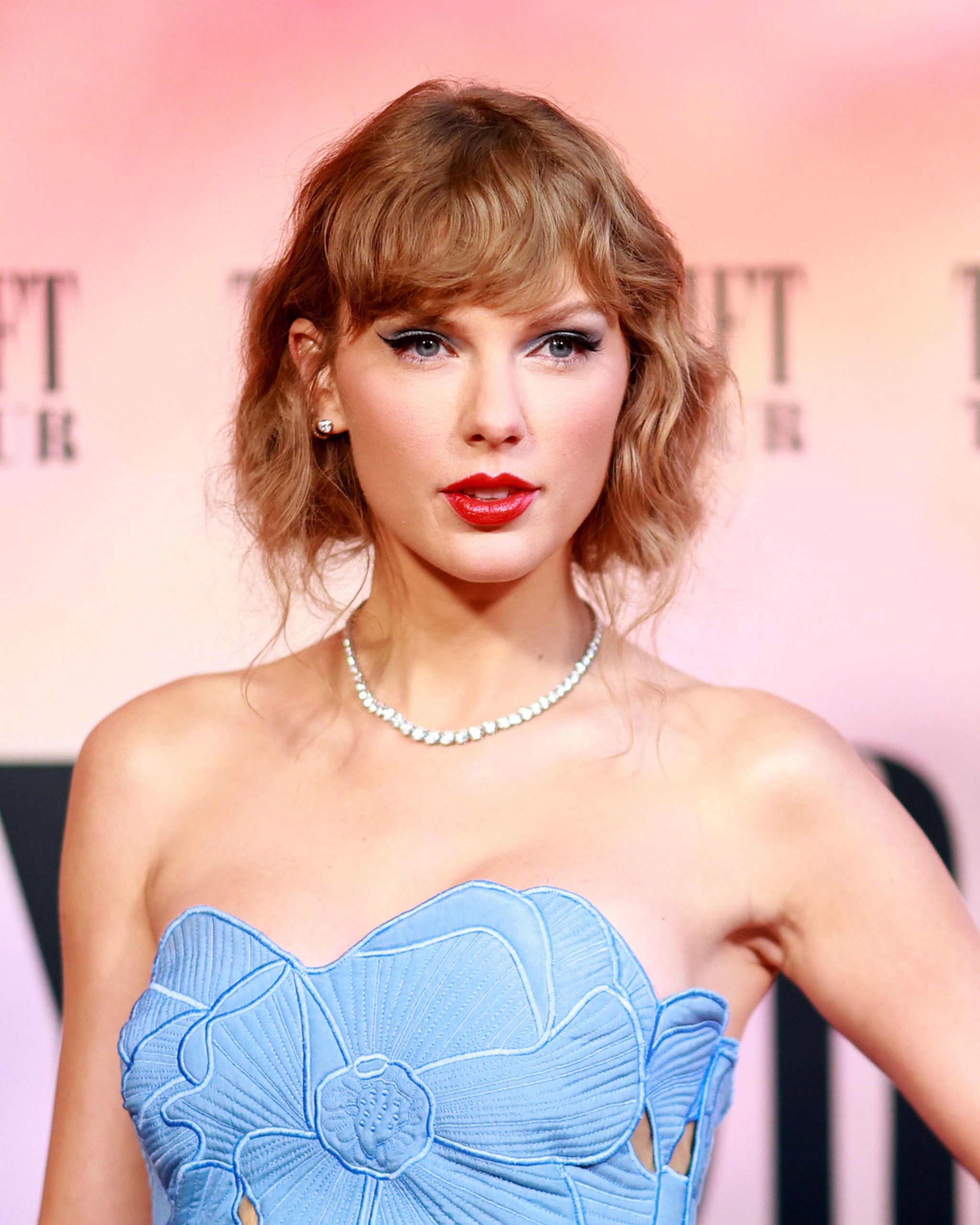
Swift made her debut on the list this year, along with 262 other “new billionaires” including shoe mogul Christian Louboutin, 19-year-old Brazilian heiress Livia Voigt, and NBA legend and entrepreneur Earvin “Magic” Johnson.
For Swift, worth an estimated US$1.2 billion, it’s the second star turn on a rich list this month. Last week, Swift made her first appearance on the 13th Hurun Global Rich Report, an annual survey from China-based media and research firm Hurun.
But the ultra wealthy had a very good year regardless of name recognition. The world now has more billionaires than ever, Forbes reported, with 2,781 in all. That adds up to 141 more than last year’s list, and 26 more than a record 2,755 billionaires set in 2021.
The richer are also richer, according to the list. Billionaires’ aggregate worth is now US$14.2 trillion, up US$2 trillion from 2023―and US$1.1 trillion above the previous record, also set in 2021, Forbes said.
A “flurry” of billionaires are getting rich through the AI “gold rush,” according to Forbes.
Getty Images
“The poster child for all this is Nvidia co-founder and CEO Jensen Huang ,” whose company’s stock surged 300% over the past year. Open AI CEO Sam Altman , who briefly lost control of his company last year, also made the list, owing to canny investments in his former role as head of VC firm Y Combinator.
The U.S. leads in billionaires, with a record 813 worth a total US$5.7 trillion. China ranked second, with 473 billionaires whose combined net worth is US$1.7 trillion. India set a record with 200 billionaires this year. Forbes said it calculated wealth using stock prices and currency exchange rates as of March 8. Two-thirds of the billionaires on the list emerged wealthier than a year ago; one-third have lost money.
Forbes’ list diverged from the Hurun rich list, where Musk reigned as the world’s wealthiest and Bezos and Arnault ranked second and third, respectively. The Hurun list was even richer, ranking 3,279 billionaires, up from 3,112 the previous year. The number of billionaires increased by 5% and their total wealth was up 9%, Hurun said.
 Copyright 2020, Dow Jones & Company, Inc. All Rights Reserved Worldwide. LEARN MORE




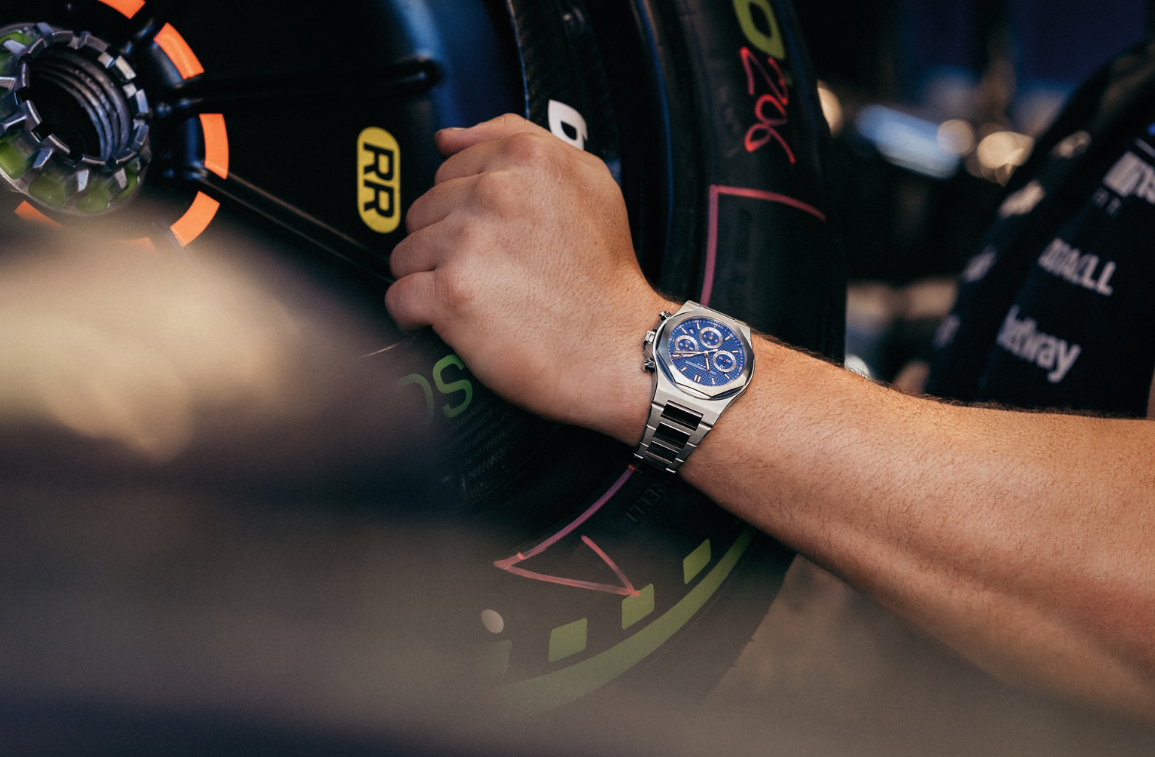
The Swiss watchmaker’s first collaboration with Atlassian Williams F1 Team produces two sporting Laureato models inspired by the team’s 2026 racing car.
Victorian auction buyers will soon receive a piece of information that has traditionally been withheld until bidding reaches it: the vendor’s reserve price. Under new property-sale and underquoting laws, agents must publish the agreed reserve at least seven days before an auction or fixed-date sale. Most changes begin on 1 October 2026 and apply to …
Continue reading “Victoria’s New Auction Rules Will Force Reserve Prices Into the Open”

The Swiss watchmaker’s first collaboration with Atlassian Williams F1 Team produces two sporting Laureato models inspired by the team’s 2026 racing car.
3 minGirard-Perregaux has revealed the first watches created through its partnership with Atlassian Williams F1 Team, bringing the British racing team’s colours to one of Switzerland’s most recognisable integrated-bracelet designs.
The collaboration comprises two 42mm steel watches: the time-and-date Laureato Williams Edition and the more technical Laureato Chronograph Williams Edition.
Both retain the familiar architecture of the Laureato, including its octagonal bezel, integrated bracelet and mix of polished and satin-finished surfaces. The influence of Williams is comparatively restrained, appearing through colour, discreet branding and details inspired by the team’s current Formula 1 car.
It is a welcome departure from the oversized logos and literal automotive references that can characterise motorsport watches.
The Williams FW48 inspires the dial
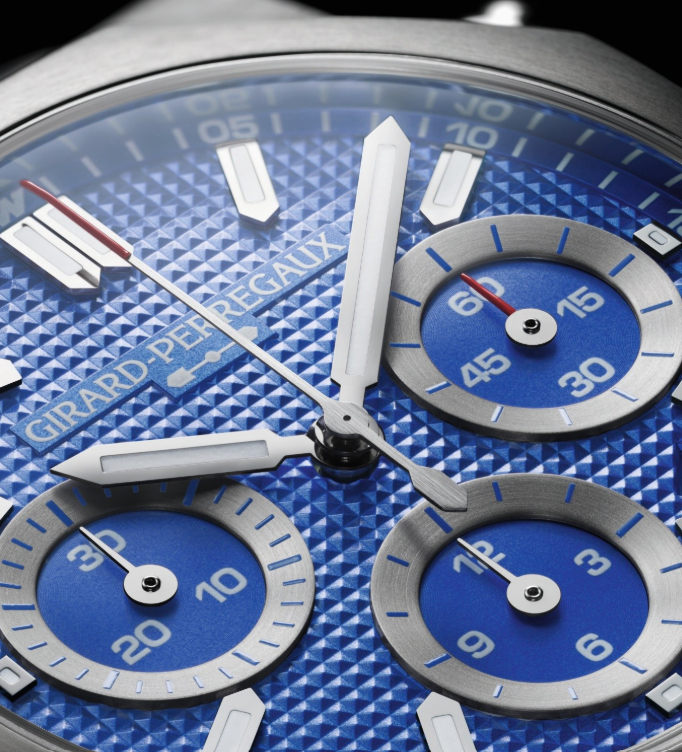
The centrepiece of both models is a blue Clous de Paris dial informed by the livery of the Williams FW48, the car being campaigned by the team during the 2026 Formula 1 season.
A small Williams “W” replaces the conventional marker at 12 o’clock, while the team emblem appears on the sapphire crystal caseback. Red accents echo the keyline used on the FW48 without overwhelming the established Laureato design.
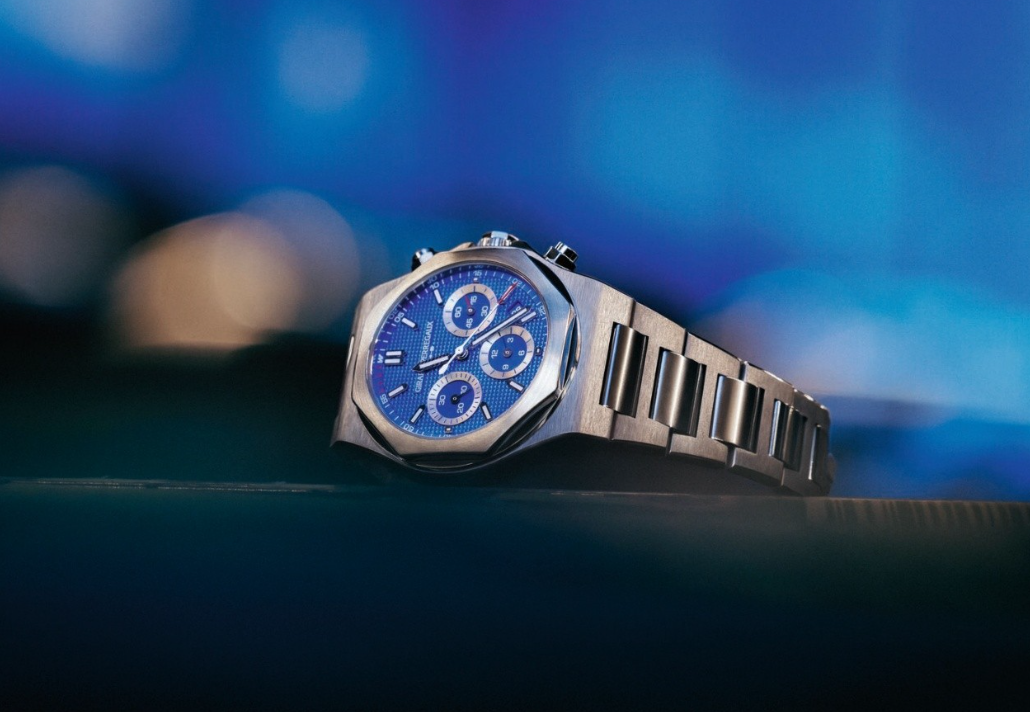
The three-hand model offers the quieter interpretation. Baton-shaped, rhodium-plated hands and hour markers are filled with white-emitting luminescent material, while a date window sits at three o’clock.
The chronograph creates a more obvious connection with motorsport. Three subdials are framed by rhodium-plated rings, with red appearing on the small-seconds hand and the tip of the central chronograph seconds hand.
Both watches measure 42mm across and are water resistant to 100 metres. The standard Laureato has a case thickness of 10.68mm, while the additional mechanics of the chronograph increase its profile to 12.16mm.
Two in-house automatic movements
The Laureato Williams Edition is powered by Girard-Perregaux’s self-winding GP01800 calibre. The movement provides hours, minutes, central seconds and the date, with a minimum power reserve of 54 hours.
The Laureato Chronograph Williams Edition uses the automatic GP03300 calibre, which combines its chronograph functions with a date display and offers a minimum power reserve of 46 hours.
Both movements operate at 28,800 vibrations per hour and can be viewed through their sapphire crystal casebacks.
Their decoration provides a more traditional counterpoint to the Formula 1 association. Finishing techniques include Côtes de Genève, circular graining, bevelling, mirror polishing, satin finishing, engraving and snailing.
The result is less about reproducing the appearance of a racing car than identifying the common ground between two mechanical disciplines: precision, incremental development and the considerable work hidden beneath the finished product.
Parallel histories
The timing of the partnership draws attention to the remarkably similar ages of its two protagonists.
Girard-Perregaux introduced the original Laureato in 1975, establishing an integrated-bracelet sports watch with a distinctive octagonal bezel. Williams entered Formula 1 two years later in 1977.
Both have evolved continuously across the five decades since. The Laureato has moved through different sizes, materials and complications, while retaining its central design language. Williams, meanwhile, has remained one of Formula 1’s most historically significant teams.
That gives the collaboration greater credibility than a simple licensing exercise. Girard-Perregaux and Williams are not being connected solely through the familiar language of speed. Their stronger link is a shared dependence on engineering, testing and the accumulation of specialist knowledge.
The watches are described as the beginning of a longer collaboration, suggesting further Williams editions may follow.
Girard-Perregaux’s international website lists the Laureato Williams Edition at US$16,200 and the Laureato Chronograph Williams Edition at US$20,900. Australian pricing has not been announced.
Specifications
Girard-Perregaux Laureato Williams Edition 42mm
Reference: 81010-11-3680-1GM
Case: Steel
Diameter: 42mm
Thickness: 10.68mm
Crystal: Anti-reflective sapphire crystal
Dial: Blue Clous de Paris pattern
Movement: Automatic GP01800
Functions: Hours, minutes, central seconds and date
Power reserve: Minimum 54 hours
Water resistance: 100 metres
Bracelet: Integrated steel bracelet with triple-folding clasp
International price: US$16,200
Girard-Perregaux Laureato Chronograph Williams Edition 42mm
Reference: 81020-11-3681-1GM
Case: 904L steel
Diameter: 42mm
Thickness: 12.16mm
Crystal: Anti-reflective sapphire crystal
Dial: Blue Clous de Paris pattern with three chronograph counters
Movement: Automatic GP03300
Functions: Chronograph, hours, minutes, small seconds and date
Power reserve: Minimum 46 hours
Water resistance: 100 metres
Bracelet: Integrated 904L steel bracelet with triple-folding clasp
International price: US$20,900

Formula 1 may be the world’s most glamorous sport, but for Oscar Piastri, it’s also one of the most lucrative. At just 24, Australia’s highest-paid athlete is earning more than US$40 million a year.
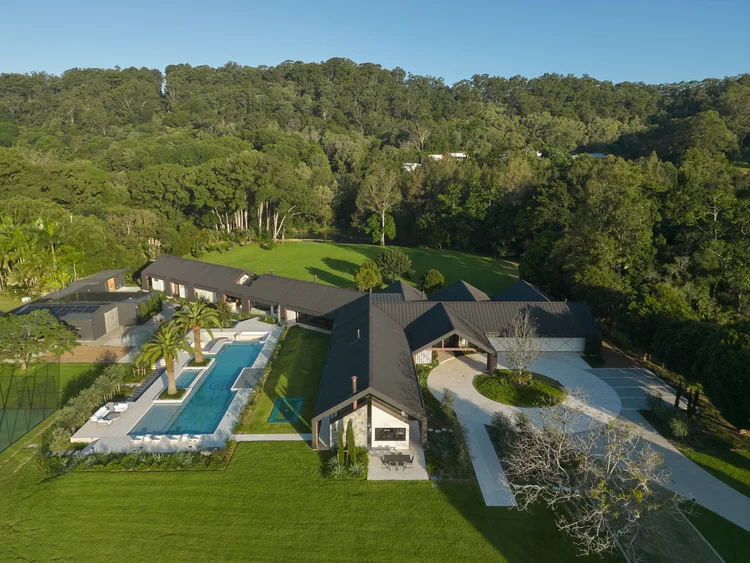
Margot Robbie may have travelled from a Queensland farm to the highest reaches of Hollywood, but a reported $28 million property deal suggests the Gold Coast has never lost its hold on her. The Australian actor and producer is believed to be the mystery buyer of Redwood, a seven-acre Currumbin Valley estate transformed into the …
Continue reading “Margot Robbie Reportedly Behind $28 Million Currumbin Valley Homecoming”