Where to Invest in 2025: Top-Performing Suburbs in Australia’s Property Market
Australia’s market is on the move again, and not always where you’d expect. We’ve found the surprise suburbs where prices are climbing fastest.
 3 min
3 min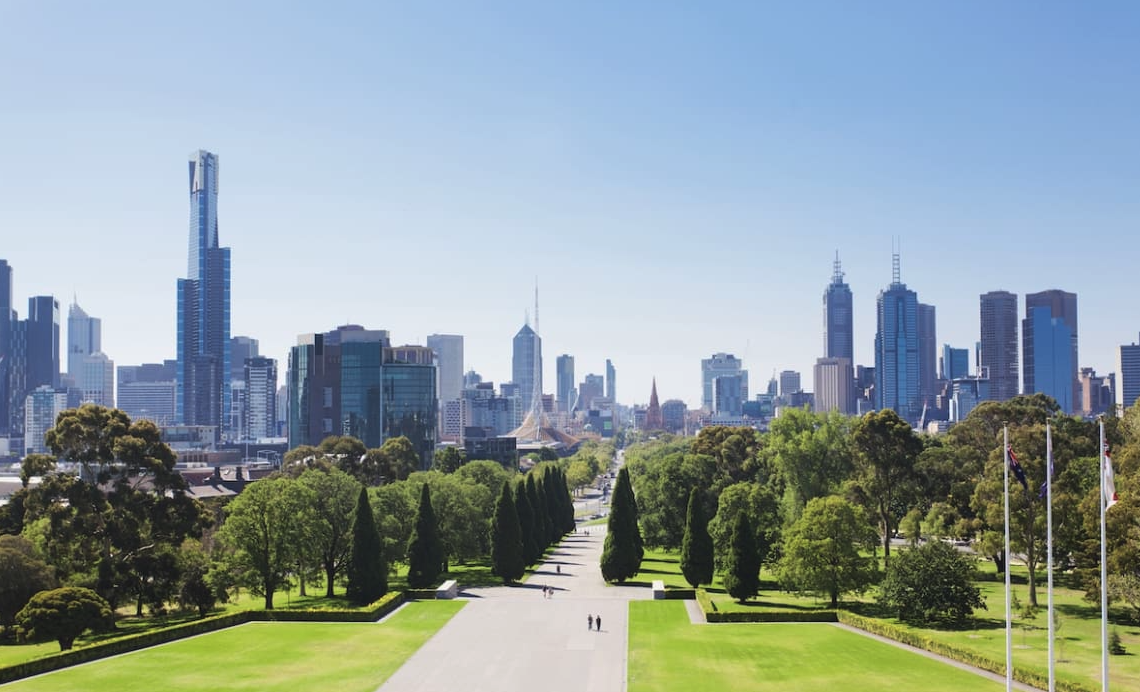
Australian property is once again in the midst of a growth cycle. After prices cooled in late 2024, 2025 has, aside from a flat January, delivered consistent gains. Much of this momentum is being fuelled by the Reserve Bank of Australia’s ongoing easing cycle, which has yet to reach its “terminal rate,” with several more rate cuts expected through the remainder of 2025 and into 2026.
Affordability has become the defining challenge in the residential real estate market. First home buyers are struggling to break in, squeezed by high entry prices, while many investors have stayed on the sidelines in recent years amid elevated interest rates and intense competition.
Yet the hunt for the next property hotspot never stops. It might not have the glamour of Bondi or Byron Bay. Still, a number of pockets within Australia’s largest capital cities are outperforming the broader market — and they’re attracting growing attention from buyers and investors alike.
We’ve looked at the best-performing SA4 regions from property data analytics firm Cotality.
Brisbane
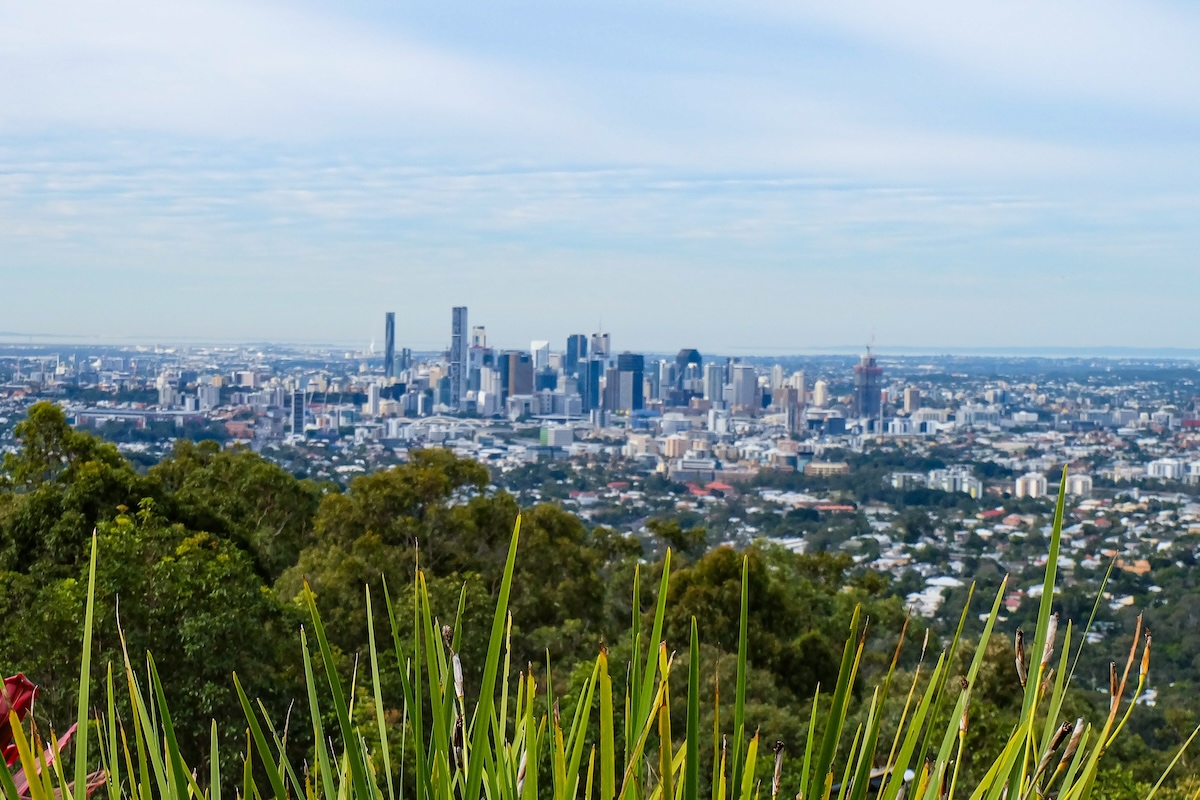
Brisbane has been the strongest capital city property market over the last two years. The market has been supercharged by the announcement of the 2032 Brisbane Summer Olympics, but the market has been on fire since 2020, when there was an exodus from the southern states to the Sunshine States, which drove Brisbane to Australia’s second most expensive capital city.
Over the last 12 months, Brisbane dwelling values have risen by 7.3%, only bettered by growth in Darwin. There are some pockets around the city which have outperformed the market. The top five SA4s (regions) are:
- Nundah (North)
Median value $988,394
Annual change +11.8% - Ipswich Hinterland (Ipswich)
Median $790,119
Annual +10.7%. - Redcliffe (Moreton Bay – North)
Median $903,286
Annual +10.0%. - Caboolture Hinterland (Moreton Bay – North)
Median $888,571
Annual +10.0%. - Ipswich Inner (Ipswich)
Median $726,560
Annual +9.9%.
Brisbane is not only posting solid citywide gains, but the strongest pockets are outside the CBD. Growth is concentrated in Moreton Bay, Ipswich and northern corridors (Nundah/Redcliffe). That pattern points to ongoing demand for more affordable family housing and lifestyle submarkets within commuting distance of the city.
Melbourne
Melbourne has been the polar opposite to Brisbane in the last few years. It has been one of the worst-performing property markets, slipping to the sixth most expensive capital city in the rankings with a median dwelling value of $803,000. Only Hobart and Darwin media dwelling values are lower.
Dwelling values are only up 0.5% year to date; however, 2025 has been more positive since the RBA started cutting rates. Dwelling values are up 2.4% year to date, and growth is becoming more consistent, something which Melbourne has struggled with since being the most locked-down city in the world during the pandemic. Struggling to respond from then.
There have been some pockets, however, where growth has been stronger over the last 12 months. The top five SA4 regions have been:
- Frankston (Mornington Peninsula)
Median $793,152
Annual +6.0%. - Tullamarine–Broadmeadows (North West)
Median $709,167
Annual +5.0%. - Knox (Outer East)
Median $942,980
Annual +4.5%. - Dandenong (South East)
Median $757,195,
Annual +3.8%. - Sunbury (North West)
Median $694,151
Annual +3.8%.
These top performers show growth focused on middle-ring and growth-corridor suburbs (Mornington Peninsula, northwest and outer east). For Melbourne readers, the implication is that recovery is geographically uneven — steady gains in commuter and lifestyle belts rather than a broad inner-city surge.
Sydney
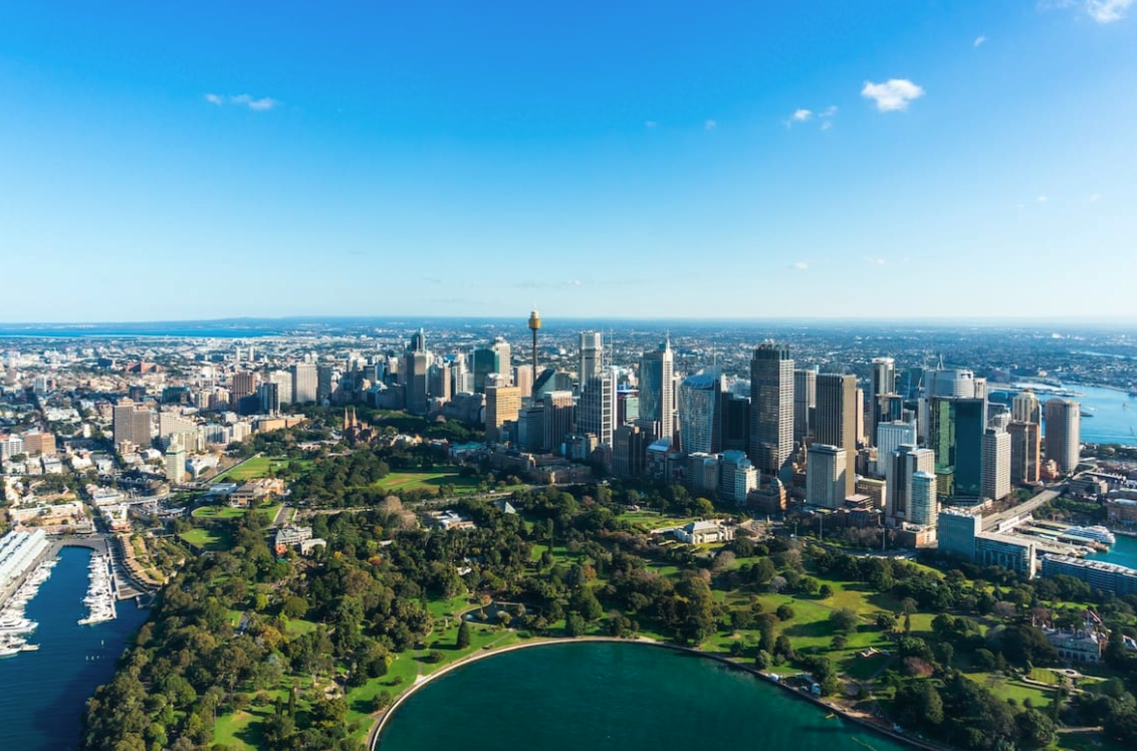
Sydney, Australia’s most expensive capital, sits somewhere between Brisbane and Melbourne in its performance. The Harbour Capital is often the most impacted during a downturn, given the relative affordability of Sydney compared to the other capital cities. But then when there are good times, Sydney usually is the strongest beneficiary.
Dwelling prices are 2.6% up year to date, but the house market is largely outstripping the unit growth. Houses were up 0.8% in April, the strongest performing capital city house market on the eastern seaboard.
Sydney’s best-performing regions have been found well outside of the postcard suburbs Sydney is known for. The five best-performing SA4s in Greater Sydney by 12-month growth are:
- St Marys (Outer West & Blue Mountains)
Median $1,024,688
Annual +7.4%. - Fairfield (South West)
Median $1,189,601
Annual +7.0%. - Liverpool (South West)
Median $1,123,438
Annual +6.8%. - Richmond–Windsor (Outer West & Blue Mountains)
Median $945,556
Annual +6.7%. - Bankstown (Inner South West)
Median $1,408,088
Annual +6.6%.
Sydney’s strongest performers are dominated by the western and south-western corridors — affordable family suburbs and growth-area precincts where demand and price momentum remain strong. The much larger median values in some of these SA4s also show that even within growth suburbs, prices are high relative to national benchmarks.

Technology and semiconductor shares fell sharply as investors questioned the debt financing the AI infrastructure boom and confronted higher rates and Chinese competition.
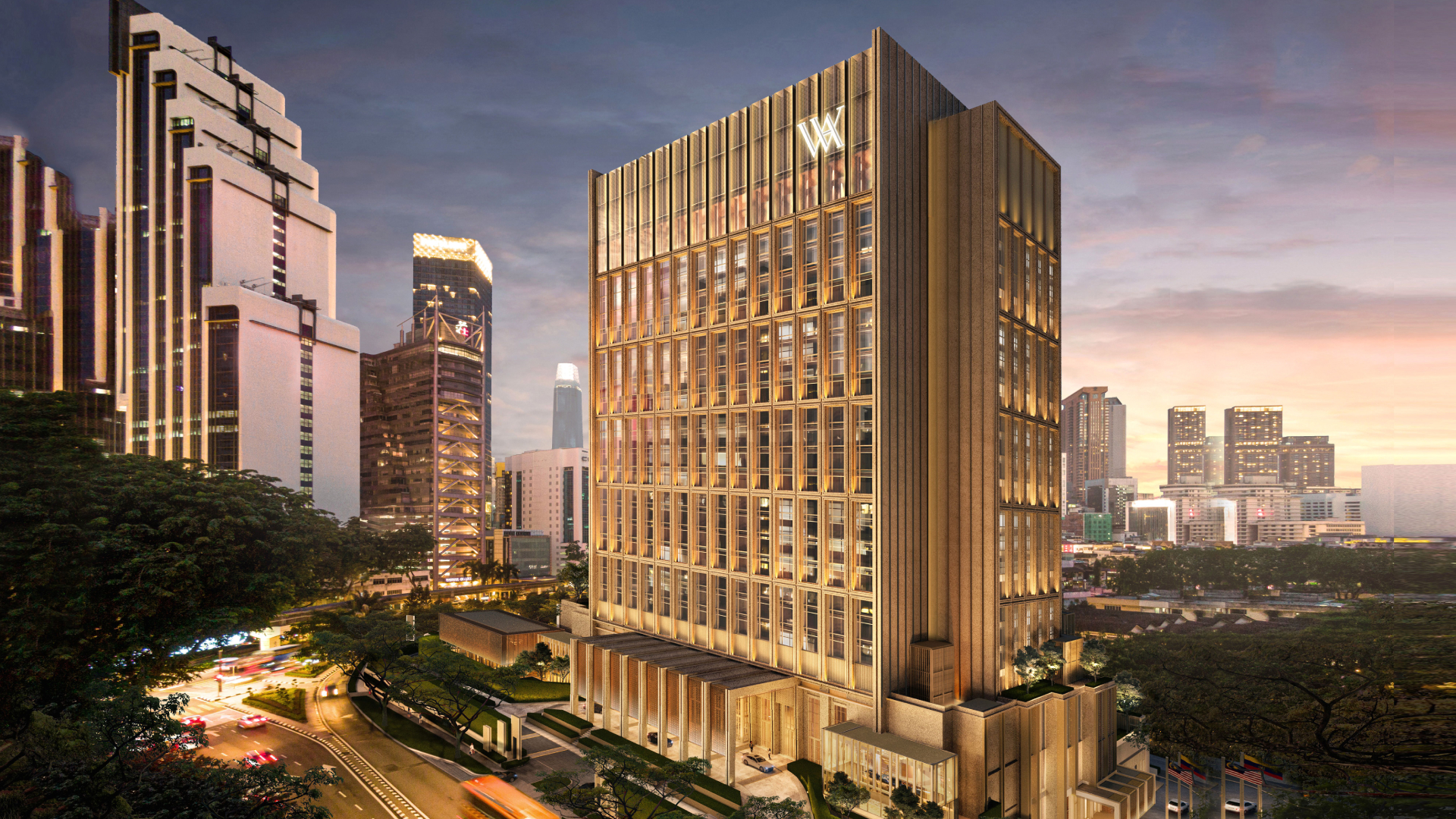
Waldorf Astoria Kuala Lumpur is scheduled to open on 30 October, introducing the Hilton luxury brand to Malaysia with an all-suite hotel in the city’s Golden Triangle.
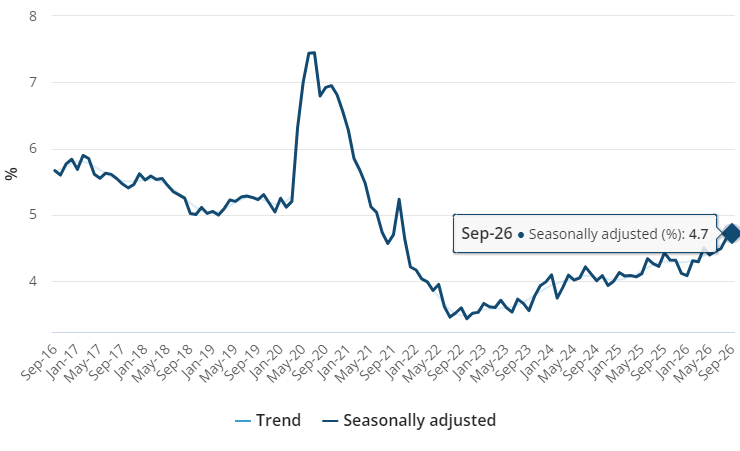
Employment fell by 39,300 and unemployment held at a revised 4.7 per cent, giving the RBA more room to pause in November.
2 min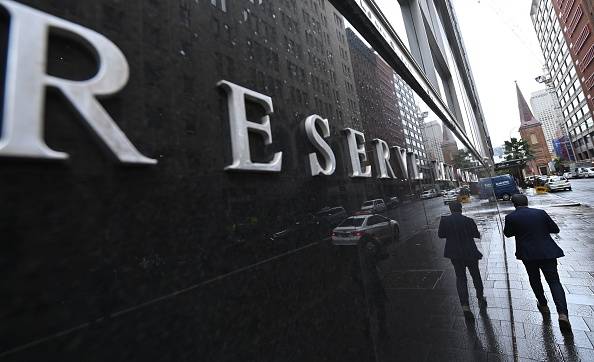
Australia’s labour market weakened in September, reducing—but not eliminating—the case for another Reserve Bank rate rise in November.
The seasonally adjusted unemployment rate was 4.7 per cent, according to the Australian Bureau of Statistics. August was revised to the same level, while September employment fell by 39,300 people. The number of unemployed Australians increased by 8,900 to 732,000.
The weakness extended beyond the headline rate. The employment-to-population ratio fell 0.3 percentage points to 63.6 per cent, participation declined 0.2 points to 66.8 per cent and underemployment edged up to 6.3 per cent. Part-time employment fell by 73,700, partly offset by a 34,400 increase in full-time work.
For the RBA, this is a clearer sign that restrictive monetary policy is cooling demand. Higher unemployment and falling employment reduce wage pressure over time and increase the risk that another rate rise would push the economy harder than necessary.
That makes a November increase less certain. It does not make a hold inevitable. The RBA must balance labour-market softness against inflation, and the September-quarter consumer price index due later in October will carry more direct weight in the decision.
For mortgage holders and property investors, the practical conclusion is not to trade one data release. Borrowers should continue testing repayments at higher rates, preserve liquidity and avoid basing a purchase on an assumed near-term reversal. Refinancing decisions should be assessed against total cost, not simply the advertised rate.
Property markets may initially welcome a reduced probability of another increase because borrowing capacity and sentiment are highly rate-sensitive. But a weakening labour market is not unambiguously positive for housing: job security supports mortgage serviceability, rental demand and buyer confidence.
The September numbers have given the RBA a credible reason to wait. Inflation will determine whether it can use it.

A divide has opened in the tech job market between those with artificial-intelligence skills and everyone else.

Travellers are swapping traditional sightseeing for immersive experiences, with Africa emerging as a must-visit destination.