


Scammers Tried to Sell Graceland. How to Prevent Your Home From Being Next.
Even if you don’t lose your property, title fraud can have real consequences

 4 min
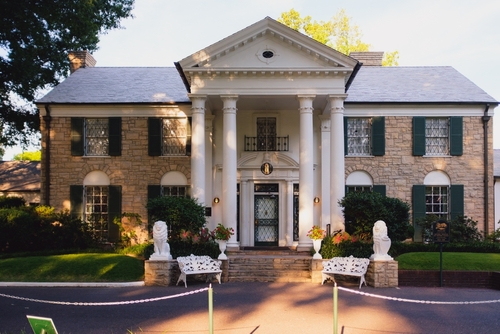
When a company tried in May to auction off Graceland, the iconic former home of music legend Elvis Presley in Memphis, a Tennessee court stepped in to stop it.
The court stopped the sale because the company that was trying to auction off the property was fake. Also fraudulent were the supporting documents the fraudsters presented that purported to show that Lisa Marie Presley, Elvis’s late daughter, had defaulted on a loan they claimed they made to her for which she used Graceland as collateral.
While this audacious and complex attempt at defrauding a famous family made national news, most other cases of attempted title theft or mortgage fraud don’t. But homes such as Graceland, where the original owners are deceased, are popular targets for scammers, according to Victor Petrescu, a real-estate attorney with Levine Kellogg Lehman Schneider & Grossman in Miami.
Homes with out-of-state owners, vacant plots of land and investment properties owned by limited liability companies are also particularly vulnerable, he said.
Here’s how it works: A fraudster targets your house and assumes your identity, using tactics similar to identity thieves to acquire your personal information and create fake IDs. He or she then tries to sell it to an unsuspecting buyer by executing a forged deed in your name. An alternative scam is to submit a mortgage application in your name to get cash out of the house.
The good news is that except in very rare circumstances, a fake deed won’t transfer your title, even if it initially gives the appearance of a transfer in public records, nor will a forged mortgage create any obligation for an innocent homeowner to pay. The bad news is that restoring your title and clearing the property of any fraudulent mortgages can be a lengthy and expensive process.
Sarah Frano, a vice president and real-estate fraud expert at First American Title Insurance Co., said there has been a sharp rise in seller impersonation fraud over the past few years, where a fraudster impersonates an owner by forging a deed conveying property to an unsuspecting buyer.
Several factors are driving the increase, including the rising popularity of remote closings and notarizations, where the parties aren’t present in person at the closing table. Home equity, which hit a record $16.9 trillion in the first quarter of 2024, according to data provider Intercontinental Exchange , is also contributing to the incidence of fraud. For scammers, that equity, which can be unlocked by a sale of a home, a cash-out refinance or a second mortgage, is an opportunity to sell the property out from under you or to steal your identity to mortgage your house.
“If you bought a house and have a big mortgage, the chances of it being stolen from you are quite slim,” said Richard Howe, register of deeds of the Northern District of Middlesex County in Lowell, Mass. “The key for this is for the wrongdoers to get a loan against the property or sell it, and nobody’s going to buy a property or put a loan against it if there is a big mortgage on it.”
Petrescu said he’s also seeing a rising number of title theft cases involving investment properties owned by limited liability companies, where a partner who was recently kicked out of the LLC continues to act and executes documents trying to transfer the property when he’s no longer part of the company or authorised to sell it.
Still, the actual risk of losing your home to title theft is quite low. “There would have to be an extreme set of facts showing the owner was aware of the issue and took no action to correct it before that deed could be deemed as valid,” said Petrescu.
But there are ramifications nonetheless. If a homeowner discovers a fraudulent deed or mortgage while applying for a home-equity loan, for example, that could push the loan application back six months or more while title gets cleared, Petrescu said. And, if they are attempting to sell the property, a title company may not want to insure the property if there is a rogue deed recorded in the county records even if it is apparent that it wasn’t a valid transfer. “So, this has real consequences,” he said. “Even if someone is not going to lose title to their property, it could be a huge setback for them.”
Here are some things you can do to avoid becoming the victim of home-title theft.
Be alert to the early signs . After targeting a vulnerable property, a home-title thief will usually try to impersonate you using forged documents, such as a Social Security card or driver’s license. There are telltale signs that someone may be trying to steal your identity. Credit inquiries will show up on a credit report, so be sure to check your credit reports regularly or consider subscribing to one of the paid services that monitors credit on your behalf. You can also freeze your credit, which restricts access to your credit report. If you receive strange bills in the mail or phone calls from lenders you haven’t contacted, or if strangers start asking questions about who owns your vacant vacation home, those can also be signs that home-title theft may be under way.
Monitor your title . Many counties offer free title monitoring services that notify owners if a new document is recorded against their property. In the Northern District of Middlesex County in Lowell, Mass., owners can register up to three residential properties, according to Howe, who noted that in his 29-year career he has only seen one case of title fraud, in January 2024, and that involved a property that was vacant because the owners were deceased. Frano suggests setting up a free Google alert for your property address. That way, if a fraudster lists your property for sale, an alert may help you stop it before it happens.
Buy the right type of title insurance . While lenders require title policies to insure their own interests when a property is mortgaged, it is a good idea to also purchase an owner’s policy when you purchase a house. There are two different types of owners’ policies, and, unfortunately, they are similarly named, which can get confusing. A standard American Land Title Association (ALTA) Owner’s Policy provides coverage only for forgeries that took place before you purchased your home, such as fake deeds in the chain of title before your closing. But this type of policy won’t protect you against forgery occurring after your property purchase. For that, you may want to consider the more comprehensive Homeowner’s Policy of Title Insurance, which does cover forgeries occurring after your closing, according to Steve Gottheim, ALTA general counsel. That enhanced coverage, available in most states, comes at an additional cost, though, which varies based on the location and purchase price of your home. Either policy will cover you for losses you incur due to fraud or forgery, including attorney fees and expenses incurred to clear title, up to the policy limit, but only the Homeowner’s Policy will cover fraud after you purchase the home.
 Copyright 2020, Dow Jones & Company, Inc. All Rights Reserved Worldwide. LEARN MORE


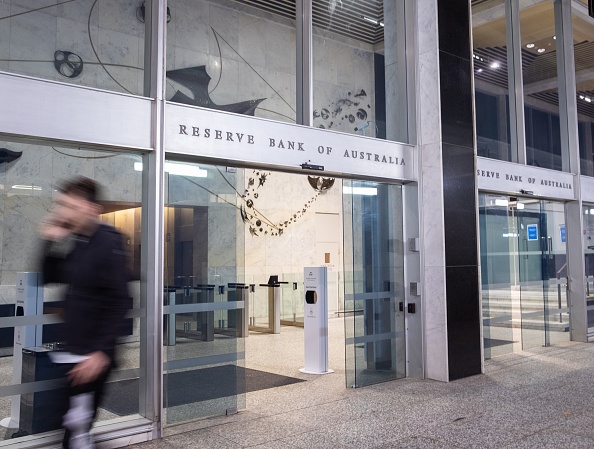
Unemployment hit 4.9% in October, but with inflation at 4.3% the big four aren’t tipping a February RBA cut. Here’s what CBA, Westpac and NAB say.

Dutch studio Vripack took cues from a Shirley Temple song for Lollipop, a 37.4-metre Moonen superyacht built for long-range cruising.
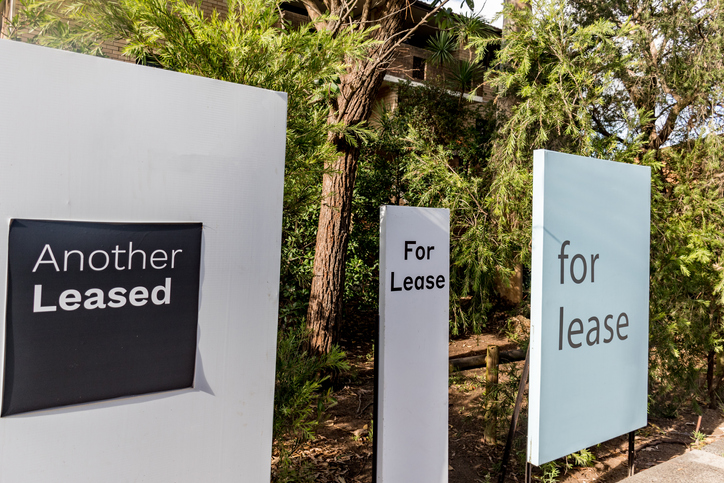

Unemployment hit 4.9% in October, but with inflation at 4.3% the big four aren’t tipping a February RBA cut. Here’s what CBA, Westpac and NAB say.
3 minUnemployment is at a five-year high and the talk has turned from hikes to cuts. But with inflation still well above target, the big banks aren’t ready to promise relief by February.
Three weeks ago the Reserve Bank lifted the cash rate for the fifth time this year. The conversation has now flipped.
Last Thursday the Australian Bureau of Statistics reported that the seasonally adjusted unemployment rate rose to 4.9 per cent in October, up from 4.7 per cent. That is the highest reading since October 2021. Economists had expected about 25,000 new jobs and an unchanged jobless rate.
“In October, there were 44,000 less employed people and 18,000 more unemployed people,” said Sean Crick, the ABS head of labour statistics. Youth unemployment rose to 11.3 per cent. October was also the second straight monthly fall in employment, following a drop of more than 36,000 in September.
Ahead of the RBA’s forecasts
The timing is awkward for the RBA. On 3 November its Monetary Policy Board raised the cash rate by 25 basis points to 4.85 per cent, the highest level since 2008. The vote was 6–3, with three members preferring to hold at 4.60 per cent.
The November Statement on Monetary Policy had forecast unemployment averaging 4.7 per cent in the December quarter, and reaching 4.9 per cent only at the end of 2027. October’s figure got there more than a year early.
Unemployment is also now above the RBA’s own estimate of full employment. Westpac economist Ryan Wells said in the bank’s labour force note that “slower hiring is now being compounded by more firing.” Westpac now expects unemployment to peak at 5.2 per cent by mid-2027, up from its earlier forecast of 4.8 per cent.
Markets moved quickly. Before the data, interest rate swaps had priced a 28 per cent chance of a rate rise by February. Afterwards they implied a roughly 20 per cent chance of a cut by March, with one cut fully priced by November 2027.
The inflation problem
So why isn’t anyone calling a February cut? Inflation hasn’t eased.
Headline CPI rose 4.3 per cent in the year to September, up from 4.0 per cent in August. Housing was the biggest contributor, up 5.2 per cent. Trimmed mean inflation, the RBA’s preferred underlying measure, was 3.6 per cent.
The RBA expects headline inflation to peak at 4.5 per cent this quarter. It sees both headline and underlying inflation staying above 3 per cent until the end of 2027, and not returning to the 2.5 per cent midpoint until mid-2028. The Board also flagged “the increasing risk that higher inflation expectations will become embedded.”
Wages add to the caution. The Wage Price Index rose 1.1 per cent in the September quarter, the strongest quarterly gain since late 2023, taking annual growth to 3.5 per cent. That is still below inflation, so real wages are falling, but the quarterly pace is not what a central bank trying to cool prices wants to see.
Where the banks stand
None of the big four is forecasting a cut at the February meeting. What has changed is the consensus that hikes are over.
- NAB: “We think the RBA are done,” chief economist Sally Auld said on 9 November. She pointed to weaker growth in the first half of 2026, business conditions below their long-run average and fading momentum in household spending. After the jobs data, NAB senior economist Taylor Nugent said unemployment was already well above where the RBA expected it to be this year, which supports the view that the tightening cycle is finished.
- CommBank: in its 2 November forecast update, CBA warned of a “sharper, longer slowdown”. It now expects GDP growth to fall to 1 per cent by mid-2027 and unemployment to peak at 5.1 per cent at the end of 2027. It still has two cuts pencilled in for August and November 2027, though it says the timing is uncertain.
- Westpac: sees November’s increase as the peak of the cycle and expects the Board to pause in December. It said a February move could not be ruled out but looked increasingly unlikely. That comment referred to a further hike, not a cut.
What it means for property
For borrowers, the change is that a sixth hike now looks unlikely. Relief, though, still looks like a story for the second half of 2027.
The housing market is already feeling the strain. NAB’s November Housing Monitor shows combined capital city dwelling prices fell 1.4 per cent in October, the seventh straight monthly fall. Prices are now 8.1 per cent below their March 2026 peak. Westpac cited a deeper-than-expected housing downturn as one reason it lifted its unemployment forecast.
What to watch
October CPI is released on Wednesday 25 November, and November jobs figures follow on 17 December. Both land before or around the RBA’s final meeting of the year next month. The December-quarter inflation figures in late January will then set up the February decision.
If unemployment keeps rising and underlying inflation falls faster than the RBA expects, February could become a real possibility. For now, the banks expect the RBA to hold rates where they are.

Victorian auction buyers will soon receive a piece of information that has traditionally been withheld until bidding reaches it: the vendor’s reserve price. Under new property-sale and underquoting laws, agents must publish the agreed reserve at least seven days before an auction or fixed-date sale. Most changes begin on 1 October 2026 and apply to …
Continue reading “Victoria’s New Auction Rules Will Force Reserve Prices Into the Open”

Formula 1 may be the world’s most glamorous sport, but for Oscar Piastri, it’s also one of the most lucrative. At just 24, Australia’s highest-paid athlete is earning more than US$40 million a year.