To Get What You Want, Try Shutting Up
Silence makes us feel awkward. Deploying it can be a superpower.

 4 min
4 min
To get what you want, try closing your mouth.
A well-deployed silence can radiate confidence and connection. The trouble is, so many of us are awful at it.
We struggle to sit in silence with others, and rush to fill the void during a pause in conversation. We want to prove we’re smart or get people to like us, solve the problem or just stop that deafening, awkward sound of nothing.
The noise of social media and constant opinions have us convinced we must be louder to be heard. But do we?
“I should just shut up,” Joan Moreno , an administrative assistant in Spring, Texas, often thinks while hearing herself talk.
Still, she barrels on, giving job candidates at the hospital where she works a full history of the building and parking logistics. She slips into a monologue during arguments with her husband, even when there’s nothing good left to say. She tries to determine, via a torrent of texts, if her son is giving her the silent treatment. (Turns out he just had a cold.)
“I should have just held it in,” she thinks afterward.
We often talk ourselves out of a win. Our need to have the last word can make the business deal implode or the friend retreat, pushing us further from people we love and things we want.
“Let your breath be the first word,” advises Jefferson Fisher , a Texas trial lawyer who shares communication tips on social media.
The beauty of silence, he says, is that it can never be misquoted. Instead, it can act as a wet blanket, tamping down the heat of a dispute. Or it can be a mirror, forcing the other person to reflect on what they just said.
In court, he’ll pause for 10 seconds to let a witness’s insistence that she’s never texted while driving hang in the air. Sure enough, he says, she’ll fill the void, giving roundabout explanations and excuses before finally admitting, yes, she was on her phone.
For a mediation session, he trained a client to respond in a subdued manner if the other party said something to rile him up. When an insult was lobbed, the client sat quietly, then slowly asked his adversary to repeat the comment. No emotional reaction, just implicit power.
“You’re the one who’s in control,” Fisher says.
Acing negotiations
To be the boss, “you gotta be quiet,” says Daniel Hamburger , who spent years as the chief executive of education and healthcare technology firms.
He once sat across the negotiating table from an executive who was convinced his company was worth far more than Hamburger wanted to pay to acquire it. What Hamburger desperately wanted to do was explain all the reasons behind his math. What he actually did was throw out a number and then shut his mouth.
Soon they were shaking on a deal.
Hamburger, who retired last year and now sits on three corporate boards, also deployed strategic silence when running meetings or leading teams. If the boss chimes in first, he says, some people won’t speak up with valuable insights.
Days into one CEO job, Hamburger was confronted with two options for rewriting a piece of the company’s software. He didn’t answer, and instead turned the question back on the tech team.
“People were like, ‘Really? Are you really asking?’” he says. By morning, he had a 50-page deck from the team outlining the plan they’d long thought was best. He left them to it, and the project was done in record time, he says.
A day without speaking
Staying mum can feel like going against biology. Humans are social animals, says Robert N. Kraft , a professor emeritus of cognitive psychology at Otterbein University, in Ohio.
“Our method of connecting—and we crave it—is talking,” he says, adding that it excites us, raising our blood pressure, adrenaline and cortisol.
For years, Kraft assigned his students a day without words. No talking, no texting. Some of the students’ friends reported later that they’d been unnerved. After all, silence can be a weapon.
Many students also found that when forced to listen, they bonded better with their peers.
When we spend conversations plotting what to say next, we’re focused on ourselves. Those on the receiving end often don’t want to hear our advice or semi related anecdotes anyway. They just want someone to listen as they work through things on their own.
The question mark trick
Without pauses, we’re generally worse speakers, swerving into tangents or stumbling over sounds.
Michael Chad Hoeppner , a former actor who now runs a communications training firm, recommends an exercise to get used to taking a beat. Ask one question out loud, then draw a big question mark in the air with your finger—silently.
“That question mark is there to help you live through that fraught moment of, ‘I really should keep talking,’” Hoeppner says.
At a cocktail party or in the boardroom, you can subtly trace a question mark by your side or in your pocket to force a pause.
Sell with silence
Fresh out of college, Kyler Spencer struggled through meetings with potential clients. Some sessions stretched to two hours and still didn’t end in a yes.
The financial adviser, based in Nashville, Ill., realized he was rambling for 15-minute stretches, spouting off random economic facts in an attempt to sound savvy and experienced.
“I basically just bulldozed the meeting,” says Spencer, now 27.
He started meditating and doing breathing exercises to calm his nerves before meetings. He now makes sure to stop talking after a minute or two. The other person will jump in, sharing about their life, fears and goals. It’s information Spencer can use to build trust and pitch the right products.
His client list soon started filling up, and happy customers now send referrals his way.
“It’s amazing,” he says, “what you learn when you’re not the one talking.”
 Copyright 2020, Dow Jones & Company, Inc. All Rights Reserved Worldwide. LEARN MORE





From making unpopular decisions to learning when to listen, leaders from five businesses reveal what nobody prepared them for — and how running a company has challenged their expectations.

Technology and semiconductor shares fell sharply as investors questioned the debt financing the AI infrastructure boom and confronted higher rates and Chinese competition.

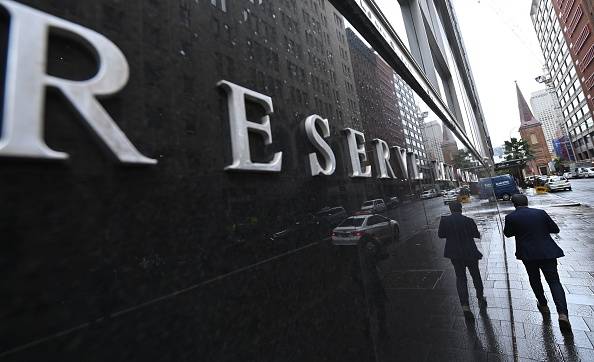
Technology and semiconductor shares fell sharply as investors questioned the debt financing the AI infrastructure boom and confronted higher rates and Chinese competition.
4 minA sharp technology sell-off has exposed a new anxiety on global markets: whether the enormous borrowing behind the artificial-intelligence infrastructure boom can generate sufficient returns as interest rates rise and Chinese competition intensifies.
The artificial-intelligence investment boom has powered technology shares, semiconductor manufacturers and data-centre operators to extraordinary heights. Last week, investors were given a reminder that much of this expansion is being built with borrowed money.
The technology-heavy Nasdaq Composite fell 4.5 per cent over the week ended October 16, its weakest performance since late June. Semiconductor shares suffered an even deeper correction, with the Philadelphia Semiconductor Index losing about 11.4 per cent.
The selling spread quickly through global markets. Micron Technology fell 14.6 per cent over the week, while South Korea’s Samsung Electronics and SK Hynix dropped approximately 18 per cent and 24 per cent respectively.
This was more than a routine bout of profit-taking. Investors were reassessing three interconnected risks: higher interest rates, the rapidly expanding debt burden attached to AI infrastructure and the prospect of stronger competition from Chinese memory-chip manufacturers.
The debt behind the AI build-out
Artificial intelligence requires a physical infrastructure network of enormous scale. Data centres must be built, advanced processors purchased, power supplies secured and cooling systems installed before customers begin generating meaningful revenue from them.
Technology companies are increasingly supplementing their own cash with corporate bonds, syndicated loans, equipment leases, private credit and project-level financing.
JPMorgan describes the emerging funding model as a combination of conventional corporate borrowing and project finance tied to individual data-centre assets. In Australia, the Reserve Bank estimates that syndicated loans accounted for approximately three-quarters of data-centre financing during 2025 and 2026 to date.
The numbers are becoming large enough to affect broader credit markets. The Federal Reserve Bank of Dallas has cited Wall Street estimates suggesting AI-related investment-grade bond issuance could approach US$300 billion in 2026 alone.
That borrowing is not automatically problematic. Debt can be an efficient way to finance long-lived infrastructure when future revenue is sufficiently predictable. The concern is that AI technology, customer demand and computing economics are changing much faster than the repayment schedules attached to the assets.
A data centre financed today may carry debt for years. Investors must therefore make assumptions about future utilisation rates, electricity prices, chip performance, customer concentration and the amount businesses will ultimately pay for AI computing.
When interest rates rise, those assumptions become less forgiving.
Inflation changes the calculation
September’s US inflation data intensified the pressure. Consumer prices increased 3.7 per cent over the year, ahead of market expectations and up from 3.4 per cent in August.
The hotter reading reduced confidence that interest rates would fall quickly and pushed bond yields higher. That matters particularly for companies whose valuations depend on profits expected well into the future, as well as highly leveraged infrastructure operators that may need to refinance.
CoreWeave has emerged as a closely watched test case. The specialist cloud-computing company has accumulated substantial debt and lease obligations to build AI capacity, while relying on a concentrated group of large technology customers.
Its shares fell sharply during the sell-off, while the cost of insuring its debt against default climbed. CoreWeave has argued that its contracted backlog more than covers its obligations and that financial markets do not always understand its business model. Nevertheless, its securities have become a proxy for investor confidence in debt-funded AI infrastructure.
Oracle, another major investor in AI computing capacity, fell 8.8 per cent in Friday trading, while CoreWeave dropped 15.5 per cent.
The question is shifting from how much AI infrastructure can be built to how profitably it can be operated.
China adds another source of pressure
Interest rates were not the only catalyst. Reports of advances by Chinese memory-chip producer ChangXin Memory Technologies raised concerns that lower-cost Chinese products could increase competition across the global semiconductor industry.
Memory chips are essential to AI systems, but the industry is historically cyclical. Periods of tight supply and high pricing can encourage rapid investment, eventually producing oversupply and falling margins.
The prospect of a well-funded Chinese competitor expanding its technological capabilities unsettled investors in Samsung, SK Hynix and Micron. It also demonstrated that AI-related demand does not insulate chipmakers from conventional competitive pressures.
That combination—slower rate cuts, more expensive financing and potentially cheaper supply—challenged the assumption that every company exposed to AI would enjoy continually expanding margins.
A reset rather than the end of the boom
The sell-off does not establish that the AI boom is ending. Demand for computing power remains strong, the largest technology companies continue to generate formidable cash flows and many infrastructure projects are backed by long-term customer contracts.
What has changed is the market’s willingness to overlook the price and financing structure of that growth.
The most resilient companies are likely to be those able to fund investment from operating cash flow, secure long-duration customers and demonstrate that new capacity will earn returns comfortably above its financing costs.
More speculative operators may face greater scrutiny, particularly where debt is expensive, customers are concentrated or expected revenue depends on demand that has not yet materialised.
For Australian investors, the lesson extends beyond US technology shares. Local data-centre operators, infrastructure funds, electricity suppliers and property groups are increasingly exposed to the same investment cycle.
Artificial intelligence may remain one of the defining growth themes of the decade. But last week’s correction showed that enthusiasm for the technology does not eliminate financial discipline.
The next stage of the AI boom will be judged not only by computing power, model performance or demand for chips, but by something more traditional: whether the assets being financed can generate enough cash to repay the money borrowed to build them.
Fact box
Nasdaq Composite: Down 4.5 per cent for the week ended October 16, 2026
Philadelphia Semiconductor Index: Down approximately 11.4 per cent
Micron Technology: Down approximately 14.6 per cent
Samsung Electronics: Down approximately 18 per cent
SK Hynix: Down approximately 24 per cent
US September inflation: 3.7 per cent annually
Estimated 2026 AI-related investment-grade issuance: Approximately US$300 billion

Here’s how they are looking at artificial intelligence, interest rates and economic pressures.

Limited to 630 units, Lamborghini’s latest Urus Capsule pushes personalisation further than ever, blending hybrid performance with over 70 bespoke design combinations.