The Stunning Collapse of the Premier League’s Most Successful Club
Manchester United’s commercial empire turned the club into a winning machine. Now the club is losing money off the pitch and can hardly win a game on it.

 3 min
3 min
There was a time in European soccer when Manchester United was known as one of the smartest spenders in the game.
The club’s massive commercial empire allowed it to pay sky-high salaries, outbid rivals for talent, and turn over its squad often enough and cleverly enough to build several different dynasties. The approach was costly, but the club left no doubt that it worked.
These days, United is learning the hard way that losing can be just as expensive.
The crisis at the club runs so deep that it’s taking emergency measures everywhere it can to cut costs, despite record investment. It was less than two years ago that British petrochemicals billionaire Jim Ratcliffe paid $1.3 billion for a 25% stake in United, which he has since increased to 29%, on top of a $300 million injection of cash.
Since then, results have only gone backwards. The club has continued a streak of losing money every year since 2019. The squad is so thin that a sudden rash of injuries has left it desperately short of senior players. And United currently languishes in 14th place in the English Premier League after a 1-1 draw against Arsenal.
A midseason coaching change cost United around $28 million to pull off, according to the club’s accounts. Some $13.5 million went to previous manager Erik ten Hag and his coaching staff in severance, while the cost of bringing in Ruben Amorim and his assistants from Sporting Lisbon hit $14.5 million.
And while money goes out for correcting course on the pitch, the club is trying to find ways to save cash away from it. Last month, United announced around 200 layoffs, beyond the 250 jobs it had already cut in 2024. The club also announced plans to close its staff cafeteria and ended its policy of serving free lunches to non-players at the practice facility.
“This cannot continue,” United CEO Omar Berrada said. “These hard choices are necessary to put the club back on a stable financial footing.”
The quickest way for a club of United’s standing to do that is to qualify for the richest annual event in club soccer, the Champions League. Simply showing up for the tournament this season was worth $20 million, with bonuses paid for each draw or victory. A trip to the quarterfinals adds another $25 million, while the team that wins the whole thing could rake in more than $80 million.
But United is nowhere near a Champions League qualifying berth for next season. Its only path back into the elite would be winning this season’s Europa League, which looks far-fetched—the club is currently tied in its round-of-16 matchup against Spain’s Real Sociedad.
“If you have a football team that is playing well and are winning games then, in a certain way, it’s easier for the fans and for everybody to feel those changes,” head coach Ruben Amorim said of the restructuring at United.
Things have devolved so far that one United supporters’ group is organizing a protest outside Old Trafford ahead of Sunday’s home game against Arsenal, because it believes the club is “slowly dying.”
“For everyone in our club, it is a tough moment,” Amorim said. “People have the right to protest.”
The last time United finished outside the top 10 in England’s top tier was the 1989-90 season. Back then the creaking club was also racked by injuries and lost more games than it won, but stood by its embattled manager while fans clamored for him to be fired. Only a narrow victory in the FA Cup kept him in place. If it’s any consolation to United supporters 35 years later, that manager’s name was Alex Ferguson. He went on to turn Manchester United into one of the most successful clubs of the modern era.
These days, however, the club seems farther away from a revival than ever. The club that prided itself on its relentless goal scoring under Ferguson has netted fewer goals than 14 other teams. It hasn’t won back-to-back games in the Premier League all season. And Amorim has openly questioned the effort of some of his players.
“You can’t be at 99% every day because then you lose games against the teams that are in the Premier League,” United defender Matthijs de Ligt said. “In a lot of games, we haven’t been good enough.”
What United doesn’t seem to know is how to fix it. Amorim has defended the team’s style of play and reshuffled his squad in the hopes that there is enough cash on hand to bring in reinforcements this summer.
“But sometimes it’s a lack of results and you have to win games,” Amorim said. “I know the consequences when you don’t win.”
Write to Joshua Robinson at Joshua.Robinson@wsj.com
 Copyright 2020, Dow Jones & Company, Inc. All Rights Reserved Worldwide. LEARN MORE




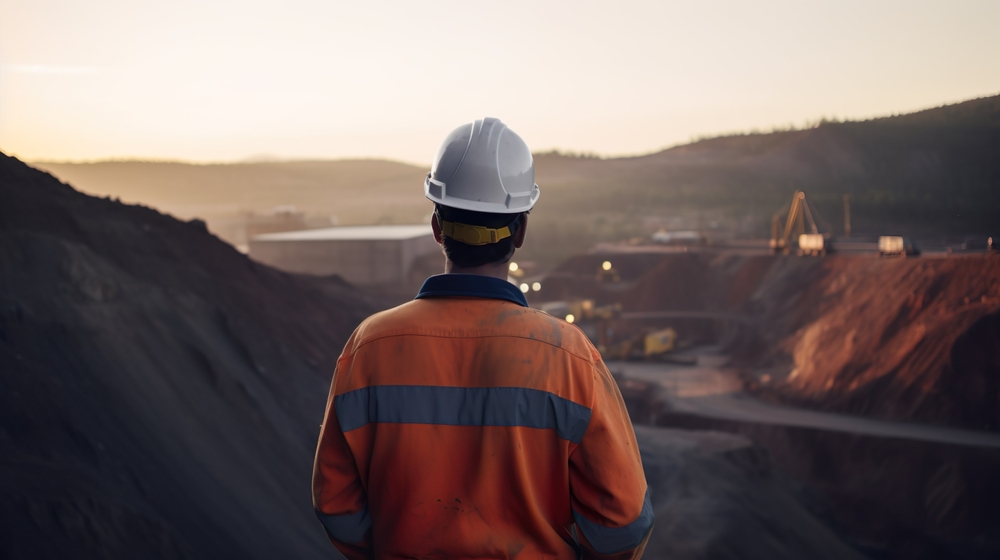
Australian shares fell on Thursday as Wall Street weakness, rising oil and persistent rate concerns weighed on most of the market. The S&P/ASX 200 declined 0.72 per cent to 8,702. The All Ordinaries lost 0.66 per cent to finish at 8,897. Mining stocks were hit particularly hard, while real estate also dragged on the index. …
Continue reading “ASX falls 0.7 per cent as miners and property stocks retreat”

Borrowers cannot control the Reserve Bank, but they can control how exposed their household budget is to its next decision. The RBA meets on 29 September with inflation concerns still elevated and major-bank economists increasingly bringing forward their rate-rise calls. Fixed mortgage rates have also been moving, reducing the value of waiting for perfect certainty. …
Continue reading “What mortgage holders should do before the next RBA decision”

 2 min
2 minAustralian shares fell on Thursday as Wall Street weakness, rising oil and persistent rate concerns weighed on most of the market.
The S&P/ASX 200 declined 0.72 per cent to 8,702. The All Ordinaries lost 0.66 per cent to finish at 8,897. Mining stocks were hit particularly hard, while real estate also dragged on the index.
Energy was the notable exception, gaining more than one per cent as Brent crude traded above US$103 a barrel. Oil had moved higher amid uncertainty surrounding potential US diesel-export restrictions and broader geopolitical supply risks. The move supported energy producers but renewed concern about inflation inputs across transport and the wider economy.
Gold shares were weak even as spot bullion remained historically elevated. The All Ordinaries Gold index fell about 2.25 per cent, showing that equity performance can diverge from the commodity because of valuation, currency, operating and company-specific factors.
Zip was a prominent loser, falling 11.38 per cent after the company reported short sales after the previous close. Nine Entertainment also weakened after UBS analysts warned of near-term revenue challenges associated with its advertising-supported subscription tier.
Premier Investments led larger winners despite caution about the retail environment. Breville, in which Premier owns a significant stake, also appeared among leading movers. In the broader ASX 300 screen, Myer gained 11.43 per cent and MAAS Group rose 7.93 per cent, while Lotus Resources fell 10.53 per cent. These percentage moves should be checked against company announcements and trading liquidity before attributing causes.
The Australian dollar was broadly flat at US70.38 cents. Spot gold was around US$4,280 an ounce, Brent crude approximately US$103.08 a barrel and iron ore near US$96.90 a tonne late in the session.
The rate outlook remains the central domestic catalyst. Labour-market weakness has not eliminated the possibility of an RBA increase next week, leaving banks, listed property and other rate-sensitive sectors exposed to changing expectations.
Market dashboard
S&P/ASX 200: 8,702, down 0.72 per cent.
All Ordinaries: 8,897, down 0.66 per cent.
Best sector: Energy, up more than one per cent.
Weakest areas: Real estate and materials were the major drags; confirm final sector percentages before publication.
Material winner: Premier Investments led the large-company gainers. Confirm its final closing move from the ASX before publication.
Material loser: Zip, down 11.38 per cent.
ASX 300 percentage leader: Myer, up 11.43 per cent.
ASX 300 percentage laggard: Zip, down 11.38 per cent.
AUD/USD: Approximately US$0.7038, broadly flat.

The era of the gorgeous golden retriever is over. Today’s most coveted pooches have frightful faces bred to tug at our hearts.

From Tokyo backstreets to quiet coastal towns and off-grid cabins, top executives reveal where they holiday and why stepping away makes the grind worthwhile.