A Piece of Glass Thinner Than a Credit Card Could Solve America’s $25 Billion Energy Problem
New windows can insulate better than most walls, and some can even survive being hit with a two-by-four shot from a cannon.

 4 min
4 min
Here’s one more thing we owe to the restless mind of Steve Jobs : hyper-efficient, ultra-tough windows for homes.
This new kind of window could save American households billions of dollars in wasted energy each year, while allowing expansive views of the outdoors and making our homes quieter, more comfortable and able to survive even the most violent weather. The key enabling technology is thin panes of glass—sandwiched between thicker standard glass—which exist because of the same manufacturing and chemistry breakthroughs that made possible the light, strong, scratch-resistant screens on our smartphones, tablets and watches.
Typical double-pane windows have hardly changed since their invention a century ago. Filling them with inert gases or adding coatings to reflect or let in heat has made them more effective. But it’s still generally accepted that, all other things being equal, your home’s energy bills will go up or down based on how many windows you have, and how big they are.
“Windows are always viewed as the problem, because windows typically lose 10 to 20 times more energy per square foot than a well-insulated wall,” says Stephen Selkowitz, an affiliate at the Lawrence Berkeley National Laboratory and a dean in the field of building energy efficiency. The Energy Department estimates that U.S. households each waste $200 to $400 a year on energy bills due to drafts, leaks and inefficiencies, for a total of at least $25 billion a year.
These new three- and four-pane windows can be even better insulators than the walls around them, but cost only about 20% more than standard energy-efficient windows. Installing them could bring big energy savings for those ready to retrofit, and could enable the construction of new homes that are so well-insulated that even when the power goes out in a winter storm, they stay warm for days. Another variant of these windows can meet the most stringent hurricane-related building codes in the country, while being significantly lighter than conventional stormproof windows.
The bad news is that Joe and Jane Consumer won’t be able to buy these kinds of windows at the local home-supply store—at least not yet. While the primary manufacturer of this type of window is offering its tech to other window makers, it’s only opened up U.S. production in the past few months, and it’s still scaling up manufacturing.
Bringing the panes
Scientists have long known the key to more efficient windows is similar to the relationship between razorblades and a closer shave: More is better. But it was hard to translate that into a product that could be mass manufactured, at a price that people would be willing to pay, says Selkowitz.
Enter Corning , maker of the thin, tough Gorilla Glass that has helped make possible today’s mobile devices. In order to win over Steve Jobs and land Apple as a client when it first started making iPhones, Corning offered Apple a fresh twist on its existing process for making glass for LCD displays and other applications, which yielded a new kind of chemically strengthened glass.
Traditional glass, called soda-lime glass, is made by floating molten glass on top of molten tin, which is a cheap and effective process but leaves microscopic flaws. With Gorilla Glass, molten glass with different additives than soda-lime glass cascades in a waterfall as thin as half a millimeter, which rapidly cools and is cut to size, yielding glass that is nearly flawless. The glass is also chemically strengthened, making it resistant to scratches and chipping.
As the smartphone industry ramped up, Corning built more factories to meet demand for Gorilla Glass. Some of these factories now use the same process, with a slightly modified chemistry, to create far larger sheets of similarly tough glass, for windows instead of hand-held devices. These sheets of glass are thinner than a credit card, yet they can be bigger than a queen-size mattress, says Ron Verkleeren , senior vice president of Corning’s emerging-innovations group.
This architectural glass doesn’t yet have a compelling name like Gorilla Glass, but they’re working on it, he adds. (“Orangutan Glass” has my vote.)
When three or even four layers of glass are put together, with inert gas in between, only the interior panes are the super-thin Corning panes, and they add little weight to the finished product.
When you go from a single air gap to the two or three that are possible with triple- and quad-pane windows, the insulating ability of a window can skyrocket, says Selkowitz, who has collaborated at the federally funded Lawrence Berkeley lab with Alpen, a Colorado-based maker of specialty windows, to research their capabilities.
Efficiency and more
Alpen’s windows have long been favored by architects who want to build super energy-efficient homes. Corning began collaborating with Alpen about five years ago, and now the company is ready to mass-manufacture reinforced windows at two facilities, one in Colorado and one in Pennsylvania. The first wave will be windows in standard sizes, says Andrew Zech, Alpen’s CEO. Key to keeping costs down are the company’s new automated, high-throughput assembly lines for making the windows, he adds.
David Schleicher, managing director of Kala, a high-performance builder in Kansas City, Mo., has been living with a wall of triple-pane windows comparable to Alpen’s on the south side of his home since 2015. Typically, such a vast expanse of glass—a total of 16 feet by 7—would create an unpleasantly cold patch during the winter. But this glass is so well insulated, it actually creates warmth in his living room: It admits the radiant heat of the low winter sun but prevents conductive heat loss through the window, says Schleicher.
“With the right glass in my house, my heat won’t even be running on a winter day, as long as the sun is shining and it’s coming in the window,” he says. “It is crazy—I will be in shorts and a T-shirt and it’s 20 degrees outside. Meanwhile, my neighbors are paying out the nose in heating and cooling bills.”
Whether or not these innovative new windows take off depends largely on the demand from builders, homeowners and landlords.
Historically, the biggest reason that energy-efficient technologies get adopted is that building codes require them, says Schleicher. Without explicit regulations that enforce minimum standards, builders often seek deals on materials so that they can maximize profits, and businesses and individuals who rent out properties often have little incentive to reduce tenants’ month-to-month energy bills.
Slashing home energy bills is just the next chapter for the tech that brought us smartphone glass.
Miter Brands is producing windows in North Venice, Fla. in which it layers Corning’s tough glass onto windows designed to withstand hurricane-force winds. Previously, the company’s impact-resistant glass doors weighed up to 600 pounds; using Corning thin glass inside has cut the weight by up to 40%, says Dean Ruark, vice president of engineering and innovation at Miter subsidiary PGT Innovations.
Despite being lighter, these new doors can pass the most stringent hurricane testing in the country: Miami Dade’s building codes for hurricane resistance. This involves withstanding air pressure equivalent to a major hurricane, and a two-by-four fired from a cannon at 34 miles an hour…twice.
 Copyright 2020, Dow Jones & Company, Inc. All Rights Reserved Worldwide. LEARN MORE




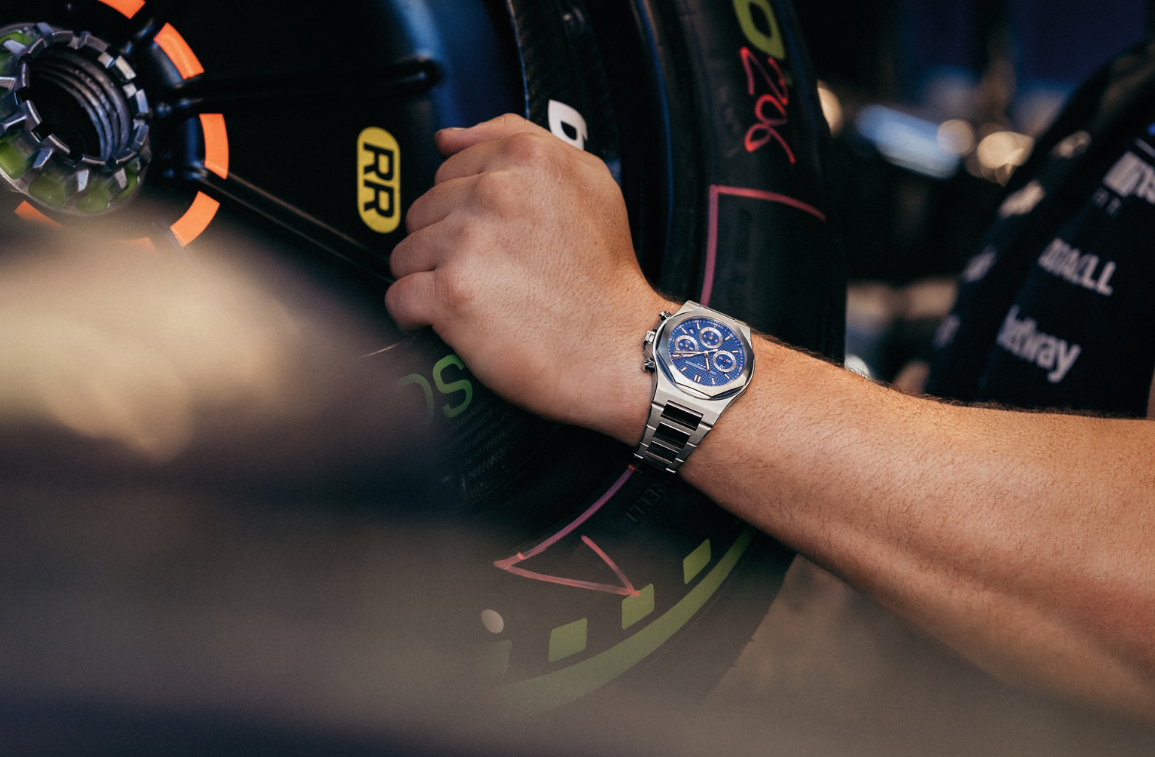
The Swiss watchmaker’s first collaboration with Atlassian Williams F1 Team produces two sporting Laureato models inspired by the team’s 2026 racing car.
Victorian auction buyers will soon receive a piece of information that has traditionally been withheld until bidding reaches it: the vendor’s reserve price. Under new property-sale and underquoting laws, agents must publish the agreed reserve at least seven days before an auction or fixed-date sale. Most changes begin on 1 October 2026 and apply to …
Continue reading “Victoria’s New Auction Rules Will Force Reserve Prices Into the Open”
The Swiss watchmaker’s first collaboration with Atlassian Williams F1 Team produces two sporting Laureato models inspired by the team’s 2026 racing car.
3 minGirard-Perregaux has revealed the first watches created through its partnership with Atlassian Williams F1 Team, bringing the British racing team’s colours to one of Switzerland’s most recognisable integrated-bracelet designs.
The collaboration comprises two 42mm steel watches: the time-and-date Laureato Williams Edition and the more technical Laureato Chronograph Williams Edition.
Both retain the familiar architecture of the Laureato, including its octagonal bezel, integrated bracelet and mix of polished and satin-finished surfaces. The influence of Williams is comparatively restrained, appearing through colour, discreet branding and details inspired by the team’s current Formula 1 car.
It is a welcome departure from the oversized logos and literal automotive references that can characterise motorsport watches.
The Williams FW48 inspires the dial
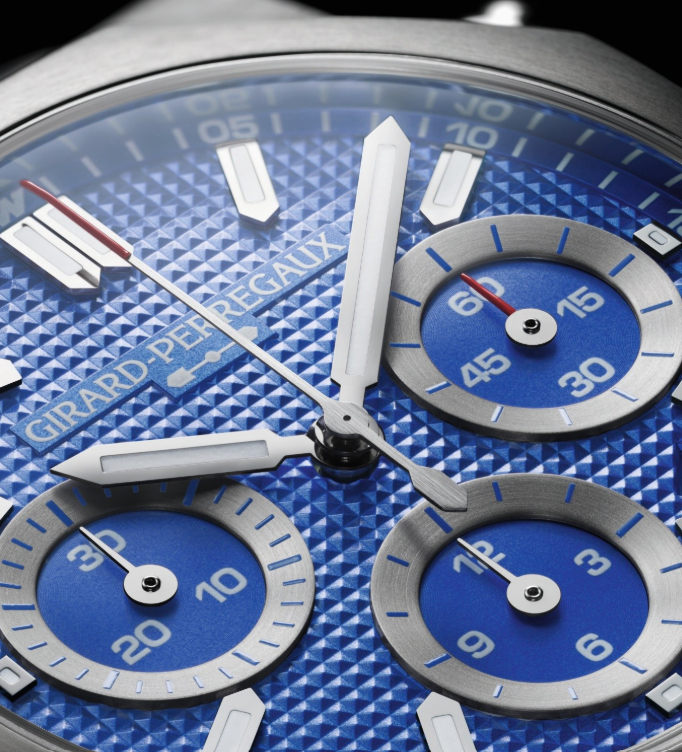
The centrepiece of both models is a blue Clous de Paris dial informed by the livery of the Williams FW48, the car being campaigned by the team during the 2026 Formula 1 season.
A small Williams “W” replaces the conventional marker at 12 o’clock, while the team emblem appears on the sapphire crystal caseback. Red accents echo the keyline used on the FW48 without overwhelming the established Laureato design.
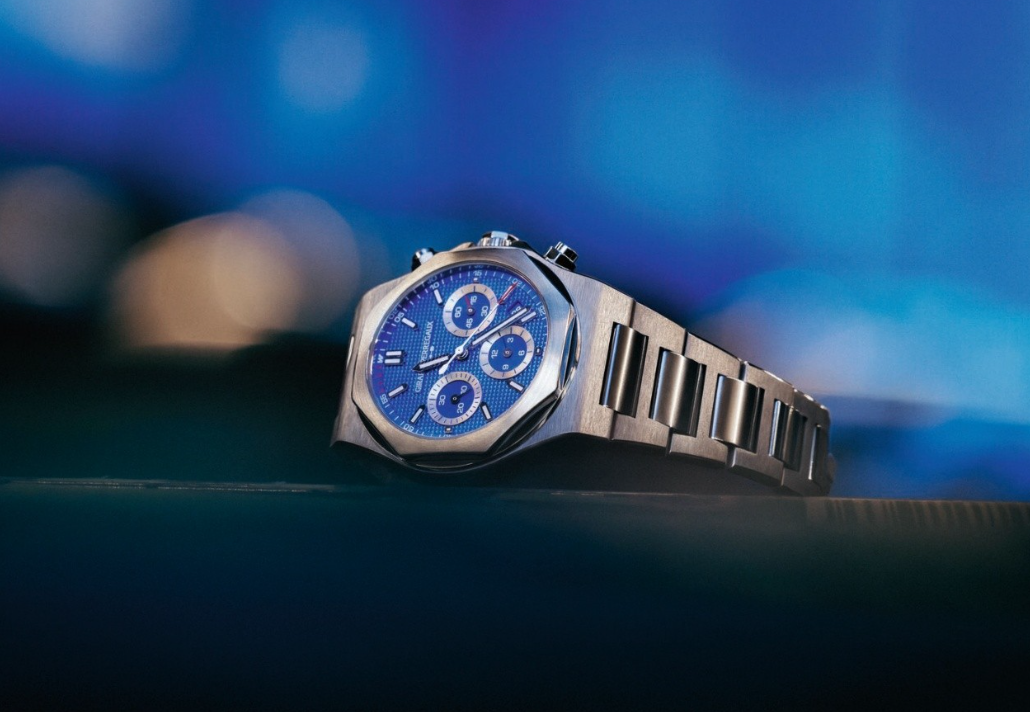
The three-hand model offers the quieter interpretation. Baton-shaped, rhodium-plated hands and hour markers are filled with white-emitting luminescent material, while a date window sits at three o’clock.
The chronograph creates a more obvious connection with motorsport. Three subdials are framed by rhodium-plated rings, with red appearing on the small-seconds hand and the tip of the central chronograph seconds hand.
Both watches measure 42mm across and are water resistant to 100 metres. The standard Laureato has a case thickness of 10.68mm, while the additional mechanics of the chronograph increase its profile to 12.16mm.
Two in-house automatic movements
The Laureato Williams Edition is powered by Girard-Perregaux’s self-winding GP01800 calibre. The movement provides hours, minutes, central seconds and the date, with a minimum power reserve of 54 hours.
The Laureato Chronograph Williams Edition uses the automatic GP03300 calibre, which combines its chronograph functions with a date display and offers a minimum power reserve of 46 hours.
Both movements operate at 28,800 vibrations per hour and can be viewed through their sapphire crystal casebacks.
Their decoration provides a more traditional counterpoint to the Formula 1 association. Finishing techniques include Côtes de Genève, circular graining, bevelling, mirror polishing, satin finishing, engraving and snailing.
The result is less about reproducing the appearance of a racing car than identifying the common ground between two mechanical disciplines: precision, incremental development and the considerable work hidden beneath the finished product.
Parallel histories
The timing of the partnership draws attention to the remarkably similar ages of its two protagonists.
Girard-Perregaux introduced the original Laureato in 1975, establishing an integrated-bracelet sports watch with a distinctive octagonal bezel. Williams entered Formula 1 two years later in 1977.
Both have evolved continuously across the five decades since. The Laureato has moved through different sizes, materials and complications, while retaining its central design language. Williams, meanwhile, has remained one of Formula 1’s most historically significant teams.
That gives the collaboration greater credibility than a simple licensing exercise. Girard-Perregaux and Williams are not being connected solely through the familiar language of speed. Their stronger link is a shared dependence on engineering, testing and the accumulation of specialist knowledge.
The watches are described as the beginning of a longer collaboration, suggesting further Williams editions may follow.
Girard-Perregaux’s international website lists the Laureato Williams Edition at US$16,200 and the Laureato Chronograph Williams Edition at US$20,900. Australian pricing has not been announced.
Specifications
Girard-Perregaux Laureato Williams Edition 42mm
Reference: 81010-11-3680-1GM
Case: Steel
Diameter: 42mm
Thickness: 10.68mm
Crystal: Anti-reflective sapphire crystal
Dial: Blue Clous de Paris pattern
Movement: Automatic GP01800
Functions: Hours, minutes, central seconds and date
Power reserve: Minimum 54 hours
Water resistance: 100 metres
Bracelet: Integrated steel bracelet with triple-folding clasp
International price: US$16,200
Girard-Perregaux Laureato Chronograph Williams Edition 42mm
Reference: 81020-11-3681-1GM
Case: 904L steel
Diameter: 42mm
Thickness: 12.16mm
Crystal: Anti-reflective sapphire crystal
Dial: Blue Clous de Paris pattern with three chronograph counters
Movement: Automatic GP03300
Functions: Chronograph, hours, minutes, small seconds and date
Power reserve: Minimum 46 hours
Water resistance: 100 metres
Bracelet: Integrated 904L steel bracelet with triple-folding clasp
International price: US$20,900

MAISON de SABRÉ’s new Spring Harvest Collection turns everyday produce into collectible leather charms and introduces fresh silhouettes in its cult Bucket bag family.

By improving sluggish performance or replacing a broken screen, you can make your old iPhone feel new agai