Pay for New Hires Is Shrivelling
After years of salary increases, businesses across the economy say they’re reducing starting salaries for recruits

 4 min
4 min
Pay for new hires is starting to shrivel after years of hefty salary bumps, requiring workers to reset what financial gains to expect from switching to a new job.
Wages, especially for people who changed jobs, climbed in recent years as companies competed for workers to fill pandemic-induced labor shortages. Now, as the job market cools and businesses become more cautious in their hiring, many companies are paying new recruits less than they did just months ago—in some cases, much less.
Among postings for more than 20,000 job titles on ZipRecruiter’s site this year, the average pay for a majority of roles has declined from last year. Some of the steepest drops have been in technology, transportation and other sectors that experienced frenzied hiring sprees in 2021 and early 2022.
Chanteal Brayboy, 25 years old, has been seeking user-experience design roles since last summer, ever since finishing a design boot camp. At the time, layoffs had just begun to churn through the tech economy.
She’s since applied for more than 2,000 roles, and only gotten calls for a couple interviews. The posted salaries for the jobs she’s interested in, she says, have fallen around $10,000 from those advertised a year ago.
“The market is completely different now, companies know they can pay less,” says Brayboy, who lives in Kalamazoo, Mich.
A sharp reversal
The declines mark a stark turnaround from 2022, when compensation for three-quarters of advertised job titles rose from the year before, according to ZipRecruiter. In a July survey of about 2,000 employers conducted by the online hiring platform, nearly half said they had reduced pay for recent job openings.
Overall wage growth continues and it surpassed inflation in June for the first time in two years as consumer price increases slowed. Still, wage growth peaked last summer and has since declined to 5.7%, according to Labor Department figures.
Because new hires account for less than 4% of all employed workers each month, says Julia Pollak, chief economist at ZipRecruiter, it can take a while for adjustments in their pay to show up in the federal data. The mass layoffs many large companies have conducted lately, particularly in tech, have helped push salaries for new hires downward, says Pollak.
“Other companies no longer face pressure to match these Meta-sized offers,” she says, referring to Facebook’s parent company.
It isn’t just white-collar roles that are feeling the crimp.
During the pandemic, the Unionville, Tenn., pizza restaurant where Valerie Breshears works as a delivery driver boosted wages to $13 an hour to draw new workers. More recently, Breshears discovered from newly hired staff that the restaurant’s starting pay had been lowered to $11 an hour.
“I felt bad for them,” says Breshears, 38. She didn’t tell them she and other workers who had been hired earlier were making more money.
‘Just not as competitive’
In Denver, where retail company Appliance Factory & Mattress Kingdom is based, the company has recently been hiring administrative workers for around $18 an hour. A year ago, the company was paying $20 an hour, says Chief Executive Chuck Ewing.
“There are more people looking for work now, it’s just not as competitive,” he says.
Data from Gusto, a payroll and benefits software company serving more than 300,000 small and midsize businesses, shows that pay rates for new hires are 5% lower than they were for new recruits for the same roles at this time last year. While professional-service roles have been most affected—pay rates for engineers and developers, for example, have dropped 18% in the past year—workers in other industries have also been hit.
More in-demand workers in certain industries continue to get pay bumps, says Gusto economist Luke Pardue. The company’s data shows pay in tourism and construction, for example, has continued to rise.
During the pandemic, the supply chain for workers was “horrifically broken,” says Laurie Chamberlin, the North America head of LHH Recruitment Solutions. Many workers sat on the job-market sidelines, and companies competed furiously to get them through the door.
“There was kind of an auction mentality,” she says. “People were paying extraordinary amounts without a whole lot of negotiating power or long-term view.”
That’s now over, Chamberlin says: “They’re saying holy cow, I’m paying this person a lot, and they’re not worth what I paid for them.” In addition to laying off workers, she says, businesses have become cautious about what they’re willing to pay for new recruits.
Back when Jennifer O’Halloran, 40, was looking for advertising roles in late 2021, she racked up 21 interviews in a matter of weeks. She quickly secured multiple competing job offers, including one from ad agency Dentsu for a media-buying supervisor role that would have paid $95,000 with a $5,000 signing bonus.
“It was insane, everyone wanted to talk to me,” recalls O’Halloran, who’s based in San Francisco.
She ended up choosing another company that offered her more money, a role she quit last summer. Earlier this year when job-hunting again, she reached back out to Dentsu. She learned that roles comparable to the one she’d previously been offered were now paying between $85,000 and $90,000, and with no signing bonus.
Dentsu declined to comment.
Too good to last
In Tampa, Fla., Meg Reilly, president at placement firm National Mortgage Staffing, says that salaries have dropped for a range of roles as the real-estate industry has slowed. For mortgage closers and underwriters, the drop has been as much as 30%. The fall has been precipitous, though many veteran candidates were primed to expect it.
“They knew it wasn’t a forever thing,” she says, of elevated salaries.
While employers have more leverage now on pay, they should tread carefully, says Marc Goldberg, CEO of Stages Collective, which specializes in recruiting for the ad tech industry.
“I advise my clients not to go down too far, because you’ll have a temporary employee,” he says. To control costs without alienating applicants, he says, companies are doing things like increasing performance incentives while reducing base salaries for certain roles, such as sales.
In Boston, Sherri Carpineto, 46, has been job-hunting since February, when she was laid off from her director role at a medical-device startup. Companies are conducting more drawn-out vetting processes, she says, including asking applicants to complete numerous sample work projects. Sometimes, they request test assignments even before she’s made it to the interview stage.
Carpineto, who has 20 years of experience in strategy and operations and is currently doing independent consulting, says the jobs she’s interested in, which are director-level or above, are paying around 20% less than what she was making at her old position. She’s noticed prospective employers are tending to combine more responsibilities and roles under one title.
“They’re paying less and asking more,” she says.
 Copyright 2020, Dow Jones & Company, Inc. All Rights Reserved Worldwide. LEARN MORE




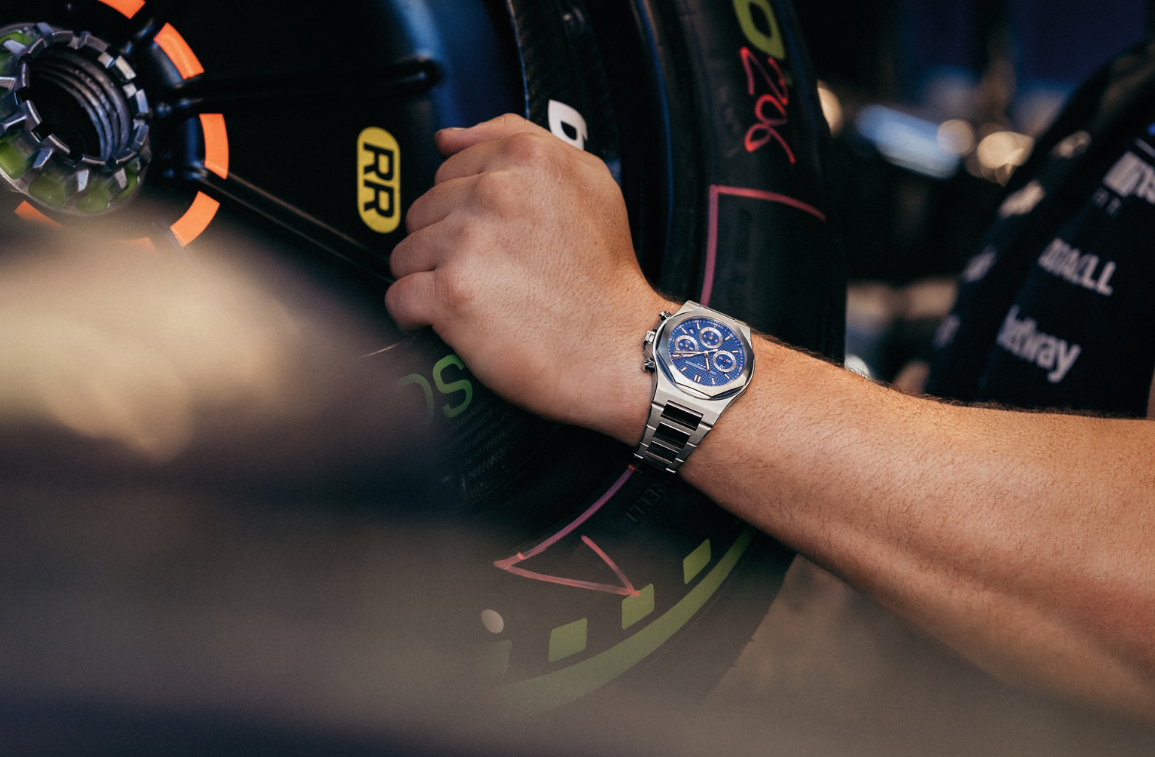
The Swiss watchmaker’s first collaboration with Atlassian Williams F1 Team produces two sporting Laureato models inspired by the team’s 2026 racing car.
Victorian auction buyers will soon receive a piece of information that has traditionally been withheld until bidding reaches it: the vendor’s reserve price. Under new property-sale and underquoting laws, agents must publish the agreed reserve at least seven days before an auction or fixed-date sale. Most changes begin on 1 October 2026 and apply to …
Continue reading “Victoria’s New Auction Rules Will Force Reserve Prices Into the Open”
The Swiss watchmaker’s first collaboration with Atlassian Williams F1 Team produces two sporting Laureato models inspired by the team’s 2026 racing car.
3 minGirard-Perregaux has revealed the first watches created through its partnership with Atlassian Williams F1 Team, bringing the British racing team’s colours to one of Switzerland’s most recognisable integrated-bracelet designs.
The collaboration comprises two 42mm steel watches: the time-and-date Laureato Williams Edition and the more technical Laureato Chronograph Williams Edition.
Both retain the familiar architecture of the Laureato, including its octagonal bezel, integrated bracelet and mix of polished and satin-finished surfaces. The influence of Williams is comparatively restrained, appearing through colour, discreet branding and details inspired by the team’s current Formula 1 car.
It is a welcome departure from the oversized logos and literal automotive references that can characterise motorsport watches.
The Williams FW48 inspires the dial
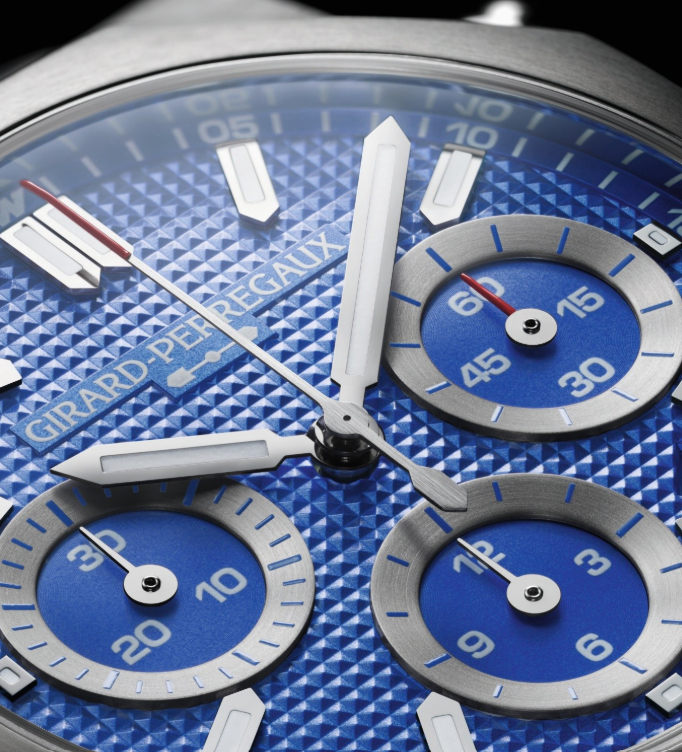
The centrepiece of both models is a blue Clous de Paris dial informed by the livery of the Williams FW48, the car being campaigned by the team during the 2026 Formula 1 season.
A small Williams “W” replaces the conventional marker at 12 o’clock, while the team emblem appears on the sapphire crystal caseback. Red accents echo the keyline used on the FW48 without overwhelming the established Laureato design.
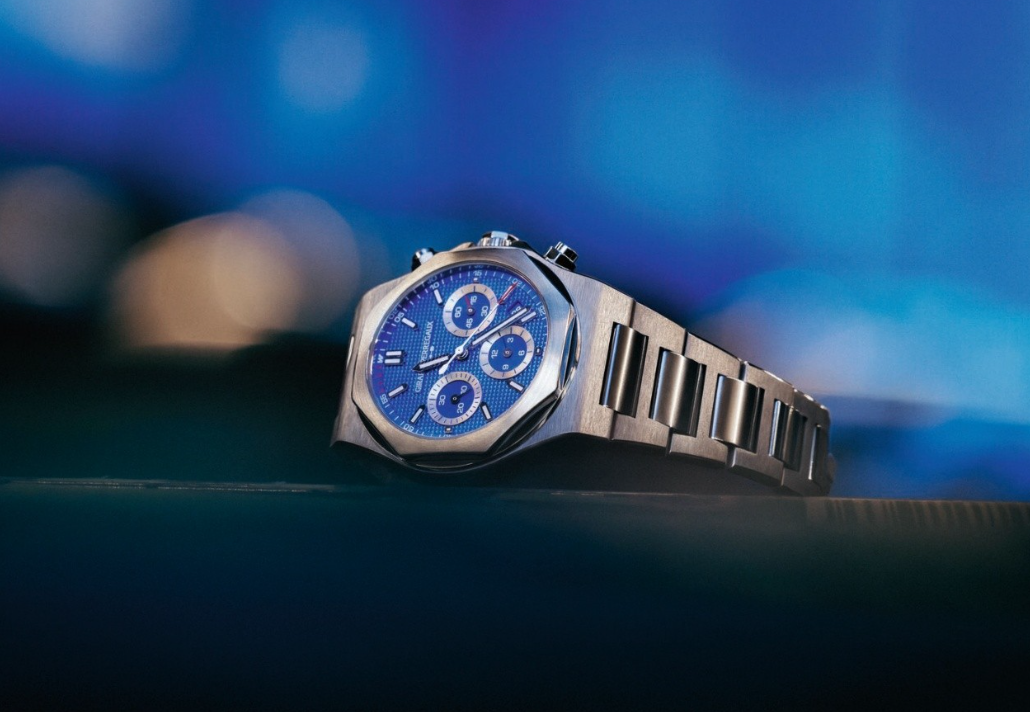
The three-hand model offers the quieter interpretation. Baton-shaped, rhodium-plated hands and hour markers are filled with white-emitting luminescent material, while a date window sits at three o’clock.
The chronograph creates a more obvious connection with motorsport. Three subdials are framed by rhodium-plated rings, with red appearing on the small-seconds hand and the tip of the central chronograph seconds hand.
Both watches measure 42mm across and are water resistant to 100 metres. The standard Laureato has a case thickness of 10.68mm, while the additional mechanics of the chronograph increase its profile to 12.16mm.
Two in-house automatic movements
The Laureato Williams Edition is powered by Girard-Perregaux’s self-winding GP01800 calibre. The movement provides hours, minutes, central seconds and the date, with a minimum power reserve of 54 hours.
The Laureato Chronograph Williams Edition uses the automatic GP03300 calibre, which combines its chronograph functions with a date display and offers a minimum power reserve of 46 hours.
Both movements operate at 28,800 vibrations per hour and can be viewed through their sapphire crystal casebacks.
Their decoration provides a more traditional counterpoint to the Formula 1 association. Finishing techniques include Côtes de Genève, circular graining, bevelling, mirror polishing, satin finishing, engraving and snailing.
The result is less about reproducing the appearance of a racing car than identifying the common ground between two mechanical disciplines: precision, incremental development and the considerable work hidden beneath the finished product.
Parallel histories
The timing of the partnership draws attention to the remarkably similar ages of its two protagonists.
Girard-Perregaux introduced the original Laureato in 1975, establishing an integrated-bracelet sports watch with a distinctive octagonal bezel. Williams entered Formula 1 two years later in 1977.
Both have evolved continuously across the five decades since. The Laureato has moved through different sizes, materials and complications, while retaining its central design language. Williams, meanwhile, has remained one of Formula 1’s most historically significant teams.
That gives the collaboration greater credibility than a simple licensing exercise. Girard-Perregaux and Williams are not being connected solely through the familiar language of speed. Their stronger link is a shared dependence on engineering, testing and the accumulation of specialist knowledge.
The watches are described as the beginning of a longer collaboration, suggesting further Williams editions may follow.
Girard-Perregaux’s international website lists the Laureato Williams Edition at US$16,200 and the Laureato Chronograph Williams Edition at US$20,900. Australian pricing has not been announced.
Specifications
Girard-Perregaux Laureato Williams Edition 42mm
Reference: 81010-11-3680-1GM
Case: Steel
Diameter: 42mm
Thickness: 10.68mm
Crystal: Anti-reflective sapphire crystal
Dial: Blue Clous de Paris pattern
Movement: Automatic GP01800
Functions: Hours, minutes, central seconds and date
Power reserve: Minimum 54 hours
Water resistance: 100 metres
Bracelet: Integrated steel bracelet with triple-folding clasp
International price: US$16,200
Girard-Perregaux Laureato Chronograph Williams Edition 42mm
Reference: 81020-11-3681-1GM
Case: 904L steel
Diameter: 42mm
Thickness: 12.16mm
Crystal: Anti-reflective sapphire crystal
Dial: Blue Clous de Paris pattern with three chronograph counters
Movement: Automatic GP03300
Functions: Chronograph, hours, minutes, small seconds and date
Power reserve: Minimum 46 hours
Water resistance: 100 metres
Bracelet: Integrated 904L steel bracelet with triple-folding clasp
International price: US$20,900

Porsche has revealed a one-off 911 GT2 RS that brings the extraordinary silhouette of its 935/78 “Moby Dick” racing car onto the road. Created by Porsche Sonderwunsch with Manthey, the commission began with a near-new GT2 RS. The owner requested greater performance, a Slantnose profile and a rear wing influenced by the limited 911 GT3 …
Continue reading “Porsche Builds a Road-Going “Moby Dick” From a 911 GT2 RS”

Limited to 630 units, Lamborghini’s latest Urus Capsule pushes personalisation further than ever, blending hybrid performance with over 70 bespoke design combinations.