Buildings Are Empty, Now They Have to Go Green
Rising rates, falling occupancy and new carbon taxes hit building owners

 4 min
4 min
Their buildings echo with empty offices, their borrowing costs have soared, and now owners of buildings in cities across the U.S. are facing a new tax on their carbon emissions.
Cities are toughening their climate standards and are beginning to tax buildings that don’t meet the new requirements. Landlords are left with a difficult choice between paying for expensive upgrades to reduce emissions or paying the tax.
In New York City, which has one of the first and most expensive carbon taxes, landlords of large buildings (including owners of residential buildings) beginning next year will face a $268 fine for every ton of carbon dioxide emitted beyond certain limits.
“If you’re under cash flow pressure due to lack of tenancy, adding a tax on top of that isn’t a good sign,” said Bank of America CMBS Strategist Alan Todd. “It would be potentially pretty painful.”
The Wall Street Journal tallied the potential impact of the taxes on buildings that borrowed funds from Wall Street investors by issuing mortgage-backed bonds. The Journal also looked at properties owned by three of the country’s largest publicly traded landlords. The tax bill for 128 properties analyzed could add up to more than $50 million during the first five-year enforcement period, which begins in 2024, according to the Journal’s analysis of Department of Building data and financial disclosures.
Fines for the same buildings could jump to $214 million if their landlords don’t meet the city’s emissions standards during the period between 2030 and 2034, the Journal’s analysis shows. The Real Estate Board of New York, an industry group, and engineering consulting firm Level Infrastructure said that more than 13,000 properties could face fines totaling about $900 million annually.
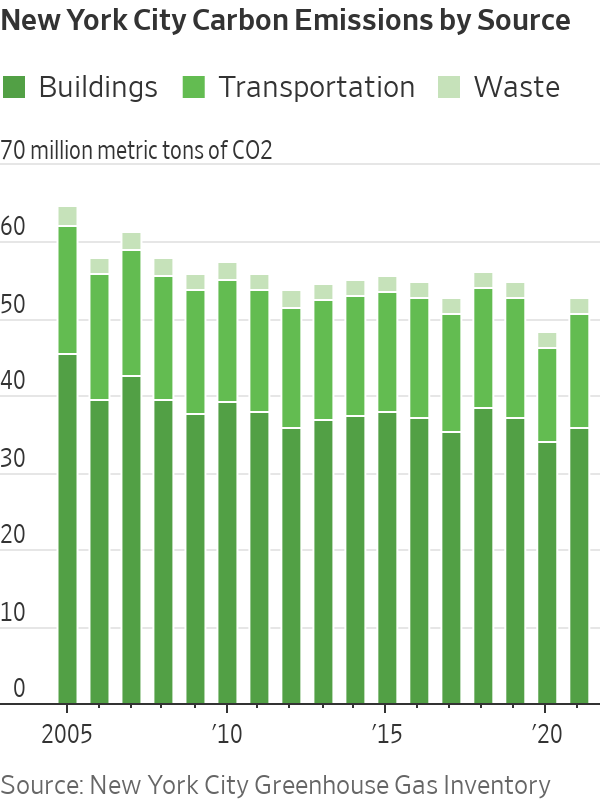
Buildings are by far New York City’s largest source of carbon emissions, which come from the fossil fuels used to heat and to provide air conditioning for them.
More than a dozen local laws regulating buildings’ carbon footprints from Chula Vista, Calif., to Boston have gone into effect since 2021 or will come online by 2030, according to carbon accounting firm nZero. Compliance also begins next year for buildings in Denver, while St. Louis properties face penalties beginning in 2025. Four other laws from Cambridge, Mass., to Reno, Nev., will go into effect in 2026.
The impact of the emissions laws initially will be small but will come on top of other, more costly problems faced by landlords. The law, based on New York’s current projections, would cost the 51-story skyscraper at 277 Park Ave. in Manhattan just $1.3 million in fines in 2024. The revenue of the building, owned by private landlord The Stahl Organization, was $129 million last year.
The building’s vacancy rate has jumped from about 2% in 2014 to 25% currently, according to commercial property data provider Trepp. JP Morgan Chase accounts for about half of the building’s space, but its lease expires in 2026. The bank is constructing a nearby tower that aims to produce net-zero carbon emissions and is scheduled to be completed in 2025. It wouldn’t comment on its leasing plans.
Stahl’s $750 million mortgage on the building is scheduled to mature next August. Stahl is now faced with potentially higher rates if it takes out a new loan, the loss of its biggest tenant and fines for carbon emissions.
Stahl declined to comment.
Shares of the three big landlords whose properties were analysed by the Journal are trading at near historic lows. Shares of Vornado Realty Trust and SL Green, each of which has about 30 New York City office buildings, are down by roughly two-thirds since before the pandemic. Boston Properties Inc., one of the country’s largest office building owners, shares are down more than 50% from before the pandemic.
SL Green faces a potential carbon-tax liability of up to $6.6 million by 2030, according to the Journal’s analysis. The company declined to comment. More than 80 other properties financed using mortgage-backed bonds reviewed by the Journal could have a nearly $27 million carbon-tax bill by 2030.
The costly upgrades needed to comply with the law will hit some properties when they are on the block or when they are trying to attract tenants, who know they will effectively be paying for any improvements. “Tenants are looking to be in a building that is greener,” said Brendan Schmitt, partner in law firm Herrick’s Real Estate Department.

The new laws coincide with big government spending on climate. Landlords can get generous subsidies for projects that reduce emissions.
Ironically, landlords are also benefiting from emptier buildings, which burn less fossil fuel. New York City says about 11% of buildings covered under the law are projected to face penalties using the latest energy data, down from 20% using earlier data.
The city’s law was passed in 2019 and included a $268 fine for every ton of CO emitted by buildings over 25,000 square feet exceeding limits. Landlords will be required to report emissions to city officials starting in 2025 with penalties based on 2024 energy use.
Some big landlords are facing fines in multiple jurisdictions including Boston Properties, which will likely get hit on properties it owns in Boston, New York and Washington, D.C. The company’s eight New York City offices could face a $2.3 million dollar tax bill by 2030, according to city data.
Ben Myers, senior vice president of sustainability at Boston Properties, said complying with local building standards is important. “We have made energy efficiency a priority,” he said.
 Copyright 2020, Dow Jones & Company, Inc. All Rights Reserved Worldwide. LEARN MORE





From making unpopular decisions to learning when to listen, leaders from five businesses reveal what nobody prepared them for — and how running a company has challenged their expectations.

Technology and semiconductor shares fell sharply as investors questioned the debt financing the AI infrastructure boom and confronted higher rates and Chinese competition.

Mirvac’s 45-level Trielle has topped out at Yarra’s Edge, pairing riverfront apartments with wellness facilities, private dining and resident services.
3 min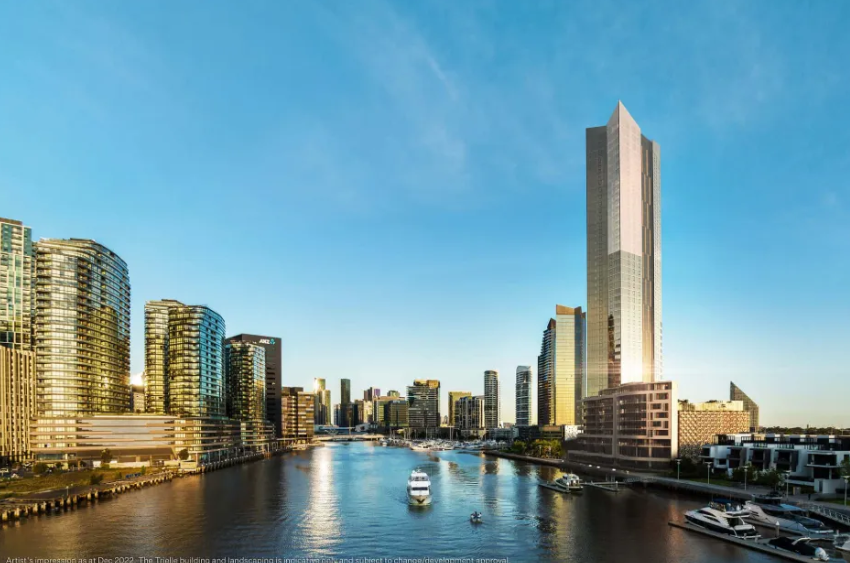
Mirvac has topped out Trielle at Melbourne’s Yarra’s Edge, with more than 70 per cent of the riverfront development sold and approximately 80 per cent of purchasers intending to make their apartment a home.
The figures, released on September 22, point to an owner-occupier audience for one of the precinct’s final residential towers. Mirvac began developing Yarra’s Edge in 2003, and its latest addition occupies one of the remaining absolute riverfront sites.
Mirvac CEO of Development Stuart Penklis said existing residents were among those moving up within the neighbourhood.
“Many purchasers already have a connection to Yarra’s Edge,” Mr Penklis said, describing buyers whose changing needs were encouraging an upgrade within the precinct.
“As one of the final residential towers within Yarra’s Edge, Trielle represents the culmination of more than two decades of creating one of Melbourne’s most established and sought-after waterfront communities,” Penklis said.
“Positioned on the Collins Street axis with absolute river frontage, Trielle offers residents a rare opportunity to enjoy sweeping views across the Yarra River, Melbourne skyline and Port Phillip Bay, while remaining seamlessly connected to the CBD. With Trielle now more than 70 per cent sold, we’re continuing to see strong demand from buyers seeking quality homes in established locations.”

The developer also flagged a penthouse and sub-penthouse collection with larger layouts, premium finishes and broad outlooks. The planned wellness centrepiece, The Oasis, encompasses a 900-square-metre elevated urban rainforest.
Mirvac General Manager Residential Development Victoria Elysa Anderson said Trielle had resonated strongly with buyers seeking a rare lifestyle offering in Melbourne.
“Opportunities to secure a new luxury residence on a riverfront site of this calibre are incredibly rare, particularly within a community like Yarra’s Edge,” Anderson said.
“What makes Trielle unique is the combination of exceptional views, world-class residential facilities and the lifestyle that already exists around it. Residents are buying into a mature waterfront community with parks, promenades, dining, wellness and strong community connections already in place.”
The 45-level tower brings a substantial new presence to that waterfront. Its residential offering spans one-, two-, three- and four-bedroom apartments, with Signature, Prestige and Sub-Penthouse collections accommodating different household sizes. The north-facing position connects the apartments visually to the river and city beyond.
Seven storeys above the promenade, the planned Oasis combines planting and a running stream with a Scandinavian-inspired wellness club developed with spa specialist Naomi Gregory. Facilities include a 25-metre lap pool, hot magnesium pool, sauna, hydrotherapy, a gym, yoga and Pilates room, and treatment spaces.

The amenity extends beyond exercise. Residents will have access to The Biblioteca library and workspaces, ground-floor work pods, and The Salone piano lounge. A private Chef’s Table dining room offers a setting for larger gatherings, while a cinema, games room and sports lounge broaden the entertaining options. Concierge services and a dog-wash area support everyday routines.
Trielle comprises a collection of one, two, three and four-bedroom residences. Reflecting strong demand from owner occupiers, approximately 80 per cent of purchasers to date intend to live in their homes, highlighting the project’s appeal to those seeking a long-term waterfront lifestyle.
Mirvac has recently delivered The Albertine, a premium apartment development on the edge of Melbourne’s CBD, and is nearing completion of Prince & Parade in Brunswick, further strengthening its portfolio of thoughtfully designed apartment communities in some of Melbourne’s most sought-after urban locations.

Margot Robbie and Jacob Elordi star in an adaptation of the classic novel that respects the romance’s slow burn.

MAISON de SABRÉ’s new Spring Harvest Collection turns everyday produce into collectible leather charms and introduces fresh silhouettes in its cult Bucket bag family.