The World’s Biggest Crypto Firm Is Melting Down
‘Every battle is a do-or-die situation,’ Binance co-founder Yi He writes

 4 min
4 min
After FTX crashed, the world of crypto seemed to belong to the largest exchange, Binance. Less than a year later, Binance is the one in distress.
Under threat of enforcement actions by U.S. agencies, Binance’s empire is quaking. Over the past three months, more than a dozen senior executives have left, and the exchange has laid off at least 1,500 employees this year to cut costs and prepare for a decline in business. And while Binance still looms large in crypto, its dominance is dwindling.
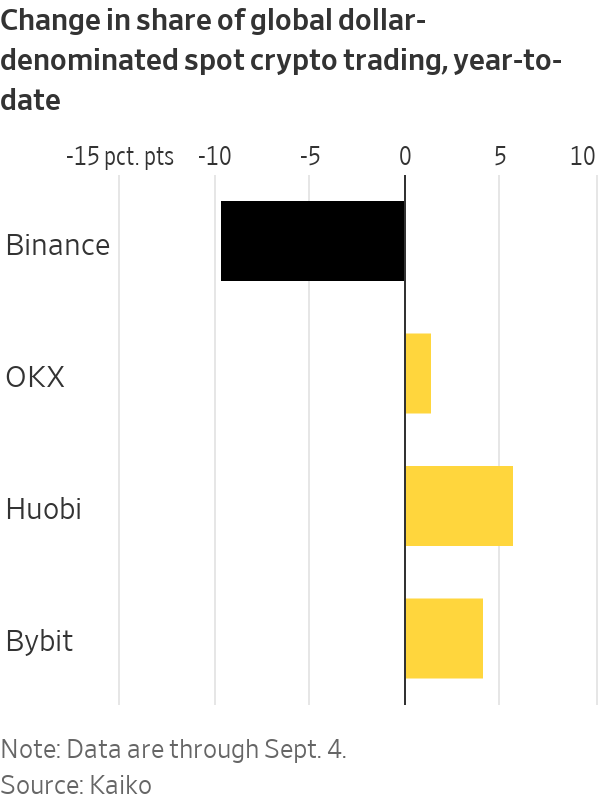
Binance now handles about half of all trades where cryptocurrencies are directly bought and sold, down from about 70% at the start of the year, according to data provider Kaiko.
What happens to Binance will have immense implications for the crypto industry because the exchange is so big. Industry players and watchers say other exchanges would fill the void if Binance were to collapse. But in the short term, liquidity in the market could evaporate, driving the price of tokens sharply down.
One institutional trader told The Wall Street Journal that his company has conducted fire drills to withdraw its assets from Binance quickly in the event of a meltdown.
Yi He, Binance’s co-founder and chief marketing officer, vowed to overcome the troubles in a message to Binance staff last month.
“Every battle is a do-or-die situation, and the only thing that can defeat us is ourselves,” she wrote in the message viewed by the Journal. “We have won countless times, and we need to win this time as well.”
Binance is a frequent investor in third-party crypto projects and beyond. Binance has invested in X, formerly known as Twitter. Binance co-founder Changpeng Zhao—or CZ as his 8.6 million X followers know him—is the biggest face of crypto.
“You just can’t quantify what would happen to the industry if Binance disappeared, given it has been responsible for fostering a huge amount of innovation and growth,” said Anthony Georgiades, a general partner at Innovating Capital, a fund that invests in early-growth companies.
The U.S. Justice Department has undergone a years long investigation that could result in criminal charges for Binance and Zhao as well as billions of dollars of fines, according to people familiar with the probe.
Binance also faces a Securities and Exchange Commission lawsuit that alleges it and Zhao operated illegally in the U.S. and misused customers’ funds. The firm has acknowledged past mistakes but says customer money is safe and it is committed to compliance.
“We have worked tirelessly not just to learn the lessons of the past, but also to continue to invest in the teams and systems that ensure user protection,” a spokesman said.
Binance launched in China in 2017, though it claims to be based nowhere, with staff scattered around the world. Its global website is accessible by traders almost everywhere, but that number is falling as its presence has been forbidden in many countries. In Europe, more countries are shutting their doors to the exchange.
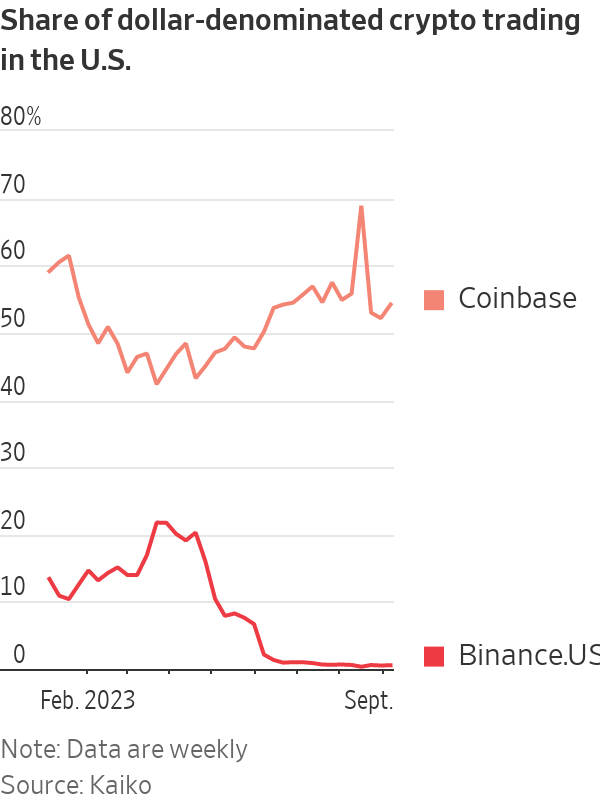
In the U.S., activity at its local exchange, Binance.US, has basically dissipated. Its chief executive officer, legal chief and risk head all left recently.
In a virtual Binance.US meeting days before his departure earlier this month, Binance.US CEO Brian Shroder said revenue at the exchange had fallen 70% year to date, according to a presentation viewed by the Journal. Executives looked on with dismay.
Shroder told employees Zhao would need to resolve “his regulatory matters, put his .US holdings in a blind trust, or sell his shares” in order for the U.S. platform to maintain its growth initiative. Those steps would allow the company to unblock banking relationships and get licenses, he said. Zhao is the majority owner of Binance.US and the global exchange.
A spokeswoman for Binance.US declined to comment.
Binance and the DOJ have been talking for months, according to people familiar with the discussions, and inside Binance, there have been discussions on whether Zhao should step down.
Zhao’s insistence in remaining at the helm of the company has frustrated some executives who believed him leaving would improve the chances of the company surviving, the Journal previously reported.
The company upheaval has also hurt employee morale.
Employees confronted Zhao in a summer meeting following layoffs, according to messages viewed by the Journal, in a rare showing of criticism.
“Some ppl laid off were given 0 days notice and/or found out they got laid off because they couldn’t login to the system anymore. How is that treating them respectfully? Is 2 weeks severance respectful?” one anonymous employee asked Zhao in the all-hands meeting chat. Nine others upvoted that. The question went unanswered.
A further stumbling block for Binance came in late August, when the Journal published an article on Binance customers’ use of sanctioned Russian banks. The DOJ has also been investigating Binance in connection with possible violations of U.S. sanctions on Russia, the Journal has reported.
Following the Journal story, the Justice Department questioned Binance about the banks’ usage, and Binance’s chief compliance officer, Noah Perlman, met with department officials to discuss their concerns, a person with direct knowledge of the matter said.
Pressure from the DOJ was partly responsible for Zhao’s decision to begin winding down Binance’s business in Russia, once one of its most important markets, the person said. Over the following two weeks, Binance barred customers from using the sanctioned banks and forced out the executives managing its Russia business. It said it was considering a full withdrawal from Russia.
Zhao publicly remained defiant. “We are one community,” he wrote on X on the day the Russia executives left. “Keep building!”
But behind closed doors, Zhao has been bringing new lawyers to handle the DOJ case, according to people familiar with the move. And Zhao has been staying put in his home in the United Arab Emirates, which doesn’t have a mutual extradition treaty with the U.S.
 Copyright 2020, Dow Jones & Company, Inc. All Rights Reserved Worldwide. LEARN MORE




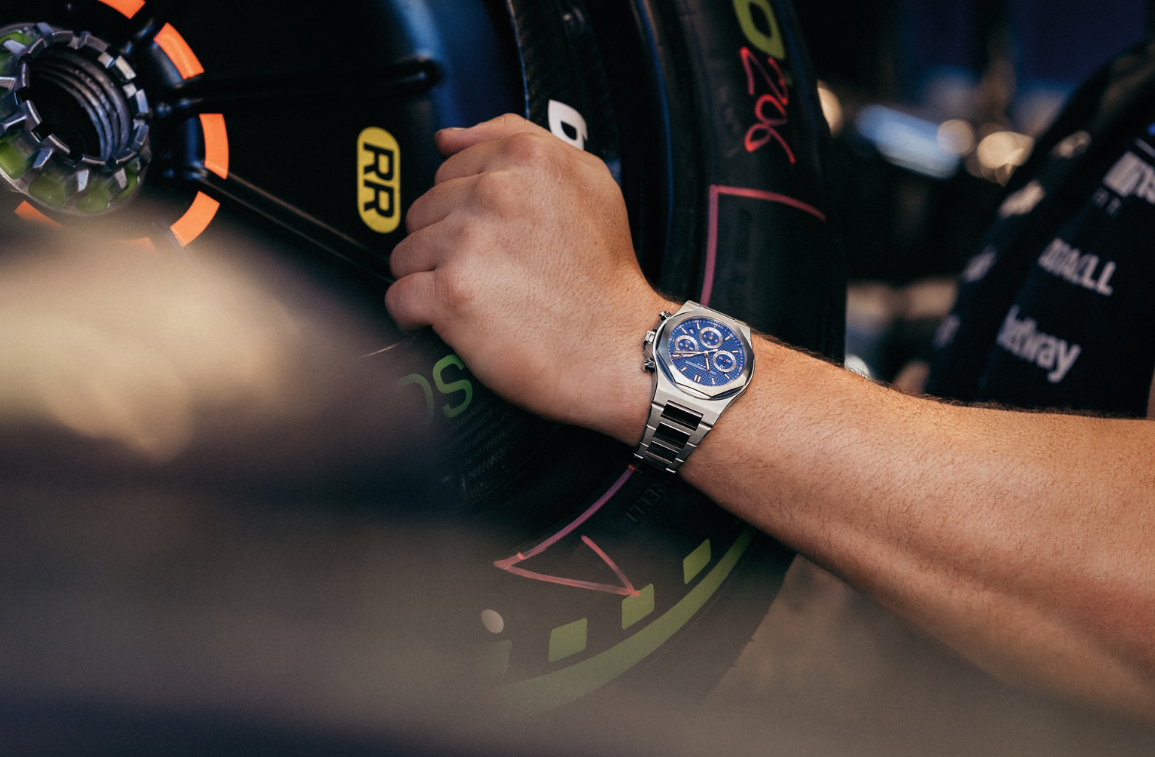
The Swiss watchmaker’s first collaboration with Atlassian Williams F1 Team produces two sporting Laureato models inspired by the team’s 2026 racing car.
Victorian auction buyers will soon receive a piece of information that has traditionally been withheld until bidding reaches it: the vendor’s reserve price. Under new property-sale and underquoting laws, agents must publish the agreed reserve at least seven days before an auction or fixed-date sale. Most changes begin on 1 October 2026 and apply to …
Continue reading “Victoria’s New Auction Rules Will Force Reserve Prices Into the Open”

The Swiss watchmaker’s first collaboration with Atlassian Williams F1 Team produces two sporting Laureato models inspired by the team’s 2026 racing car.
3 minGirard-Perregaux has revealed the first watches created through its partnership with Atlassian Williams F1 Team, bringing the British racing team’s colours to one of Switzerland’s most recognisable integrated-bracelet designs.
The collaboration comprises two 42mm steel watches: the time-and-date Laureato Williams Edition and the more technical Laureato Chronograph Williams Edition.
Both retain the familiar architecture of the Laureato, including its octagonal bezel, integrated bracelet and mix of polished and satin-finished surfaces. The influence of Williams is comparatively restrained, appearing through colour, discreet branding and details inspired by the team’s current Formula 1 car.
It is a welcome departure from the oversized logos and literal automotive references that can characterise motorsport watches.
The Williams FW48 inspires the dial
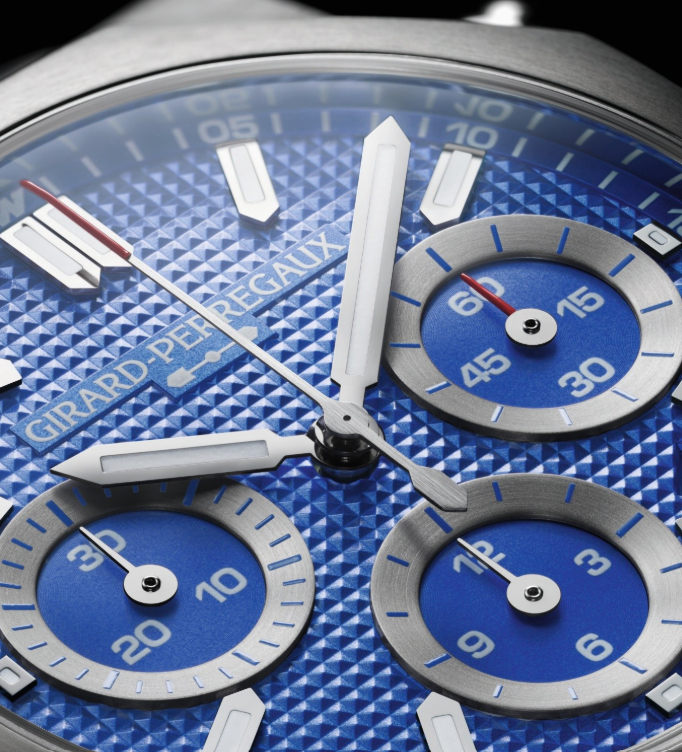
The centrepiece of both models is a blue Clous de Paris dial informed by the livery of the Williams FW48, the car being campaigned by the team during the 2026 Formula 1 season.
A small Williams “W” replaces the conventional marker at 12 o’clock, while the team emblem appears on the sapphire crystal caseback. Red accents echo the keyline used on the FW48 without overwhelming the established Laureato design.
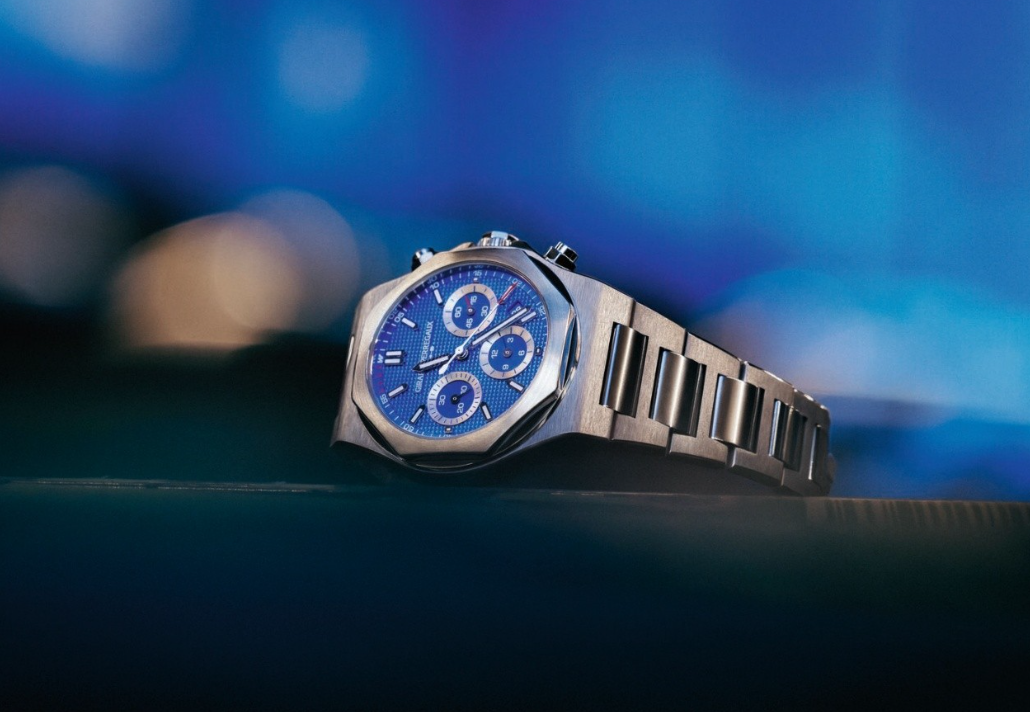
The three-hand model offers the quieter interpretation. Baton-shaped, rhodium-plated hands and hour markers are filled with white-emitting luminescent material, while a date window sits at three o’clock.
The chronograph creates a more obvious connection with motorsport. Three subdials are framed by rhodium-plated rings, with red appearing on the small-seconds hand and the tip of the central chronograph seconds hand.
Both watches measure 42mm across and are water resistant to 100 metres. The standard Laureato has a case thickness of 10.68mm, while the additional mechanics of the chronograph increase its profile to 12.16mm.
Two in-house automatic movements
The Laureato Williams Edition is powered by Girard-Perregaux’s self-winding GP01800 calibre. The movement provides hours, minutes, central seconds and the date, with a minimum power reserve of 54 hours.
The Laureato Chronograph Williams Edition uses the automatic GP03300 calibre, which combines its chronograph functions with a date display and offers a minimum power reserve of 46 hours.
Both movements operate at 28,800 vibrations per hour and can be viewed through their sapphire crystal casebacks.
Their decoration provides a more traditional counterpoint to the Formula 1 association. Finishing techniques include Côtes de Genève, circular graining, bevelling, mirror polishing, satin finishing, engraving and snailing.
The result is less about reproducing the appearance of a racing car than identifying the common ground between two mechanical disciplines: precision, incremental development and the considerable work hidden beneath the finished product.
Parallel histories
The timing of the partnership draws attention to the remarkably similar ages of its two protagonists.
Girard-Perregaux introduced the original Laureato in 1975, establishing an integrated-bracelet sports watch with a distinctive octagonal bezel. Williams entered Formula 1 two years later in 1977.
Both have evolved continuously across the five decades since. The Laureato has moved through different sizes, materials and complications, while retaining its central design language. Williams, meanwhile, has remained one of Formula 1’s most historically significant teams.
That gives the collaboration greater credibility than a simple licensing exercise. Girard-Perregaux and Williams are not being connected solely through the familiar language of speed. Their stronger link is a shared dependence on engineering, testing and the accumulation of specialist knowledge.
The watches are described as the beginning of a longer collaboration, suggesting further Williams editions may follow.
Girard-Perregaux’s international website lists the Laureato Williams Edition at US$16,200 and the Laureato Chronograph Williams Edition at US$20,900. Australian pricing has not been announced.
Specifications
Girard-Perregaux Laureato Williams Edition 42mm
Reference: 81010-11-3680-1GM
Case: Steel
Diameter: 42mm
Thickness: 10.68mm
Crystal: Anti-reflective sapphire crystal
Dial: Blue Clous de Paris pattern
Movement: Automatic GP01800
Functions: Hours, minutes, central seconds and date
Power reserve: Minimum 54 hours
Water resistance: 100 metres
Bracelet: Integrated steel bracelet with triple-folding clasp
International price: US$16,200
Girard-Perregaux Laureato Chronograph Williams Edition 42mm
Reference: 81020-11-3681-1GM
Case: 904L steel
Diameter: 42mm
Thickness: 12.16mm
Crystal: Anti-reflective sapphire crystal
Dial: Blue Clous de Paris pattern with three chronograph counters
Movement: Automatic GP03300
Functions: Chronograph, hours, minutes, small seconds and date
Power reserve: Minimum 46 hours
Water resistance: 100 metres
Bracelet: Integrated 904L steel bracelet with triple-folding clasp
International price: US$20,900
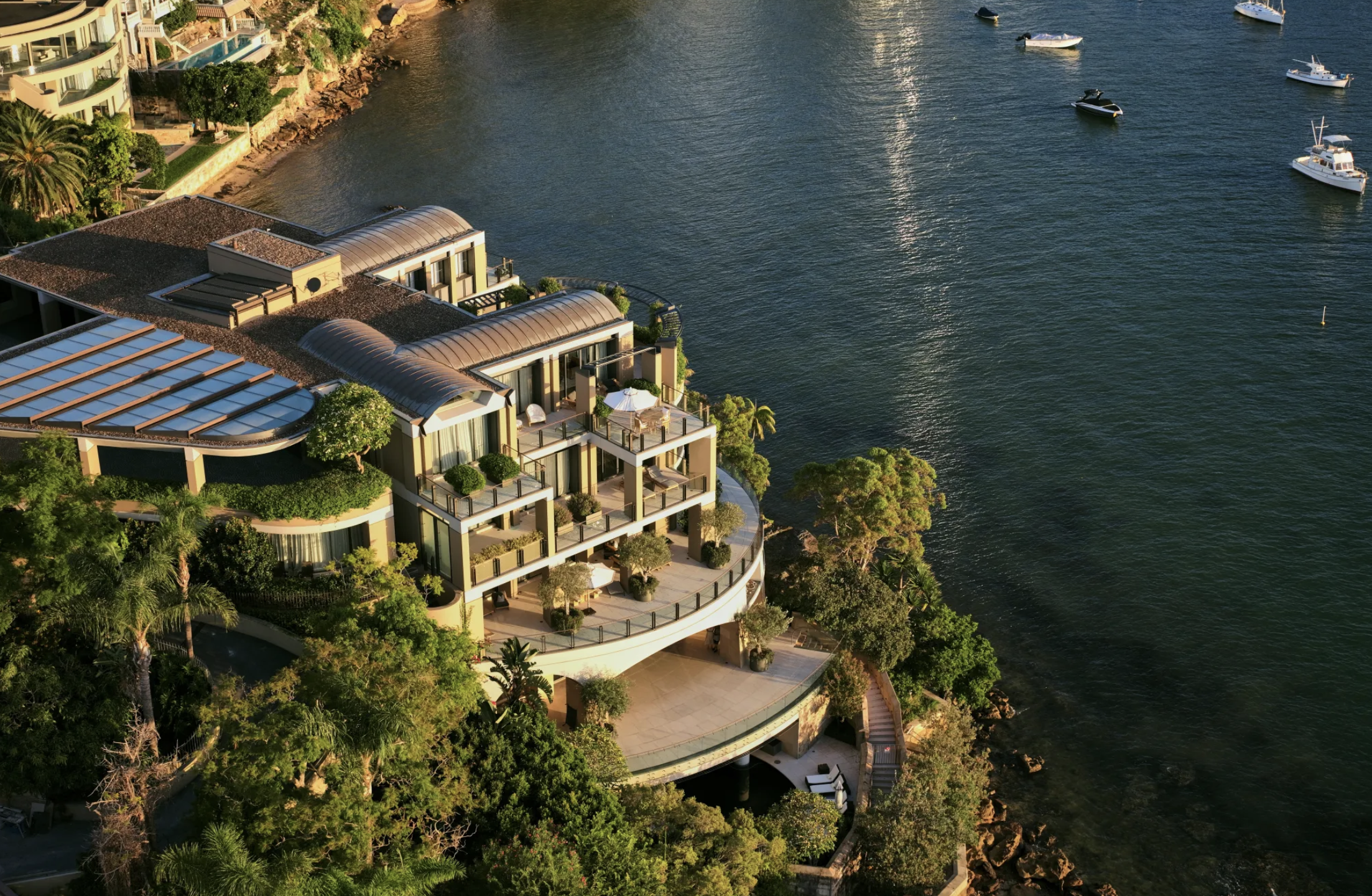
Records keep falling in 2025 as harbourfront, beachfront and blue-chip estates crowd the top of the market.
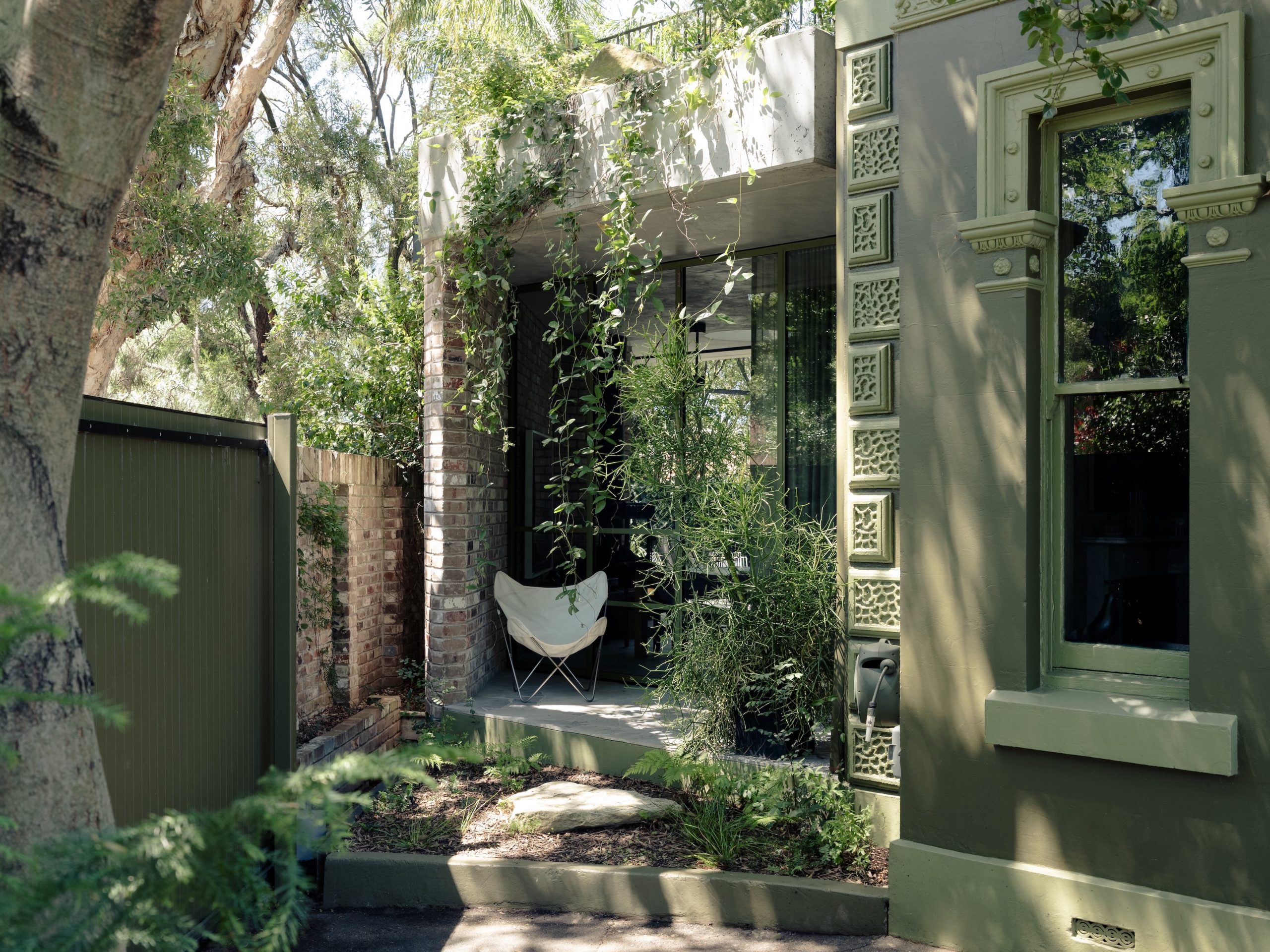
From bushland greens to valley reds, the country’s most awarded designers are proving that the best colour palette was never on a swatch card; it was outside the window all along.