A Luxury Giant, a Reclusive Heir and the Case of the Missing $13 Billion
A member of the Hermès family says his fortune is gone. Was it the handyman? The consigliere? Someone else?

 10 min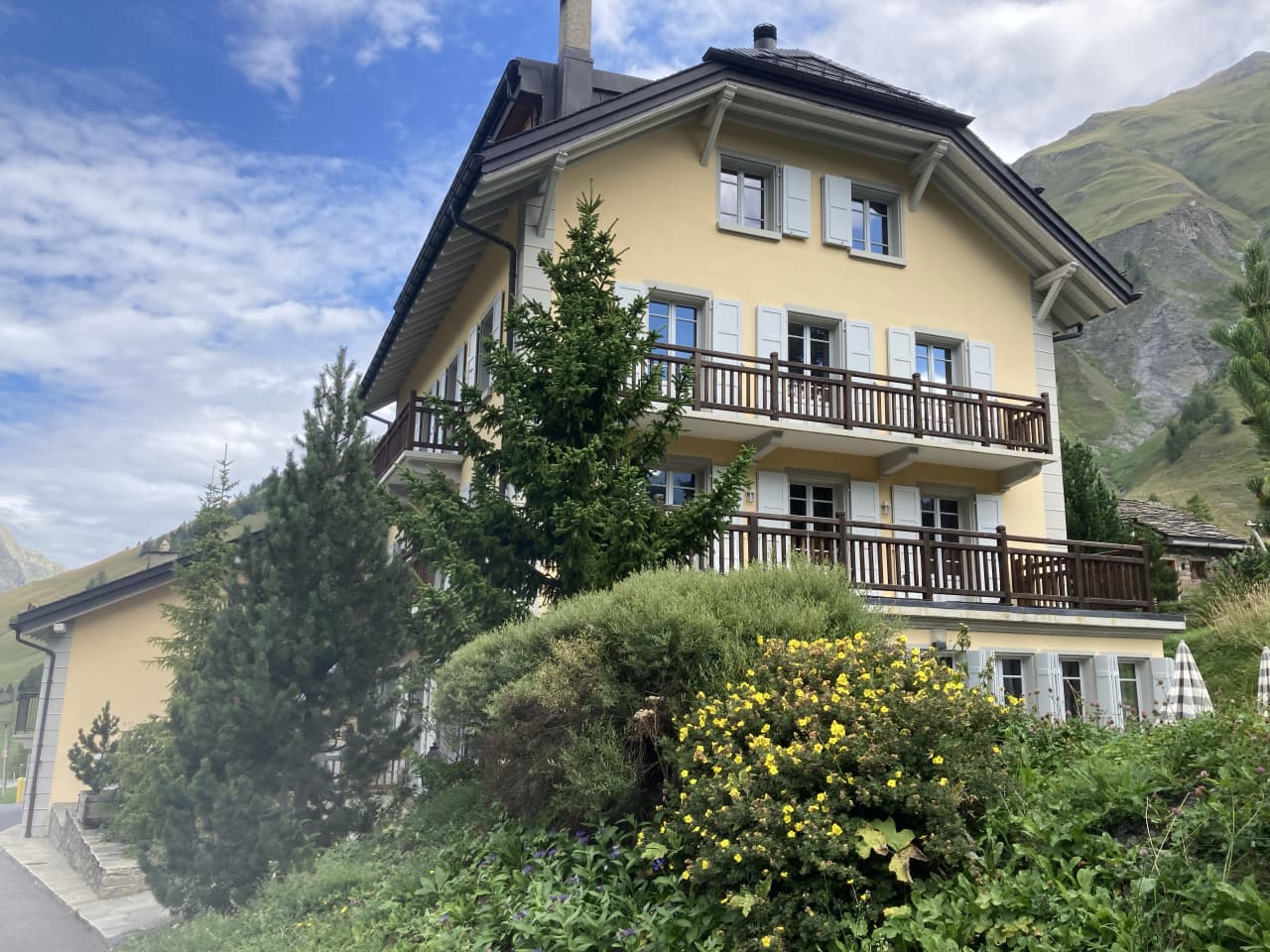
FERRET, Switzerland —Nicolas Puech, an heir to the Hermès fortune and long considered one of Europe’s richest men, lives much of the year in one of the dozen houses that make up this tiny village in the Swiss Alps.
In the winter, it’s not accessible by road, so locals use snowshoes to trek into the nearest town for provisions. Few residents know anything about their reclusive neighbour, who has been reported to be worth roughly $13 billion.
“I know he’s very rich,” said Jean-Jacques Éleaume, who is in his 70s and moved to the village because his wife’s ashes were scattered there. “How or why, no idea.”
Mila Fedele, who owns a small mountain inn in the village where hikers stop for the night on their way around nearby Mont Blanc, said Puech usually came in about once a year for a coffee.
“I didn’t even know his name,” she said. “Now, of course, I’ve read like everyone else, I’ve seen the name in the newspapers….”
Puech, who is 81 years old and doesn’t have any children, is in the newspapers due to a stunning claim he made last year: He said he was out of money. As for his stake in Hermès, the luxury giant controlled by his family, he said he didn’t own the shares anymore, and he didn’t know who did.
It’s a mystery tale that could only unfold among the ultra wealthy, in the opulent settings of Italian palazzos and sprawling chalets in the Alps. At stake are 6 million shares in an iconic luxury brand famed for its colourful silk scarves and Birkin and Kelly handbags cherished by socialites. A massive inheritance that was once earmarked for philanthropy now could be lost forever.
Puech’s revelation has spawned questions being whispered about from Paris to Geneva. Did his one-time financial adviser, as Puech has contended, sell the shares and take the proceeds? Is Puech claiming they are lost as part of a plan to leave his wealth to a one-time employee without paying inheritance taxes, as the former adviser has claimed? Could Hermès archrival Bernard Arnault shed light on the situation, as Puech has requested?
Eric Freymond, who worked for decades as Puech’s financial adviser, filed a report with Switzerland’s child and adult protection authority in November 2023, alleging that the employee and his partner, who both live with Puech, had come to control the heir’s life to their own financial benefit. To circumvent his estate plan—laid out in a binding contract that is different from a will—Puech was also trying to legally adopt the man, Freymond alleged.
Puech, for his part, says Freymond himself pilfered the shares as part of a “gigantic fraud,” which could have started as far back as 25 years ago, when he assisted Bernard Arnault, the owner of Hermès rival, LVMH , in his efforts to covertly build a large stake in Hermès.
Even Hermès is in the dark. The company’s chief executive told analysts earlier this year that it can’t say for sure whether Puech still owns his shares.
Complicating the matter is the fact that Puech was issued so-called bearer shares in Hermès, a type of stock that does not need to be registered under a specific person or business and where the ultimate owner is unknown to the company. Dividends for bearer shares are typically paid through the financial intermediaries that hold them on behalf of the owner, which can sometimes lead to challenges in tracing ownership. The rest of the Hermès family hold “registered shares” which are issued in their names.
“Of course at least someone must know where they are,” says Nicolas Borsinger, who runs Puech’s private foundation, to which Puech had planned to leave his fortune until abruptly trying last year to cancel that commitment.
On a late summer day, horned cows grazed through roadside meadows when a Wall Street Journal reporter visited Puech’s big yellow house, by far the largest in the village. A small sign in the window had the word “Privé”—private—scrawled in red marker.
Before the reporter could knock, Puech emerged from the side of the house, appearing in good health and good spirits. He was friendly, and responded affirmatively when asked if he had a nice summer.
Asked if he could talk about the mystery surrounding his fortune, Puech said it wasn’t the right moment and climbed into a small white SUV. A trim middle-aged woman who was driving the car interjected that the reporter should contact their lawyer. The two drove off.
When contacted by the Journal, the lawyer representing Puech, Jörn-Albert Bostelmann, said he wouldn’t comment in depth on what he called a “murky affair” and a criminal matter.
“My client has no intention of going into the details,” he said. “He’s an 81-year-old man who prefers for things to unfold peacefully.”
A lawyer for Freymond said his client denied wrongdoing and disputes Puech’s version of events. “My client is tired of having to defend himself against unreal defamatory allegations that have no substance and are not supported by any proof,” he said.
This account is based on court records as well as interviews with people familiar with the matter.
The financial adviser is fired
Puech, pronounced “pwesh,” was born on Jan. 29, 1943, in Neuilly-sur-Seine, France. He is a great-grandson of Thierry Hermès, who founded the company in 1837 when he opened a workshop in Paris.
Over the years, the Hermès family split into three branches, one of which was the Puechs. Most of the Puech cousins weren’t involved in the business, enjoying quiet lives funded by increasingly sizeable dividends.
From the late 1980s, Nicolas Puech spent much of his time at his farm located about an hour from Seville, in the south of Spain. The property, whose name means Four Winds in English, is secluded, and Puech enjoyed spending time among the eucalyptus and cork oaks, surrounded by his horses, pigs, goats, and his Labrador, called Nectar. He didn’t work.
“Horses are his passion,” said a person who has known him for decades. “Architecture, interior design, history, travel. I would say he leans more toward the artistic…. He has always been a bit frustrated, I think, growing up in a family where numbers were valued more than art.”
In 1993, Hermès went public, but the family kept a 74% ownership stake. Three years later, Puech inherited around 5% of Hermès when his mother died, making him one of the company’s largest individual shareholders. He inherited another 1% stake in the company when his sister died several years later.
In the absence of a partner or children, Puech set up a foundation and in 2017 named Nicolas Borsinger as chief executive to run it. Puech himself came up with the name, the Isocrates Foundation, in honour of the ancient Athenian orator who promoted the use of rhetoric as a solution to societal problems.
Borsinger, a quiet Swiss national who had a distinguished career working for the International Committee of the Red Cross, was told he would eventually have billions of dollars to distribute to causes including investigative journalism and other ways to combat misinformation and conspiracy theories.
Puech attended board meetings, as well as annual staff retreats. In September 2022, they convened at the Tuscan mansion of Puech’s wealth manager, Freymond, who was also a foundation board member.
Two people who were there said Puech seemed pleasant, engaged and happy.
Upon returning to his house in Geneva, Freymond found a letter in his mailbox. Puech was firing him, effective immediately.
Freymond had known Puech since the 1980s and considered him a friend as well as a client. Now Puech was dismissing him without even confronting him in person.
Then last fall, Borsinger, the head of the foundation, received his own letter.
In slanted handwriting across the top of the letter, Puech wrote: “Annulation pacte successoral.”
Translation: “Cancellation inheritance agreement.”
“I irrevocably declare the cancellation of this agreement in its entirety,” Puech wrote. “Not only because I was mistaken in believing that this agreement, in favor of my…foundation, could protect me and my assets, but also because I intend to make other testamentary arrangements.”
“We were shocked,” Borsinger recalls. “To start with, we didn’t even believe it was possible, and quite often I still can’t believe it.”
Beneath Puech’s signature, he stated that it had been written in the office of his new lawyer, Bostelmann, and in the presence of Jadil Butrak, a Moroccan national, and Butrak’s partner, Maria Paz.
Weeks later, Freymond filed a report to the Swiss welfare agency in which he claimed that Puech, or those around him, were taking steps to try to transfer Puech’s fortune to Butrak and Paz. Butrak had been hired by Puech many years earlier as a “laborer / gardener,” the report said, and Paz had also worked for him. It alleged that Butrak and Paz exerted more and more influence over Puech during the Covid-19 pandemic, when the heir lived in fear of catching the disease.
“They have—to everyone’s surprise—managed to make themselves ‘emotionally’ indispensable to him,” the report stated.
A section of the report titled “gradual isolation and extravagant spending,” detailed how Butrak and Paz received more than 54 properties from Puech over the years, including homes in Spain, Portugal and Montreux, Switzerland.
Finally, Freymond claimed that Puech, Butrak, and Paz had submitted an adoption request, so that Puech could legally become Butrak’s father.
Adopting Butrak would allow Puech to forgo most of the inheritance taxes on his wealth. It also would allow him to cancel giving his Hermès shares to his foundation as he had agreed. A bequest to children, even recently adopted ones, was one of the few ways Puech could unilaterally cancel the contract that laid out the original plan to give his holdings to the foundation.
“The obvious goal of this approach is to capture the ownership of the Hermès shares,” the report stated.
The lawyer for Puech, Bostelmann, said that Freymond’s allegations were “absurd” and that gifting dozens of properties would represent only 1% of Puech’s wealth. He said Puech, Butrak, Paz and her two children “have been living in a shared community, domestically, and happily together for around two decades.”
Does Arnault hold the clue?
Many in the Hermès family—including Nicolas Puech himself—suspected that clues to his fortune’s whereabouts could lie decades in the past.
And they suspect one person might have helpful information: Bernard Arnault, the chairman of Hermès’s archrival, LVMH.
In 2001, Arnault was on the hunt for acquisitions, having recently lost out in a battle for Gucci. And in June of that year, an LVMH employee in Geneva reached out to Freymond to ask whether the he would be “willing to assist and partner with LVMH in the goal of acquiring Hermès,” according to a lawsuit later filed by Freymond against LVMH and Arnault seeking to get a commission for his efforts. The lawsuit was later withdrawn.
Freymond respected Arnault, seeing him as a genius who was Europe’s answer to entrepreneurs like Bill Gates . He agreed to help by leveraging his relationships with the various Hermès heirs to acquire shares in secret, which he was able to do in part because he had so-called “discretionary management mandates” on Puech’s accounts and later a number of LVMH-affiliated accounts as well, according to the lawsuit.
The lawsuit alleged that Puech agreed to the plan, but “was unaware of the finer details of the trades and did not wish to know them, as long as his portfolio was managed in his best interest.”
Starting in June 2001, Freymond steadily built the Arnault stake up to just under the disclosure threshold of 5%.
In September 2006, Freymond met with Arnault at Château d’Yquem, LVMH’s wine property in Bordeaux, to talk about how to build the stake even bigger without being detected. Puech joined them for the first time, according to Freymond’s lawsuit.
Over a series of meetings, they came up with a complex plan to use equity swaps and collateral-backed trades to effectively disguise the transfer of Hermès shares into LVMH hands. According to Freymond’s lawsuit, some 13 million Hermès shares were transferred to banks and then on to LVMH in this way. Almost all of these transited through Puech’s bank accounts, the lawsuit states.
The multiyear operation didn’t become public until Oct. 23, 2010, when LVMH declared that it held 14.2% of Hermès and would increase this percentage to 17% in the following days. It later increased its stake to 23%.
Arnault and LVMH insisted that they had no intention of taking control of Hermès or seeking board representatives. But the Hermès family considered it an assault on family unity.
Hermès Chairman Bertrand Puech , Nicolas Puech’s late brother, told the French daily Le Figaro, “With friends like these, who needs enemies?”
Swiftly, the Hermès family set up a holding company to pool its shares. Those who participated relinquished their rights to sell the shares for several decades, making it impossible for anyone to take over the fashion house.
Nicolas Puech was one of the few family members who refused to participate.
He registered to vote for the May 2011 Hermès annual meeting as the personal holder of more than 5 million shares. His foundation was listed in the shareholder documents as owning an additional 900,000 shares.
The takeover thwarted, Arnault’s LVMH was fined 8 million euros for not properly disclosing its purchases of Hermès shares. The luxury giant agreed to distribute its Hermès shares to LVMH shareholders and promised in writing not to purchase further shares of the company for the next five years.
Still, some family members and Hermès executives suspected that Puech had betrayed them and sold his stake to Arnault. How else could they explain that Arnault had amassed such a large amount of shares, given that only about a quarter of the company’s shares were publicly available?
Despite taking credit for the subterfuge, Freymond has consistently claimed—and reiterated to the Journal—that the LVMH stake did not include Puech’s inherited family holdings, and that he never managed those shares.
In 2012, Hermès chairman Henri-Louis Bauer flew to Biarritz to confront Puech directly. He denied selling shares to LVMH, saying they were in a bank account in Geneva. Bauer said he followed up a few months later, and Puech promised to double check.
In 2014, Hermès asked Puech for a bank statement confirming how many shares he owned. He refused. Hermès stopped stating how many shares Puech owned in its annual report.
In October 2015, Hermès lodged a criminal complaint in Paris against an unnamed individual for “forgery and use of forged documents” stating the number of shares he held. The unnamed individual, according to people familiar with the matter, was Puech.
Investigators later broadened the case to include Freymond.
Puech at the time denied the allegations, writing to a judge in 2018 that he had “personally, on several occasions” verified his Hermès holdings.
Tip of the iceberg
Some people close to Puech say that he believes he was being truthful in all of his previous attestations to owning the shares, and only came to believe otherwise after his split with Freymond.
In 2023, a year after revoking Freymond’s mandates as financial adviser, Puech filed three lawsuits against him in Geneva, accusing his former adviser of “massive fraud.” The lawsuits also target another board member of the foundation, along with “all other individuals involved in the offenses described.”
One of the lawsuits says that in 2021, but mostly in 2022, Puech began to ask Freymond more questions about his wealth as he was trying to organize his estate.
“I blindly signed all the documents that Eric Freymond asked me to sign, without any further explanation, given the complexity of managing such a large fortune,” Puech wrote in the lawsuit. “Eric Freymond’s strategy was aimed at stripping me of my fortune. Me, his supposed friend.”
In his lawsuit, Puech called on the court to solicit testimony from Arnault and raid his house in Paris’s seventh arrondissement, as well as LVMH headquarters, to determine what he knows about the fate of the shares.
He asked the same for Freymond and his wealth-management firm in Geneva.
Arnault and LVMH didn’t respond to requests for comment.
For now, both sides continue to fight on the legal front. In throwing out Puech’s lawsuits, the court cited Puech’s inattention to his own financial affairs.
Switzerland’s child and adult protection authority has dismissed Freymond’s report without taking any action.
The foundation is in a holding pattern and hasn’t received any money.
Puech wrote in one of the lawsuits that he believed Freymond had created a trust or some other entity abroad that was now holding either the Hermès shares or the proceeds from their sale. He attached bank statements, including one from Panama, for accounts that he said he only learned about recently.
The documents he provided, he said, “likely represent only the visible tip of the iceberg.”
 Copyright 2020, Dow Jones & Company, Inc. All Rights Reserved Worldwide. LEARN MORE





From making unpopular decisions to learning when to listen, leaders from five businesses reveal what nobody prepared them for — and how running a company has challenged their expectations.

Technology and semiconductor shares fell sharply as investors questioned the debt financing the AI infrastructure boom and confronted higher rates and Chinese competition.
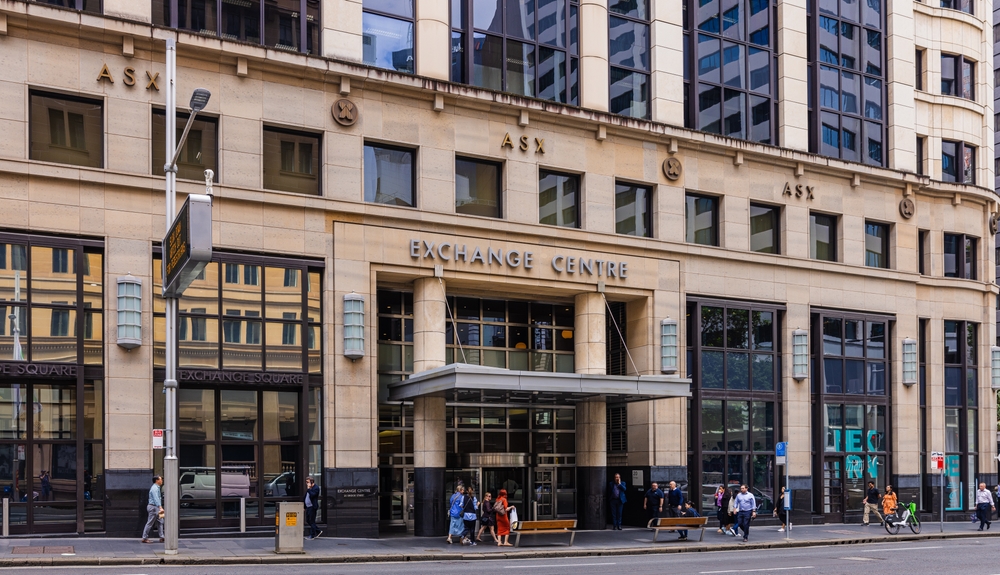
Technology and semiconductor shares fell sharply as investors questioned the debt financing the AI infrastructure boom and confronted higher rates and Chinese competition.
4 minA sharp technology sell-off has exposed a new anxiety on global markets: whether the enormous borrowing behind the artificial-intelligence infrastructure boom can generate sufficient returns as interest rates rise and Chinese competition intensifies.
The artificial-intelligence investment boom has powered technology shares, semiconductor manufacturers and data-centre operators to extraordinary heights. Last week, investors were given a reminder that much of this expansion is being built with borrowed money.
The technology-heavy Nasdaq Composite fell 4.5 per cent over the week ended October 16, its weakest performance since late June. Semiconductor shares suffered an even deeper correction, with the Philadelphia Semiconductor Index losing about 11.4 per cent.
The selling spread quickly through global markets. Micron Technology fell 14.6 per cent over the week, while South Korea’s Samsung Electronics and SK Hynix dropped approximately 18 per cent and 24 per cent respectively.
This was more than a routine bout of profit-taking. Investors were reassessing three interconnected risks: higher interest rates, the rapidly expanding debt burden attached to AI infrastructure and the prospect of stronger competition from Chinese memory-chip manufacturers.
The debt behind the AI build-out
Artificial intelligence requires a physical infrastructure network of enormous scale. Data centres must be built, advanced processors purchased, power supplies secured and cooling systems installed before customers begin generating meaningful revenue from them.
Technology companies are increasingly supplementing their own cash with corporate bonds, syndicated loans, equipment leases, private credit and project-level financing.
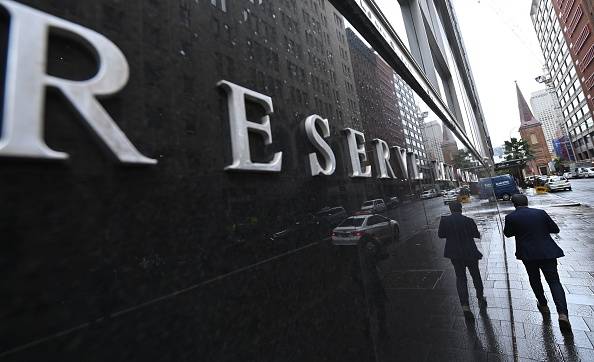
JPMorgan describes the emerging funding model as a combination of conventional corporate borrowing and project finance tied to individual data-centre assets. In Australia, the Reserve Bank estimates that syndicated loans accounted for approximately three-quarters of data-centre financing during 2025 and 2026 to date.
The numbers are becoming large enough to affect broader credit markets. The Federal Reserve Bank of Dallas has cited Wall Street estimates suggesting AI-related investment-grade bond issuance could approach US$300 billion in 2026 alone.
That borrowing is not automatically problematic. Debt can be an efficient way to finance long-lived infrastructure when future revenue is sufficiently predictable. The concern is that AI technology, customer demand and computing economics are changing much faster than the repayment schedules attached to the assets.
A data centre financed today may carry debt for years. Investors must therefore make assumptions about future utilisation rates, electricity prices, chip performance, customer concentration and the amount businesses will ultimately pay for AI computing.
When interest rates rise, those assumptions become less forgiving.
Inflation changes the calculation
September’s US inflation data intensified the pressure. Consumer prices increased 3.7 per cent over the year, ahead of market expectations and up from 3.4 per cent in August.
The hotter reading reduced confidence that interest rates would fall quickly and pushed bond yields higher. That matters particularly for companies whose valuations depend on profits expected well into the future, as well as highly leveraged infrastructure operators that may need to refinance.
CoreWeave has emerged as a closely watched test case. The specialist cloud-computing company has accumulated substantial debt and lease obligations to build AI capacity, while relying on a concentrated group of large technology customers.
Its shares fell sharply during the sell-off, while the cost of insuring its debt against default climbed. CoreWeave has argued that its contracted backlog more than covers its obligations and that financial markets do not always understand its business model. Nevertheless, its securities have become a proxy for investor confidence in debt-funded AI infrastructure.
Oracle, another major investor in AI computing capacity, fell 8.8 per cent in Friday trading, while CoreWeave dropped 15.5 per cent.
The question is shifting from how much AI infrastructure can be built to how profitably it can be operated.
China adds another source of pressure
Interest rates were not the only catalyst. Reports of advances by Chinese memory-chip producer ChangXin Memory Technologies raised concerns that lower-cost Chinese products could increase competition across the global semiconductor industry.
Memory chips are essential to AI systems, but the industry is historically cyclical. Periods of tight supply and high pricing can encourage rapid investment, eventually producing oversupply and falling margins.
The prospect of a well-funded Chinese competitor expanding its technological capabilities unsettled investors in Samsung, SK Hynix and Micron. It also demonstrated that AI-related demand does not insulate chipmakers from conventional competitive pressures.
That combination—slower rate cuts, more expensive financing and potentially cheaper supply—challenged the assumption that every company exposed to AI would enjoy continually expanding margins.
A reset rather than the end of the boom
The sell-off does not establish that the AI boom is ending. Demand for computing power remains strong, the largest technology companies continue to generate formidable cash flows and many infrastructure projects are backed by long-term customer contracts.
What has changed is the market’s willingness to overlook the price and financing structure of that growth.
The most resilient companies are likely to be those able to fund investment from operating cash flow, secure long-duration customers and demonstrate that new capacity will earn returns comfortably above its financing costs.
More speculative operators may face greater scrutiny, particularly where debt is expensive, customers are concentrated or expected revenue depends on demand that has not yet materialised.
For Australian investors, the lesson extends beyond US technology shares. Local data-centre operators, infrastructure funds, electricity suppliers and property groups are increasingly exposed to the same investment cycle.
Artificial intelligence may remain one of the defining growth themes of the decade. But last week’s correction showed that enthusiasm for the technology does not eliminate financial discipline.
The next stage of the AI boom will be judged not only by computing power, model performance or demand for chips, but by something more traditional: whether the assets being financed can generate enough cash to repay the money borrowed to build them.
Fact box
Nasdaq Composite: Down 4.5 per cent for the week ended October 16, 2026
Philadelphia Semiconductor Index: Down approximately 11.4 per cent
Micron Technology: Down approximately 14.6 per cent
Samsung Electronics: Down approximately 18 per cent
SK Hynix: Down approximately 24 per cent
US September inflation: 3.7 per cent annually
Estimated 2026 AI-related investment-grade issuance: Approximately US$300 billion
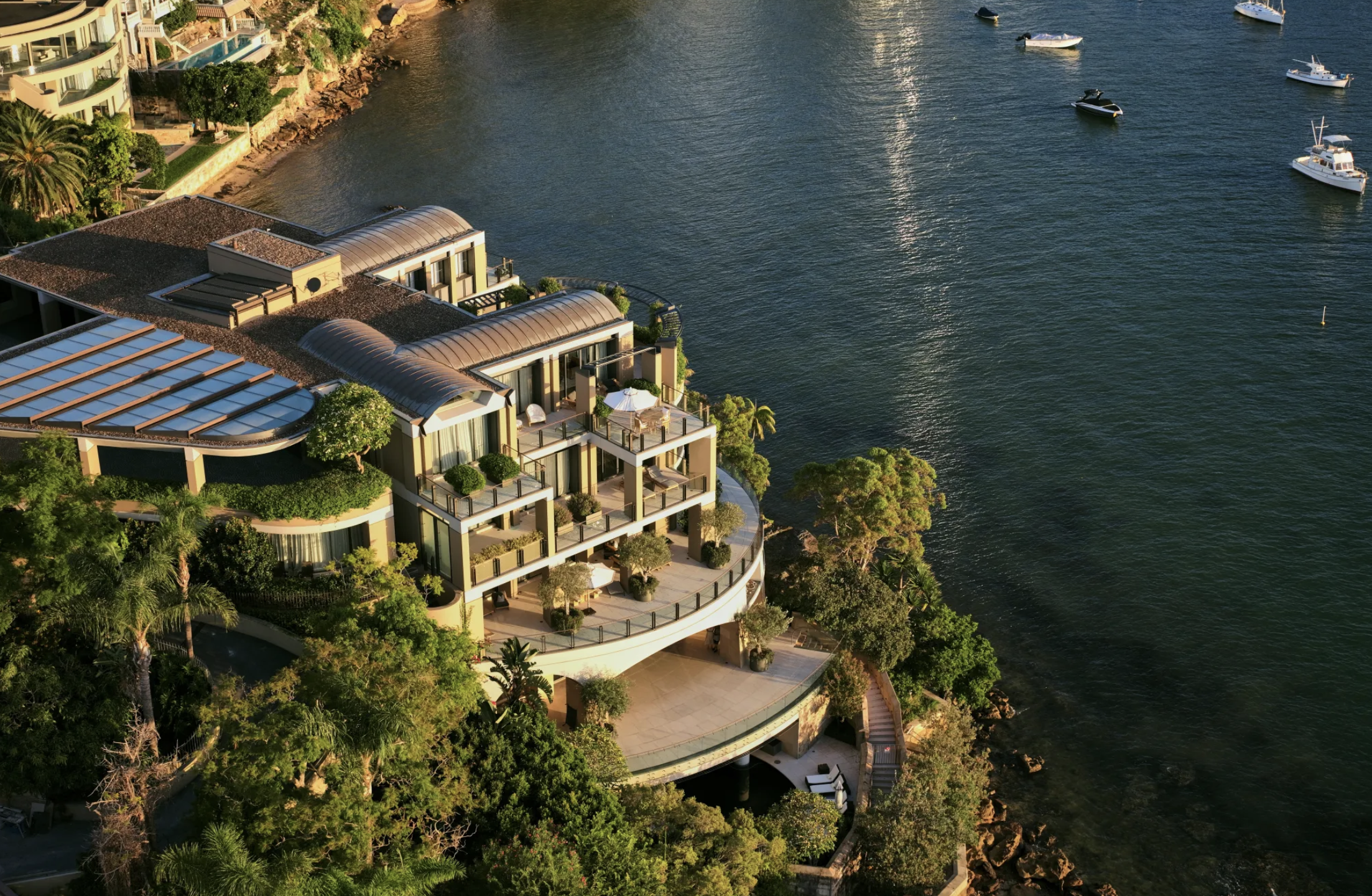
Records keep falling in 2025 as harbourfront, beachfront and blue-chip estates crowd the top of the market.

All three vehicles will form part of a broader charitable initiative benefiting Big Brothers Big Sisters of America, the American Red Cross and Starlight Children’s Foundation