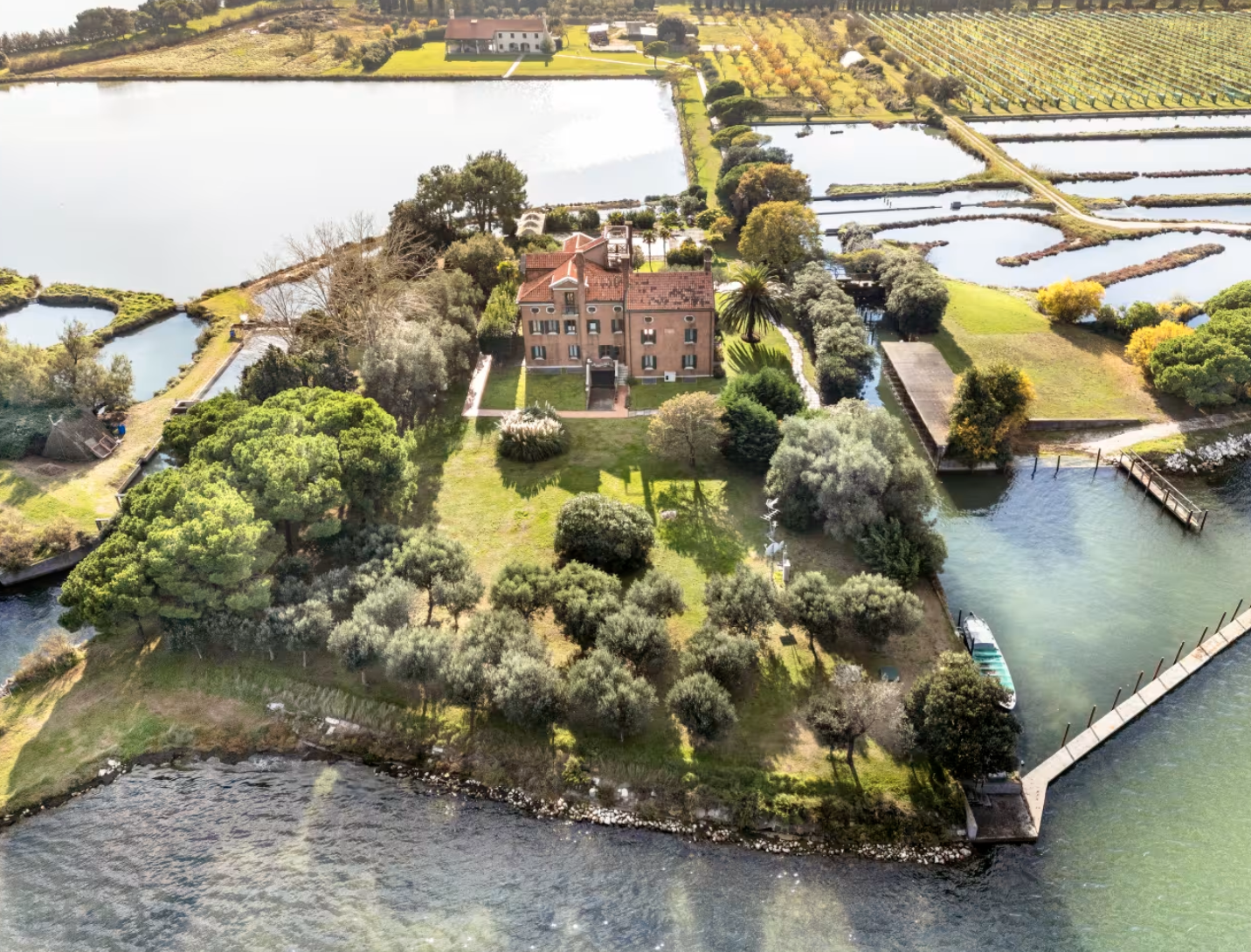


Alfred Hitchcock’s Vandamm House Never Existed, Until They Built Their Own
Two architecture lovers created a real-life version of the home in Utah. It is now on the market for $45 million.

 5 min
Near the end of “North By Northwest,” Alfred Hitchcock’s 1959 thriller, the protagonist, Roger Thornhill (played by Cary Grant), follows the seductress Eve Kendall (played by Eva Marie Saint) to a sprawling Modernist house reminiscent of Frank Lloyd Wright’s Fallingwater.
Except this house is situated not over a waterfall but, absurdly, atop Mount Rushmore.
The Vandamm House, named for the movie’s villain, never existed except on a Hollywood soundstage.
But it seems so real on the screen that Christine Madrid French, an expert on the architecture of Hitchcock’s films, says people sometimes tell her: “I went to Mount Rushmore, but I forgot to visit the house.”
John Boccardo, who grew up in Los Gatos, Calif., was 11 when the film came out. He saw it nearly a dozen times at the Studio Theatre in San Jose.
He was especially taken with the Vandamm House, which seemed completely real to him.
“I promised myself I would visit it one day,” says Boccardo. In the meantime, he drew surprisingly realistic renderings of it, from memory, while still in grade school. undefined
Years later, as an architecture student at SCI-Arc (Southern California Institute of Architecture) in downtown Los Angeles, he learned that the house didn’t exist.
A couple of rooms and two small sections of its exterior had been built on MGM’s Culver City lot under the supervision of production designer Robert Boyle.
For scenes in which the house was in the background, Hitchcock relied on paintings of the imaginary building by special-effects artist Matthew Yuricich.
The paintings, known as mattes in Hollywood, weren’t terribly realistic, but with Cary Grant and Eva Marie Saint moving across the screen, moviegoers didn’t notice.
“It may be the most famous Modernist house that never existed,” says French, an architecture and film historian and the author of “The Architecture of Suspense: The Built World in the Films of Alfred Hitchcock.”
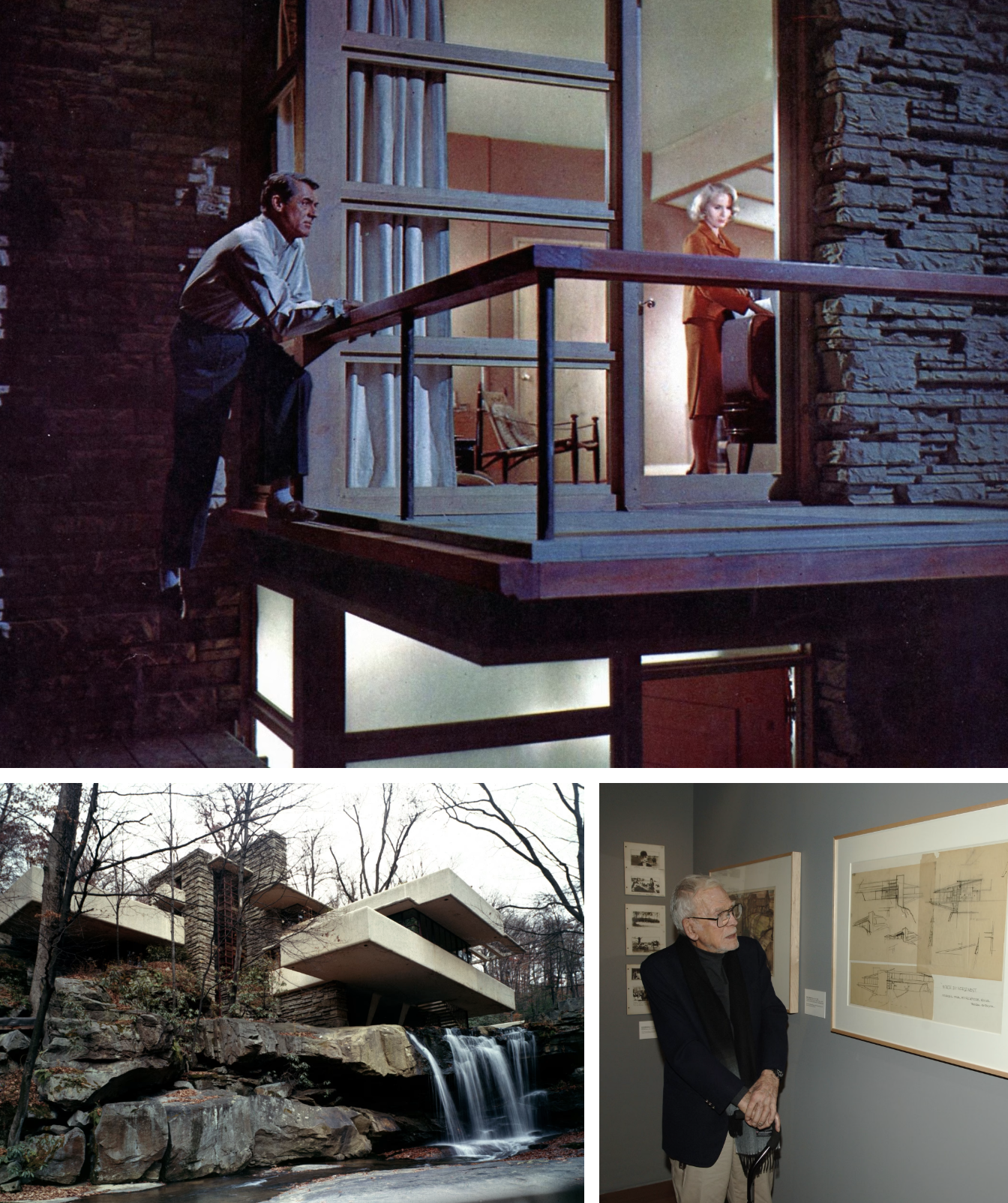
Boccardo went on to become a successful architect who worked in both northern and southern California.
Then, while semi-retired and living in Utah, he decided it was time to build the Vandamm House. His partner, Derek Esplin, threw himself into the project, working out details of everything from financing to furnishing. Says Esplin, a film producer, “I took it on as my life’s work.”
Boccardo, 78, Esplin, 59, and their three dogs (two schnauzers and an aussiedoodle) moved into the house in February.
The men have used it the last four months to ensure that everything is working perfectly. Now they are offering the house for sale at $45 million. The furniture and fixtures are available separately. “It can be turnkey,” Esplin says. The broker is Paul Benson of Engel & Völkers in Park City.
“I expect to get the full price,” says Benson. “It is not an outlier. We sold a house by the same architect in Park City last year for $65 million. And this is one of the most exceptional homes ever built in the state of Utah. You couldn’t recreate it for $45 million.”
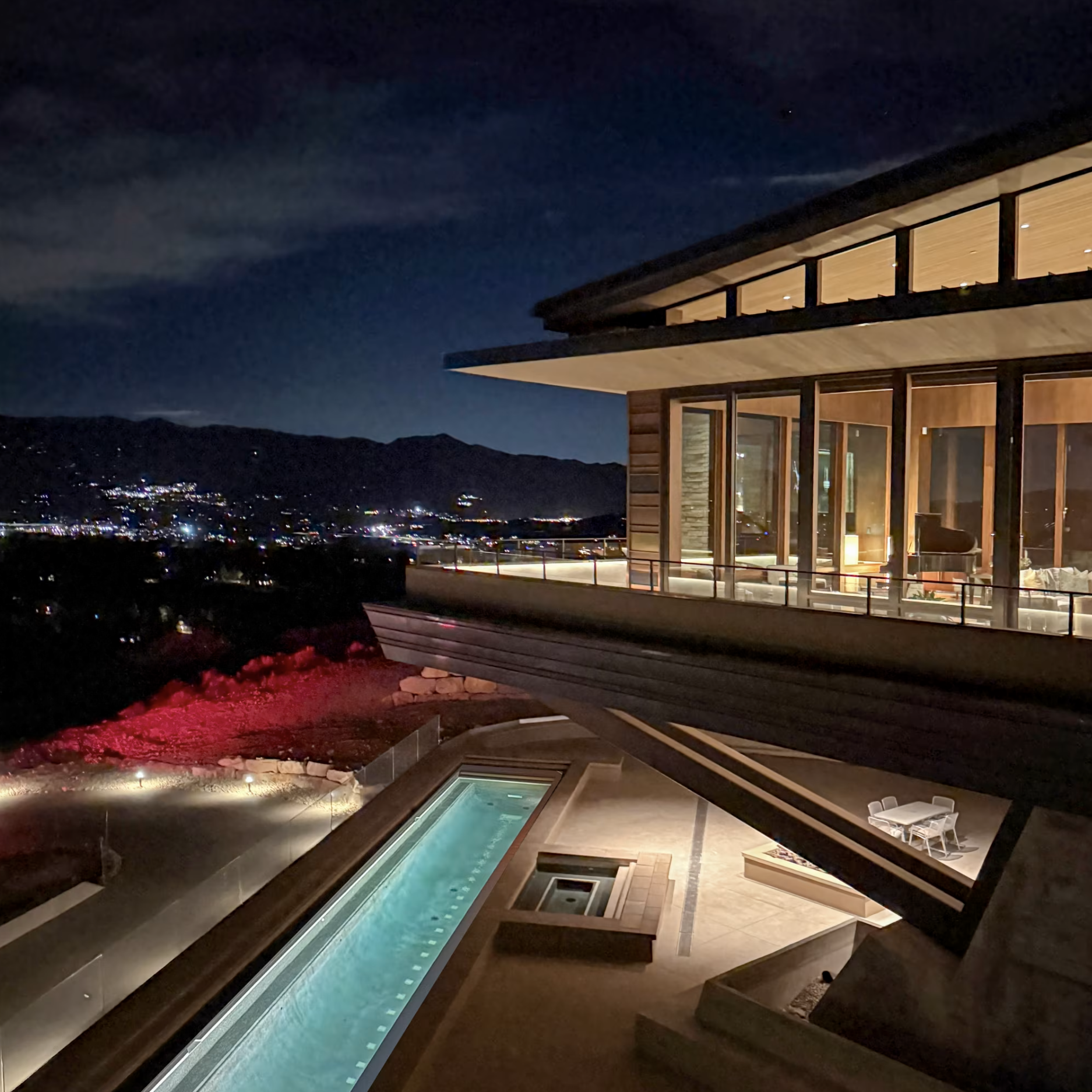
Boccardo and Esplin declined to say how much it cost to build the house. But they got a bargain when they paid about $2 million for the 1.7 acre lot in 2021. (Benson says the land alone would command $7 million to $10 million today.) They chose the site, high above Park City, after searching for property that would let the house, with its dramatic cantilevers, be seen from below.
The property, which offers unobstructed views of the Wasatch Range, is in the Pinnacle , a gated community (complete with a clubhouse and a concierge) within the Promontory, a larger gated community—like a nightclub’s VVIP room entered through its VIP room.
With the site selected, they turned to Salt Lake City architect Michael Upwall, who is known for designing very large houses for the very rich. The dramatic aerie in HBO’s “Mountainhead,” with Steve Carrell, was one of his.
Laying out the house, Boccardo and Upwall, who served as co-architects, knew it would have a large living room with a wall of windows at one end and a stairway at the other. The stairway would lead, via a mezzanine, to one of the bedrooms. But that was all they could glean from the movie.
To finish the floorplans, says French, they had to answer all the questions the filmmakers never asked, such as “What’s behind that door?”and “What’s around that corner?”
And how many bedrooms, bathrooms and kitchens are there? Their answer: six, eleven and three. (Boccardo and Esplin met French when they attended a lecture she gave about Hitchcock. The two men have since hired her to write about their house.)
Boccardo and Esplin also had to answer questions the filmmakers, even the wildly imaginative Hitchcock, would never have thought to ask:
How many black leather seats, fully reclining and heated, should there be in the home theatre? (18)
How much will it cost to fire-harden the house? (Over $1 million. “You can’t make a house completely fireproof, but you can improve its chance of surviving,” Esplin says. A special pump allows the water in the extra-deep, 75-foot lap pool to be used for firefighting.)
How much should we spend on custom walnut cabinetry? (Also over $1 million.)
What if our dogs’ feet get cold? (Relax. The house’s 100-foot-long gravel dog run is heated.)
Structural engineer Cambria M. Flowers figured out how to support the living room, which cantilevers 40 feet into thin air. The answer was to build two 160-foot-long steel-reinforced concrete beams, 120 feet of which anchor the cantilever while also supporting the ceiling of the garage.
Thick diagonal beams, like those shown prominently in “North By Northwest,” were slipped in later to provide additional stability. In the end, the project required 400 tons of steel, 4,000 cubic yards of concrete and 24 miles of electrical wire, according to contractor Gary Hill.
Now the men are ready to return to the last dream house they built, against dramatic red rocks in the southern Utah town of Ivins. Boccardo hopes the buyer of the Vandamm house is a lover of “North By Northwest.”
Esplin says that he and Boccardo, who dreamt of the house for more than 60 years, occasionally wonder if they really want to sell it. But then they remind themselves that it will be okay for someone else to own it. After all, Esplin says, “Many houses are built without stories. But this house has a story. And the story of this house belongs to us.”
 Copyright 2020, Dow Jones & Company, Inc. All Rights Reserved Worldwide. LEARN MORE



Porsche’s Cayenne Turbo Electric produces up to 1,156PS and reaches 100km/h in a claimed 2.5 seconds.
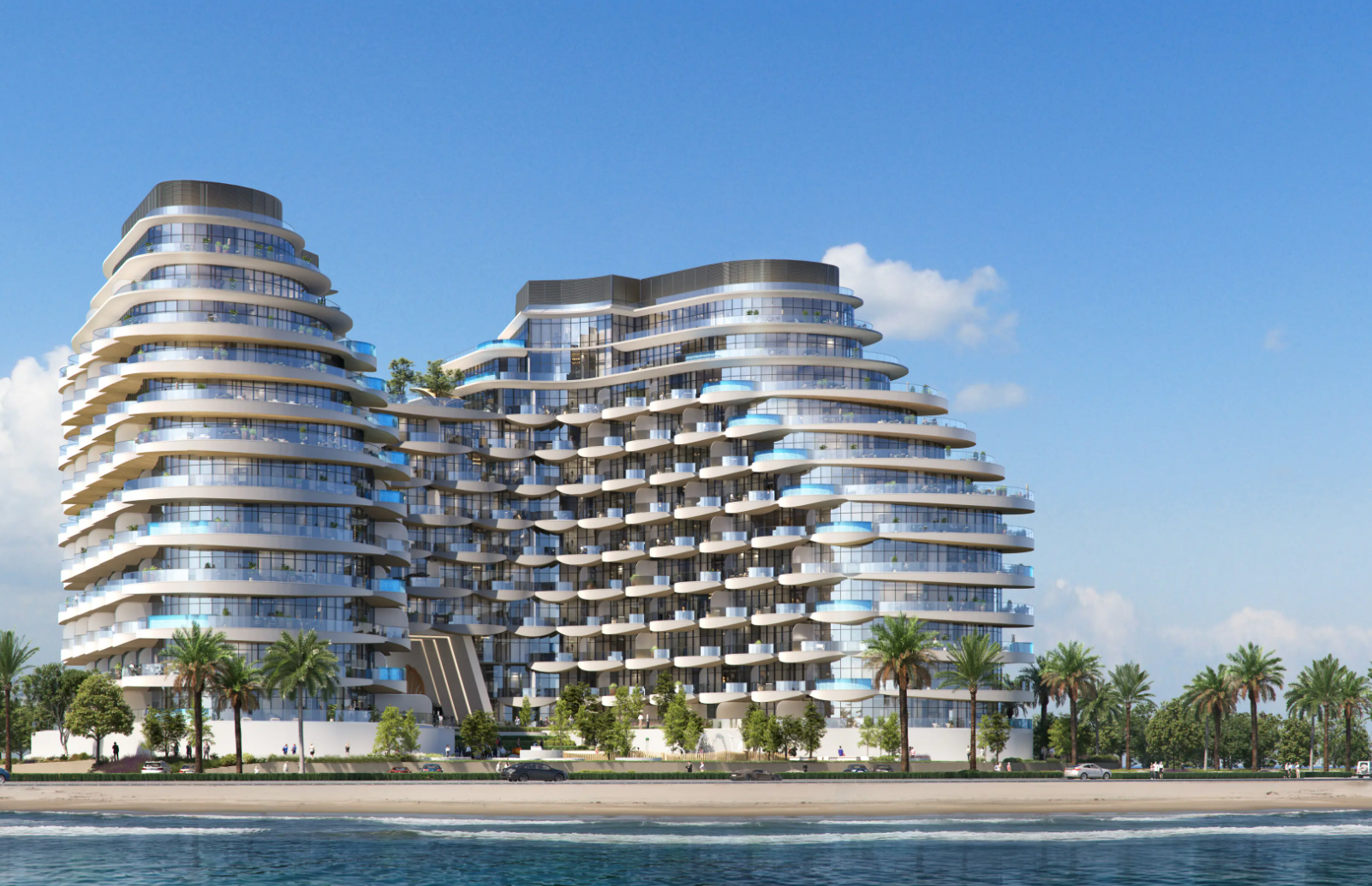
BNW Developments has established a Sydney presence, joining Arada and Sobha Realty among the growing number of UAE developers pursuing Australian buyers and development opportunities.
Rising Australian bond yields are putting pressure on listed property and the cost of capital. Here’s why A-REITs can signal changes in property valuations before the direct market moves.
4 min
Most property investors spend considerably more time watching interest rates than bond markets.
That makes sense. The Reserve Bank cash rate has an obvious relationship with mortgage repayments, borrowing capacity and investor sentiment, while government bonds can seem far removed from what someone will pay for an apartment in Sydney or an office building in Melbourne.
But the bond market can provide one of the earliest indications that the price investors are willing to pay for property is changing.
That became evident last Thursday, when Australian shares suffered their worst trading session in months. The S&P/ASX 200 fell almost two per cent, with property among the rate-sensitive sectors caught in the sell-off as government bond yields moved sharply higher.
Australia’s 10-year government bond yield pushed to around 5.4 per cent, close to its highest level in 15 years, against a backdrop of rising global yields and renewed concern about inflation and the direction of interest rates.
For property investors, that matters because the government bond yield is effectively one of the reference prices for money.
An investor buying an Australian government bond is receiving a return while taking comparatively little credit risk. Property comes with tenants, vacancies, maintenance, leasing costs, illiquidity and the possibility that the underlying asset falls in value, so investors generally expect to be compensated for accepting those additional risks.
A property yielding five per cent therefore looks considerably more attractive when a 10-year government bond yields three per cent than when that same bond is yielding more than five per cent.
That does not mean property values automatically fall every time bond yields increase. Rental growth, scarcity, lease structures and the quality of an asset can all outweigh movements in rates, but it changes the return investors require and therefore what they may be prepared to pay.
SG Hiscock & Company made that point in an ASX Investor Update, arguing that real, or inflation-adjusted, bond yields can be particularly relevant to property because real estate is fundamentally a long-duration investment whose value is derived from future income.
The first place investors can often see that repricing is the sharemarket.
A house or commercial building does not have a price that changes every few seconds. An Australian real estate investment trust does.
A-REITs can own billions of dollars of shopping centres, offices, warehouses and other property, but their securities trade continuously on the ASX. When expectations around interest rates and bond yields change, investors can immediately alter what they are willing to pay for those property earnings.
That can create a situation where the value attributed to a portfolio on the sharemarket falls even though the underlying buildings have not changed hands and their independent valuations remain unchanged.
The two markets simply move at different speeds.
Mark Ferguson, Head of Charter Hall Maxim Property Securities, has previously described direct property valuations as lagging the listed market. Writing for Charter Hall during an earlier period of rising interest rates and bond yields, Ferguson noted that listed property was already pricing increases in capitalisation rates and falls in underlying property values before those adjustments had fully emerged in direct-market valuations.
The effect can be substantial.
Consider a commercial property producing $1 million a year in net operating income. At a five per cent capitalisation rate, that income implies a value of $20 million.
If investors subsequently require a 5.5 per cent return while the property’s income remains unchanged, the implied value falls to around $18.18 million. At six per cent, it falls again to roughly $16.67 million.
Nothing necessarily happened to the building. It could have the same tenant paying the same rent under the same lease. What changed was the return required by the person buying it.
That is also why income growth becomes so important.
A well-located property with constrained supply and strong rental growth can increase its earnings quickly enough to absorb some of the pressure from higher required returns. An ageing office building facing vacancies, refurbishment costs and an approaching debt refinancing could instead be hit from several directions at once.
Debt adds another dimension because property is one of the economy’s most capital-intensive asset classes.
Higher market rates can increase the cost of financing an acquisition or refinancing existing debt while simultaneously increasing the return investors expect from the property itself. For developers, the consequences can be even more pronounced because higher construction finance costs can coincide with lower anticipated end values.
If that happens, a project can be squeezed from both directions: it becomes more expensive to deliver at precisely the time investors become less willing to pay yesterday’s price for the finished asset.
The direct property market generally takes longer to reveal that adjustment.
An A-REIT can lose five per cent of its market value in a trading session. An office building may not transact for another year. Owners can reject lower offers, transactions can be withdrawn and valuers must wait for comparable sales to establish new evidence.
That lag is one reason listed property can be useful even for investors who have no intention of buying a REIT.
The same principle eventually extends to residential property, although houses and apartments are generally valued using comparable sales rather than capitalisation rates.
Residential property is particularly sensitive to credit. Higher bond and swap rates can influence bank funding and fixed mortgage pricing, while higher borrowing costs reduce the amount households can service.
If prospective buyers can borrow less, the number of people capable of paying yesterday’s price can shrink. Vendors may initially resist that adjustment, resulting in fewer transactions rather than immediate price falls, before motivated sales eventually establish new comparable values.
For investors, rental growth can provide an important buffer. Rising rents can help offset higher financing costs, just as increasing commercial rents can compensate for some expansion in capitalisation rates. Investors relying primarily on capital growth while accepting a low rental yield have considerably less protection when the cost of money rises.
That is why movements in listed property and bond markets deserve attention beyond the trading floor.
They provide a constantly updating view of how investors are pricing interest rates, debt, future income and property risk, often months before those changes become obvious in direct transactions.
For an A-REIT investor, that means looking at gearing, debt maturity, hedging, interest cover and the discount or premium to net tangible assets rather than simply chasing the highest distribution yield.
For a commercial property investor, it means testing what happens to valuations if capitalisation rates move 25, 50 or 100 basis points higher.
For residential investors, it means understanding mortgage costs, borrowing capacity, realistic rental income and how much of the investment case relies on future capital growth.
The cash rate will continue to attract most of the attention in Australian property. But investors looking for an earlier indication of how the market is repricing risk should also be watching the bond market.
Property prices might take months to respond to a changing financial environment. The price of money moves considerably faster.

From snow-dusted valleys to festival-filled autumns, Bhutan reveals itself as a rare destination where culture, nature and spirituality unfold year-round.
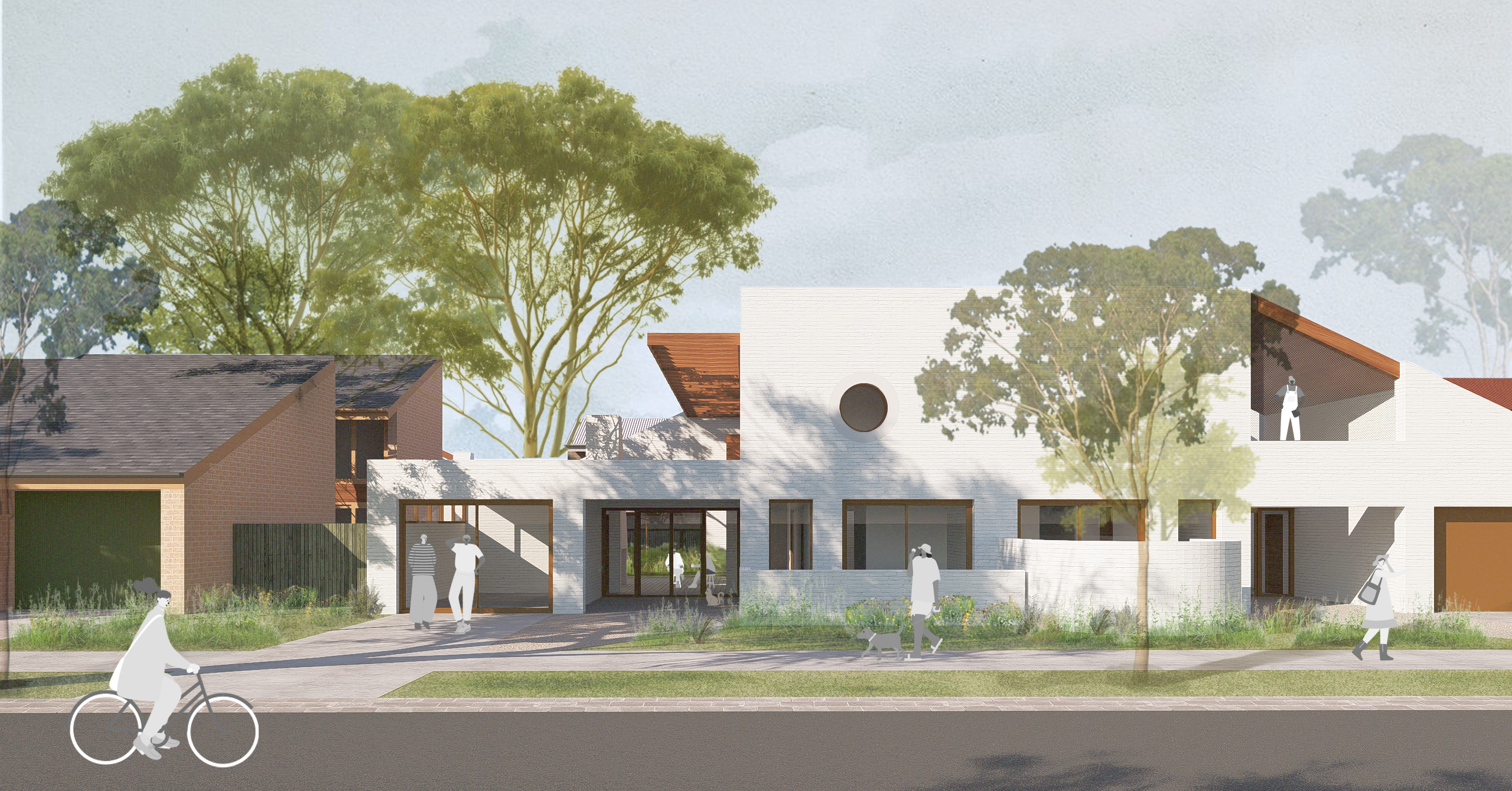
Brickworks has enlisted acclaimed architecture studio Kennedy Nolan to explore how homes could become more adaptable, energy-efficient and connected to community.