Rolex Celebrates Its Waterproof Pioneer With a Centenary Watch
 2 min
2 min
Luxury watch anniversaries often produce overtly nostalgic designs. Rolex has taken a more restrained route for the centenary of the Oyster, translating references to its 1926 breakthrough into a contemporary Oyster Perpetual 41 rather than reproducing a historic model.
The original Rolex Oyster is central to the company’s mythology. Introduced in 1926, it was presented as the first waterproof wristwatch, using a hermetically sealed case to protect the movement from water and dust. The architecture would go on to underpin the professional and everyday watches that built Rolex’s global reputation.
One hundred years later, the new Oyster Perpetual 41 carries details intended to echo that origin. Rolex describes the model as a centenary tribute and positions it within the direct line of descendants from the first Oyster. The appeal is not a conspicuous anniversary inscription, but the idea that an apparently simple three-hand watch embodies a century of incremental refinement.
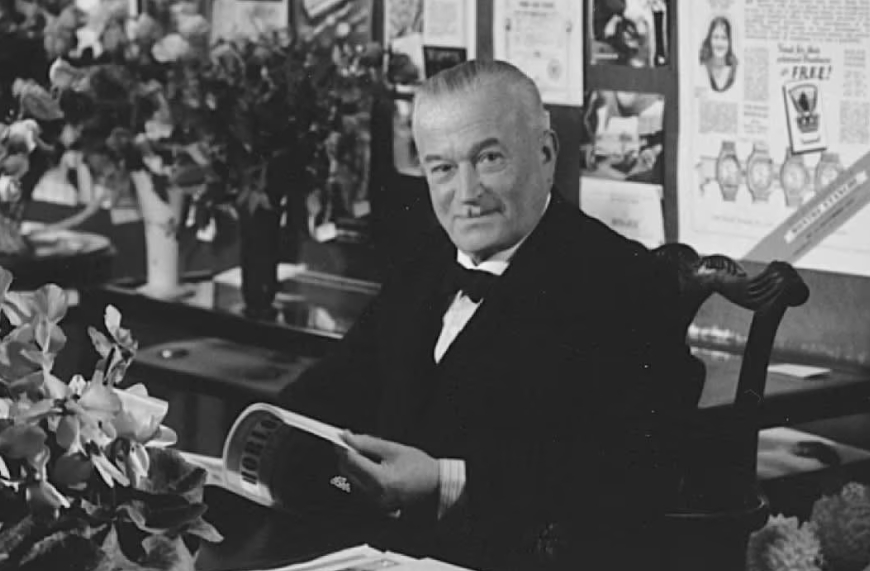
Hans Waldorf, the founder of Rolex and Tudor. Image credit: Rolex
At 41 millimetres, it has the scale expected of the modern Oyster Perpetual line. The case, bracelet and automatic movement follow Rolex’s familiar formula: robust construction, legibility and an absence of unnecessary complication. That simplicity is precisely what gives the model breadth. It can serve as a first serious watch, an understated daily piece or a historically meaningful addition to a larger collection.
The launch also arrives as Rolex strengthens its Superlative Chronometer certification. The company says its 2026 standard expands the testing framework with additional criteria addressing magnetism, reliability and sustainability. Buyers should treat those claims as manufacturer specifications until independent long-term testing becomes available, but the change shows where major watchmakers see the next contest for credibility: not only accuracy, but resilience over years of ownership.
For collectors, the centenary context will be the headline. For everyone else, the attraction is more elemental. The Oyster Perpetual has no rotating bezel, chronograph registers or calendar window demanding attention. It is Rolex reduced to its essentials — waterproof case, automatic movement, clear dial and a design intended to outlast fashion.
That makes the 100th-anniversary model a fitting tribute. The original Oyster was important because it made a wristwatch more usable in daily life. A century later, Rolex is celebrating it with a watch designed around the same promise.
About Rolex
Hans Wilsdorf was a German-born watchmaker and entrepreneur, best known for founding Rolex and Tudor. Pioneering innovations like the waterproof Oyster case (1926) and self-winding Perpetual rotor (1931), he transformed wristwatches into precise, durable luxury items.
A master marketer, he introduced brand ambassadors and global expansion strategies. In 1945, he created the Hans Wilsdorf Foundation, ensuring Rolex’s profits support philanthropic causes beyond his death in 1960.
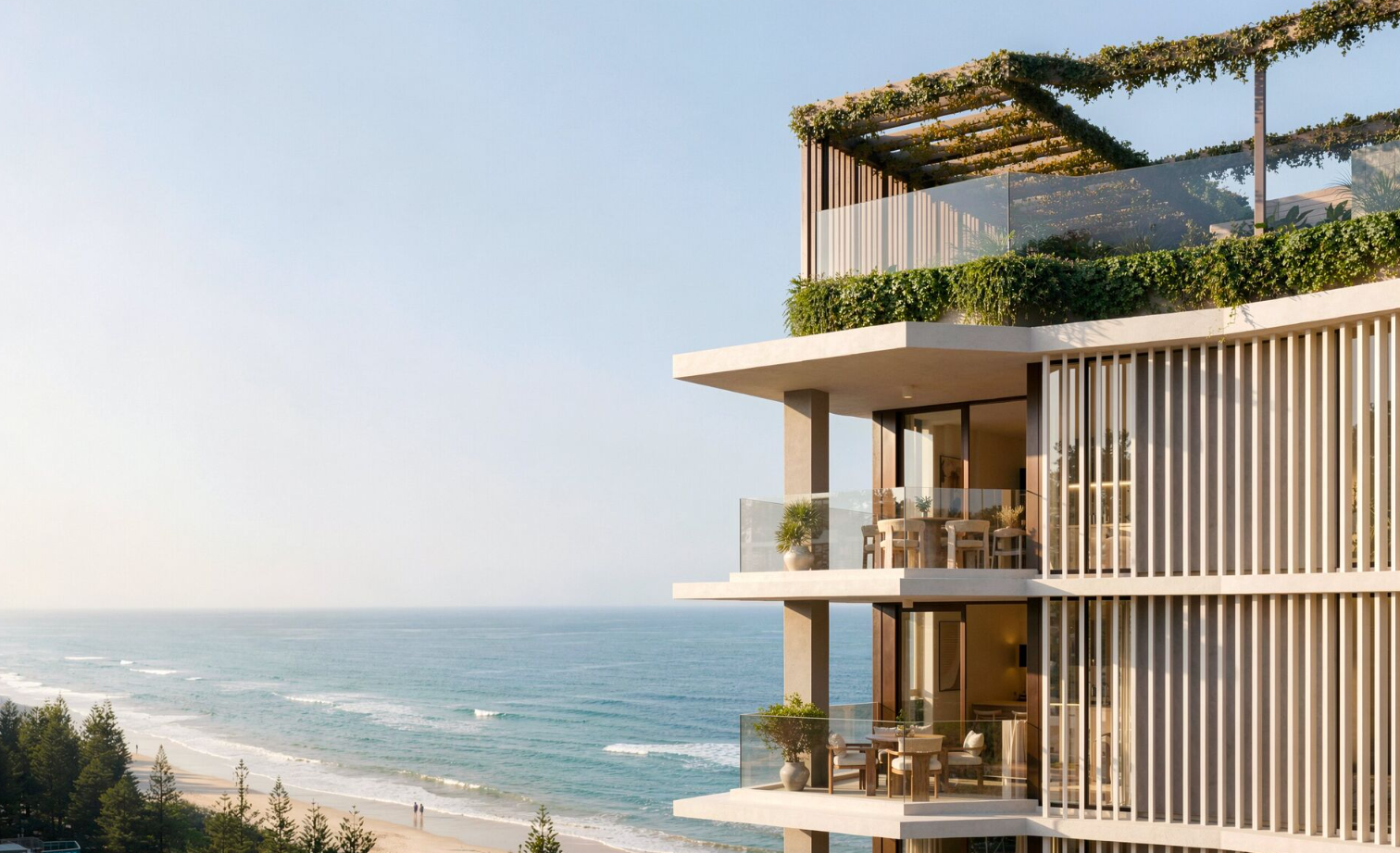
Studio apartments have almost disappeared from new Australian developments. Lura is bringing them back to Burleigh Heads from $495,000.

Porsche’s Cayenne Turbo Electric produces up to 1,156PS and reaches 100km/h in a claimed 2.5 seconds.
The ASX 200 gained 0.4 per cent in the week ended 9 October as property and energy rose while technology and small caps declined.
5 min
Heavyweights Lift the ASX as Small Caps and Technology Fall Behind
The S&P/ASX 200 finished the week ended 9 October at 8,716.6, up 0.4 per cent, but the headline concealed a sharply divided market as listed property, energy and selected blue chips advanced while technology, iron ore miners and smaller companies fell.
Australia’s sharemarket finished the week higher, but the gain was less convincing than the index alone suggested.
The S&P/ASX 200 closed Friday, 9 October at 8,716.6, gaining 0.4 per cent over the five trading sessions. The broader All Ordinaries added 0.26 per cent to 8,877.7. By contrast, the Small Ordinaries fell 1.34 per cent to 3,281.9, showing that the market’s progress relied heavily on larger, more liquid companies rather than a broad increase in investor confidence.
The index’s path was uneven. It edged up on Monday, rose 0.57 per cent on Tuesday, slipped 0.09 per cent on Wednesday and lost 0.77 per cent on Thursday before recovering 0.64 per cent on Friday.
That final-session rise of 55.7 points allowed the benchmark to finish the week in positive territory and brought it approximately back to break-even for the calendar year.
The strongest sector was listed property, which gained 3.73 per cent. The move was visible in Goodman Group, one of the market’s largest property securities, which rose 4.82 per cent across the week based on adjusted closing prices.
A-REITs remain sensitive to movements in global bond yields, funding costs and asset valuations, so the sector’s strength indicated a meaningful rotation towards income-producing real assets. It did not eliminate the longer-term questions surrounding office demand, asset valuations, development pipelines or refinancing costs.
Energy gained 2 per cent as Brent crude finished the week around US$101.42 a barrel, up approximately 0.85 per cent. Woodside Energy rose 3.46 per cent over the week, although the sector was far from uniform.
Uranium shares came under pressure on Friday, with several names falling sharply. That demonstrated why a supportive move in the energy index should not be interpreted as a universal signal for every energy commodity or producer.
Technology was the weakest major sector, declining 1.97 per cent over the week despite a substantial rebound on Friday. Pro Medicus, WiseTech Global and Life360 all rallied in the final session after suffering sizeable drawdowns from their August levels. The late recovery softened the weekly damage without erasing the market’s broader caution towards higher-valuation growth shares.
Materials also struggled. BHP fell 0.44 per cent over the week, Rio Tinto lost 1.48 per cent and Fortescue declined 5.25 per cent. The size of those companies meant their weakness offset part of the support supplied by property, energy and healthcare.
The banks were another drag. Commonwealth Bank fell 1.43 per cent, Westpac declined 1.75 per cent, National Australia Bank lost 2.13 per cent and ANZ eased 0.51 per cent.
Macquarie Group moved in the other direction, gaining 1.12 per cent. With the major banks representing an unusually large share of the Australian index, even modest simultaneous falls can materially restrain the benchmark.
Healthcare provided some of the strongest large-cap performances. CSL rose 4.84 per cent and ResMed gained 2.49 per cent. General insurer QBE advanced 5.63 per cent, making it the strongest performer among the 20 large-cap companies tracked below.
Consumer-facing companies also contributed. Woolworths rose 3.23 per cent, Coles gained 1.22 per cent and Wesfarmers added 1.48 per cent. Aristocrat Leisure finished 2.91 per cent higher. Those gains helped balance the losses across the banks and diversified miners.
How the ASX’s top 20 moved
The following figures compare adjusted closing prices on Friday, 2 October with Friday, 9 October. Percentages have been rounded to two decimal places.
The top 20 is based on the largest-company framework used for this wrap. Rankings can change with share prices, index reviews and corporate actions.
Commonwealth Bank (CBA): Down 1.43 per cent, from $151.45 to $149.29.
BHP Group (BHP): Down 0.44 per cent, from $61.21 to $60.94.
Westpac Banking Corporation (WBC): Down 1.75 per cent, from $34.32 to $33.72.
National Australia Bank (NAB): Down 2.13 per cent, from $38.50 to $37.68.
ANZ Group (ANZ): Down 0.51 per cent, from $37.37 to $37.18.
Wesfarmers (WES): Up 1.48 per cent, from $76.22 to $77.35.
Macquarie Group (MQG): Up 1.12 per cent, from $245.63 to $248.37.
CSL (CSL): Up 4.84 per cent, from $175.35 to $183.84.
Woodside Energy (WDS): Up 3.46 per cent, from $31.24 to $32.32.
Rio Tinto (RIO): Down 1.48 per cent, from $164.81 to $162.37.
Goodman Group (GMG): Up 4.82 per cent, from $25.91 to $27.16.
Woolworths Group (WOW): Up 3.23 per cent, from $38.35 to $39.59.
Telstra Group (TLS): Down 1.24 per cent, from $4.83 to $4.77.
Fortescue (FMG): Down 5.25 per cent, from $16.19 to $15.34.
Coles Group (COL): Up 1.22 per cent, from $23.03 to $23.31.
Northern Star Resources (NST): Up 1.54 per cent, from $24.02 to $24.39.
QBE Insurance Group (QBE): Up 5.63 per cent, from $23.81 to $25.15.
Aristocrat Leisure (ALL): Up 2.91 per cent, from $59.76 to $61.50.
ResMed (RMD): Up 2.49 per cent, from $31.79 to $32.58.
James Hardie Industries (JHX): Up 0.06 per cent, from $36.07 to $36.09.
The Top 20 results show why the overall index could advance despite weakness in the banks and miners. Eleven of the 20 companies finished higher, but more importantly, several of the gains were substantial.
QBE, CSL and Goodman rose close to or above 5 per cent, while Woodside and Woolworths advanced more than 3 per cent. Those moves countered falls across all four major banks and the three largest diversified iron ore exposures.
Fortescue was the weakest company in the group, down 5.25 per cent. National Australia Bank recorded the largest decline among the major banks, while Rio Tinto was the weaker of the two larger diversified miners after Fortescue.
It is important not to invent a company-specific explanation where none was confirmed. Some weekly movements reflected sector rotations, commodity prices, interest-rate expectations and changes in investor positioning rather than a fresh announcement by the company.
Where no material ASX announcement clearly explained the move, the percentage should be treated as market performance rather than evidence of a particular event.
Weekly market dashboard
Trading week: 5–9 October 2026.
S&P/ASX 200: 8,716.6, up 0.40 per cent.
All Ordinaries: 8,877.7, up 0.26 per cent.
Small Ordinaries: 3,281.9, down 1.34 per cent.
Best sector: Listed property, up 3.73 per cent.
Weakest sector: Information technology, down 1.97 per cent.
Energy: Up 2.00 per cent.
Brent crude: Approximately US$101.42 a barrel, up 0.85 per cent.
AUD/USD at Friday’s close: Approximately US69.81 cents.
Strongest tracked large cap: QBE Insurance, up 5.63 per cent.
Weakest tracked large cap: Fortescue, down 5.25 per cent.
What investors will watch next
The immediate question is whether the rally can broaden. A market supported by a handful of large companies can continue rising, but it is more vulnerable if those leaders reverse.
Improvement in the Small Ordinaries and technology sector would provide stronger evidence that investors are becoming comfortable taking risk beyond defensive and income-producing assets.
Oil remains another major variable. Prices above US$100 a barrel can support producers such as Woodside, but they also increase transport, manufacturing and household costs. That creates a complicated backdrop for inflation and interest-rate expectations.
Global bond yields, US earnings and local company announcements will also shape the coming week. For Australian investors, the concentration of the domestic market means movements in the banks, BHP, Rio Tinto, CSL, Wesfarmers, Goodman and Woodside can overwhelm an otherwise mixed session.
The week’s 0.4 per cent gain was constructive, but it was not a declaration that risk had disappeared. The more accurate reading is that investors favoured selected large companies, listed property, energy and defensive consumer names while remaining cautious about smaller companies, technology and iron ore exposure.
That distinction matters. An investor whose portfolio resembled the headline index may have finished ahead. Someone weighted towards smaller companies, technology or bulk miners may have experienced a very different week.
This article provides general information only. It does not constitute personal financial advice or a recommendation to buy, sell or hold any security. Market prices and index composition can change rapidly.

From elevated skincare to handcrafted home pieces, this year’s most thoughtful gifts go beyond the expected.
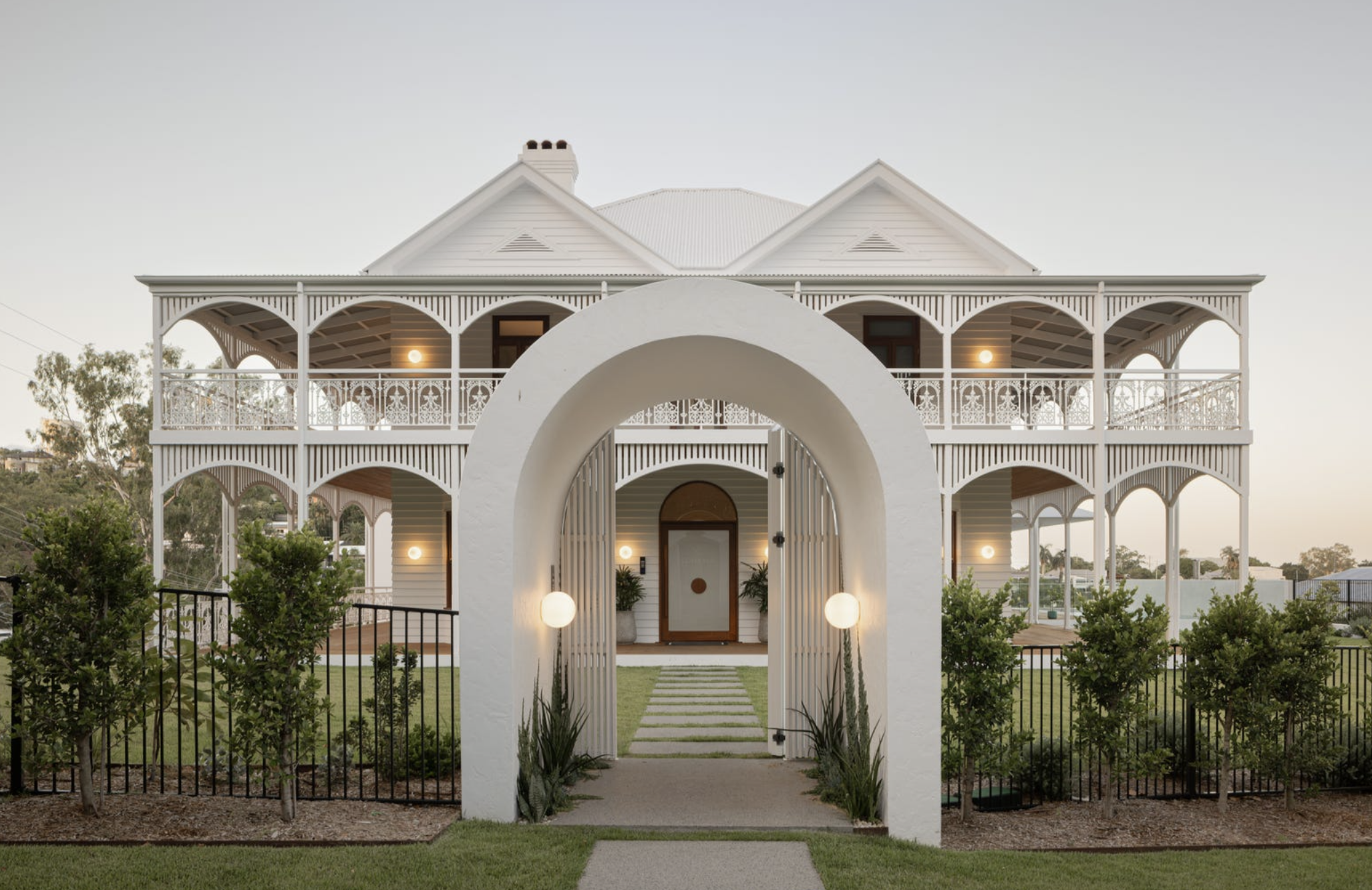
A restored 1860s Brisbane residence transformed by GRAYA has smashed Paddington’s house price record, selling for more than $12 million.