Swapping Your Home for a Vacation? What You Need to Know
It pays to do logistical research before taking this leap of faith for your travels

 4 min
4 min
Would you let a stranger vacation in your home if you got free lodging in return?
A free stay in someone else’s home, long a budget-friendly way to travel, has become more appealing as costs rise and travelers seek out local vibes.
Home-swapping platform People Like Us has more than 10,300 homes listed on its site. Chief Executive Drew Seitam says, by the end of June, members had completed or arranged for 30% more swaps than in all of 2023. Another platform, HomeExchange, has more than 175,000 members, a number it says has grown 17% this year.
Home-swap platforms like these charge annual membership fees north of $100. Swaps also happen more informally in Facebook groups and between friends. Travellers can do a simultaneous swap, where they travel during the same dates, but can also plan to host each other at different times.
While home exchanges can save travellers thousands on lodging, they aren’t for everyone. Home swappers give the following tips to consider before listing your home.
Get a read on the situation
The person you are swapping with shouldn’t feel like a stranger by the time you arrive, home exchangers say.
Barbara Osterwisch , 66 years old, and her husband, both retirees, have swapped their home in Houston and their cabin in Texas’ Hill Country for stays in the Netherlands, France, Canada, Austria and California. They video chat with potential matches to establish rapport, and to give tours of their homes. Many exchangers begin planning their swaps months, if not years, in advance. This gives ample time for getting to know one another, Osterwisch says.
Apprehensive travellers should consider a swap within a few hours’ drive as a trial run, rather than jumping into an exchange in another country, she says.
Home swaps aren’t for tourists who like everything just so, travelers say. Unlike a short-term rental, home swaps are more likely to be people’s primary residences. People leave clothes in the closets, tools in the garage and photos on the walls. Living in someone’s home is part of the charm, but it isn’t the same as staying in a hotel with a front desk and staff to fix issues that arise.
Using a platform can ensure some safety and quality guarantees, swappers say. Some companies, such as Kindred, a members-only platform, offer 24/7 text support for problems.
Osterwisch says she and her husband have stayed in touch with the families they swapped with and now have connections all over the world.
Check your insurance policy
Some travelers use membership-based services to provide supplemental insurance or support if things go wrong.
Oleg Pynda is a 31-year-old New York City tech worker who has swapped with travellers from France. He says, based on his experience, U.S. travellers tend to worry more about strangers staying in their homes and damaging their belongings. Most of the initial messages he gets from U.S.-based travellers emphasise their trustworthiness, while European travelers focus on the quality of the home they are offering to exchange.
Pynda says he is comfortable with people staying in his apartment for a short time, so he doesn’t feel compelled to sign up for services that provide extra insurance for members. The people he swaps with end up becoming familiar to him and don’t feel like complete strangers.
He says his lease prohibits situations with a monetary exchange, such as a short-term rental or sublet, but not home exchanges.
Homeowners and renters-insurance policies might limit the number of days a guest can stay in your home during a swap, says Janet Ruiz of the Insurance Information Institute. They might also limit compensation for damage done to hosts’ and visitors’ possessions while people are in your home.
“People don’t want to tell their insurance agents what they are doing,” she says. Having a conversation with the agent before anything happens can help you make informed choices about coverage, she adds, including whether to buy a supplemental policy for vacation-rental coverage.
Travelers should also ensure the home they are staying in has coverage. And renters ought to check their leases before entering into a swap.
Some swappers let travellers borrow their cars. Ruiz recommends first asking the person you’re exchanging with about their driver’s licenses and insurance coverage.
Shawn and Bill Personke , from Michigan, had a potential swap fall through because the other family wanted to use their car. They had promised it to someone else while they were away.
Some travelers say they lock valuables in one room of the house or put them in the trunks of their cars and take the keys with them. Problems can arise, but none of the travellers interviewed had any horror stories to share.
“My only regret regarding home exchanging is not figuring it out sooner,” Osterwisch says.
Travel somewhere new
Marina Wanders , a photographer, lives in a suburb of Austin, Texas. She floated the idea of a summer house swap in a Facebook group. A Dallas woman, whose home has a backyard swimming pool and a shower with a chandelier in it, responded and said she was game. Wanders says Dallas isn’t her ideal vacation destination, but as a 29-year-old single mom of two, she looks for affordable travel alternatives.
“I’m like a middle-class American single mom and make enough to pay my bills and buy $40 shampoo, but I do not have a chandelier in my shower,” Wanders says.
She decided to go for the swap because she can give her sons a memorable vacation in a beautiful home while saving thousands on lodging. The Dallas family will stay in her home during the same dates.
Travelers with flexible dates and locations will have more options. The Personkes once scored a swap in Angers, France, on their preferred dates.
People who live in major cities have more luck requesting specific dates because their locations are in demand, but travelers like the Personkes, who live in a small city outside of Detroit, often need to work harder marketing their homes and communities. The Personkes’ swappers have experienced their town’s local parade and nearby nature trails.
The retirees have swapped as part of People Like Us and HomeLink. They also use the People Like Us Facebook group to speak with other travellers, get advice and suss out exchanges.
They say they love living like locals, getting baguettes from vending machines in remote French towns and joining neighbours for dinner.
“Sometimes we are the first Americans people are ever going to meet, and I want to make a good impression,” Shawn says.
 Copyright 2020, Dow Jones & Company, Inc. All Rights Reserved Worldwide. LEARN MORE





On the owner’s deck, a 20-metre swimming pool incorporates Feadship’s patented ContraWave technology and extends indoors as a suspended, glass-bottomed infinity pool.

Automobili Lamborghini is turning its attention to something considerably more difficult to define: what makes Italian excellence uniquely Italian?

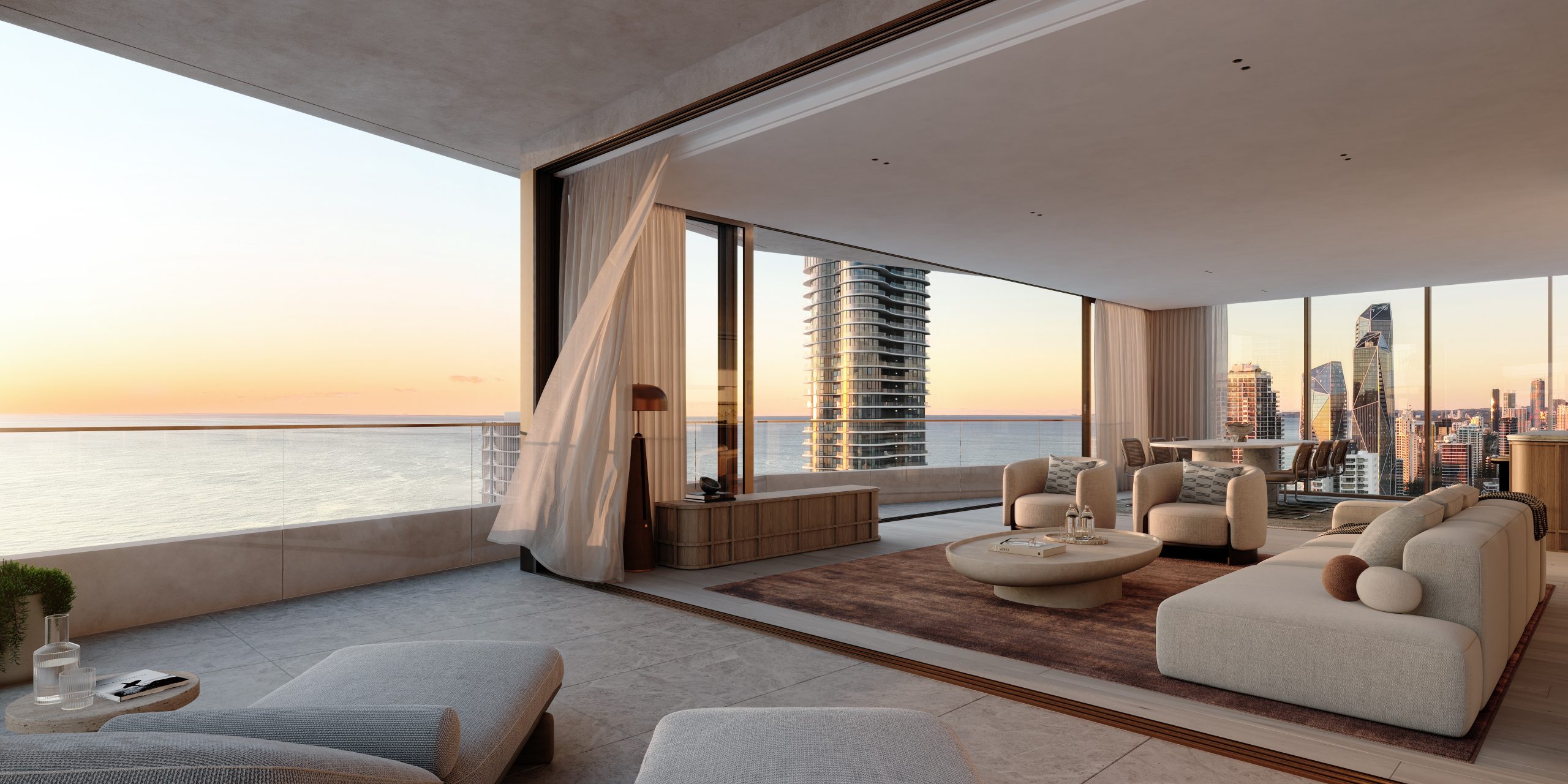
Mirvac’s 45-level Trielle has topped out at Yarra’s Edge, pairing riverfront apartments with wellness facilities, private dining and resident services.
3 min
Mirvac has topped out Trielle at Melbourne’s Yarra’s Edge, with more than 70 per cent of the riverfront development sold and approximately 80 per cent of purchasers intending to make their apartment a home.
The figures, released on September 22, point to an owner-occupier audience for one of the precinct’s final residential towers. Mirvac began developing Yarra’s Edge in 2003, and its latest addition occupies one of the remaining absolute riverfront sites.
Mirvac CEO of Development Stuart Penklis said existing residents were among those moving up within the neighbourhood.
“Many purchasers already have a connection to Yarra’s Edge,” Mr Penklis said, describing buyers whose changing needs were encouraging an upgrade within the precinct.
“As one of the final residential towers within Yarra’s Edge, Trielle represents the culmination of more than two decades of creating one of Melbourne’s most established and sought-after waterfront communities,” Penklis said.
“Positioned on the Collins Street axis with absolute river frontage, Trielle offers residents a rare opportunity to enjoy sweeping views across the Yarra River, Melbourne skyline and Port Phillip Bay, while remaining seamlessly connected to the CBD. With Trielle now more than 70 per cent sold, we’re continuing to see strong demand from buyers seeking quality homes in established locations.”
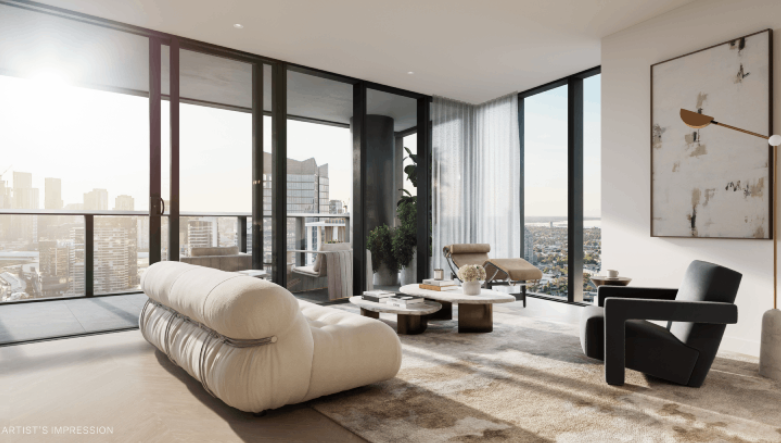
The developer also flagged a penthouse and sub-penthouse collection with larger layouts, premium finishes and broad outlooks. The planned wellness centrepiece, The Oasis, encompasses a 900-square-metre elevated urban rainforest.
Mirvac General Manager Residential Development Victoria Elysa Anderson said Trielle had resonated strongly with buyers seeking a rare lifestyle offering in Melbourne.
“Opportunities to secure a new luxury residence on a riverfront site of this calibre are incredibly rare, particularly within a community like Yarra’s Edge,” Anderson said.
“What makes Trielle unique is the combination of exceptional views, world-class residential facilities and the lifestyle that already exists around it. Residents are buying into a mature waterfront community with parks, promenades, dining, wellness and strong community connections already in place.”
The 45-level tower brings a substantial new presence to that waterfront. Its residential offering spans one-, two-, three- and four-bedroom apartments, with Signature, Prestige and Sub-Penthouse collections accommodating different household sizes. The north-facing position connects the apartments visually to the river and city beyond.
Seven storeys above the promenade, the planned Oasis combines planting and a running stream with a Scandinavian-inspired wellness club developed with spa specialist Naomi Gregory. Facilities include a 25-metre lap pool, hot magnesium pool, sauna, hydrotherapy, a gym, yoga and Pilates room, and treatment spaces.

The amenity extends beyond exercise. Residents will have access to The Biblioteca library and workspaces, ground-floor work pods, and The Salone piano lounge. A private Chef’s Table dining room offers a setting for larger gatherings, while a cinema, games room and sports lounge broaden the entertaining options. Concierge services and a dog-wash area support everyday routines.
Trielle comprises a collection of one, two, three and four-bedroom residences. Reflecting strong demand from owner occupiers, approximately 80 per cent of purchasers to date intend to live in their homes, highlighting the project’s appeal to those seeking a long-term waterfront lifestyle.
Mirvac has recently delivered The Albertine, a premium apartment development on the edge of Melbourne’s CBD, and is nearing completion of Prince & Parade in Brunswick, further strengthening its portfolio of thoughtfully designed apartment communities in some of Melbourne’s most sought-after urban locations.

Automobili Lamborghini and Babolat have expanded their collaboration with five new colourways for the ultra-exclusive BL.001 racket, limited to just 50 pieces worldwide.

As interest rates, inflation and market sentiment fluctuate, investors are being urged to focus on data, not panic.