Greenland Is Gorgeous and Uncrowded. Now Here Come the Americans.
The remote northern island wants more visitors: ‘It’s the rumbling before the herd is coming,’ one hotel manager says

 4 min
4 min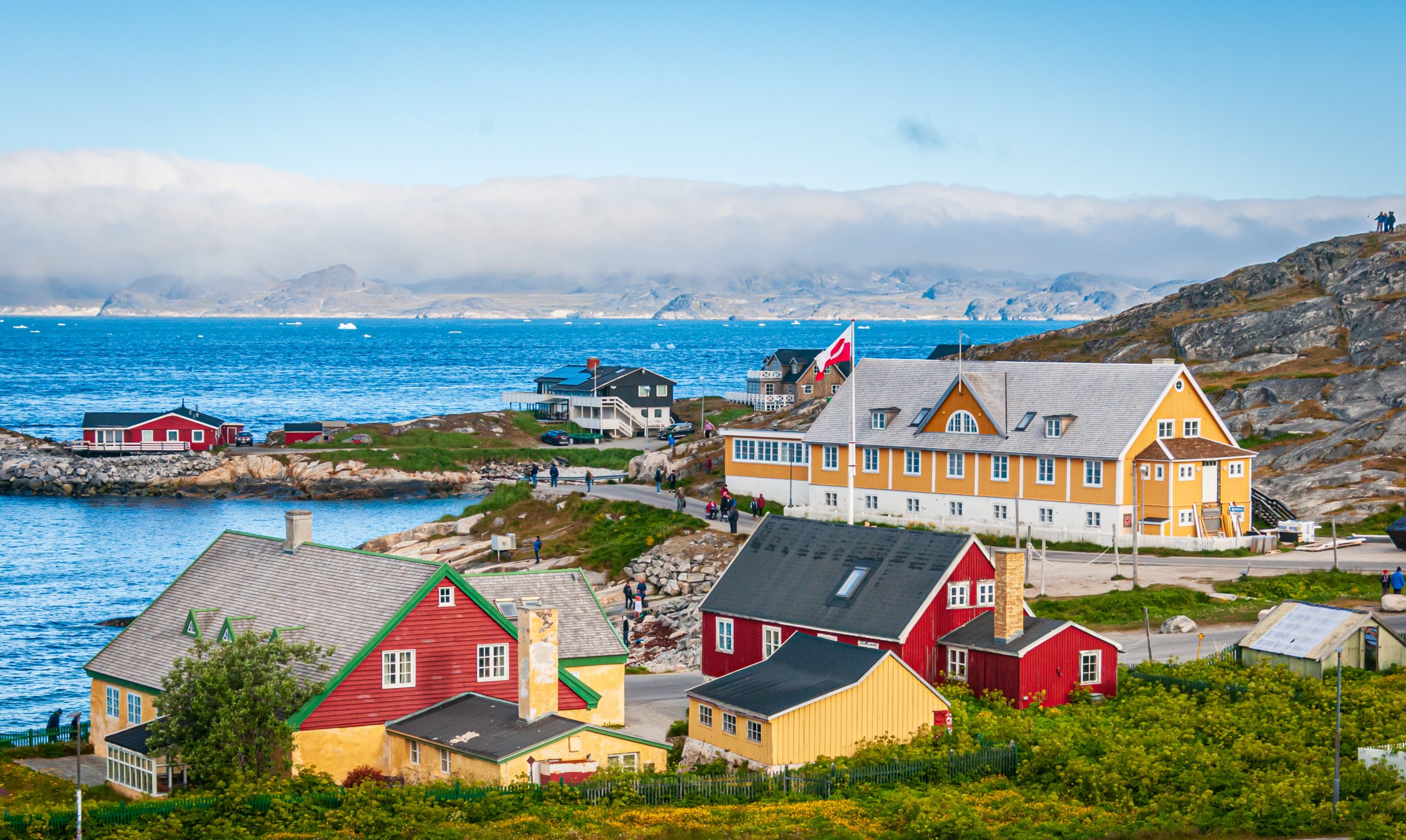
As European hot spots become overcrowded , travellers are digging deeper to find those less-populated but still brag-worthy locations. Greenland, moving up the list, is bracing for its new popularity.
Aria Varasteh has been to 69 countries, including almost all of Europe. He now wants to visit more remote places and avoid spots swarmed by tourists—starting with Greenland.
“I want a taste of something different,” said the 34-year-old founder of a consulting firm serving clients in the Washington, D.C., area.
He originally planned to go to Nuuk, the island’s capital, this fall via out-of-the-way connections, given there wasn’t a nonstop flight from the U.S. But this month United Airlines announced a nonstop, four-hour flight from Newark Liberty International Airport in New Jersey to Nuuk. The route, beginning next summer, is a first for a U.S. airline, according to Greenland tourism officials.
It marks a significant milestone in the territory’s push for more international visitors. Airlines ran flights with a combined 55,000 seats to Greenland from April to August of this year, says Jens Lauridsen, chief executive officer of Greenland Airports. That figure will nearly double next year in the same period, he says, to about 105,000 seats.
The possible coming surge of travellers also presents a challenge for a vast island of 56,000 people as nearby destinations from Iceland to Spain grapple with the consequences of over tourism.
Greenlandic officials say they have watched closely and made deliberate efforts to slowly scale up their plans for visitors. An investment north of $700 million will yield three new airports, the first of which will open next month in Nuuk.
“It’s the rumbling before the herd is coming,” says Mads Mitchell, general manager of Hotel Nordbo, a 67-room property in Nuuk. The owner of his property is considering adding 50 more rooms to meet demand in the coming years.
Mitchell has recently met with travel agents from Brooklyn, N.Y., South Korea and China. He says he welcomes new tourists, but fears tourism will grow too quickly.
“Like in Barcelona, you get tired of tourists, because it’s too much and it pushes out the locals, that is my concern,” he says. “So it’s finding this balance of like showing the love for Greenland and showing the amazing possibilities, but not getting too much too fast.”
Greenland’s buildup
Greenland is an autonomous territory of Denmark more than three times the size of Texas. Tourists travel by boat or small aircraft when venturing to different regions—virtually no roads connect towns or settlements.
Greenland decided to invest in airport infrastructure in 2018 as part of an effort to expand tourism and its role in the economy, which is largely dependent on fishing and subsidies from Denmark. In the coming years, airports in Ilulissat and Qaqortoq, areas known for their scenic fjords, will open.
One narrow-body flight, like what United plans, will generate $200,000 in spending, including hotels, tours and other purchases, Lauridsen says. He calls it a “very significant economic impact.”
In 2023, foreign tourism brought a total of over $270 million to Greenland’s economy, according to Visit Greenland, the tourism and marketing arm owned by the government. Expedition cruises visit the territory, as well as adventure tours.
United will fly twice weekly to Nuuk on its 737 MAX 8, which will seat 166 passengers, starting in June .
“We look for new destinations, we look for hot destinations and destinations, most importantly, we can make money in,” Andrew Nocella , United’s chief commercial officer, said in the company’s earnings call earlier in October.
On the runway
Greenland has looked to nearby Iceland to learn from its experiences with tourism, says Air Greenland Group CEO Jacob Nitter Sørensen. Tiny Iceland still has about seven times the population of its western neighbour.
Nuuk’s new airport will become the new trans-Atlantic hub for Air Greenland, the national carrier. It flies to 14 airports and 46 heliports across the territory.
“Of course, there are discussions about avoiding mass tourism. But right now, I think there is a natural limit in terms of the receiving capacity,” Nitter says.
Air Greenland doesn’t fly nonstop from the U.S. because there isn’t currently enough space to accommodate all travellers in hotels, Nitter says. Air Greenland is building a new hotel in Ilulissat to increase capacity when the airport opens.
Nuuk has just over 550 hotel rooms, according to government documents. A tourism analysis published by Visit Greenland predicts there could be a shortage in rooms beginning in 2027. Most U.S. visitors will stay four to 10 nights, according to traveler sentiment data from Visit Greenland.
As travel picks up, visitors should expect more changes. Officials expect to pass new legislation that would further regulate tourism in time for the 2025 season. Rules on zoning would give local communities the power to limit tourism when needed, says Naaja H. Nathanielsen, minister for business, trade, raw materials, justice and gender equality.
Areas in a so-called red zone would ban tour operators. In northern Greenland, traditional hunting takes place at certain times of year and requires silence, which doesn’t work with cruise ships coming in, Nathanielsen says.
Part of the proposal would require tour operators to be locally based to ensure they pay taxes in Greenland and so that tourists receive local knowledge of the culture. Nathanielsen also plans to introduce a proposal to govern cruise tourism to ensure more travelers stay and eat locally, rather than just walk around for a few hours and grab a cup of coffee, she says.
Public sentiment has remained in favour of tourism as visitor arrivals have increased, Nathanielsen says.
—Roshan Fernandez contributed to this article.
 Copyright 2020, Dow Jones & Company, Inc. All Rights Reserved Worldwide. LEARN MORE




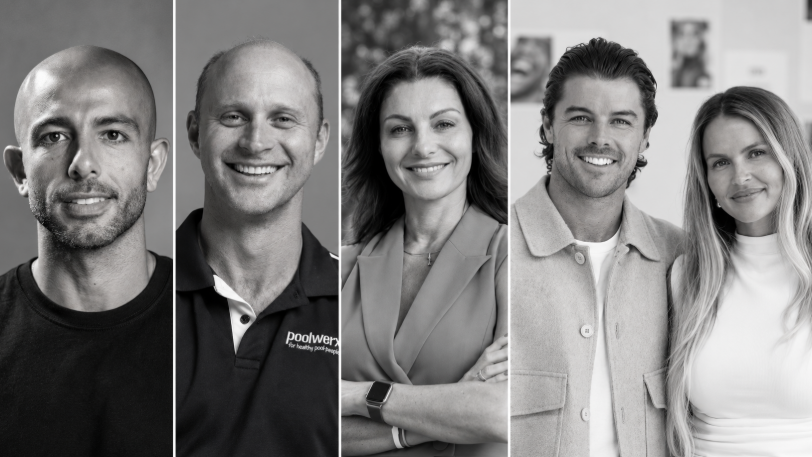
From making unpopular decisions to learning when to listen, leaders from five businesses reveal what nobody prepared them for — and how running a company has challenged their expectations.

Technology and semiconductor shares fell sharply as investors questioned the debt financing the AI infrastructure boom and confronted higher rates and Chinese competition.

Elon Musk is exploring a potential merger between Tesla and SpaceX, a deal that could reshape the future of AI, robotics, autonomous vehicles and space technology. With a combined valuation potentially reaching $3.5 trillion, the move could bring Musk’s vision of an interconnected technology ecosystem closer to reality, although a deal remains uncertain.
5 min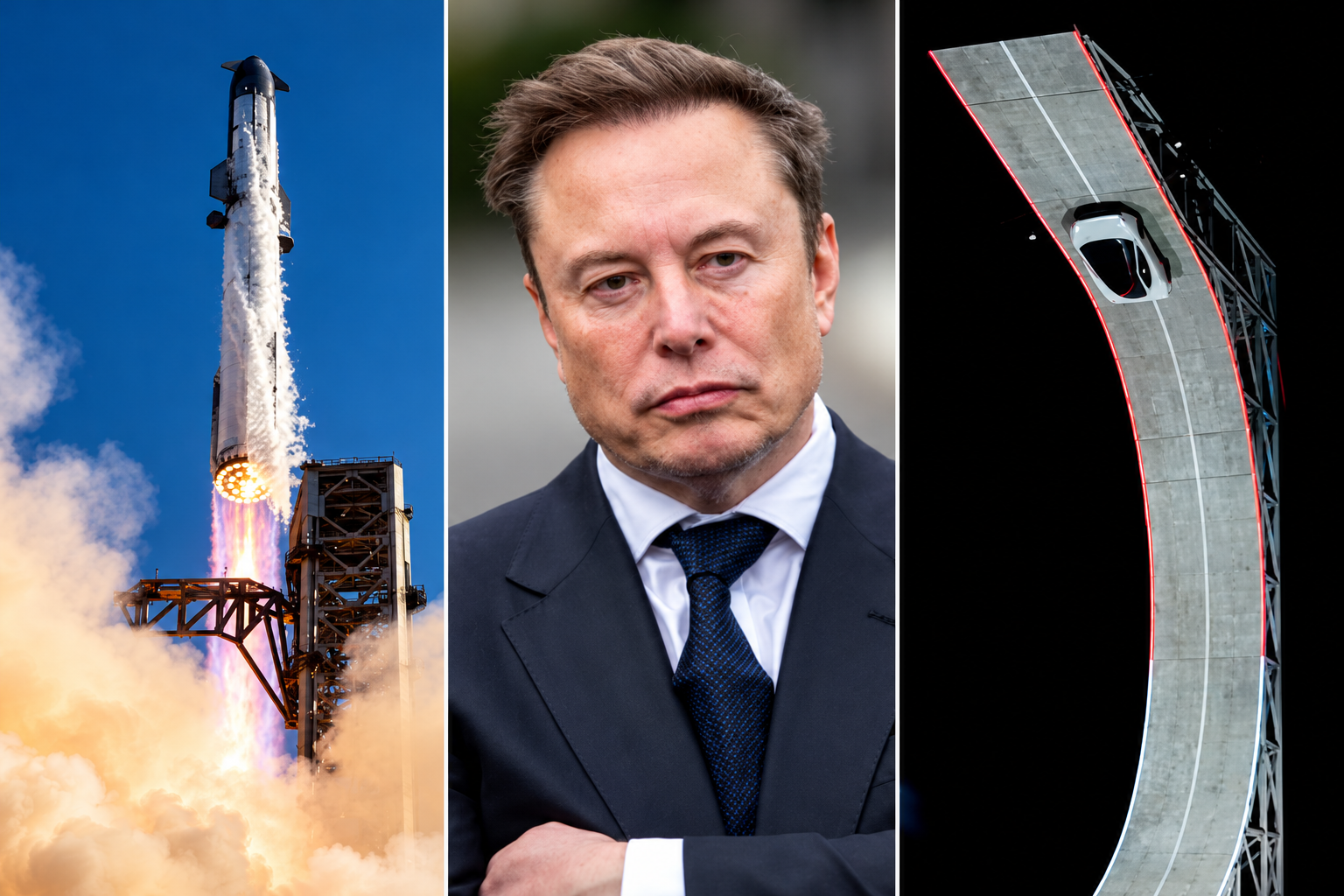
Elon Musk has engineered ties between Tesla TSLA 3.41%increase; up pointing triangle and SpaceX SPCX 7.79%increase; up pointing triangle that are hard to break, and now he wants to fuse them together permanently.
Musk has run both Tesla and SpaceX concurrently over the past two decades, using a schedule that dictated which days he spent focused on each business.
The companies have often shared resources and personnel, signaling their close ties. Last year, SpaceX looked into creating a spacesuit for Tesla’s humanoid robot Optimus, a person familiar with the matter said. Tesla last week showed off its new Roadster, a vehicle featuring SpaceX rocket thrusters that it hopes to soon bring to market.
And in recent months, Musk has repositioned both companies by expanding beyond their core operations toward a shared mission centered on artificial intelligence.
The world’s richest man on Tuesday signaled his interest in tying up SpaceX and Tesla, marking what would be the biggest corporate merger of all time. Because he serves as chief executive of SpaceX and Tesla, Musk said committees of independent directors at both companies are evaluating a possible deal, adding that a transaction might not come to fruition.
The committees will likely evaluate, with lawyers and bankers, how each company would fare in a potential deal and how a deal might best be structured. They then present their conclusions to their respective boards, who typically vote on whether to proceed.
“It’s an odd Kabuki dance where two groups of people are talking and I can’t be in the conversation,” Musk told SpaceX investors on Tuesday in response to an analyst’s question about a potential deal.
For Musk, the merger supports his vision of a world full of autonomous cars, humanoid robots and weekly rocket launches, as well as the data centers and satellites required to keep the whole thing running.
Some investors and analysts said they expect a transaction would be structured as an all-stock deal, with SpaceX potentially paying a modest premium for Tesla shares.
SpaceX, which has a market value of about $2 trillion, said it is seeing sharp growth in revenue across its businesses, which include operating data centers, launching rockets and operating satellite networks such as the internet service Starlink. Tesla is valued at about $1.5 trillion and is expanding its operations beyond its automotive and energy business. Shares in both companies traded higher following the news Tuesday.
Musk’s substantial ownership stakes in both companies, along with voting control at SpaceX, has enabled him to set the deal in motion. Analysts and investors said the deal will probably face regulatory scrutiny internationally, though some see Musk’s close relationship with the Trump administration as an asset to getting approval.
Blurred lines
The companies haven’t said which directors are on the special committees evaluating a potential deal. Several SpaceX and Tesla board members have either personal or business ties to Musk. And like Musk, venture capitalist Ira Ehrenpreis sits on both boards.
In a filing this week, Tesla outlined millions of dollars in business agreements with SpaceX and its subsidiaries last year, including $143 million in car sales to SpaceX, $3.3 million in advertising that it bought on the social-media platform X and $430 million in revenue from the sale of Megapack batteries for SpaceX’s data centers.
The companies also split the cost of resources including the use of Musk’s SpaceX jet and the bill for his personal security, which he runs through a private company.
Employees at both companies routinely move between companies to work on special projects, and some executives have dual roles, including Charles Kuehmann, vice president of materials engineering at both SpaceX and Tesla, and Ashok Elluswamy, the vice president of AI software at Tesla who runs a joint venture with SpaceX called Digital Optimus.
Over the years, Musk has launched new startups within his empire, including brain-implant company Neuralink, underground-tunnel developer the Boring Company and xAI, the AI startup that merged with SpaceX in February.
It is that AI business that Musk thinks can serve a market worth tens of trillions of dollars, justifying the need for a merger.
The business case goes like this: Tesla is developing robotaxis and robots, which it calls “physical AI.” SpaceX is working on the back end of physical AI: the data-center capacity and internet connection required for those robotaxis and robots to operate continuously.
“I don’t see what the value of Tesla is if it’s not merged with SpaceX,” said investment adviser Ross Gerber, a former Tesla bull turned critic invested in both companies. “If they don’t merge, the brains of everything that runs Tesla is owned by another company.”
On top of it all, both companies face constraints on the supply chains they need to make this world a reality, particularly when it comes to chips. To address this, Musk earlier this year announced a joint venture between Tesla, SpaceX and Intel to design and manufacture chips in Texas. “The most epic chip-building exercise by far,” he has said.
Musk at the wheel
For Musk, a merger would also solve two problems: demands on his attention and his lack of control at Tesla.
Tesla for years was Musk’s only public company, a status that came with greater scrutiny. There, Musk reports to a public board, as well as individual investors who make up around 30% of Tesla’s voting power, according to FactSet.
The question of Musk’s attention became a particular focus for investors and the board in recent years after he acquired Twitter in 2022 and launched xAI in 2023, and again in 2025 as he spent time in Washington, D.C., running the Department of Government Efficiency in the early months of President Trump’s second term.
As Tesla’s car business suffered in 2025, Musk threatened to take his AI ambitions outside the company if he wasn’t granted 25% voting control. Last November, Tesla shareholders approved a new pay package for Musk, which created a path for him to vastly expand his stake.
As of Sept. 30, Musk owned a roughly 20% stake in Tesla, according to the company’s proxy filing.
The SpaceX IPO gave Musk a different path. When SpaceX went public in June, the deal’s structure enabled him to have more than 80% voting power at the company—so much that he can’t be fired and decisions can’t be made without his support.
If SpaceX acquires Tesla, he will likely stay in control.

Following the successful launch of its Palais Collection, MAISON de SABRÉ has unveiled a new modular handbag system offering more than 720 styling combinations.

Many of the most-important events have slipped from our collective memories. But their impacts live on.