

THE BUSINESS OF BEING OSCAR PIASTRI
Formula 1 may be the world’s most glamorous sport, but for Oscar Piastri, it’s also one of the most lucrative. At just 24, Australia’s highest-paid athlete is earning more than US$40 million a year.
 3 min
3 min
In the high-octane world of international sport, homegrown Formula 1 star Oscar Piastri is big business. After a trailblazing 2025 season, Piastri is on track to be one of our most successful athletes ever. Almost certainly, he’ll be the richest.
The 24-year-old Melbourne-born driver inked a lucrative deal with McLaren reportedly worth US$41 million a year, making him Australia’s highest-paid athlete. Not bad for a Brighton boy who left home at 14.
Driving all the way to the bank
When Piastri lines up on the F1 grid at Melbourne’s Albert Park this year, the world’s eyes will be on him as he attempts to achieve what no other Australian driver has by winning the Australian Grand Prix. Football might have the most fans (an estimated 3.5 billion), but F1 still commands around 430 million devoted followers.
According to F1 owner, US giant Liberty Media, the motorsport generated a whopping US$3.65 billion in 2024. While some of that revenue comes from ticket sales, media rights account for roughly a third of the pie. These include broadcasting deals with television networks that know the adrenaline-charged drama of F1 racing translates into ratings-winning viewing.
Adding to the fascination is the Netflix docuseries “Formula 1: Drive to Survive,” which tracks the lives of drivers, managers, and team owners both on and off the circuit. The big screen joined the party in 2025 with F1: The Movie, starring Brad Pitt as an ageing driver attempting a comeback, which proved a hit with cinemagoers, grossing US$624 million (A$946 million) worldwide.
Much like Grand Slam tennis, which counts Rolex and Emirates among its sponsors, F1 attracts prestigious brands such as Louis Vuitton, Moët & Chandon and TAG Heuer. It’s no surprise F1 drivers can command enviable salaries.
At the end of Piastri’s second season with McLaren, in 2024, the Aussie is reported to have pocketed US$34.5 million, including a base pay of US$7.8 million plus US$26.7 million in bonuses. His current deal with McLaren will see him in the team’s famous papaya orange colours until at least 2028.
Piastri also benefits from team sponsors such as Mastercard, as well as personal deals with companies including Quad Lock, software group Dubber, burger chain Grill’d and his father Chris Piastri’s automotive software company HP Tuners.
Piastri is undoubtedly a champion in a cut-throat sport where split-second decision-making at more than 300 km/h can mean the difference between a chequered flag and crashing out. But it’s his future marketability and brand potential where the young driver could outshine his rivals.
It may not, however, be as simple as saying more wins equal more money, according to Hans Westerbeek, Professor of International Sport Business at Victoria University.
“In modern F1, the financial equation is far more complex,” Westerbeek says. “A driver’s value to a team and to sponsors isn’t just measured by podium finishes. It’s about their ability to generate global attention, connect with fans, and represent the brand values of their team and sponsors.”
In the age of “algorithmic fandom”, Westerbeek says digital engagement through social media matters just as much.
“A spectacular overtake that goes viral on TikTok may deliver more commercial value than a quiet second place,” he argues. “Teams and sponsors now monitor real-time sentiment data on how fans react online to every race weekend, and this affects negotiations and commercial deals.
“So, Oscar’s growth in earning potential depends on a combination of performance and digital visibility.”
When Piastri crashed out in the Azerbaijan Grand Prix in September, he was understandably deflated, telling Sky Sports F1 the race was “not my finest moment”. And yet Piastri’s first-lap exit drew most of the headlines, not rival Max Verstappen’s win.
“In many ways, F1 drivers are no longer just athletes; they’re content creators,” Westerbeek says. “An unexpected post-race interview that resonates globally might drive as much sponsor interest as a podium finish.
“The sport’s economics are shifting from pure sporting results to a hybrid model of performance plus digital storytelling.”
Read the full story here.

A resurgence in high-end travel to Egypt is being driven by museum openings, private river journeys and renewed long-term investment along the Nile.

In the lead-up to the country’s biggest dog show, a third-generation handler prepares a gaggle of premier canines vying for the top prize.


Parts for iPhones to cost more owing to surging demand from AI companies.
4 min
Apple has dominated the electronics supply chain for years. No more.
Artificial-intelligence companies are writing huge checks for chips, memory, specialised glass fibre and more, and they have begun to out-duel Apple in the race to secure components.
Suppliers accustomed to catering to Apple’s every whim are gaining the leverage to demand that the iPhone maker pay more.
Apple’s normally generous profit margins will face pressure this year, analysts say, and consumers could eventually feel the hit.
Chief Executive Tim Cook mentioned the problem in a Thursday earnings call, saying Apple was seeing constraints in its chip supplies and that memory prices were increasing significantly.
Those comments appeared to weigh on Apple shares, which traded flat despite blowout iPhone sales and record company profit.
“Apple is getting squeezed for sure,” said Sravan Kundojjala, who analyses the industry for research firm SemiAnalysis.
AI chip leader Nvidia recently became the largest customer of Taiwan Semiconductor Manufacturing , or TSMC, Nvidia Chief Executive Jensen Huang said on a podcast.
Apple had been TSMC’s biggest customer by a wide margin for years. TSMC is the world’s leading manufacturer of advanced chips for AI servers, smartphones and other computing devices.
Spokesmen for Apple and TSMC declined to comment.
The big computers that handle AI tasks don’t look like the smartphones consumers own, but many companies supply components for both. In particular, memory chips are in short supply as companies such as OpenAI, Alphabet’s Google, Meta , Microsoft and others collectively spend hundreds of billions of dollars to build AI computing capacity.
“The rate of increase in the price of memory is unprecedented,” said Mike Howard , an analyst for research firm TechInsights.
That applies both to the flash memory chips that store photos and videos, called NAND, as well as the memory used to run apps quickly, called DRAM.
By the end of this year, the price of DRAM will quadruple from 2023 levels, and NAND will more than triple, estimates TechInsights.
Howard estimates that Apple could pay $57 more for the two types of memory that go into the base-model iPhone 18 due this fall compared with the base model iPhone 17 currently on sale. For a device that retails for $799, that would be a big hit to profit margins.
Apple’s purchasing power and expertise in designing advanced electronics long made it an unrivaled Goliath among the Asian companies that make most of the iPhone’s parts and assemble the device.
Apple spends billions of dollars a year on NAND, for instance, according to people familiar with the figures, likely making it the single biggest buyer globally. Suppliers flocked to win Apple’s business, hoping to leverage its know-how and prestige to attract other customers.
These days, however, “the companies now pushing the boundaries of human‑scale engineering are the ones like Nvidia,” said Ming-chi Kuo, an analyst with TF International Securities.
Demand for AI hardware is poised to keep growing rapidly. Apple’s spending growth is modest in comparison with what is being spent to fill up AI data centers, even though it is breaking records with huge sales of the iPhone 17.
Samsung Electronics and SK Hynix are raising the price of a type of DRAM chip for Apple, according to people familiar with Apple’s supply chain.
Big AI companies pay generously and are willing to lock in supply and make upfront payments, giving the South Korean chip makers leverage against the iPhone maker.
Apple signs long-term contracts for memory, but it has used its heft to squeeze suppliers.
Its contracts have empowered it to negotiate prices as often as weekly, and to even refuse to buy any memory from a supplier if Apple didn’t view the price as favorable, according to people familiar with its memory purchases.
To boost leverage with suppliers, Apple even began stocking more inventory of memory. That was atypical for Cook, who normally cuts inventory to the bone to maximize Apple’s cash flow.
Apple is fighting not only for current deliveries but also for the attention of engineers at suppliers.
Glass scientists who worked on developing the smoothest and lightest smartphone displays are now also spending time on specialised glass for packaging advanced AI processing chips, according to industry executives.
Makers of sensors and other gizmos inside the iPhone are winning new business from AI companies such as OpenAI that are developing their own hardware.
Still, suppliers said they were far from giving up on business with Apple. Working with Apple is a form of education, they said, because it remains one of the most demanding and disciplined customers in the industry.
TSMC, the Taiwanese chip manufacturer, has built successive generations of its most advanced chips with Apple as its lead customer, relying on the big predictable demand for iPhones.
Now that TSMC is doing more business with Nvidia and other AI companies, people with knowledge of the chip supply chain said Apple was exploring whether some lower-end processors could be made by someone other than TSMC.
One of Apple’s biggest profit-spinners is selling extra memory for far more than the memory chips cost the company.
Last fall Apple discontinued the iPhone Pro model with 128 gigabytes of storage.
Customers who want that model must now start at 256 gigabytes and pay $100 more—the type of move that could be repeated this year to help Apple offset higher costs, wrote Craig Moffett, an analyst at Moffett Nathanson, in an investor note.
However, Apple isn’t expected to raise the price of its next iPhone models over similarly equipped iPhone 17s, said Kuo, the analyst.
News Corp, owner of The Wall Street Journal, has a commercial agreement to supply news through Apple services.
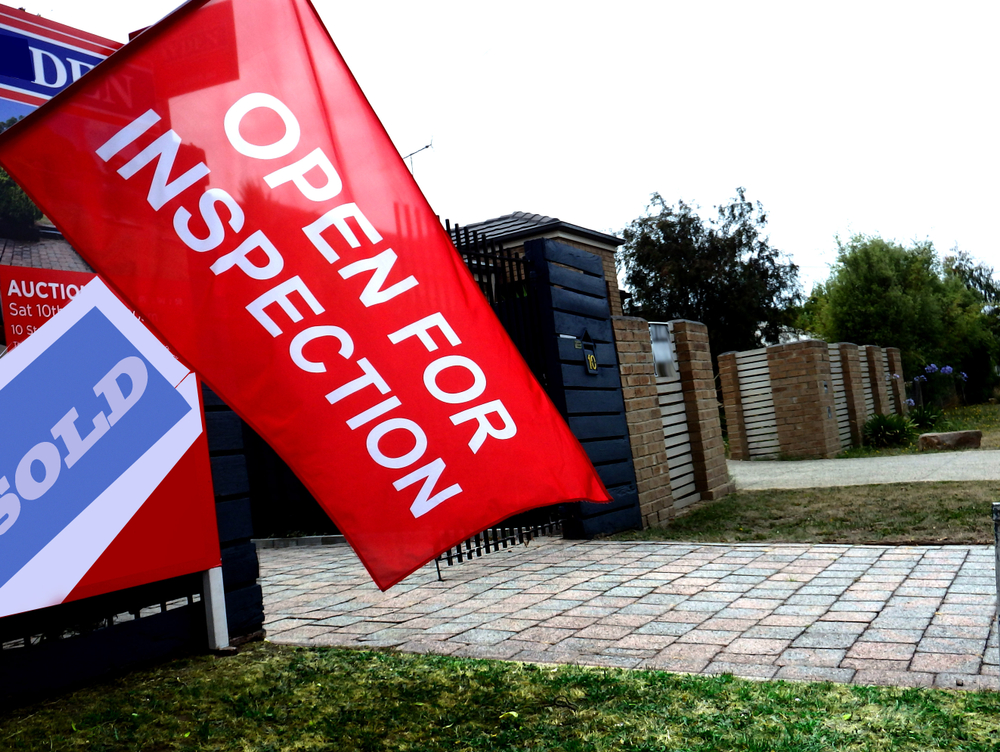
Australia’s housing market rebounded sharply in 2025, with lower-value suburbs and resource regions driving growth as rate cuts, tight supply and renewed competition reshaped the year.

A long-standing cultural cruise and a new expedition-style offering will soon operate side by side in French Polynesia.