Here Are the Top 1200 US Financial Advisors of 2025

 3 min
3 min
The nation’s Top 1,200 Financial Advisors grew their way to a new milestone.
The advisory teams that made it into this year’s ranking reported total assets under management of $6.1 trillion, for an average of $5.1 billion per team—both record highs for the dozen years during which Barron’s has ranked the Top 1,200. Last year’s ranking had $5.6 trillion in total AUM and $4.6 billion average AUM per team. In the past decade, the 1,200 cohort has increased its total AUM by 135% and its average revenue by 147%.
Amid all the growth, several advisors made big moves in this year’s rankings, including W Janet Dougherty of Cresset in Chicago, who re-entered the ranking at No. 37 in Illinois after moving from J.P. Morgan . Meanwhile, Ash Chopra of Syon Capital in San Francisco jumped 47 spots in California to No. 47; Hillary Cullen of UBS Private Wealth Management in New York rose 20 spots to No. 77; and Jon Neuhaus of Morgan Stanley Private Wealth Management in Los Angeles moved up 14 spots to No. 6 in California. Fourteen percent of the Top 1,200 advisors didn’t appear in the ranking last year.
Teams Are a Trend
Top advisory practices have ridden a wave of healthy markets, but that is only part of the growth story. Whereas a decade ago many of the best advisors were sole practitioners with modest support staff, now advisors are working in increasingly complex team configurations.
These teams are allowing advisors to provide an array of wealth management services in addition to the investing expertise that usually sits at the heart of their offerings. As teams acquire more skill in estate planning, taxes, lending, and other value-adds, they are attracting and retaining more business.
For investors looking for a new financial advisor, the trend toward expansive teams is good news. For starters, larger teams have built-in redundancy that helps with succession in the event that advisors depart the practice. A team structure also creates a great training environment for younger, more diverse wealth managers—a wellspring of workers who will be sorely needed in the coming years.
As many of the advisors who built the nation’s best teams enter the late innings of their careers, an advisor shortage is brewing. A recent McKinsey study says the advisor workforce may be short 100,000 advisors by 2034.
How We Do It
The Top 1,200 is Barron’s largest advisor ranking, and it’s actually 51 individual rankings—one for each state plus Washington, D.C., with the number of advisors represented in each determined by its relative population and wealth. Advisors who wish to be considered for the ranking complete a 100-plus-question survey about their businesses, and this year’s ranking had more than 7,600 applicants, up 16% from last year.
Like all of Barron’s advisor rankings, this Top 1,200 list uses both quantitative and qualitative measures . Client assets managed by an advisor, along with the growth of those assets, are a good signifier of the general health of a practice. We also use advisors’ revenue numbers as a proxy for client satisfaction—clients vote on the way advisors are serving them with the fees they’re willing to pay. Last, we evaluate a range of qualitative elements, including regulatory records, advanced credentials and designations on a team, and the nature and structure of an advisor’s team.
We hope this year’s list will give investors a great starting point for finding the best advisor for their needs.
Corrections & Amplifications : Jack Taylor of Truist Investment Services is No. 6 in North Carolina in Barron’s 2025 Top 1,200 Financial Advisors ranking. The advisor originally listed in that spot was removed from the ranking. All the other advisors ranked in that state moved up one place, and R. Neil Stikeleather of Merrill Wealth Management was added to the list at No. 30. Read more about our ranking and see a link to the corrected list at barrons.com/AdvisorRanks .
 Copyright 2020, Dow Jones & Company, Inc. All Rights Reserved Worldwide. LEARN MORE




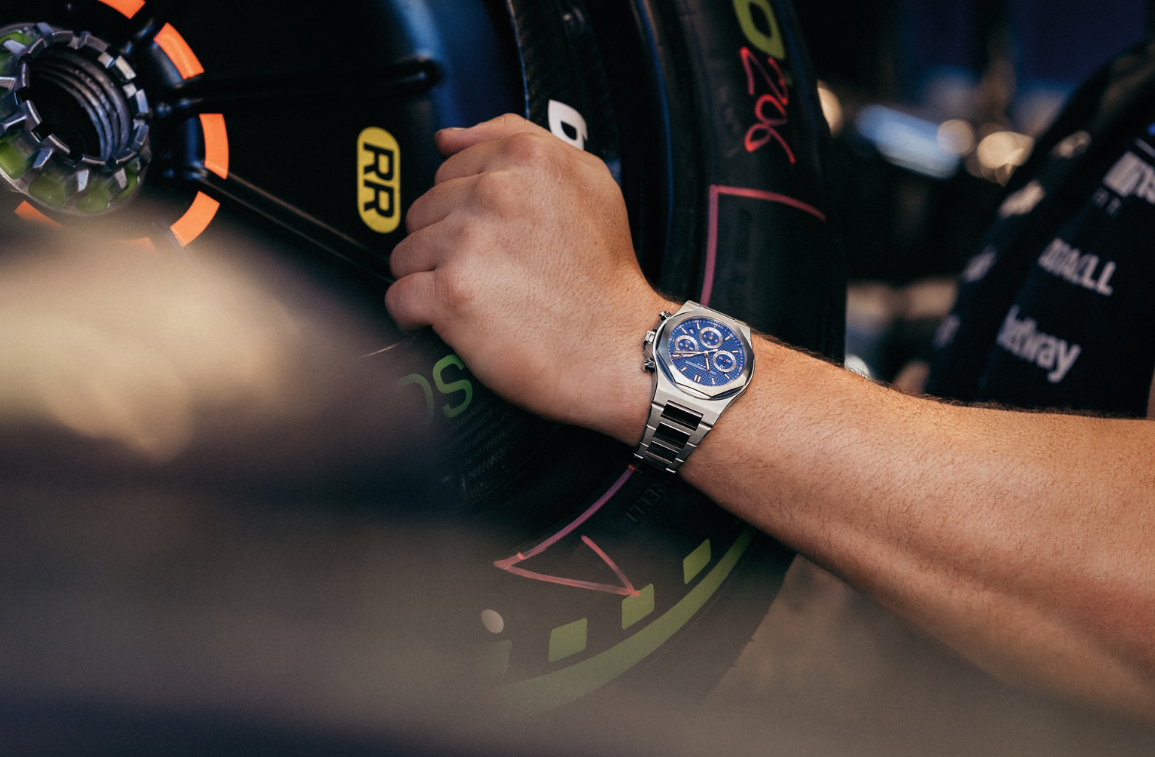
The Swiss watchmaker’s first collaboration with Atlassian Williams F1 Team produces two sporting Laureato models inspired by the team’s 2026 racing car.
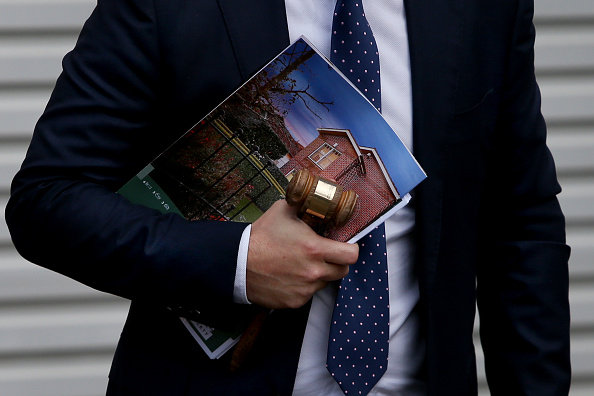
Victorian auction buyers will soon receive a piece of information that has traditionally been withheld until bidding reaches it: the vendor’s reserve price. Under new property-sale and underquoting laws, agents must publish the agreed reserve at least seven days before an auction or fixed-date sale. Most changes begin on 1 October 2026 and apply to …
Continue reading “Victoria’s New Auction Rules Will Force Reserve Prices Into the Open”

The Swiss watchmaker’s first collaboration with Atlassian Williams F1 Team produces two sporting Laureato models inspired by the team’s 2026 racing car.
3 minGirard-Perregaux has revealed the first watches created through its partnership with Atlassian Williams F1 Team, bringing the British racing team’s colours to one of Switzerland’s most recognisable integrated-bracelet designs.
The collaboration comprises two 42mm steel watches: the time-and-date Laureato Williams Edition and the more technical Laureato Chronograph Williams Edition.
Both retain the familiar architecture of the Laureato, including its octagonal bezel, integrated bracelet and mix of polished and satin-finished surfaces. The influence of Williams is comparatively restrained, appearing through colour, discreet branding and details inspired by the team’s current Formula 1 car.
It is a welcome departure from the oversized logos and literal automotive references that can characterise motorsport watches.
The Williams FW48 inspires the dial
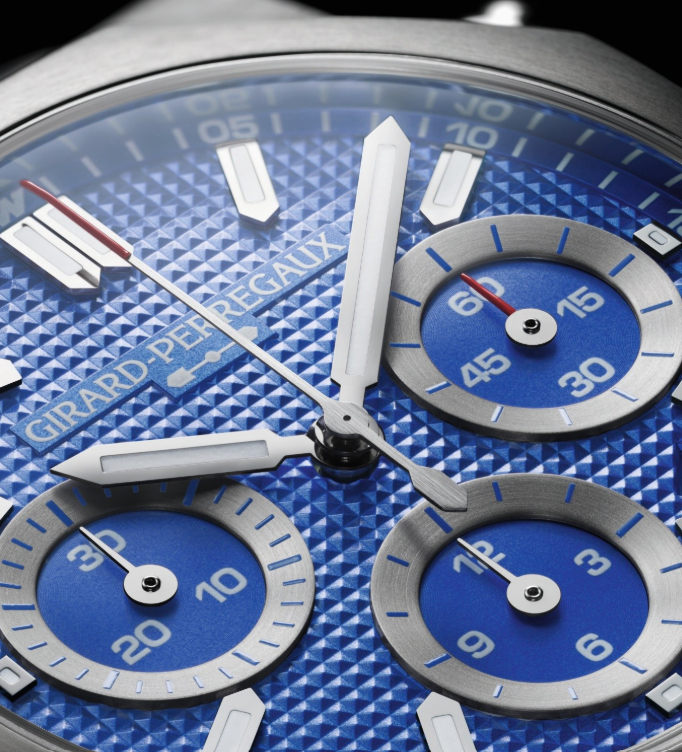
The centrepiece of both models is a blue Clous de Paris dial informed by the livery of the Williams FW48, the car being campaigned by the team during the 2026 Formula 1 season.
A small Williams “W” replaces the conventional marker at 12 o’clock, while the team emblem appears on the sapphire crystal caseback. Red accents echo the keyline used on the FW48 without overwhelming the established Laureato design.
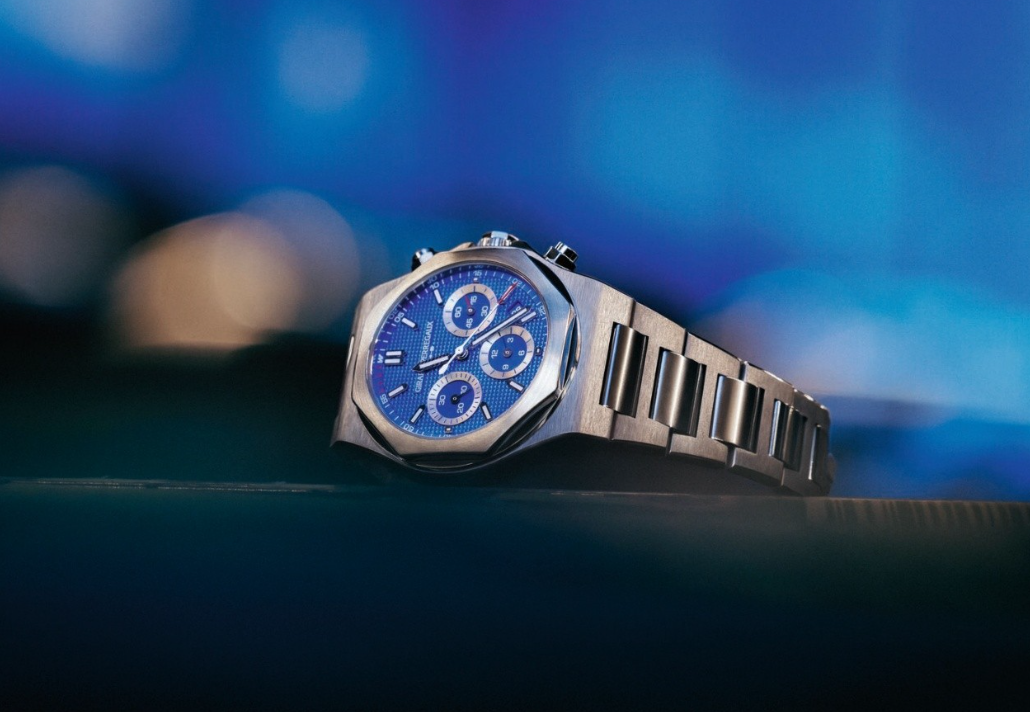
The three-hand model offers the quieter interpretation. Baton-shaped, rhodium-plated hands and hour markers are filled with white-emitting luminescent material, while a date window sits at three o’clock.
The chronograph creates a more obvious connection with motorsport. Three subdials are framed by rhodium-plated rings, with red appearing on the small-seconds hand and the tip of the central chronograph seconds hand.
Both watches measure 42mm across and are water resistant to 100 metres. The standard Laureato has a case thickness of 10.68mm, while the additional mechanics of the chronograph increase its profile to 12.16mm.
Two in-house automatic movements
The Laureato Williams Edition is powered by Girard-Perregaux’s self-winding GP01800 calibre. The movement provides hours, minutes, central seconds and the date, with a minimum power reserve of 54 hours.
The Laureato Chronograph Williams Edition uses the automatic GP03300 calibre, which combines its chronograph functions with a date display and offers a minimum power reserve of 46 hours.
Both movements operate at 28,800 vibrations per hour and can be viewed through their sapphire crystal casebacks.
Their decoration provides a more traditional counterpoint to the Formula 1 association. Finishing techniques include Côtes de Genève, circular graining, bevelling, mirror polishing, satin finishing, engraving and snailing.
The result is less about reproducing the appearance of a racing car than identifying the common ground between two mechanical disciplines: precision, incremental development and the considerable work hidden beneath the finished product.
Parallel histories
The timing of the partnership draws attention to the remarkably similar ages of its two protagonists.
Girard-Perregaux introduced the original Laureato in 1975, establishing an integrated-bracelet sports watch with a distinctive octagonal bezel. Williams entered Formula 1 two years later in 1977.
Both have evolved continuously across the five decades since. The Laureato has moved through different sizes, materials and complications, while retaining its central design language. Williams, meanwhile, has remained one of Formula 1’s most historically significant teams.
That gives the collaboration greater credibility than a simple licensing exercise. Girard-Perregaux and Williams are not being connected solely through the familiar language of speed. Their stronger link is a shared dependence on engineering, testing and the accumulation of specialist knowledge.
The watches are described as the beginning of a longer collaboration, suggesting further Williams editions may follow.
Girard-Perregaux’s international website lists the Laureato Williams Edition at US$16,200 and the Laureato Chronograph Williams Edition at US$20,900. Australian pricing has not been announced.
Specifications
Girard-Perregaux Laureato Williams Edition 42mm
Reference: 81010-11-3680-1GM
Case: Steel
Diameter: 42mm
Thickness: 10.68mm
Crystal: Anti-reflective sapphire crystal
Dial: Blue Clous de Paris pattern
Movement: Automatic GP01800
Functions: Hours, minutes, central seconds and date
Power reserve: Minimum 54 hours
Water resistance: 100 metres
Bracelet: Integrated steel bracelet with triple-folding clasp
International price: US$16,200
Girard-Perregaux Laureato Chronograph Williams Edition 42mm
Reference: 81020-11-3681-1GM
Case: 904L steel
Diameter: 42mm
Thickness: 12.16mm
Crystal: Anti-reflective sapphire crystal
Dial: Blue Clous de Paris pattern with three chronograph counters
Movement: Automatic GP03300
Functions: Chronograph, hours, minutes, small seconds and date
Power reserve: Minimum 46 hours
Water resistance: 100 metres
Bracelet: Integrated 904L steel bracelet with triple-folding clasp
International price: US$20,900
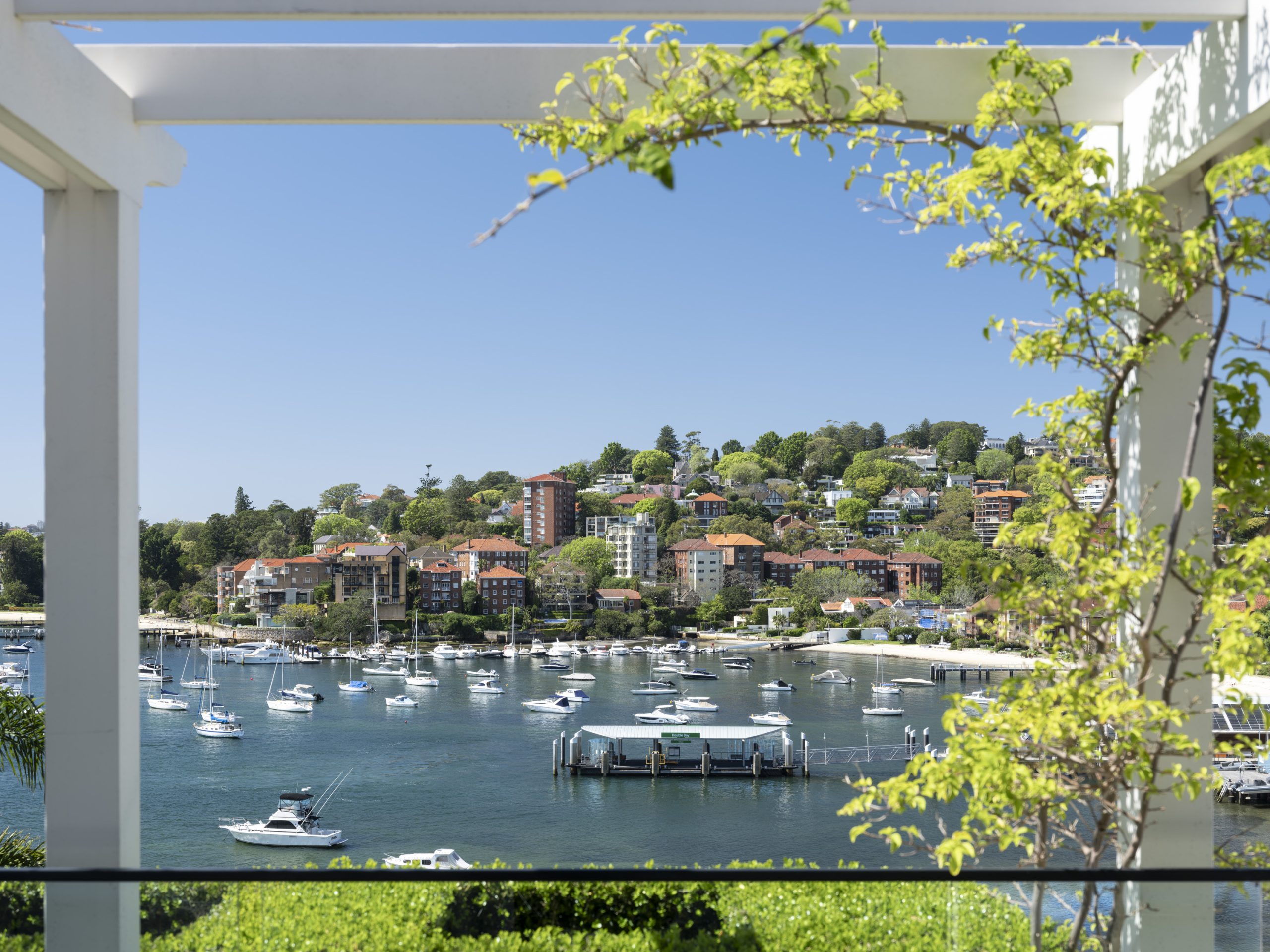
The grand harbourside residence combines sweeping Sydney Heads views, resort-style entertaining and refined designer finishes with a reported $36 million price guide.

From snow-dusted valleys to festival-filled autumns, Bhutan reveals itself as a rare destination where culture, nature and spirituality unfold year-round.