Pop Stars: Six Champagnes For Every Festive Moment
From office parties to NYE fireworks, here are the bottles that deserve pride of place in the ice bucket this season.
 3 min
3 min
If you are planning to celebrate properly this year, your Champagne list needs to work as hard as your social calendar.
So we asked Tamara Grischy, General Manager at LANGTONS, to curate a line-up of bottles tailored to every key moment of the festive season, from the end-of-year company party to that final New Year’s Eve toast.
Her selection moves from richly styled magnums and Grand Cru Blanc de Blancs to benchmark prestige cuvées, with each Champagne chosen to shine in a specific setting, whether a seafood-laden long lunch, a beach escape, or an evening with a serious wine collector.
All you need to do is pick your occasion, chill the bottle and let the celebrations take care of themselves.
To open at the end of the year work party
GOSSET Grande Reserve Brut, Champagne MV Magnum, $275
Gosset Grande Reserve Brut from magnum makes a celebratory statement at any end-of-year party thanks to its rich winemaking heritage—blending Pinot Noir, Chardonnay, and Meunier sourced from premier and grand cru vineyards, and aged for a minimum of four years, all from the oldest winemaking house in Champagne, established in 1584.
With top critic scores (91 Robert Parker, 92 James Suckling, 90 Wine Spectator) and a style that avoids malolactic fermentation to preserve freshness and a racy tension, the team will love the vibrant orchard fruit, subtle pastry notes, and a long, elegant finish in every glass.
To enjoy during a long weekend away at the beach
BLIARD-MORISET Brut Blanc de blancs Grand cru, Champagne NV, $85
Bliard-Moriset Brut Blanc de blancs Grand cru is made entirely from Chardonnay grown in the renowned Grand Cru village of Le Mesnil-sur-Oger—a perfect match for seafood or a fresh beach lunch, with elegant balance and lively citrus freshness shaped by over 40% reserve wine and a minimum 24 months’ ageing on lees.
Produced with careful manual harvesting and sustainable, integrated viticulture, this Champagne offers precise orchard fruit and a crisp, lingering finish, making it an uplifting companion to a relaxed coastal escape.
To pair with a fresh seafood platter during summer
VAZART-COQUART & FILS 82/15 Blanc de Blancs, Champagne, $260
Vazart-Coquart & Fils 82/15 Blanc de Blancs, crafted entirely from Grand Cru Chouilly Chardonnay and based on a perpetual reserve dating back to 1982, delivers exceptional
freshness, finesse, and complexity—making it a standout match for a summer seafood platter.
Fine notes of citrus, white flowers, and sea spray, along with an energetic and saline finish, cut perfectly through the richness of shellfish and oysters, celebrating the bounty of the season with precision and style.
To share with loved ones at the Christmas lunch table
KRUG 171st Edition, $471.99
Krug 171st Edition is the choice for Christmas lunch, blending 131 wines from 12 different years, including reserve wines as old as 2000, to deliver a deep and complex Champagne with bright freshness and layers of festive spice, citrus, brioche and toasted almond.
Awarded 99 points by leading critics, its vibrant mousse and long, elegant finish provide the perfect toast to family and togetherness, enhancing every special dish and sparkling conversation at the festive table.
To open with the fellow wine fanatic in your life
JACQUES SELOSSE Champagne Selosse Brut Rosé, $1,600
Jacques Selosse Brut Rosé is the perfect bottle to open with a fellow wine fanatic, offering rare complexity from an artisanal blending of two vintages of Avize Chardonnay with Pinot Noir from Ambonnay, aged in Burgundian barrels and matured for six years on lees before release.
This Champagne, often described as one of the world’s most thrilling rosés, serves up layers of wild strawberry, pomegranate, honey and spice, with electric acidity and a notably long finish—a benchmark grower Champagne that invites discussion and admiration from even the most seasoned enthusiasts.
To pop when the clock strikes midnight on New Year’s Eve
TAITTINGER Comtes de Champagne Rosé, Champagne 2011, $579
Taittinger Comtes de Champagne Rosé from 2011 is a prestige vintage, made only in exceptional years and comprising Grand Cru Pinot Noir and Chardonnay, including a generous proportion of still red wine from Bouzy to achieve a beautiful depth of colour and aromatic intensity.
With layers of wild strawberry, cherry, orange zest, pastry and a fine mineral finish—plus a 96-point rating from James Suckling—its energy, elegance, and celebratory flair make it the ultimate bottle for that first toast of the new year.

Waldorf Astoria Kuala Lumpur is scheduled to open on 30 October, introducing the Hilton luxury brand to Malaysia with an all-suite hotel in the city’s Golden Triangle.

Located steps from Crows Nest Metro, the near-complete development brings luxury living to Sydney’s Lower North Shore.
3 min
Buyers of Aston Martin’s 1,079PS Valhalla can commission one of two bespoke Breitling Super Chronomat watches, with colours and personalised details inspired by their individual car.
The relationship between cars and watches has produced countless branded chronographs, racing editions and logo-bearing collaborations. Breitling and Aston Martin are taking a more personal route with a new watch program reserved exclusively for owners of the Valhalla supercar.
Rather than offering every customer the same limited-edition watch, Breitling is opening part of its Super Chronomat design process to Valhalla owners. A dedicated configurator will allow each buyer to commission a timepiece inspired by the specification of their car and their individual tastes.
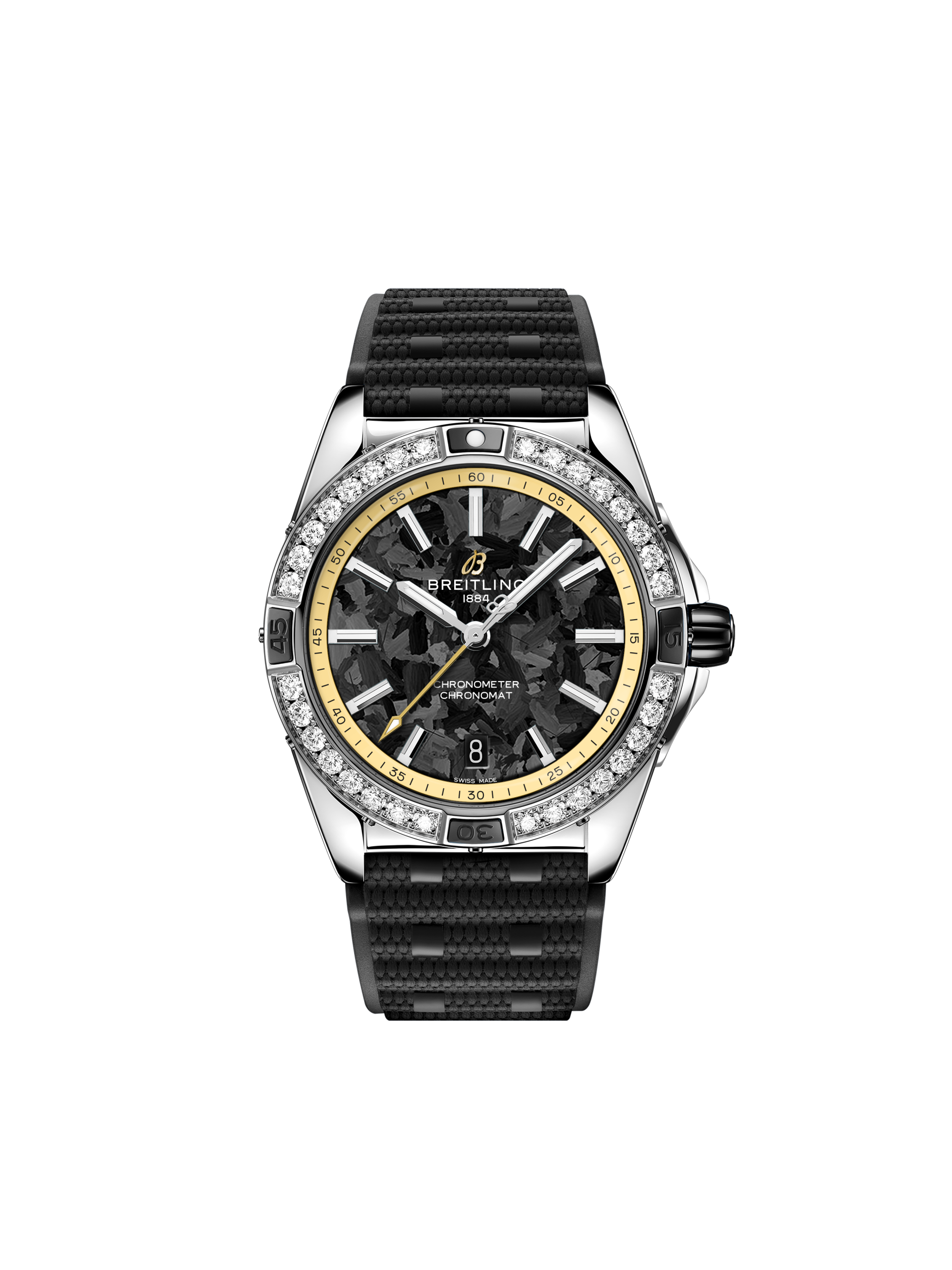
Two Super Chronomat models are available: a technically ambitious 44mm perpetual-calendar chronograph and a more compact 38mm automatic watch.
The flagship is the Super Chronomat B19 44 Perpetual Calendar Chronograph. Presented in a 44mm titanium case with Breitling’s distinctive Rouleaux bracelet, it combines a carbon-fibre dial with one of mechanical watchmaking’s most sophisticated complications.
Its automatic perpetual calendar accounts for months of different lengths, leap years and the phases of the moon. Provided it continues running, the calendar will not require manual correction until 2100—the next centurial year that will not be recognised as a leap year.
The B19 movement also provides a 96-hour power reserve, allowing the watch to be left unworn for four days without stopping. A display caseback exposes the movement and black rotor.
Valhalla owners can customise the colour of the inner bezel, seconds hand and chronograph counter hands. The rotor can also be engraved, creating a more permanent connection between the watch and its owner.
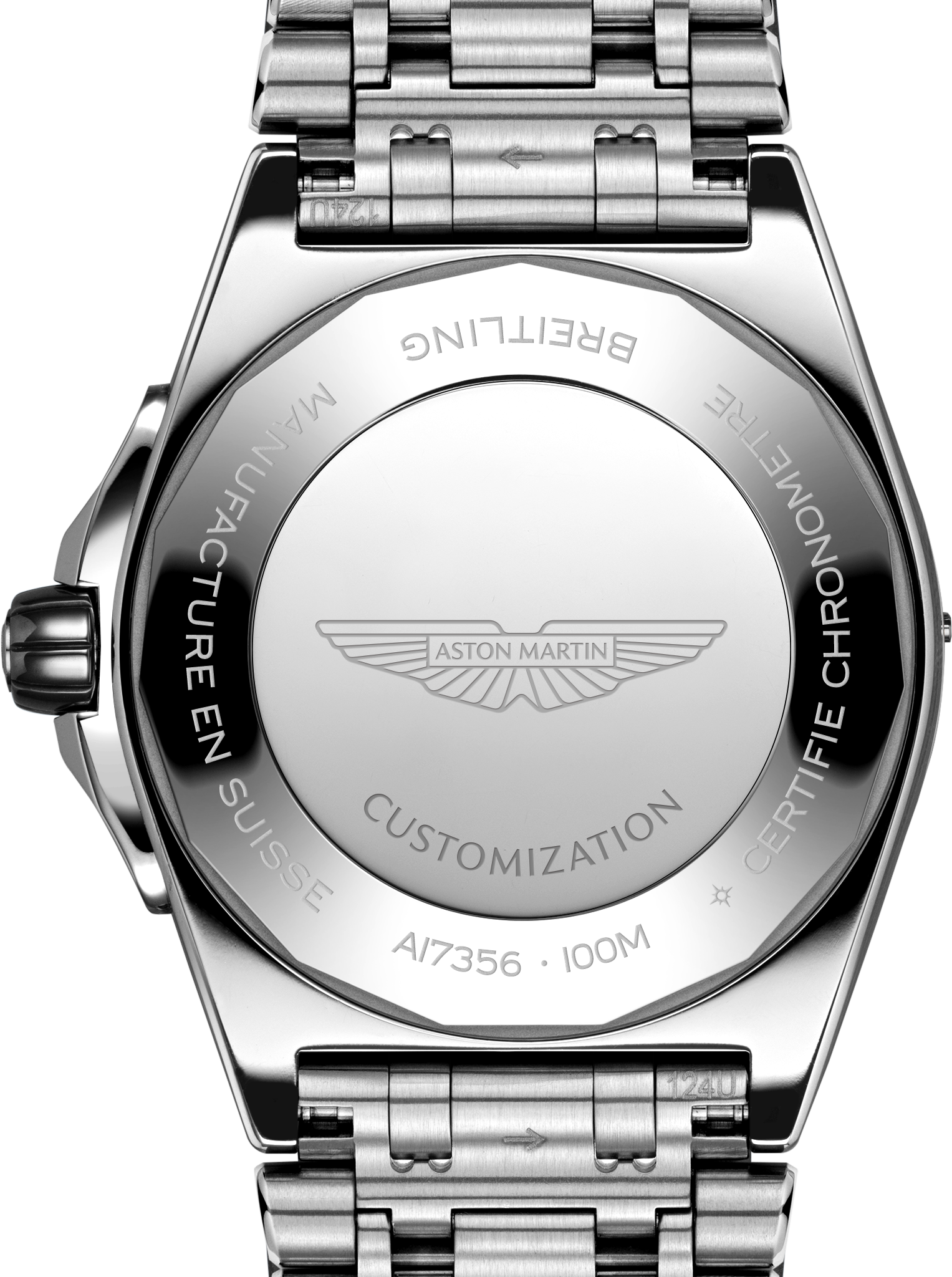
The second option, the Super Chronomat Automatic 38, offers a less complicated and more restrained interpretation.
Its 38mm stainless-steel case is paired with a textured carbon-fibre dial, a titanium crown and a diamond-set bezel. The automatic three-hand display incorporates a date window at six o’clock, while customisation extends to the colours used for the inner bezel and hands, together with a personalised caseback engraving.
The combination of carbon fibre and diamonds might appear contradictory, but it captures the dual character of the Valhalla: a car built around highly technical performance that remains unmistakably positioned as a luxury object.
The watch program draws directly from Aston Martin’s first series-production, mid-engined plug-in hybrid supercar.
Valhalla combines a 4.0-litre twin-turbocharged V8 with three electric motors to produce 1,079PS. Aston Martin claims it can accelerate from zero to 62mph—approximately 100km/h—in 2.5 seconds and reach 217mph, or about 349km/h.

Production is limited to 999 examples worldwide.
Formula One-derived technology and aerodynamic development have played central roles in the car’s engineering, but customisation is equally important to its ownership proposition. Breitling’s configurator extends that process from the Aston Martin specification studio to the wrist.
Each car will be produced at Aston Martin’s headquarters in Gaydon, England, while the watches will be made at Breitling’s Chronometrie in La Chaux-de-Fonds, Switzerland.
The program also reflects a broader change in the luxury market. Exclusivity is increasingly being defined by access rather than the simple production of another numbered edition. These watches cannot be purchased merely by joining a waiting list or paying a premium on the secondary market; the commission begins with ownership of the corresponding car.
That restriction gives the project greater authenticity than a conventional co-branded release. The strongest configurations should be those that use colour and engraving to create a subtle relationship with a particular Valhalla, rather than attempting to reproduce the car too literally.
For Valhalla buyers, the choice ultimately comes down to two very different expressions of the same idea. The 44mm B19 is the serious collector’s proposition, built around a rare combination of perpetual calendar and chronograph. The Automatic 38 is simpler, smaller and likely more versatile as an everyday watch.
Both turn the usual automotive-watch collaboration into something more individual: a timepiece configured alongside one of Aston Martin’s most significant new cars.
Watch summary
Program: Bespoke Breitling Super Chronomat watches for Aston Martin Valhalla owners
Available models: Super Chronomat B19 44 Perpetual Calendar Chronograph and Super Chronomat Automatic 38
B19 case: 44mm titanium
B19 power reserve: Approximately 96 hours
B19 complication: Automatic perpetual calendar chronograph
Automatic 38 case: 38mm stainless steel
Shared design element: Textured carbon-fibre dial
Customisation: Selected colours and personalised engraving
Availability: Exclusively for Aston Martin Valhalla owners
Valhalla production: Limited to 999 cars worldwide

From Italy’s $93,000-a-night villas to a $20,000 Bowral château, a new global ranking showcases the priciest Airbnbs available in 2026.

Parts for iPhones to cost more owing to surging demand from AI companies.