





Why I Will Drive My 2005 Pontiac Vibe Into the Ground
Americans are hanging on to their old cars longer than ever. I hope my General Motors-Toyota hatchback lasts forever.

 4 min
4 min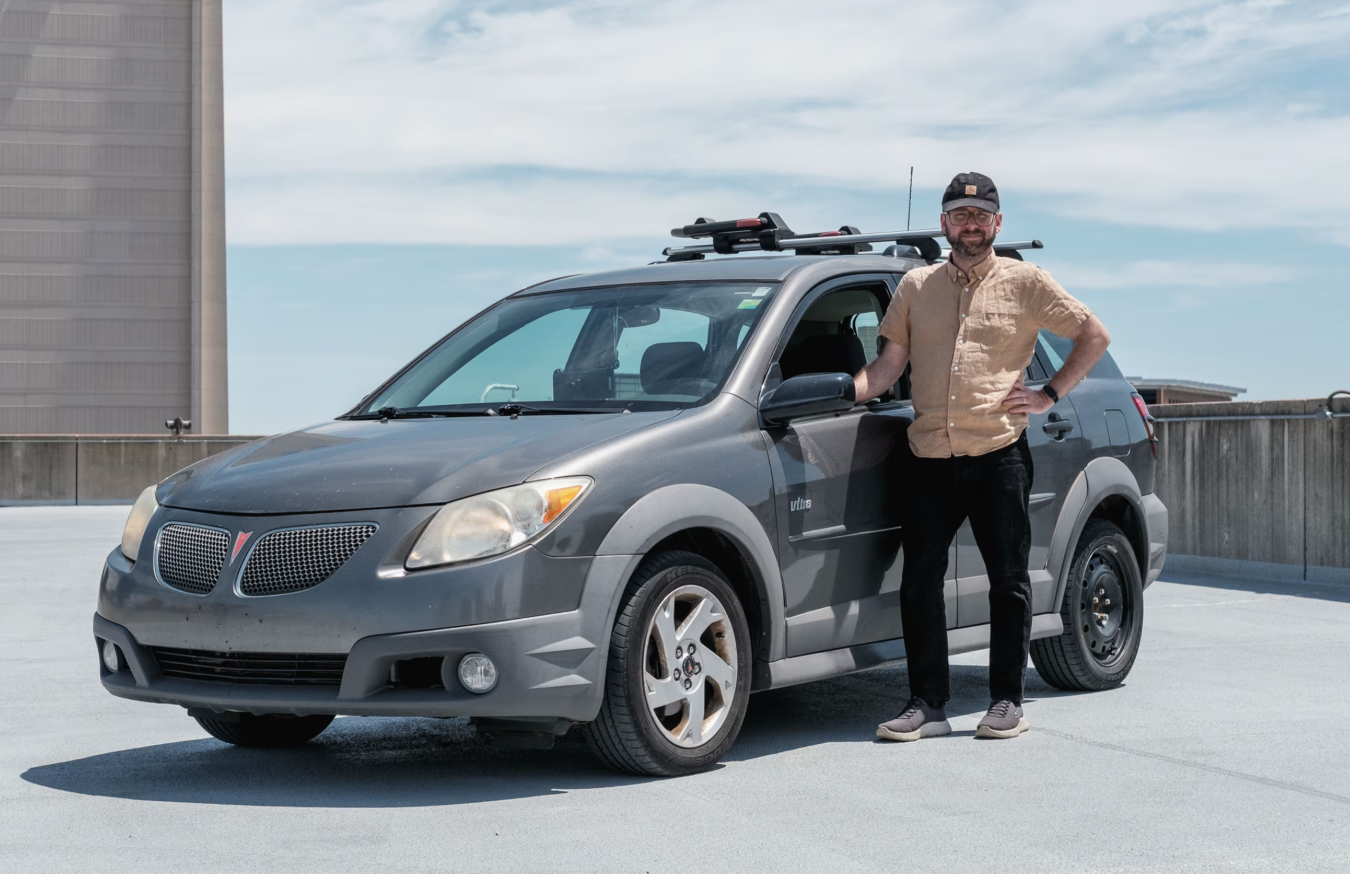
The terrible news began with a knock on my front door: My neighbour, doing his best hat-in-hand routine while holding a driver’s side mirror, kept on apologising.
Moments earlier, he’d somehow managed to back his vehicle out of his driveway and directly into the side of my 2005 Pontiac Vibe. This past winter in Michigan was rough. Things happen. I get it.
But the damage was a concern. With a two-decade-old car, I was sure the Vibe would be declared a total loss, and thus force me into the melee that is the new and used car market .
The typical age of U.S. vehicles on the road today keeps getting older, pushed upward by aging cars like my Vibe hatchback.
For many drivers, the average new-vehicle price of around $50,000 is enough to keep them on the sidelines . That’s partially why I felt a sense of dread when I saw my neighbor had done more than give the Vibe a love tap.
I also feared I would lose a vehicle I adore, which I amplified in a frantic series of messages to my co-workers.
My wife and I had bought the Vibe in the fall of 2020, while living in Brooklyn. We knew eventually a move back home to our native Michigan was in the cards, and therefore a car would be needed.
At the time, the used-car market had been upended by the pandemic , and a light at the end of the tunnel was hard to see.
I spent countless hours poring over Reddit posts and old car reviews for what my then-employer Consumer Reports then ranked as the best used vehicles under $5,000, which, believe it or not, was a thing not that long ago. The 2005 Vibe stood out.
The Vibe is a product of a once-groundbreaking joint venture between General Motors’ Pontiac brand and Toyota Motor.
The automakers co-owned a company that assembled the Vibe, essentially a rebadged variant of Toyota’s Matrix hatchback, at a factory in California. The Matrix and the Vibe rolled off the line together starting in 2002.
The car has its enjoyable quirks: The hatch glass opens up with the press of a key fob button. There’s a sweet AC outlet connection, too—a prescient feature from the pre-USB era that’s great for charging my gadgets.
Much about this car now feels like a collection of footnotes in a history book. The Pontiac brand is no more, closed in GM’s bankruptcy a few years later.
The GM-Toyota joint venture has also been dissolved. The factory that built it now belongs to Tesla , cranking out electric vehicles. And small, affordable cars like the Vibe are a rarity in today’s automotive landscape.
But once, it got plenty of hype as a genre-defying machine.
“Although Vibe ultimately defies traditional vehicle classification, it plays comfortably in nearly every automotive category, while fitting neatly into none,” GM gushed in a press release around the time the Vibe was introduced.
“It offers the handling and performance of a sports car, the utility and rugged, go-anywhere range of an SUV.”
We weren’t seeking sports-car performance. We only wanted to get out of our neighbourhood—and the Vibe did more than I could’ve imagined.
A Brooklyn dealer had a 2005 Vibe in stock with only about 60,000 miles on it. The car’s history included one owner who, according to the salesman, lived nearby and mainly drove it around the borough. For us, it was perfect.
The day after we bought the car for roughly $6,300 all-in, we drove upstate with my American Eskimo-Shih Tzu mix to go on a hike at some park. I don’t remember exactly where we went or why, but I was happy to leave New York during pandemic lockdowns.
Looking at photos from the day, that much is obvious: The image of my dog peacefully snoozing in the back seat as we puttered north, the serene emptiness of the landscape, the cheerful selfie we took with masks pulled down around our necks.
We make memories in our cars, and I didn’t waste any time making good ones in the Vibe.
The Vibe’s cargo space astounded us at times. I once needed to drive an old 1958 hi-fi console to a repair shop an hour away. A truck would surely be needed, I thought. Nope—the hulking piece of furniture neatly fit inside the Vibe’s trunk.
And for a small car with a small engine and an automatic transmission, it’s fun—I swear—to drive. I feel like I understand the Vibe when I’m at the wheel, something I can’t say about the much newer compact SUV we bought to tow my family around in.
The Vibe draws random remarks of praise all the time: Shortly after we moved, a construction worker in Ann Arbor waved me down as I idled at a stoplight. He let me know how much he loved his own Vibe, which by then had been running for over 250,000 miles. “Hell yeah,” I said. He gave me a thumbs-up.
To give you a sense of how attached I am to the Vibe, my wife and I have repeatedly remarked—only half kidding—about how we hoped it could one day be the car our kid learned to drive in.
So, faced with the damage caused by my neighbor, I told my colleagues: “The best outcomes in order are: 1) repairable; 2) an absolutely comical settlement payoff; 3) it’s totaled and I get enough money for a bulls— lease.”
Then, when the onslaught of worry and annoyance over my Vibe’s abrupt damage subsided, I started to crunch the numbers.
Perhaps it would be fine to take a check from the insurer and get into something new. Since buying the Vibe, I’ve kept track of every repair made. All told, we’ve put about $10,400 into it until now.
I feel ridiculous when I read that number, but it works out to about $150 a month on average. Sure, I could get a lease on a small, modern car.
But until I’m paying more on average for repairs, setting aside money for those fixes each month feels like the better trade-off than dumping the Vibe.
In the end, my neighbour’s insurance company said the Vibe was valued at about $4,500, which comfortably exceeded the cost of repairs that included a new mirror and door. I was relieved, as I conveyed the news to my colleagues later.
Over time, I plan to freshen up the Vibe and give it some much-needed love. A new tire rim to replace one lost when I needed a new wheel would be a nice start. Replacement floor mats and an intense detailing could go a long way to boosting its curb appeal.
The Vibe lacks modern creature comforts and safety equipment that come standard in new vehicles sold today. I don’t care. “That’s dada’s car,” my kid would sometimes shout.
It is, and it will be as long as I can keep it alive.
 Copyright 2020, Dow Jones & Company, Inc. All Rights Reserved Worldwide. LEARN MORE





From making unpopular decisions to learning when to listen, leaders from five businesses reveal what nobody prepared them for — and how running a company has challenged their expectations.

Technology and semiconductor shares fell sharply as investors questioned the debt financing the AI infrastructure boom and confronted higher rates and Chinese competition.
Tesla’s new Roadster used suction technology and SpaceX-derived thrusters to jump and flip—but production, price and road legality remain unresolved.
3 min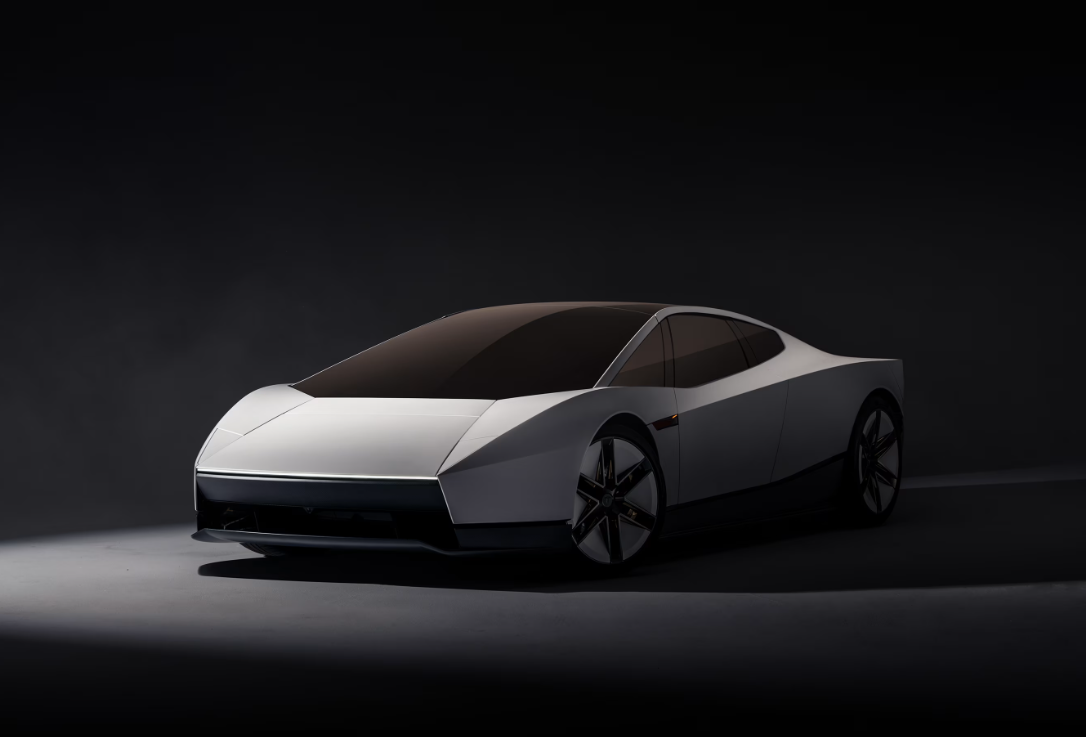
Tesla has finally revealed its radically redesigned Roadster—and delivered the airborne spectacle Elon Musk has been promising for years.
Unveiled at a SpaceX testing facility near Waco, Texas, the new electric supercar drove onto a steeply curved ramp, used a suction system to cling to its underside and launched into the air. Cold-gas thrusters stabilised the vehicle as it rotated and returned to the ground.
In another demonstration, the Roadster cleared a line of Tesla vehicles that included a Semi, Cybertruck, Cybercab, Model Y and Model 3.
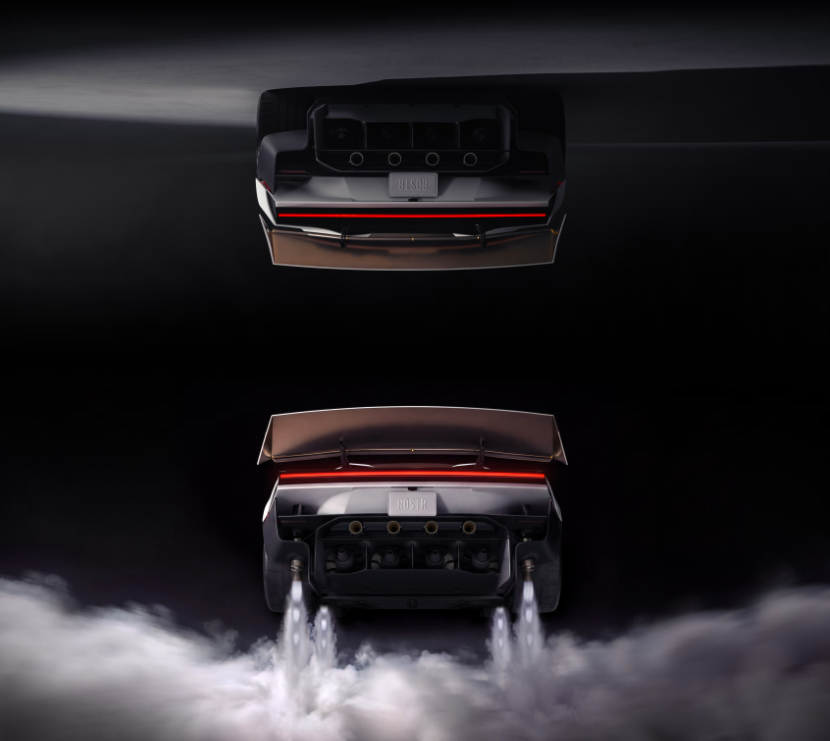
It was an extraordinary stunt. Whether it proved Tesla has created a genuine flying car is another matter.
The vehicle did not demonstrate sustained, controlled flight of the kind associated with an aircraft or electric vertical take-off and landing vehicle. Its thrusters instead produced brief powered leaps, rotation and landing control.
“We’re not talking about sustained flight,” Smithsonian National Air and Space Museum curator Roger Connor told CNN. “We are literally talking about hopping.”
How does it work?
Tesla has outlined three intended Roadster configurations.
The two-seat Performance model is the comparatively conventional version, although little about it sounds ordinary. It uses active aerodynamics and what Tesla calls a multi-mode suction system to increase downforce and allow the car to adhere to steep or inverted surfaces.
The two-seat Thrust adds rear-mounted cold-gas thrusters, designed to deliver acceleration from zero to 60mph—approximately 97km/h—in less than one second.
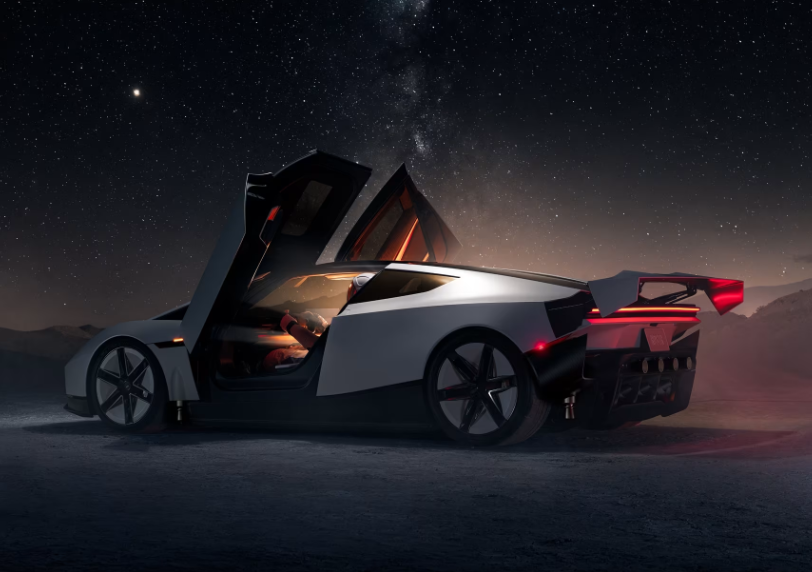
At the top is the single-seat Rocket, equipped with 10 thrusters positioned around the vehicle. This is the version intended to perform the airborne manoeuvres demonstrated in Texas.
Tesla engineering vice-president Lars Moravy said the system uses approximately 600 litres of compressed air. Carbon-fibre-wrapped pressure vessels occupy available spaces throughout the car, supplying the thrusters used for acceleration, lift and directional control.
The technology is more closely related to a rocket reaction-control system than a conventional flying-car powertrain. Rather than producing continuous lift through wings or propellers, it releases highly pressurised gas to generate short bursts of thrust.
Tesla says all three versions will offer approximately 300 miles—or 483 kilometres—of driving range and a top speed exceeding 230mph, equivalent to about 370km/h.
These remain company claims rather than independently verified production specifications.
Can buyers order one?
Reservations have reopened in selected markets. According to reporting from the launch, Tesla is seeking US$50,000 to reserve the Performance variant and US$250,000 for the Thrust. Access to the Rocket is described as invitation-only.
No final purchase price was announced, and Tesla has not confirmed Australian pricing, delivery timing or regulatory approval.
Musk said production would begin in 2028. That should be treated as an ambition rather than a settled delivery date.
The second-generation Roadster was originally unveiled in 2017 and was expected to reach customers within several years. The program was subsequently delayed in 2020, 2021, 2023 and 2024. Some customers have consequently held substantial reservations for close to a decade.
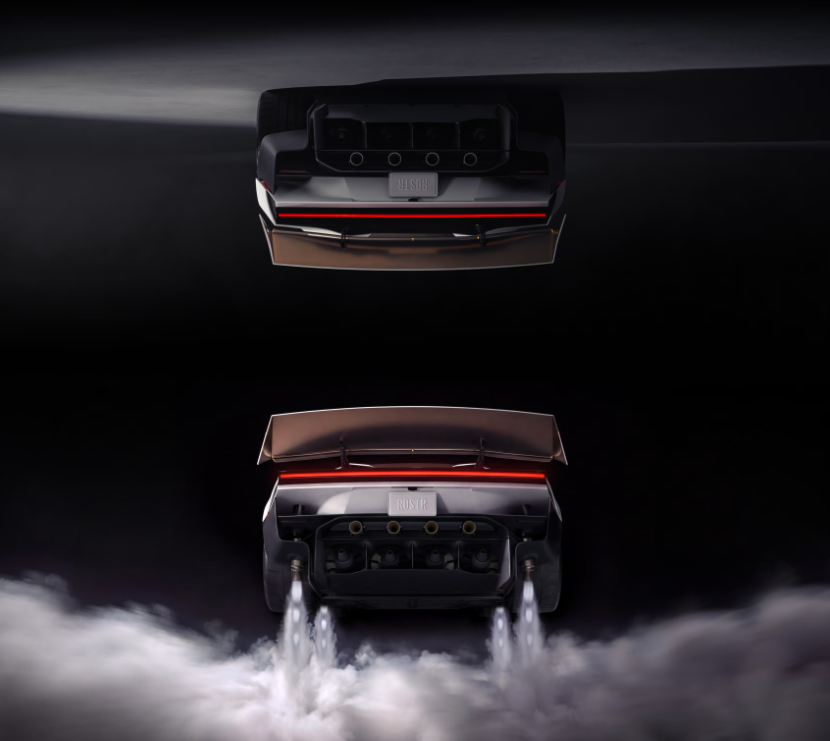
There are also formidable regulatory questions. A road-registered vehicle capable of deliberately leaving the ground, rotating and landing among other traffic does not fit neatly within existing vehicle standards. Its compressed-air system, pressure vessels and unconventional manoeuvres would require extensive safety assessment.
The more plausible outcome is that Tesla produces the Performance and perhaps Thrust versions for road and track use, while tightly restricting the Rocket’s airborne functions—or reserving them for controlled environments.
Tesla has produced a genuine moving prototype capable of remarkable stunts. It has not yet demonstrated that customers will be permitted to repeat them on public roads.
For now, the Roadster is real enough to jump. Whether it becomes a car people can buy, register and use as demonstrated remains the more consequential test.
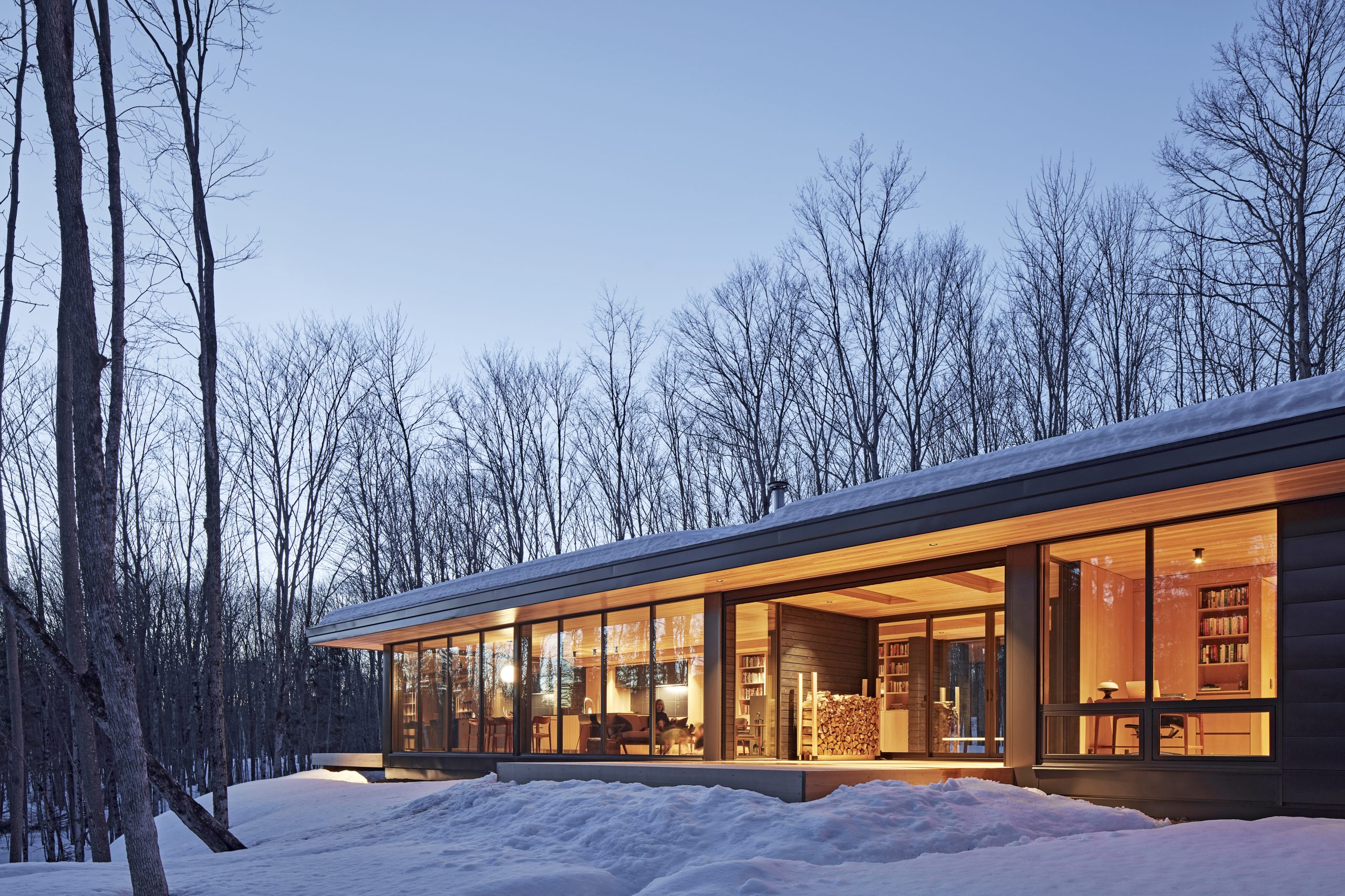
From reworked homes to remote retreats, designers are prioritising warmth and a deeper connection to landscape.

Warmer minimalism, tactile materials and wellness focused layouts are redefining luxury interiors as homeowners design for comfort, connection and lasting appeal.


