


Aston Martin’s Valen Is Its Most Powerful Front-Engined Car Yet
 2 min

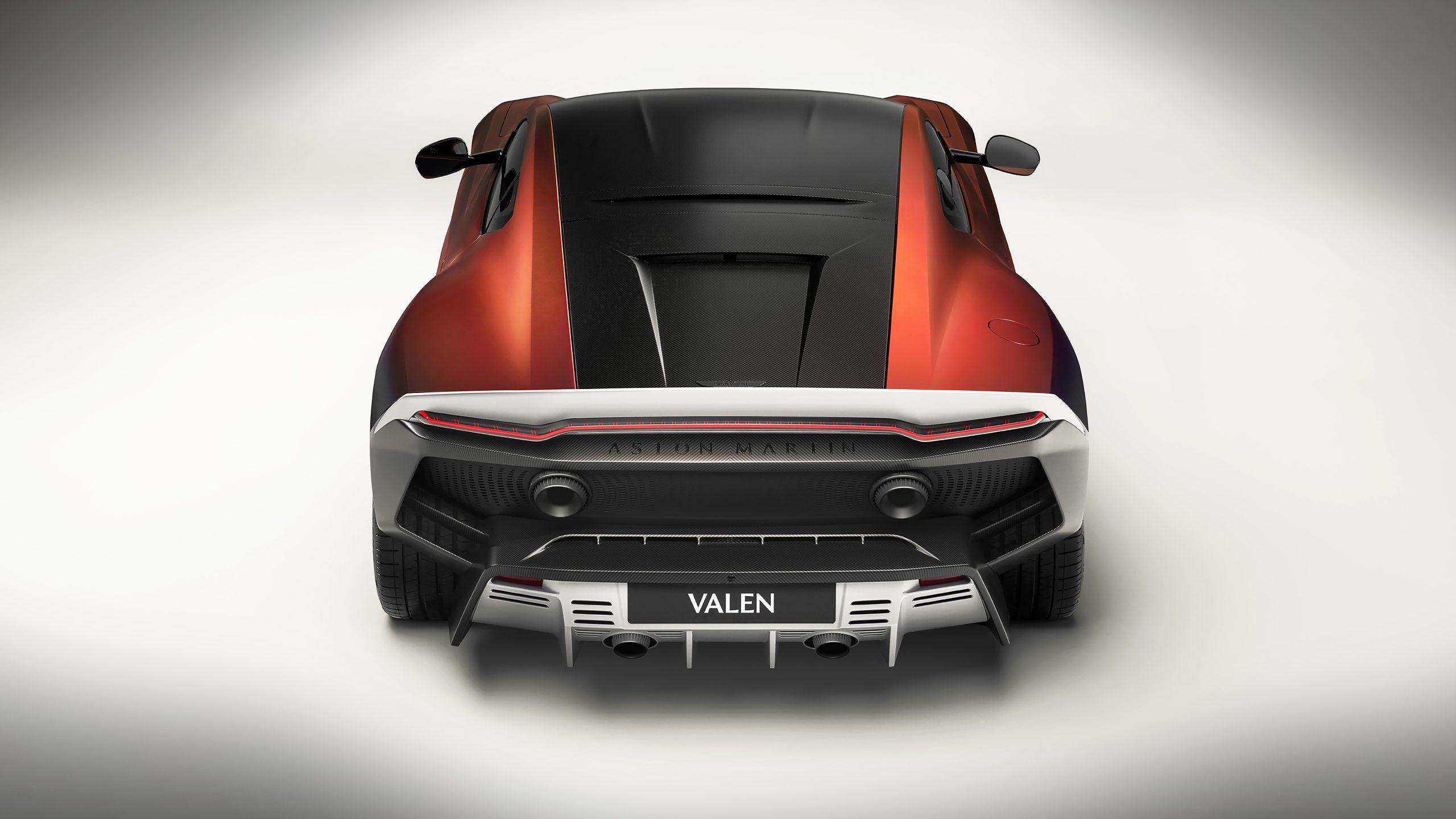
Aston Martin has unveiled the Valen, an 850PS V12 special limited to 150 cars worldwide and described by the company as the most powerful front-engined production car ever created by a manufacturer.
Developed through Q by Aston Martin, Valen uses the brand’s 5.2-litre twin-turbo V12 to produce 850PS and 1,000Nm. It is claimed to reach 60mph in three seconds and continue to a top speed of 214mph, or about 344km/h.
The numbers are only part of the proposition. Aston Martin has removed up to 110 kilograms compared with its existing core V12 platform, using a full carbon-fibre body and motorsport-influenced lightweight components. A specially tuned titanium exhaust reduces mass while giving the engine a more pronounced sound character.
The exterior is not a simple variation of a series-production body. Bespoke lighting, carbon surfacing and a new interior architecture help Valen read as a distinct model, even though its front-engine, rear-drive proportions remain recognisably Aston Martin.
Chassis and powertrain calibration have been developed specifically for the car. That matters because the enduring appeal of a front-engined flagship lies in its relationship between long-distance usability and rear-driven balance, not in chasing mid-engined lap times alone.
Valen arrives as many performance manufacturers shift towards hybrid assistance. Aston Martin has instead used a highly tuned combustion engine, aggressive weight control and low production volume to create an analogue counterpoint at the top of its range.
That does not make it technologically simple. Carbon construction, active systems and the complexity of extracting 850PS from a road-legal V12 mean long-term servicing and replacement components will be as relevant to collectors as rarity.
Only 150 cars will be built. Australian allocation, pricing and delivery timing have not been confirmed publicly. Prospective buyers should also confirm whether the quoted 110-kilogram saving depends on optional equipment rather than standard specification.
In a market crowded with four-figure power outputs, Valen’s point of difference is architectural: a vast bonnet, compact cabin and V12 driving the rear wheels. It turns Aston Martin’s traditional grand-tourer silhouette into something deliberately sharper and rarer.
Fact box
– Model: Aston Martin Valen
– Production: 150 cars worldwide
– Engine: 5.2-litre twin-turbo V12
– Output: 850PS and 1,000Nm
– Performance: Claimed 0–60mph in 3.0 seconds; 214mph top speed
– Body: Full carbon fibre
– Weight saving: Up to 110kg versus the referenced core V12 platform

A Sydney couple has paid $15.5 million for the Grand Penthouse at Marquee’s $285 million La Belle Residences beachfront development which is nearing completion at Palm Beach, eclipsing the record for an off-the-plan apartment sale on the southern Gold Coast. The sprawling single level 640 sqm beachfront residence, with sweeping views of the Gold Coast …
Continue reading “$15.5m La Belle Penthouse eclipses southern Gold Coast record”
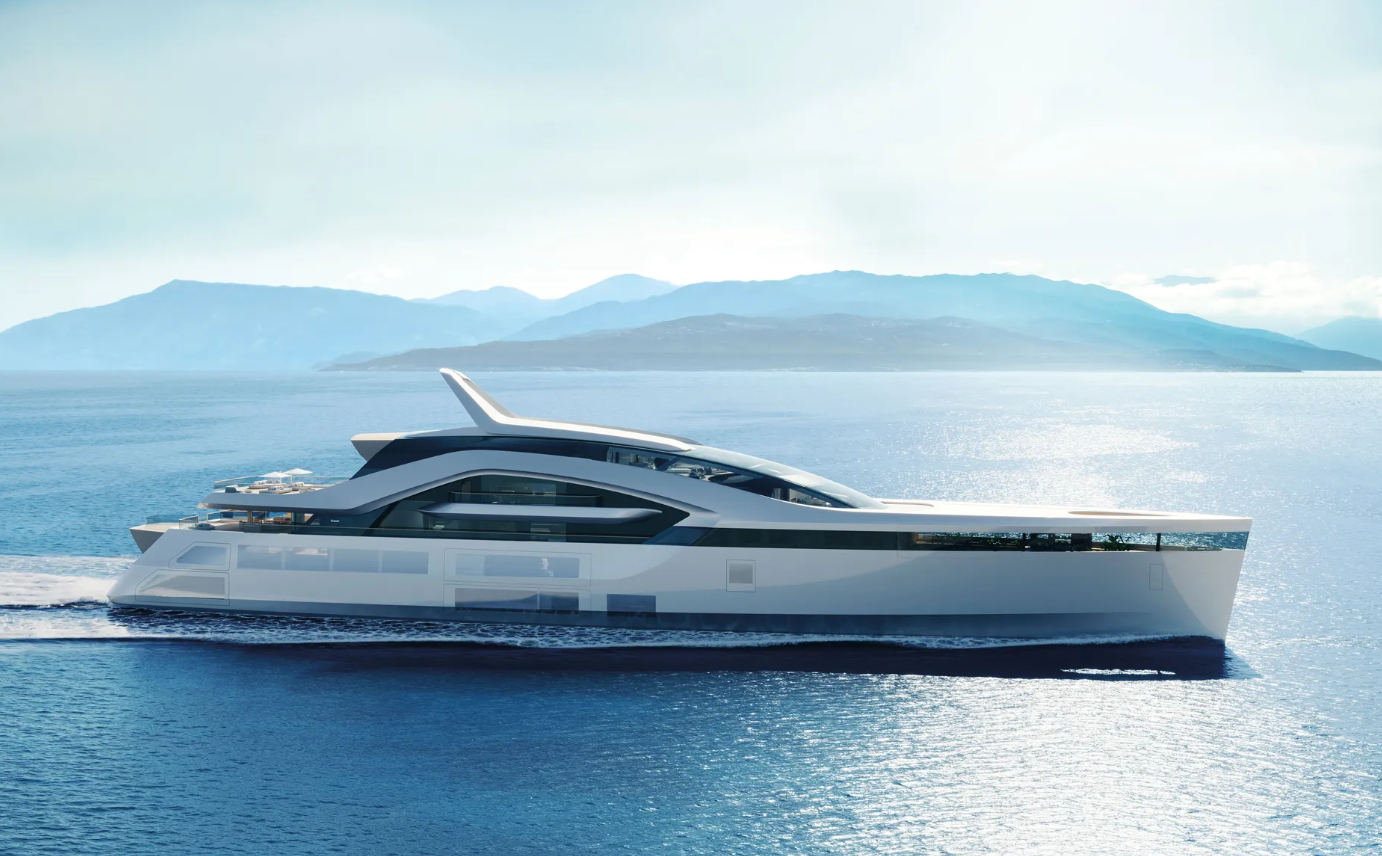
On the owner’s deck, a 20-metre swimming pool incorporates Feadship’s patented ContraWave technology and extends indoors as a suspended, glass-bottomed infinity pool.

Automobili Lamborghini is turning its attention to something considerably more difficult to define: what makes Italian excellence uniquely Italian?
4 min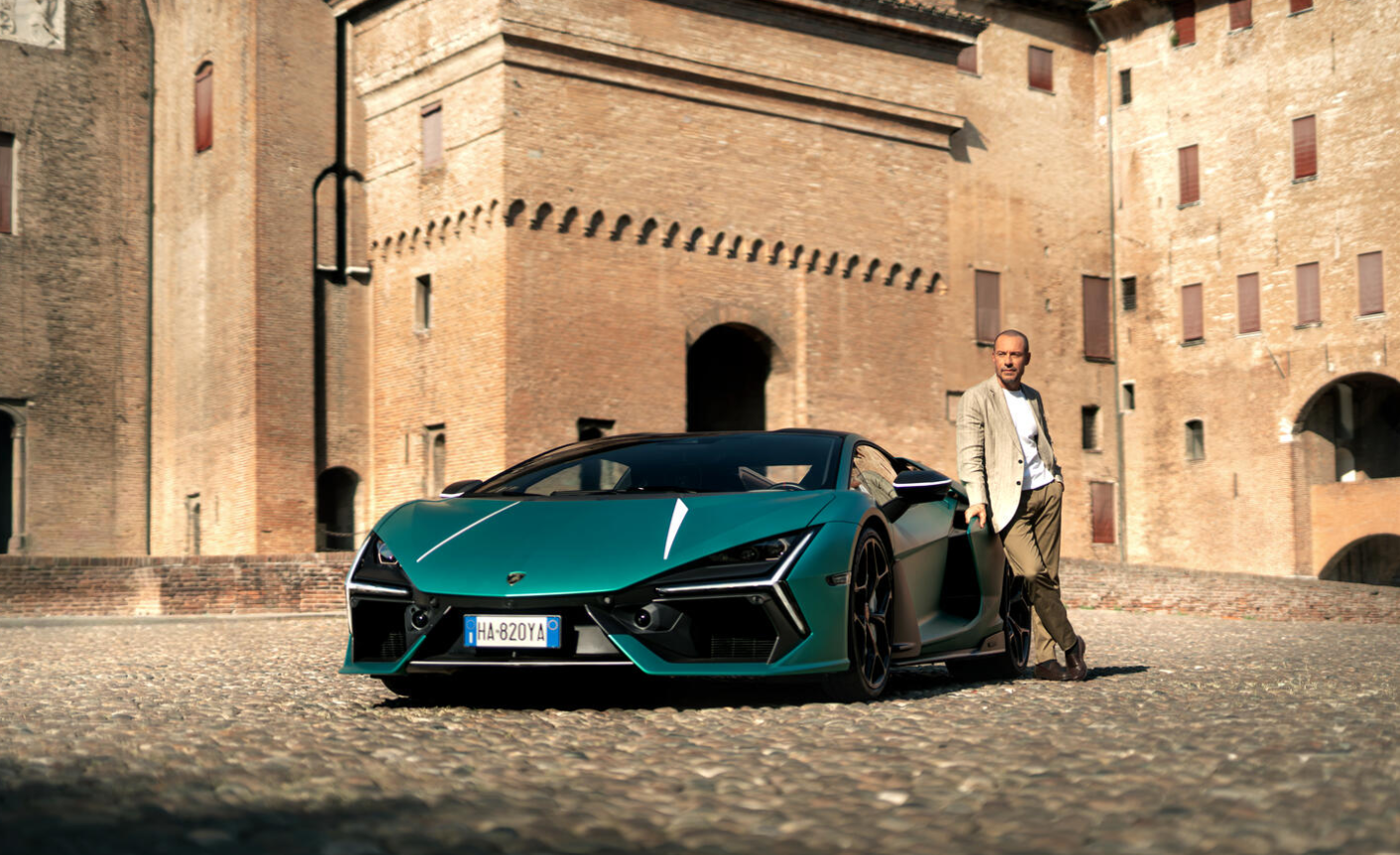
For more than six decades, Lamborghini has built its reputation on producing some of the world’s most recognisable supercars. From the Miura and Countach to the contemporary Revuelto and Temerario, the Italian manufacturer has consistently combined extraordinary performance with an equally distinctive approach to design.
Its latest project, however, has little to do with horsepower, acceleration or the introduction of another high-performance model.
Instead, Automobili Lamborghini is turning its attention to something considerably more difficult to define: what makes Italian excellence uniquely Italian?
The answer, or at least an attempt to find one, forms the basis of The Italian Excellence Code, a new three-part film series starring award-winning Italian actor, writer and director Stefano Accorsi.
Launched in October, the project explores the concept of italianità, the distinctive cultural identity that Lamborghini believes underpins not only its own vehicles but the broader reputation of Italian design, manufacturing and craftsmanship.
It is an interesting departure for a company whose communications have traditionally revolved around its products, their performance and the technology behind them. Here, the cars provide the backdrop to a wider examination of the culture responsible for creating them.
Accorsi, who was born in Bologna, close to Lamborghini’s headquarters in Sant’Agata Bolognese, guides viewers through three different expressions of Italian life. Each represents an element that the company believes contributes to the country’s reputation for excellence: taste, ingenuity and flair.
The first chapter begins in an Italian piazza, where Accorsi considers how everyday surroundings, human interaction, colour and design contribute to an aesthetic sensibility that is difficult to replicate.
It is a study of taste, not simply as an appreciation of beauty, but as an instinctive understanding of proportion, character and the choices that shape a particular way of life.
The second chapter moves into the world of fencing, using the sport’s combination of precision, technical skill and controlled movement to explore ingenuity.
For Lamborghini, the connection is clear. Engineering excellence is not simply a matter of developing more powerful machinery, but of continually refining the relationship between performance, technique and design.
The final instalment turns to Italian opera, where tradition and individual interpretation come together through performance. Here, the focus is on flair, the ability to take something technically accomplished and give it personality, emotion and originality.
Together, the three chapters attempt to explain the cultural influences that have helped distinguish Italian products in international luxury markets.
Lamborghini describes Made in Italy as extending beyond the conventional measures of manufacturing and design, arguing that the designation carries a cultural identity that cannot be explained through technical specifications alone.
That philosophy has been evident throughout the company’s history.
Founded by Ferruccio Lamborghini in 1963, the marque emerged during a period when Italy was establishing itself as a global centre of automotive design. Its early models helped challenge established ideas about how a grand touring car or supercar should look, with the Miura in particular becoming one of the defining automotive designs of the 1960s.
The Countach subsequently introduced an angular, dramatic design language that would influence Lamborghini models for decades. Its wedge-shaped profile, scissor doors and unconventional proportions helped establish the visual identity that remains central to the brand.
Those characteristics have carried through to the current generation of vehicles, even as the engineering has changed considerably.
The Revuelto combines Lamborghini’s naturally aspirated V12 engine with hybrid technology, while the Temerario represents another stage in the company’s transition towards electrification.
Yet the visual language remains unmistakably Lamborghini. Sharp lines, dramatic proportions and an emphasis on theatre continue to distinguish its cars from other manufacturers competing in the same segment.
This is where The Italian Excellence Code becomes particularly relevant.
In a luxury automotive market where performance figures can increasingly be matched or surpassed, manufacturers need to communicate qualities that are less easily measured.
Engineering innovation remains essential, but the relationship between a product and its cultural origins can be equally important in establishing its long-term appeal.
For Lamborghini, its Italian identity is not simply a geographical detail. It is a central part of the proposition.
The company’s headquarters and manufacturing operations remain in Sant’Agata Bolognese, a relatively small town in Emilia-Romagna, within one of Europe’s most important automotive and manufacturing regions.

The surrounding area has developed a concentration of specialist engineering expertise, manufacturing knowledge and automotive heritage that provides a distinctive setting for a global luxury brand.
The company’s decision to explore Italian culture through film also reflects a broader shift in how luxury manufacturers communicate with their audiences.
Rather than relying exclusively on product launches and traditional advertising, brands increasingly use cultural storytelling to establish a deeper connection with customers and enthusiasts.
Fashion, architecture, art, hospitality and design have become important reference points for luxury businesses seeking to position themselves within a wider cultural conversation.
Lamborghini’s latest project operates in similar territory, although it is more accurately described as a brand film series than a new commercial platform.
The choice of Accorsi is significant. An established figure in Italian cinema, with personal ties to the region where Lamborghini was founded, he provides a connection between the automotive manufacturer and the country’s broader creative industries.
His involvement also allows the story to unfold without relying on the familiar format of executives discussing engineering achievements or designers explaining the development of a new vehicle.
Instead, Lamborghini is inviting viewers to consider the influences that sit behind the finished product.
It is an approach that could resonate with an international audience increasingly familiar with Italian luxury through fashion houses, furniture manufacturers, architecture and hospitality, as much as through automotive marques.
There is, of course, a commercial consideration. Lamborghini’s vehicles are sold internationally, but much of their desirability remains connected to their place of origin. Preserving that association becomes particularly important as the company introduces new technologies and adapts to changing expectations around performance and electrification.
The challenge is to demonstrate that the values associated with Italian craftsmanship remain relevant even as the products themselves evolve.
For a manufacturer whose history has been defined by mechanical innovation and unconventional design, the balance between tradition and progress is hardly new.
What The Italian Excellence Code does is give that relationship a more deliberate cultural expression.
The series does not introduce a new car, establish a new product category or announce an expansion into hospitality or lifestyle experiences. Its purpose is more fundamental: to explain why the identity behind a Lamborghini matters as much as the engineering that powers it.
And in a luxury market where technical excellence is increasingly expected, that may be one of the more valuable distinctions a manufacturer can make.
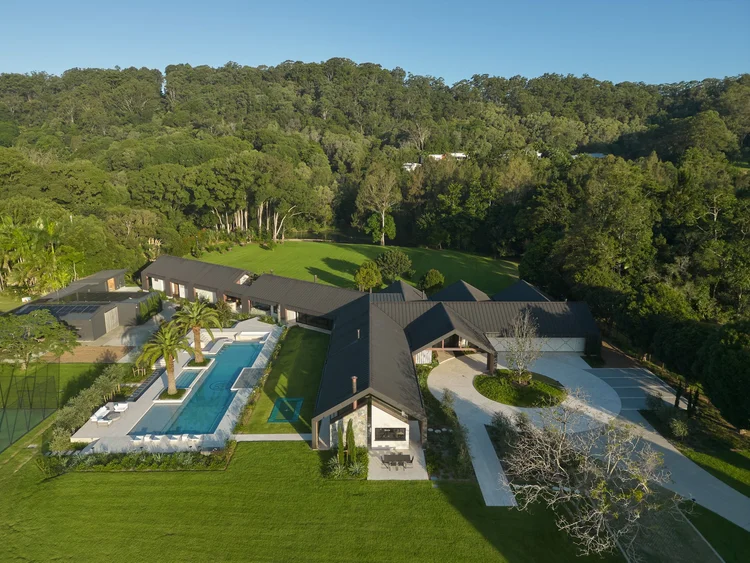
Margot Robbie may have travelled from a Queensland farm to the highest reaches of Hollywood, but a reported $28 million property deal suggests the Gold Coast has never lost its hold on her. The Australian actor and producer is believed to be the mystery buyer of Redwood, a seven-acre Currumbin Valley estate transformed into the …
Continue reading “Margot Robbie Reportedly Behind $28 Million Currumbin Valley Homecoming”

Australia’s housing market defies forecasts as prices surge past pandemic-era benchmarks.