

Lamborghini’s Newest Idea Is Not a Car, But a Code
Automobili Lamborghini is turning its attention to something considerably more difficult to define: what makes Italian excellence uniquely Italian?
 4 min
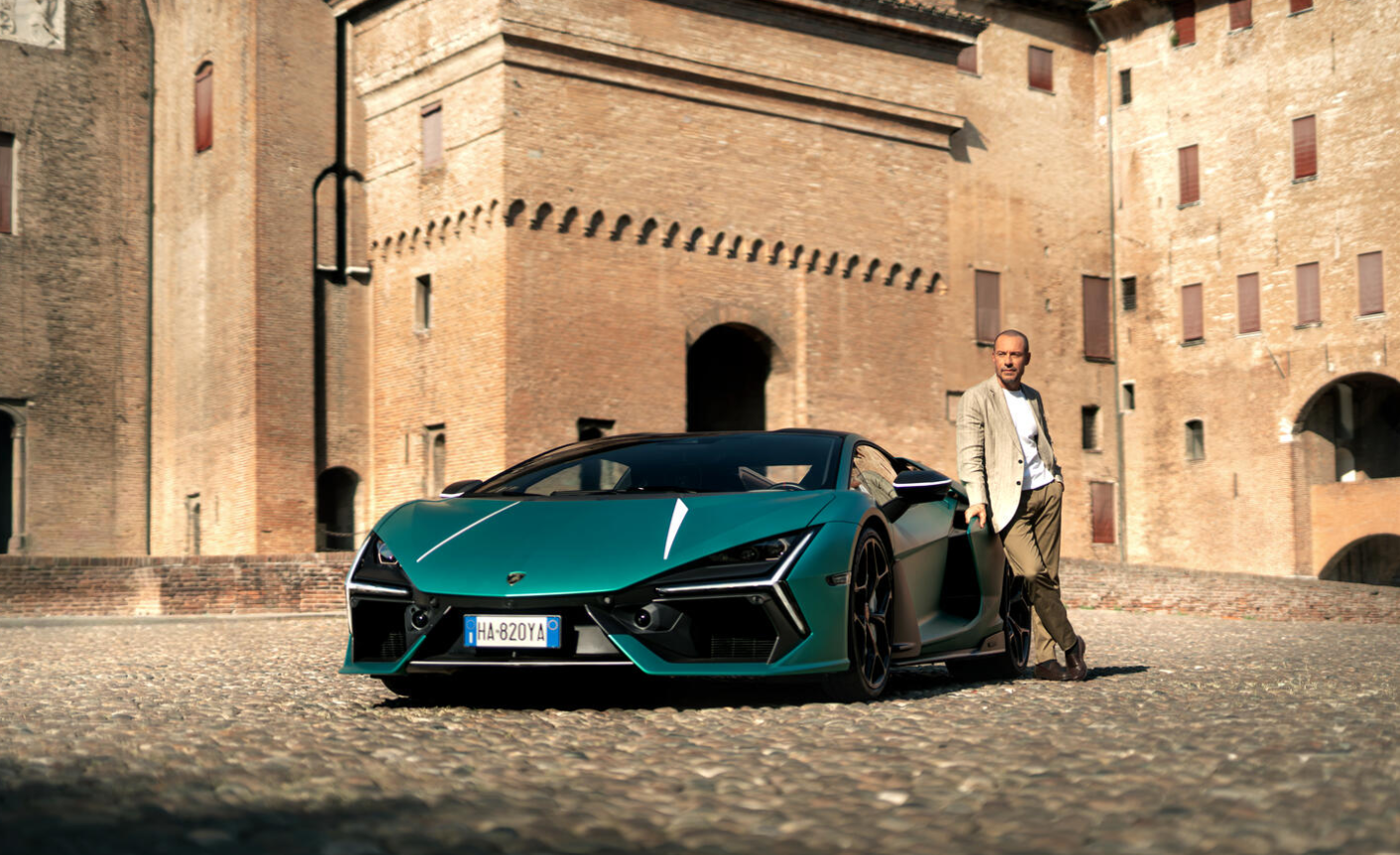
For more than six decades, Lamborghini has built its reputation on producing some of the world’s most recognisable supercars. From the Miura and Countach to the contemporary Revuelto and Temerario, the Italian manufacturer has consistently combined extraordinary performance with an equally distinctive approach to design.
Its latest project, however, has little to do with horsepower, acceleration or the introduction of another high-performance model.
Instead, Automobili Lamborghini is turning its attention to something considerably more difficult to define: what makes Italian excellence uniquely Italian?
The answer, or at least an attempt to find one, forms the basis of The Italian Excellence Code, a new three-part film series starring award-winning Italian actor, writer and director Stefano Accorsi.
Launched in October, the project explores the concept of italianità, the distinctive cultural identity that Lamborghini believes underpins not only its own vehicles but the broader reputation of Italian design, manufacturing and craftsmanship.
It is an interesting departure for a company whose communications have traditionally revolved around its products, their performance and the technology behind them. Here, the cars provide the backdrop to a wider examination of the culture responsible for creating them.
Accorsi, who was born in Bologna, close to Lamborghini’s headquarters in Sant’Agata Bolognese, guides viewers through three different expressions of Italian life. Each represents an element that the company believes contributes to the country’s reputation for excellence: taste, ingenuity and flair.
The first chapter begins in an Italian piazza, where Accorsi considers how everyday surroundings, human interaction, colour and design contribute to an aesthetic sensibility that is difficult to replicate.
It is a study of taste, not simply as an appreciation of beauty, but as an instinctive understanding of proportion, character and the choices that shape a particular way of life.
The second chapter moves into the world of fencing, using the sport’s combination of precision, technical skill and controlled movement to explore ingenuity.
For Lamborghini, the connection is clear. Engineering excellence is not simply a matter of developing more powerful machinery, but of continually refining the relationship between performance, technique and design.
The final instalment turns to Italian opera, where tradition and individual interpretation come together through performance. Here, the focus is on flair, the ability to take something technically accomplished and give it personality, emotion and originality.
Together, the three chapters attempt to explain the cultural influences that have helped distinguish Italian products in international luxury markets.
Lamborghini describes Made in Italy as extending beyond the conventional measures of manufacturing and design, arguing that the designation carries a cultural identity that cannot be explained through technical specifications alone.
That philosophy has been evident throughout the company’s history.
Founded by Ferruccio Lamborghini in 1963, the marque emerged during a period when Italy was establishing itself as a global centre of automotive design. Its early models helped challenge established ideas about how a grand touring car or supercar should look, with the Miura in particular becoming one of the defining automotive designs of the 1960s.
The Countach subsequently introduced an angular, dramatic design language that would influence Lamborghini models for decades. Its wedge-shaped profile, scissor doors and unconventional proportions helped establish the visual identity that remains central to the brand.
Those characteristics have carried through to the current generation of vehicles, even as the engineering has changed considerably.
The Revuelto combines Lamborghini’s naturally aspirated V12 engine with hybrid technology, while the Temerario represents another stage in the company’s transition towards electrification.
Yet the visual language remains unmistakably Lamborghini. Sharp lines, dramatic proportions and an emphasis on theatre continue to distinguish its cars from other manufacturers competing in the same segment.
This is where The Italian Excellence Code becomes particularly relevant.
In a luxury automotive market where performance figures can increasingly be matched or surpassed, manufacturers need to communicate qualities that are less easily measured.
Engineering innovation remains essential, but the relationship between a product and its cultural origins can be equally important in establishing its long-term appeal.
For Lamborghini, its Italian identity is not simply a geographical detail. It is a central part of the proposition.
The company’s headquarters and manufacturing operations remain in Sant’Agata Bolognese, a relatively small town in Emilia-Romagna, within one of Europe’s most important automotive and manufacturing regions.

The surrounding area has developed a concentration of specialist engineering expertise, manufacturing knowledge and automotive heritage that provides a distinctive setting for a global luxury brand.
The company’s decision to explore Italian culture through film also reflects a broader shift in how luxury manufacturers communicate with their audiences.
Rather than relying exclusively on product launches and traditional advertising, brands increasingly use cultural storytelling to establish a deeper connection with customers and enthusiasts.
Fashion, architecture, art, hospitality and design have become important reference points for luxury businesses seeking to position themselves within a wider cultural conversation.
Lamborghini’s latest project operates in similar territory, although it is more accurately described as a brand film series than a new commercial platform.
The choice of Accorsi is significant. An established figure in Italian cinema, with personal ties to the region where Lamborghini was founded, he provides a connection between the automotive manufacturer and the country’s broader creative industries.
His involvement also allows the story to unfold without relying on the familiar format of executives discussing engineering achievements or designers explaining the development of a new vehicle.
Instead, Lamborghini is inviting viewers to consider the influences that sit behind the finished product.
It is an approach that could resonate with an international audience increasingly familiar with Italian luxury through fashion houses, furniture manufacturers, architecture and hospitality, as much as through automotive marques.
There is, of course, a commercial consideration. Lamborghini’s vehicles are sold internationally, but much of their desirability remains connected to their place of origin. Preserving that association becomes particularly important as the company introduces new technologies and adapts to changing expectations around performance and electrification.
The challenge is to demonstrate that the values associated with Italian craftsmanship remain relevant even as the products themselves evolve.
For a manufacturer whose history has been defined by mechanical innovation and unconventional design, the balance between tradition and progress is hardly new.
What The Italian Excellence Code does is give that relationship a more deliberate cultural expression.
The series does not introduce a new car, establish a new product category or announce an expansion into hospitality or lifestyle experiences. Its purpose is more fundamental: to explain why the identity behind a Lamborghini matters as much as the engineering that powers it.
And in a luxury market where technical excellence is increasingly expected, that may be one of the more valuable distinctions a manufacturer can make.
Automobili Lamborghini is turning its attention to something considerably more difficult to define: what makes Italian excellence uniquely Italian?

From making unpopular decisions to learning when to listen, leaders from five businesses reveal what nobody prepared them for — and how running a company has challenged their expectations.
Tesla’s new Roadster used suction technology and SpaceX-derived thrusters to jump and flip—but production, price and road legality remain unresolved.
3 min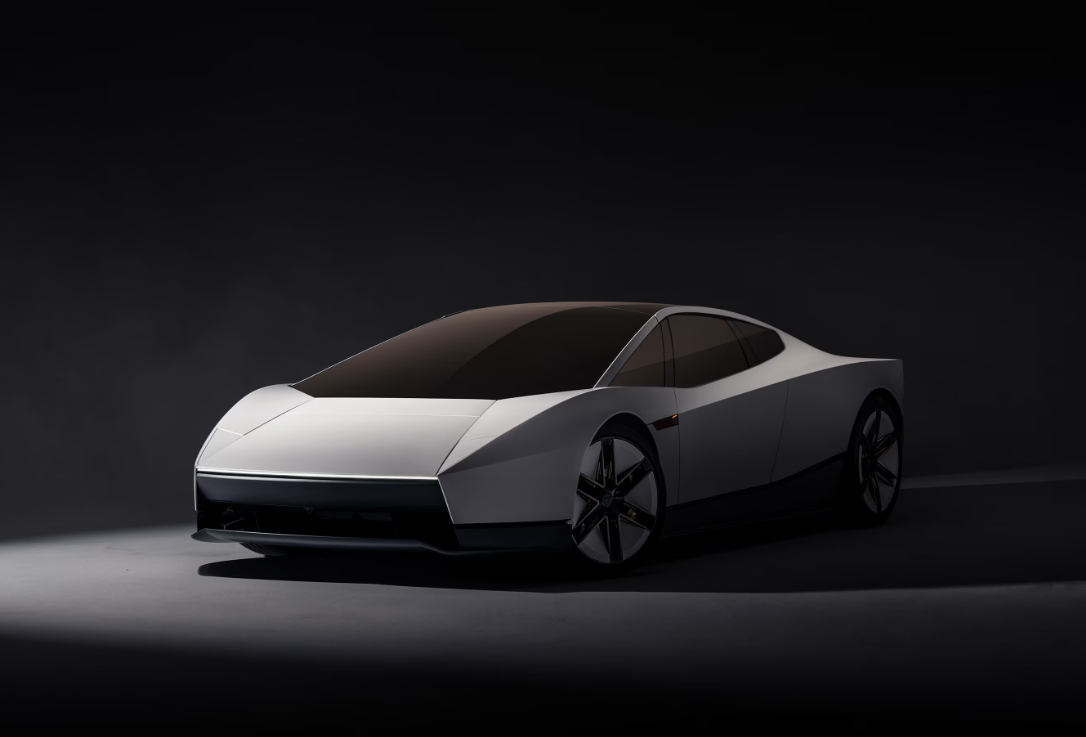
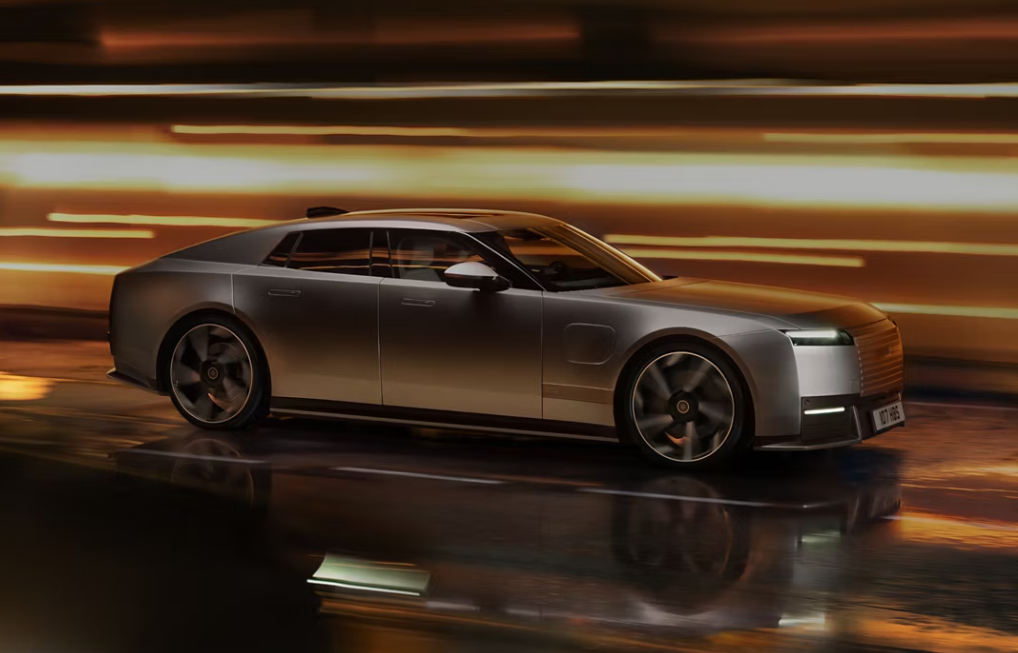
Tesla has finally revealed its radically redesigned Roadster—and delivered the airborne spectacle Elon Musk has been promising for years.
Unveiled at a SpaceX testing facility near Waco, Texas, the new electric supercar drove onto a steeply curved ramp, used a suction system to cling to its underside and launched into the air. Cold-gas thrusters stabilised the vehicle as it rotated and returned to the ground.
In another demonstration, the Roadster cleared a line of Tesla vehicles that included a Semi, Cybertruck, Cybercab, Model Y and Model 3.
It was an extraordinary stunt. Whether it proved Tesla has created a genuine flying car is another matter.
The vehicle did not demonstrate sustained, controlled flight of the kind associated with an aircraft or electric vertical take-off and landing vehicle. Its thrusters instead produced brief powered leaps, rotation and landing control.
“We’re not talking about sustained flight,” Smithsonian National Air and Space Museum curator Roger Connor told CNN. “We are literally talking about hopping.”
How does it work?
Tesla has outlined three intended Roadster configurations.
The two-seat Performance model is the comparatively conventional version, although little about it sounds ordinary. It uses active aerodynamics and what Tesla calls a multi-mode suction system to increase downforce and allow the car to adhere to steep or inverted surfaces.
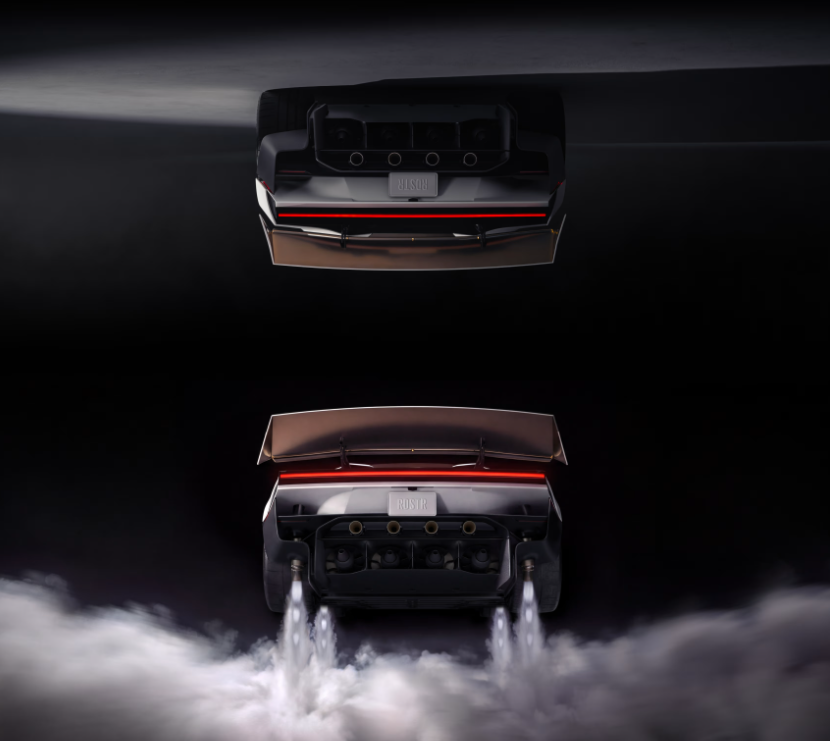
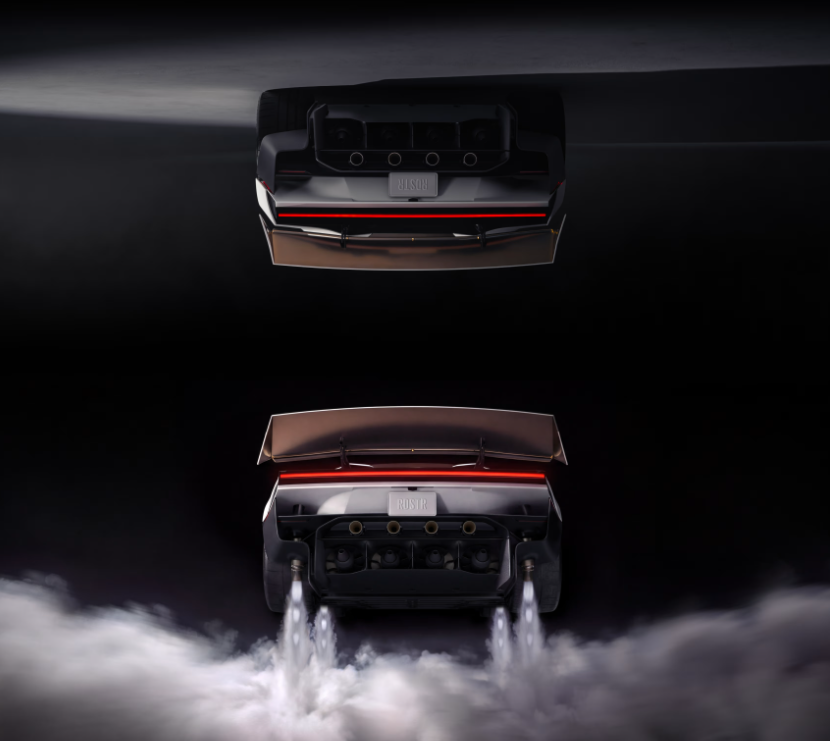
The two-seat Thrust adds rear-mounted cold-gas thrusters, designed to deliver acceleration from zero to 60mph—approximately 97km/h—in less than one second.
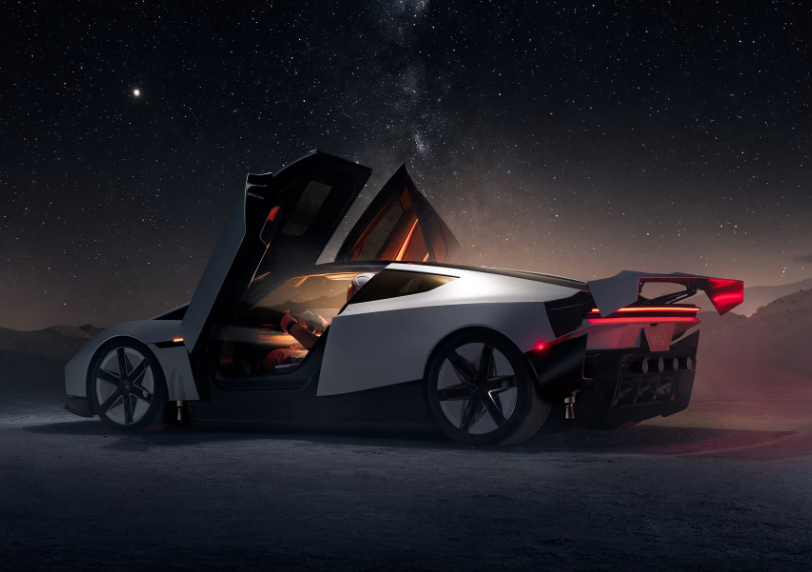
At the top is the single-seat Rocket, equipped with 10 thrusters positioned around the vehicle. This is the version intended to perform the airborne manoeuvres demonstrated in Texas.
Tesla engineering vice-president Lars Moravy said the system uses approximately 600 litres of compressed air. Carbon-fibre-wrapped pressure vessels occupy available spaces throughout the car, supplying the thrusters used for acceleration, lift and directional control.
The technology is more closely related to a rocket reaction-control system than a conventional flying-car powertrain. Rather than producing continuous lift through wings or propellers, it releases highly pressurised gas to generate short bursts of thrust.
Tesla says all three versions will offer approximately 300 miles—or 483 kilometres—of driving range and a top speed exceeding 230mph, equivalent to about 370km/h.
These remain company claims rather than independently verified production specifications.
Can buyers order one?
Reservations have reopened in selected markets. According to reporting from the launch, Tesla is seeking US$50,000 to reserve the Performance variant and US$250,000 for the Thrust. Access to the Rocket is described as invitation-only.
No final purchase price was announced, and Tesla has not confirmed Australian pricing, delivery timing or regulatory approval.
Musk said production would begin in 2028. That should be treated as an ambition rather than a settled delivery date.
The second-generation Roadster was originally unveiled in 2017 and was expected to reach customers within several years. The program was subsequently delayed in 2020, 2021, 2023 and 2024. Some customers have consequently held substantial reservations for close to a decade.
There are also formidable regulatory questions. A road-registered vehicle capable of deliberately leaving the ground, rotating and landing among other traffic does not fit neatly within existing vehicle standards. Its compressed-air system, pressure vessels and unconventional manoeuvres would require extensive safety assessment.
The more plausible outcome is that Tesla produces the Performance and perhaps Thrust versions for road and track use, while tightly restricting the Rocket’s airborne functions—or reserving them for controlled environments.
Tesla has produced a genuine moving prototype capable of remarkable stunts. It has not yet demonstrated that customers will be permitted to repeat them on public roads.
For now, the Roadster is real enough to jump. Whether it becomes a car people can buy, register and use as demonstrated remains the more consequential test.
Automobili Lamborghini is turning its attention to something considerably more difficult to define: what makes Italian excellence uniquely Italian?

From Italy’s $93,000-a-night villas to a $20,000 Bowral château, a new global ranking showcases the priciest Airbnbs available in 2026.