

The Origin Story of Candy Corn—and Other Halloween Mainstays
From candy corn and licensed costumes to pop-up Halloween shops and haunted houses, some of October’s most iconic traditions began as simple ideas from entrepreneurs and small businesses before evolving into major commercial phenomena. In 2025, Halloween grew into a $13.1 billion consumer business, driven in part by these innovations.

 6 min
Candy Corn. Haunted houses. Seasonal spectacles that now seem inseparable from October.
Many of Halloween’s biggest mainstays started much more modestly—as ideas from entrepreneurs and small businesses that caught on, spread and eventually became traditions. Along the way, they helped turn Halloween into a $13.1 billion consumer business in 2025.
Here is a look at four of the most popular creations, and how they got their start.
Candy Corn
One of the most inescapable Halloween treats—Candy Corn—wasn’t marketed as a Halloween goody at first. In fact, it was marketed as a whimsical candy version of chicken feed.
It was created back in the 1880s in Philadelphia, which was then a candy-making hub. One popular trend among candy companies was nature: treats inspired by the agricultural world, like pumpkins, leaves and chestnuts.
Among those businesses was Wunderle Candy, owned by a family of German immigrants. (Milton Hershey worked there before he founded his chocolate business.) One Wunderle employee, George Renninger, came up with the idea of a candy shaped like corn kernels—but also took the innovative step of applying different layers of colors to the treats.
The process involved pouring layers of hot liquid sugar into tiny molds by hand. “It was laborious,” says Beth Kimmerle, founder and chief executive of Attribute Analytics and author of three books about candy.
The unusual color scheme gave the candy instant appeal. And, yes, it was marketed as faux chicken feed at the start: “an agricultural-themed novelty and penny candy that appeared throughout the year,” Kimmerle says.
How did the corn get associated with Halloween? At the turn of the last century, another candy company, Goelitz Confectionery, also began selling the treat. Kimmerle says it isn’t clear what kind of arrangement—if any—the two companies had about the rights to the candy. But, in the end, Goelitz usually gets the credit for scaling the candy and branding it as a Halloween product.
As for Wunderle, Kimmerle says, the business wound down in the 1980s, while Goelitz was eventually renamed Jelly Belly in 2001, and acquired by Ferrara Candy in 2023. (Another Ferrara brand, Brach’s, has also been selling candy-corn treats since the 1920s; Ferrara says that it doesn’t have information showing a licensing agreement between the companies.)
Candy Corn has not only become immensely popular in itself, but also has lent its colors and flavors to countless other products. This year, Brach’s launched a limited-edition fragrance, Ode to Candy Corn, which “smells exactly like how candy corn tastes,” according to the company.
Licensed costumes
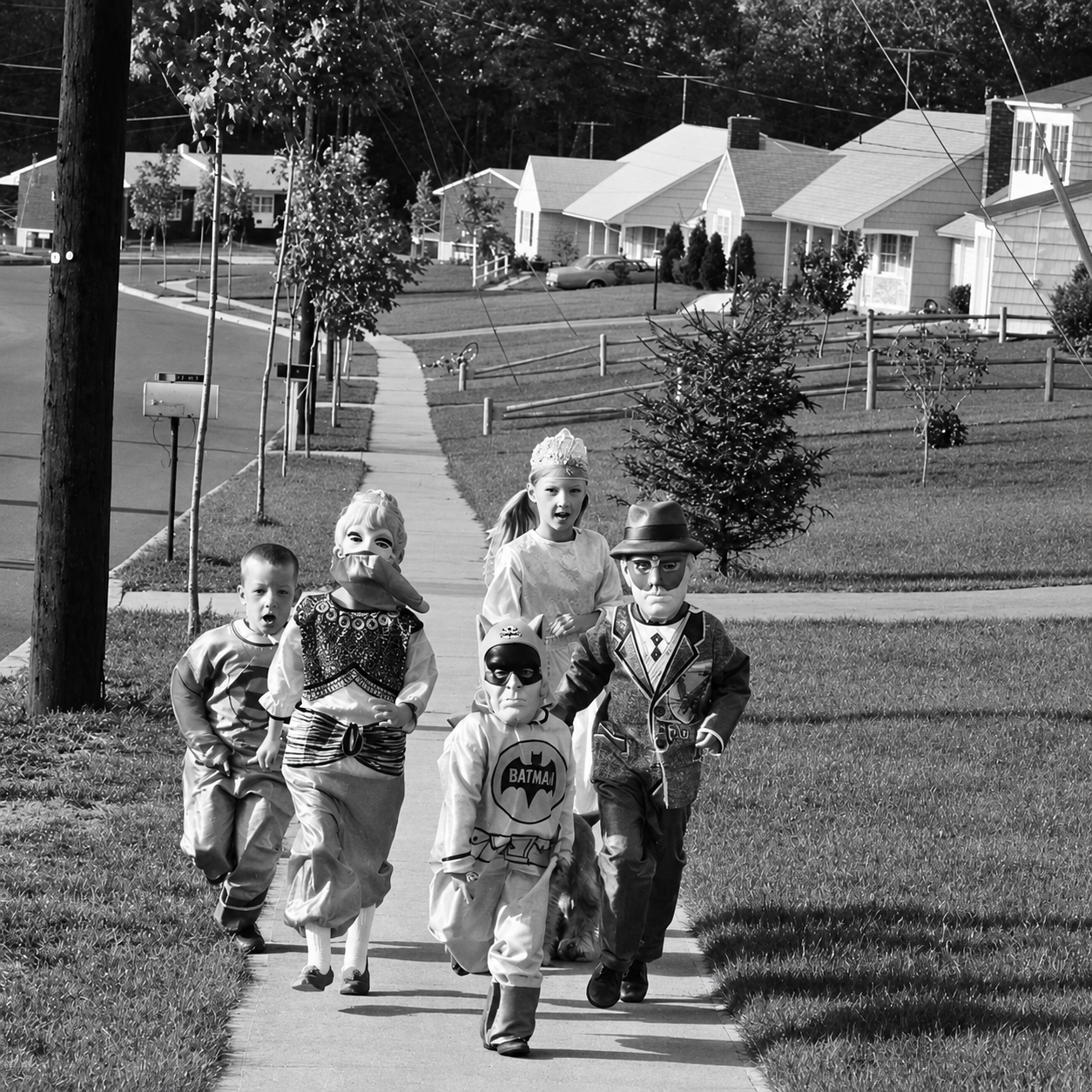
Dressing up as your favorite fictional figure is a Halloween tradition. Entrepreneur Ben Cooper made it a lot easier for people to get into character—by making licensed costumes a big business.
In the 1930s, Cooper sold costumes for vaudeville, says Rob Caprilozzi, founder of the Horror News Network website, who recently made a documentary about Cooper. In 1937, the entrepreneur—whose company was simply called Ben Cooper Inc.—bought another company, A.S. Fishbach, which had the license to manufacture costumes of Disney characters.
Cooper added more costumes as new Disney movies came out, as well as updating the old ones, Caprilozzi says. In the 1960s, he expanded his line to superheroes—including Spider-Man and Batman—and then turned to “Sesame Street” and “Star Wars” characters in the 1970s.
“At its height, the company controlled 80% of the licensed custom characters,” says Caprilozzi.
And it wasn’t just fictional heroes, either: Cooper had a line of costumes based on U.S. presidents. (The company destroyed its JFK inventory after the assassination, says Caprilozzi.)
One of the selling points of Cooper’s costumes was simplicity. The costumes were just plastic masks and tarps costing a few dollars apiece, and you could toss them out after the big night—no need to hang onto them year-round.
The company lasted until 1992, when it filed for bankruptcy and was then acquired by competitor Rubie’s Costume. (The company, now known as Rubies, didn’t respond to requests for comment.)
Halloween pop-up shops
Joseph Marver didn’t change what we wear for Halloween, the candy we eat or the type of decorations we put up. But he revolutionized where we buy all that stuff.
Marver was running an apparel store called Spirit Women’s Discount Apparel in Castro Valley, Calif. October sales were historically slow, but he noticed sales booming at a costume shop across the street. According to media accounts, the other store changed locations, and Marver in 1983 decided to get into the Halloween business himself. He put his usual wares into storage and turned his store into an emporium for Halloween merchandise.
“I went to a trade show in Chicago, picked up everything I could that had to do with Halloween, and put it in my store, and it was amazing,” Marver told San Francisco Bay Area radio station KQED in July 2024. (He died in 2025.)
“His sales went through the roof,” says Lisa Morton, author of “Trick or Treat: A History of Halloween” and “The Halloween Encyclopedia.”
Marver doubled down on the gambit the following year—renting out a temporary space in a local mall to sell all types of Halloween products for eight to 10 weeks, from costumes to decorations to face paint. At the time, retail leases typically lasted a decade, and it was difficult for newcomers to land a lease, let alone a temporary one, says Barbara Kahn, a professor at the University of Pennsylvania’s Wharton School.
In the interview with KQED, Marver described his initial difficulties. “Some of the people in the strip centers wanted to have the big boxes come in, but then, some of them realized it [was] not going to happen,” he said. So the malls agreed to take on the pop-ups, figuring, “‘Let’s do Halloween. Let’s get something going. Maybe it’ll bring business to the other tenants.’”
Over the next 16 years, Marver grew his business to 60 temporary retail outlets and changed its name to Spirit Halloween. His company spent the rest of the year preparing for the season, handling jobs like sourcing costumes and identifying potential real estate.
In 1999, Spencer Gifts bought the company; Marver stayed on as a consultant, then opened a hotel. Today, Spirit Halloween operates about 1,500 seasonal stores across the U.S. and Canada.
“I didn’t invent temporary sales,” Marver told the Seattle Times in October 2022, “but I feel like I invented temporary Halloween.”
Haunted houses
Walter Knott became famous as the founder of amusement park Knott’s Berry Farm, which has been in operation for about 80 years. But he and his marketing team also invented the large-scale, commercial haunted house.
People had been putting up private, informal haunted houses for years. Charitable organizations also set up the houses to raise funds, says Benjamin Gagne, president of the Haunted Attraction Association and owner of the Thirteenth Hour haunted attraction in Indianapolis.
But Knott’s Scary Farm Halloween event in 1973 was a first, a large-scale commercial setup designed to boost ticket sales during an otherwise slow season, says M. Stang, Ainsworth Visiting Scholar of American Culture at Randolph College in Lynchburg, Va.
Full-page advertisements flooded Orange County and Los Angeles County newspapers, promising entry to the “spookiest, ghouliest place in Southern California” for just $4. The print ads promised “bizarre, spooky antics,” a “fun-tingling plunge through Satan’s sawmill,” and “LIVE MONSTERS,” Stang wrote in a paper about the attraction.
The park also distinguished itself by having people in costumes provide the scares, says Gagne. Previously, amusement parks, including Disney, had what Gagne calls “dark carny rides,” where patrons rode around in carts, and mirrors and lighting created the mood.
The Scary Farm turned into an annual tradition. Knott’s is still running the Halloween attraction—which is open for 26 nights this season.
 Copyright 2020, Dow Jones & Company, Inc. All Rights Reserved Worldwide. LEARN MORE


From making unpopular decisions to learning when to listen, leaders from five businesses reveal what nobody prepared them for — and how running a company has challenged their expectations.
Technology and semiconductor shares fell sharply as investors questioned the debt financing the AI infrastructure boom and confronted higher rates and Chinese competition.
Elon Musk is exploring a potential merger between Tesla and SpaceX, a deal that could reshape the future of AI, robotics, autonomous vehicles and space technology. With a combined valuation potentially reaching $3.5 trillion, the move could bring Musk’s vision of an interconnected technology ecosystem closer to reality, although a deal remains uncertain.
5 min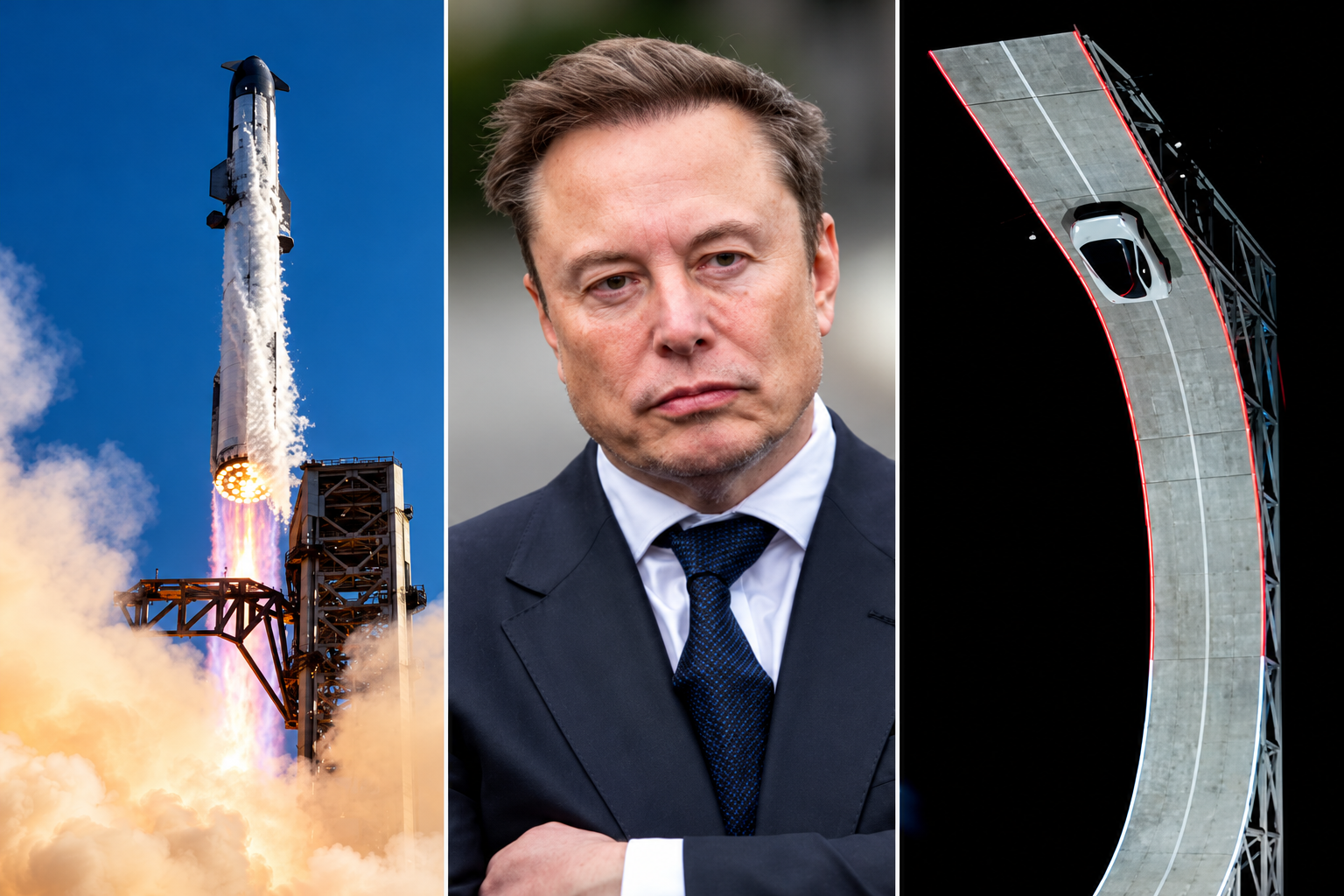
Elon Musk has engineered ties between Tesla TSLA 3.41%increase; up pointing triangle and SpaceX SPCX 7.79%increase; up pointing triangle that are hard to break, and now he wants to fuse them together permanently.
Musk has run both Tesla and SpaceX concurrently over the past two decades, using a schedule that dictated which days he spent focused on each business.
The companies have often shared resources and personnel, signaling their close ties. Last year, SpaceX looked into creating a spacesuit for Tesla’s humanoid robot Optimus, a person familiar with the matter said. Tesla last week showed off its new Roadster, a vehicle featuring SpaceX rocket thrusters that it hopes to soon bring to market.
And in recent months, Musk has repositioned both companies by expanding beyond their core operations toward a shared mission centered on artificial intelligence.
The world’s richest man on Tuesday signaled his interest in tying up SpaceX and Tesla, marking what would be the biggest corporate merger of all time. Because he serves as chief executive of SpaceX and Tesla, Musk said committees of independent directors at both companies are evaluating a possible deal, adding that a transaction might not come to fruition.
The committees will likely evaluate, with lawyers and bankers, how each company would fare in a potential deal and how a deal might best be structured. They then present their conclusions to their respective boards, who typically vote on whether to proceed.
“It’s an odd Kabuki dance where two groups of people are talking and I can’t be in the conversation,” Musk told SpaceX investors on Tuesday in response to an analyst’s question about a potential deal.
For Musk, the merger supports his vision of a world full of autonomous cars, humanoid robots and weekly rocket launches, as well as the data centers and satellites required to keep the whole thing running.
Some investors and analysts said they expect a transaction would be structured as an all-stock deal, with SpaceX potentially paying a modest premium for Tesla shares.
SpaceX, which has a market value of about $2 trillion, said it is seeing sharp growth in revenue across its businesses, which include operating data centers, launching rockets and operating satellite networks such as the internet service Starlink. Tesla is valued at about $1.5 trillion and is expanding its operations beyond its automotive and energy business. Shares in both companies traded higher following the news Tuesday.
Musk’s substantial ownership stakes in both companies, along with voting control at SpaceX, has enabled him to set the deal in motion. Analysts and investors said the deal will probably face regulatory scrutiny internationally, though some see Musk’s close relationship with the Trump administration as an asset to getting approval.
Blurred lines
The companies haven’t said which directors are on the special committees evaluating a potential deal. Several SpaceX and Tesla board members have either personal or business ties to Musk. And like Musk, venture capitalist Ira Ehrenpreis sits on both boards.
In a filing this week, Tesla outlined millions of dollars in business agreements with SpaceX and its subsidiaries last year, including $143 million in car sales to SpaceX, $3.3 million in advertising that it bought on the social-media platform X and $430 million in revenue from the sale of Megapack batteries for SpaceX’s data centers.
The companies also split the cost of resources including the use of Musk’s SpaceX jet and the bill for his personal security, which he runs through a private company.
Employees at both companies routinely move between companies to work on special projects, and some executives have dual roles, including Charles Kuehmann, vice president of materials engineering at both SpaceX and Tesla, and Ashok Elluswamy, the vice president of AI software at Tesla who runs a joint venture with SpaceX called Digital Optimus.
Over the years, Musk has launched new startups within his empire, including brain-implant company Neuralink, underground-tunnel developer the Boring Company and xAI, the AI startup that merged with SpaceX in February.
It is that AI business that Musk thinks can serve a market worth tens of trillions of dollars, justifying the need for a merger.
The business case goes like this: Tesla is developing robotaxis and robots, which it calls “physical AI.” SpaceX is working on the back end of physical AI: the data-center capacity and internet connection required for those robotaxis and robots to operate continuously.
“I don’t see what the value of Tesla is if it’s not merged with SpaceX,” said investment adviser Ross Gerber, a former Tesla bull turned critic invested in both companies. “If they don’t merge, the brains of everything that runs Tesla is owned by another company.”
On top of it all, both companies face constraints on the supply chains they need to make this world a reality, particularly when it comes to chips. To address this, Musk earlier this year announced a joint venture between Tesla, SpaceX and Intel to design and manufacture chips in Texas. “The most epic chip-building exercise by far,” he has said.
Musk at the wheel
For Musk, a merger would also solve two problems: demands on his attention and his lack of control at Tesla.
Tesla for years was Musk’s only public company, a status that came with greater scrutiny. There, Musk reports to a public board, as well as individual investors who make up around 30% of Tesla’s voting power, according to FactSet.
The question of Musk’s attention became a particular focus for investors and the board in recent years after he acquired Twitter in 2022 and launched xAI in 2023, and again in 2025 as he spent time in Washington, D.C., running the Department of Government Efficiency in the early months of President Trump’s second term.
As Tesla’s car business suffered in 2025, Musk threatened to take his AI ambitions outside the company if he wasn’t granted 25% voting control. Last November, Tesla shareholders approved a new pay package for Musk, which created a path for him to vastly expand his stake.
As of Sept. 30, Musk owned a roughly 20% stake in Tesla, according to the company’s proxy filing.
The SpaceX IPO gave Musk a different path. When SpaceX went public in June, the deal’s structure enabled him to have more than 80% voting power at the company—so much that he can’t be fired and decisions can’t be made without his support.
If SpaceX acquires Tesla, he will likely stay in control.

Chinese carmaker GAC will expand its Australian electric vehicle line-up with the city-focused AION UT hatchback.
A restored 1860s Brisbane residence transformed by GRAYA has smashed Paddington’s house price record, selling for more than $12 million.