‘It’s Business in Front and a Party in Back’: Welcome to the Mullet House
A Texas couple spent $9 million building a second home in California and named it after the infamous haircut

 5 min
5 min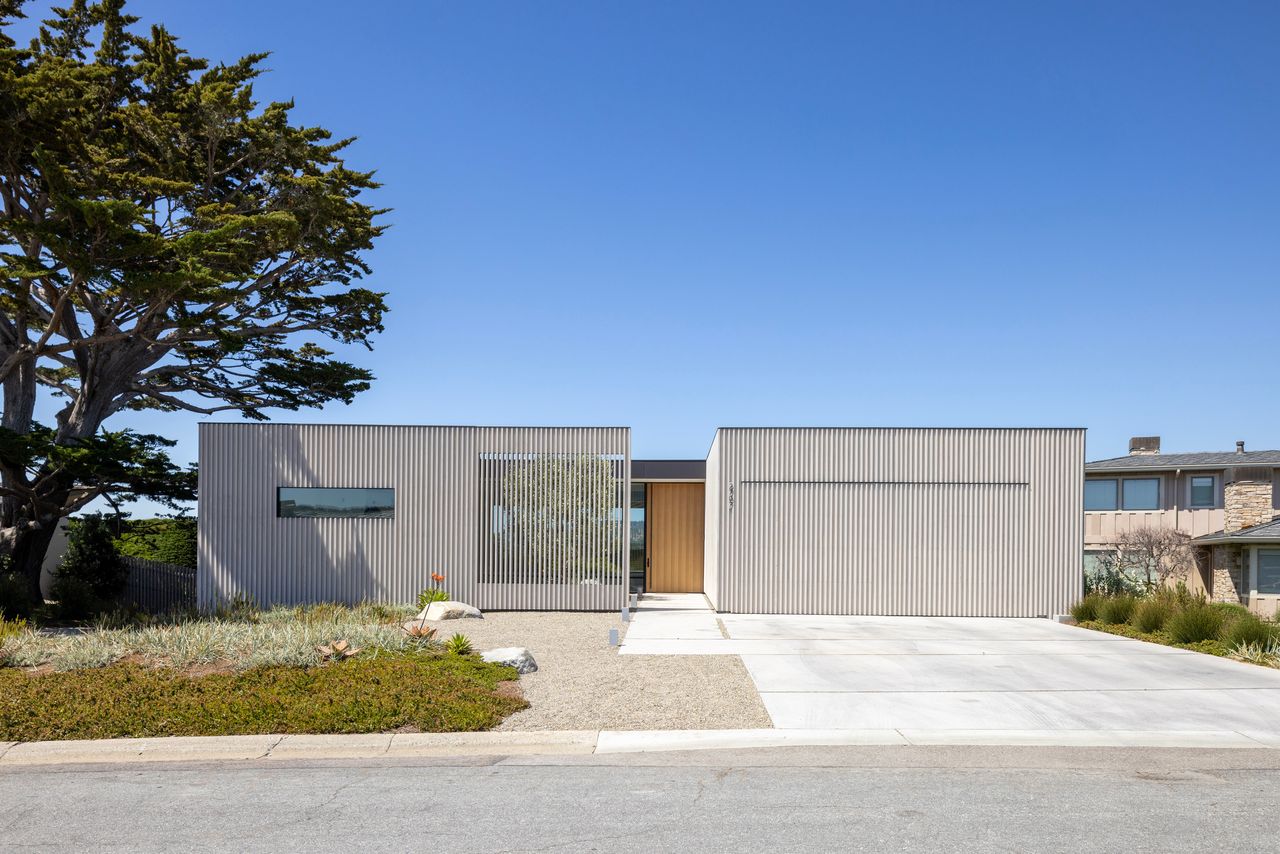
Houses in Carmel, Calif., tend to have tongue-in-cheek names, like Cabin-on-the-Rocks and Last Resort. So Marguerite Woung-Chapman and Stan Chapman decided to christen the house they built in this charming seaside community with a name that gives a humorous nod to its contemporary twist on modern architecture.
“We call it Mullet House. It’s business in front and a party in back,” says Chapman, 57, a senior executive at an energy infrastructure company in Houston. The reference, of course, is to the haircut popularised in the 1980s that was short at the front and sides but long in the back.
From the street, the house, a second home for the Texas couple, has an unassuming appearance. The front walls are shielded behind ribbed slats of white painted cedar, almost like a fence. And like a mullet, there is a hint from first glance that something interesting is happening on the other side: A portion of the ribbed slats reveals an entryway’s glass wall that offers a glimpse of the interior and views of the valley beyond.
Inside, the space unfolds into multiple levels, with sweeping views of the beach and mountains seen through glass walls and courtyards.
“People stop when they’re driving or walking down the street to look through our house,” says Woung-Chapman, 57, a former general counsel for an energy company in Houston and currently on several boards. She says she is comfortable being observed and waves if she catches people’s eyes. “They’re usually more embarrassed than I am,” she says.
It was this sense of discreet boldness that drove much of the interior design of the house, says Susan Collins Weir, founding principal of Sausalito-based Studio Collins Weir. She chose furnishings and fixtures that had clean lines but were textured and layered, such as olive-colour leather Poliform chairs with leather-upholstered legs and heavy stitching in a dining room that also has a porcelain art piece on the wall that hangs like a woolly fabric.
“They both have a quiet strength,” Collins Weir says of the couple.

To immerse the $9 million house in its surrounding nature, it was sited as close to the front of the property line as possible instead of in the middle of the lot, as is typical in this Carmel Meadows neighbourhood, says Daniel Piechota, founding principal of San Francisco-based Piechota Architecture, which designed the house. The other three sides were at the setback limit, allowing them to max out the envelope at the perimeter and then carve out courtyards.
The property has a large courtyard in the middle, spanned by an open-air bridge that acts as a patio for dining and lounging, and connects the two sides of the house. Below the bridge is a sunken outdoor conversation pit, with a fire pit in the middle, that opens to a backyard space with a hot tub. Glass walls give the whole house transparency.
On one side of the bridge is the main bedroom and bathroom, leading to a smaller courtyard through a large shower. On the other side is the main living and dining area and the kitchen. Two of the three bedrooms are on the bottom floor, where a media room opens to the garden level with the conversation pit. There is also a workout room and a wine room at one end of that level.
The kitchen has three islands lined up in a row: two stainless steel ones for cooking and prepping food, and a marble one for dining. Reflecting the couple’s love for meat, there is a Dry Ager, a butcher block and a bone saw.
Chapman and Woung-Chapman, who were both married before, met when they were working at the same energy company in Houston. They married in 1999. An acquaintance joked they were “a train wreck waiting to happen” because they were such opposites. She grew up in Kingston, Jamaica; briefly in Queens, N.Y.; and then in Miami, with a father she describes as a socialist. He grew up in Colonia, N.J., in a politically conservative, Catholic family, he says.
Chapman says he loved how Woung-Chapman challenged him intellectually. “Early on, I thought I’d make her see the light, but I’ve learned not to try anymore,” he says.
Woung-Chapman, whose ancestry includes Chinese, German, Indian and African, says she liked how intensely curious Chapman was about her background. Both their parents were surprised by their union, but she jokes that her father’s heavy Jamaican accent warded off fights because it made it hard for Chapman to understand him. She says they give each other grace from having to attend too many family events.
One thing they agree on is where and how they live. After renovating a house in the West University Place neighbourhood in Houston in 2001, they decided it was too small for the four kids, now ages 26 to 30, they share from their previous marriages. So they built a new house in the same neighbourhood in 2008. Chapman describes it as a Contemporary Craftsman: Prairie style (his preference) on the outside and stark white modern (her taste) inside. “It was a perfect blend. A really good compromise,” he says.
When they started thinking of where to retire, their criteria included wanting to build a house by the water and mountains that was within walking distance of stores and restaurants, and was relatively close to an airport. Their list of potential locations included Nashville, Annapolis, the Jersey Shore, Key West and Savannah. It didn’t include California—or anything on the West Coast.
Still, Chapman had fond memories of a trip to Carmel, so in February 2017 they decided to look at houses while on vacation there. “We said we know it won’t happen, but let’s start there and knock it out,” says Woung-Chapman.
She says the moment they entered Carmel Meadows, which has fairly traditional homes—including the one formerly owned by the late actress Betty White that sold for $10.775 million in 2022, well over its $7.95 million asking price—they knew that was where they would end up. They put in an offer immediately on the neighbourhood’s last remaining open lot with an ocean view and bought it in April 2017 for $1.25 million. “We just wanted it,” she says.
This time, Woung-Chapman says, she wanted a design determined by the site. Cameron Helland, a lead architect on the project who now has his own firm, Helland Architecture in San Francisco, says he came up with the idea of the bridge as a way to maximise the views of the ocean while keeping to the 18-foot, county-dictated limit on height. In response to early opposition from some neighbours, who felt that the aesthetic might not fit with the neighbourhood, Helland says he made the front of the house as unimposing as possible so the street presence would more closely tie in with the scale of the neighbouring houses.
The $9 million cost, including the lot, the architect, interior design, landscaping and building, was significantly higher than they expected, says Chapman. He sometimes thinks about what they could have gotten for the same amount at the Jersey Shore or Nashville. And he sometimes feels he should be spending more time there, as he commutes back and forth to Houston and is in Carmel less than six months a year.
But neither Chapman nor Woung-Chapman has any regrets about choosing Carmel. Their new home offers what they wanted in climate, views and the access to outdoors.
 Copyright 2020, Dow Jones & Company, Inc. All Rights Reserved Worldwide. LEARN MORE





From making unpopular decisions to learning when to listen, leaders from five businesses reveal what nobody prepared them for — and how running a company has challenged their expectations.

Technology and semiconductor shares fell sharply as investors questioned the debt financing the AI infrastructure boom and confronted higher rates and Chinese competition.

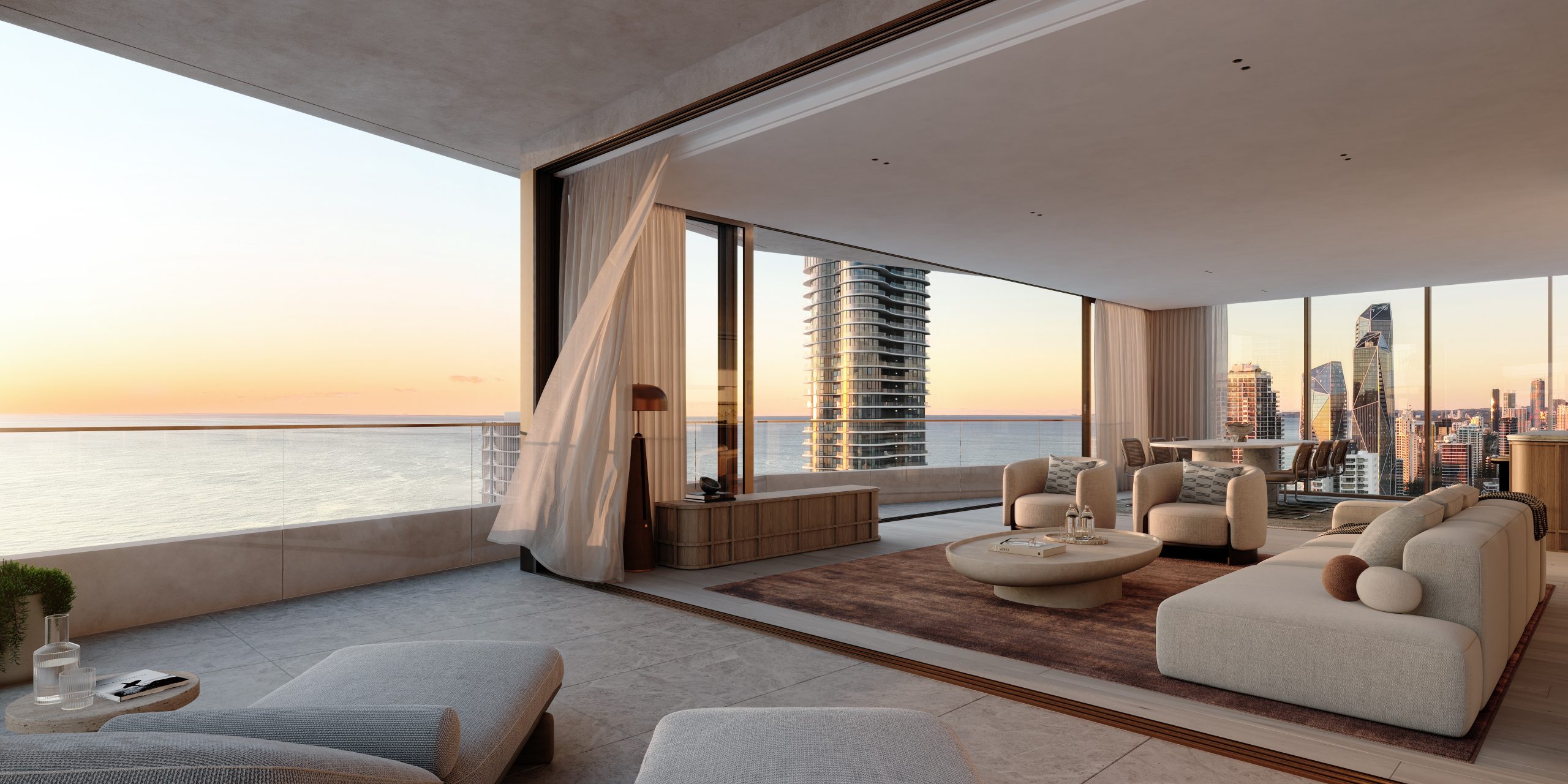
Mirvac’s 45-level Trielle has topped out at Yarra’s Edge, pairing riverfront apartments with wellness facilities, private dining and resident services.
3 min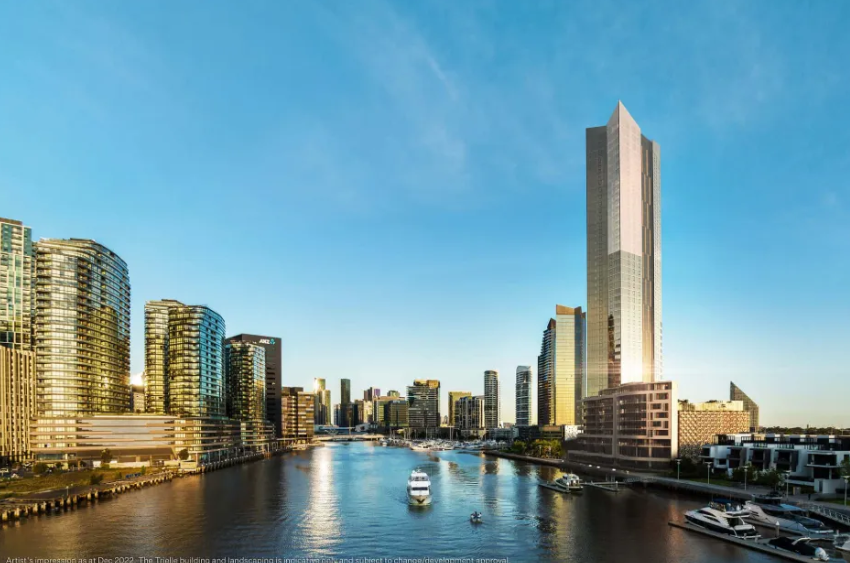
Mirvac has topped out Trielle at Melbourne’s Yarra’s Edge, with more than 70 per cent of the riverfront development sold and approximately 80 per cent of purchasers intending to make their apartment a home.
The figures, released on September 22, point to an owner-occupier audience for one of the precinct’s final residential towers. Mirvac began developing Yarra’s Edge in 2003, and its latest addition occupies one of the remaining absolute riverfront sites.
Mirvac CEO of Development Stuart Penklis said existing residents were among those moving up within the neighbourhood.
“Many purchasers already have a connection to Yarra’s Edge,” Mr Penklis said, describing buyers whose changing needs were encouraging an upgrade within the precinct.
“As one of the final residential towers within Yarra’s Edge, Trielle represents the culmination of more than two decades of creating one of Melbourne’s most established and sought-after waterfront communities,” Penklis said.
“Positioned on the Collins Street axis with absolute river frontage, Trielle offers residents a rare opportunity to enjoy sweeping views across the Yarra River, Melbourne skyline and Port Phillip Bay, while remaining seamlessly connected to the CBD. With Trielle now more than 70 per cent sold, we’re continuing to see strong demand from buyers seeking quality homes in established locations.”
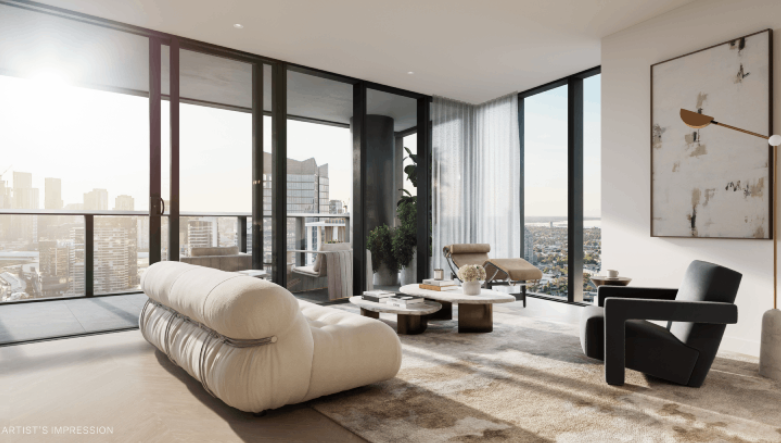
The developer also flagged a penthouse and sub-penthouse collection with larger layouts, premium finishes and broad outlooks. The planned wellness centrepiece, The Oasis, encompasses a 900-square-metre elevated urban rainforest.
Mirvac General Manager Residential Development Victoria Elysa Anderson said Trielle had resonated strongly with buyers seeking a rare lifestyle offering in Melbourne.
“Opportunities to secure a new luxury residence on a riverfront site of this calibre are incredibly rare, particularly within a community like Yarra’s Edge,” Anderson said.
“What makes Trielle unique is the combination of exceptional views, world-class residential facilities and the lifestyle that already exists around it. Residents are buying into a mature waterfront community with parks, promenades, dining, wellness and strong community connections already in place.”
The 45-level tower brings a substantial new presence to that waterfront. Its residential offering spans one-, two-, three- and four-bedroom apartments, with Signature, Prestige and Sub-Penthouse collections accommodating different household sizes. The north-facing position connects the apartments visually to the river and city beyond.
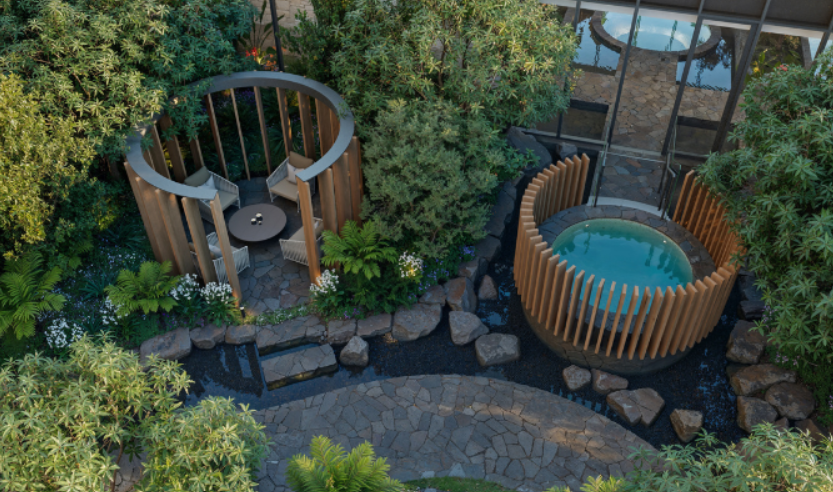
Seven storeys above the promenade, the planned Oasis combines planting and a running stream with a Scandinavian-inspired wellness club developed with spa specialist Naomi Gregory. Facilities include a 25-metre lap pool, hot magnesium pool, sauna, hydrotherapy, a gym, yoga and Pilates room, and treatment spaces.
The amenity extends beyond exercise. Residents will have access to The Biblioteca library and workspaces, ground-floor work pods, and The Salone piano lounge. A private Chef’s Table dining room offers a setting for larger gatherings, while a cinema, games room and sports lounge broaden the entertaining options. Concierge services and a dog-wash area support everyday routines.
Trielle comprises a collection of one, two, three and four-bedroom residences. Reflecting strong demand from owner occupiers, approximately 80 per cent of purchasers to date intend to live in their homes, highlighting the project’s appeal to those seeking a long-term waterfront lifestyle.
Mirvac has recently delivered The Albertine, a premium apartment development on the edge of Melbourne’s CBD, and is nearing completion of Prince & Parade in Brunswick, further strengthening its portfolio of thoughtfully designed apartment communities in some of Melbourne’s most sought-after urban locations.
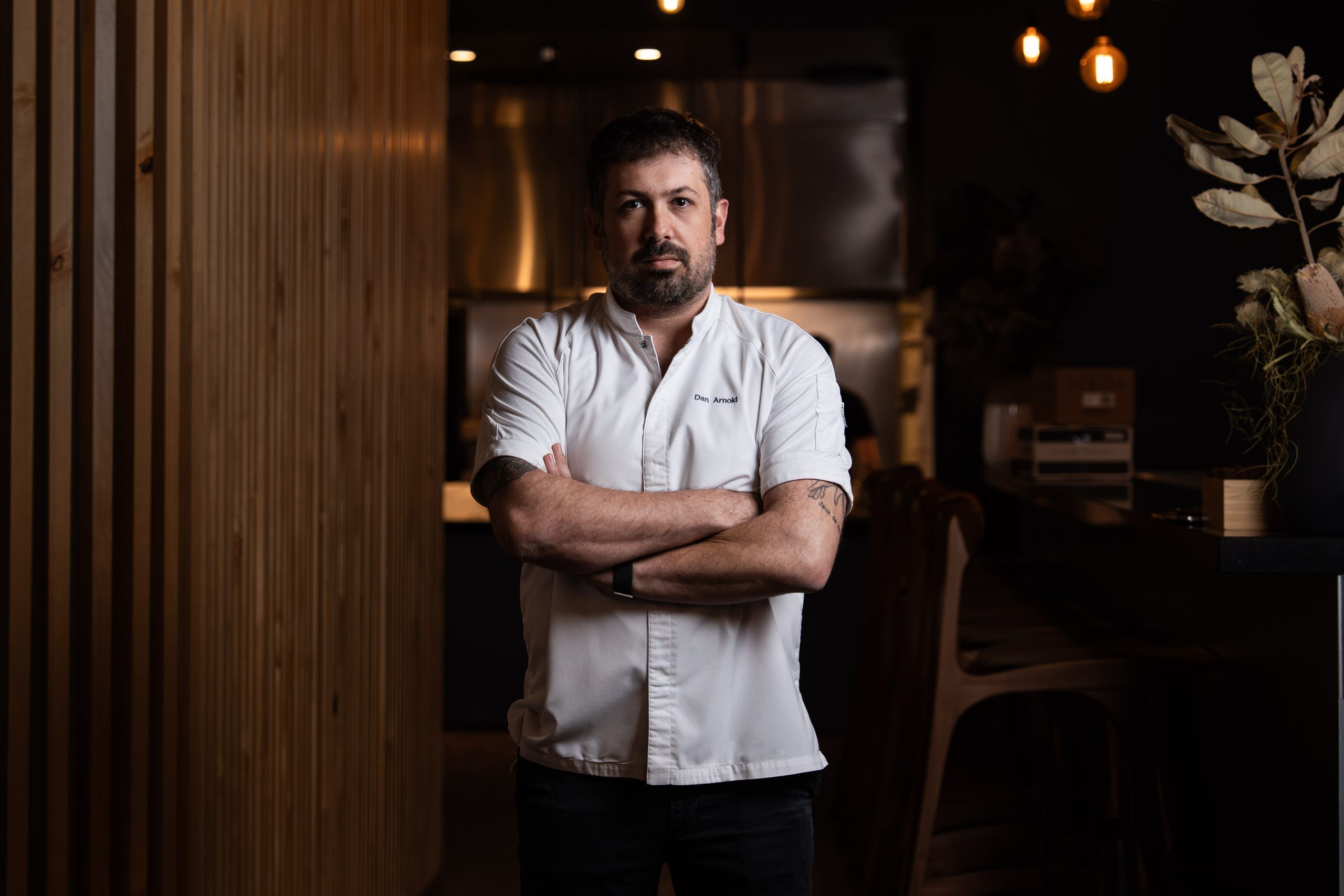
On October 2, acclaimed chef Dan Arnold will host an exclusive evening, unveiling a Michelin-inspired menu in a rare masterclass of food, storytelling and flavour.
Australia’s housing market rebounded sharply in 2025, with lower-value suburbs and resource regions driving growth as rate cuts, tight supply and renewed competition reshaped the year.