

Goodbye Bathtub and Living Room. America’s Homes Are Shrinking.
Faced with high mortgage rates, cost-constrained Americans are embracing smaller homes

 3 min

For many Americans, homeownership may be attainable only if they give up a dining room.
Home prices are near record highs, frustrating millions of potential buyers who feel priced out of the housing market. Home builders are having to find ways to make their product more affordable to increase their pool of customers.
Shrinking the size of a new single-family home is an increasingly popular way to do it. Smaller homes can help cost-constrained buyers facing high mortgage rates. They also boost the bottom line for builders who are contending with spiralling labour and construction costs.
Since 2018, the average unit size for new housing starts has decreased 10% nationally to 2,420 square feet, according to Livabl by Zonda, a listing platform for new construction homes. Construction starts for new single-family homes declined in 2022. But starts for homes with fewer than three bedrooms increased 9.5% over the same period, according to a Zillow report.
Home sizes are shrinking the most in some of the hotter markets of previous years. The Seattle area, where the size of newly built homes is 18% smaller than it was five years ago, tops the list. New homes in Charlotte, N.C., and San Antonio shrank by 14%, Livabl by Zonda said.
Most builders and architects follow the same basic playbook to produce tighter, more efficient living spaces. They are axing dining areas, bathtubs and separate living rooms. Secondary bedrooms and loft spaces are shrinking and sometimes disappearing.
At the same time, they are increasing the size of multiuse rooms like kitchens and great rooms. Shared spaces like bunk rooms and jack-and-jill bathrooms, which are located between and shared by two bedrooms, are on the rise. In some cases, the kitchen island has become the only eating area in the home.
Estridge Homes, a semi-custom new-home builder that operates near Indianapolis, recently launched a new neighbourhood concept with detached homes 300 to 500 square feet smaller and $50,000 to $75,000 cheaper than it typically builds.
The builder is slashing some bedrooms and bathrooms and trading some indoor living space for outdoor space. Lots in the neighbourhood are smaller too, but the builder is working with limited acreage by landscaping to create privacy.
Home buyers began moving in earlier this year, and demand has been strong from both entry-level buyers and empty-nesters.
Those two groups “are both big demographics,” said Clint Mitchell, chief executive at Estridge. “They kind of want the same thing.”
In December, Brad and Julie Redman downsized from their more-than 7,000 square-foot custom-built home to a 3,400 square-foot semi-custom model in Westfield, Ind., after their children left home.
Despite the smaller house and yard in a denser neighbourhood, the couple is happy with the decision. They gave up a formal dining area when they moved, but their new eating area easily converts to space for entertaining guests.
“We can use the same space for more than one thing,” Julie Redman said.
Shrinking homes are also beginning to reshape the furniture market. Companies like Bob’s Discount Furniture are creating designs suited to tighter spaces. Demand has increased for items with multiple functions, from kitchen islands with drawers and wine racks to sleeper sofas and smaller, drop-leaf dining tables, said Carol Glaser, executive vice president of merchandising at Bob’s Discount Furniture.
“If they are in smaller homes,” she said of her customers, “they need their furniture to work harder.”
Still, even smaller homes won’t make a big enough dent in the purchase price for most entry-level buyers or provide an answer to the nation’s severe housing shortage. Estridge’s semi-custom homes and townhomes, for example, still range in price between $400,000 and $800,000.
The share of new home projects priced below $400,000 has declined in nearly every major home-building metro since 2018, according to Livabl by Zonda. For entry-level buyers across the nation, the cost of owning a home increased 72% from February 2020 to May 2023, according to an analysis by John Burns Research and Consulting that estimates monthly payments, maintenance and other costs of ownership.
And the smaller floor plans usually mean that buyers are getting less space for their dollar. Lower list prices might make the overall price cheaper, but buyers are still paying more a square foot, according to the U.S. Census Bureau. Inflation-adjusted cost a square foot increased about 2.5% on average between 2012 and 2020. In both 2021 and 2022, it increased nearly 4%, according to John Burns Research and Consulting.
Builders have also ramped up activity for other cost-saving methods, like starting home construction off-site and building more attached homes. In Lexington, S.C., buyers are willing to share a wall with a neighbor when it saves thousands and makes homeownership more attainable.
Sonia Mendez, a real-estate agent in the area, said she has seen builders increase construction of 1,500 to 1,700 square-foot townhomes.
“They are being bought just as fast as the single family home,” Mendez said. “The first-time home buyers are excited. They don’t see a small home. They see it as a dream come true.”
 Copyright 2020, Dow Jones & Company, Inc. All Rights Reserved Worldwide. LEARN MORE


Unemployment hit 4.9% in October, but with inflation at 4.3% the big four aren’t tipping a February RBA cut. Here’s what CBA, Westpac and NAB say.

Dutch studio Vripack took cues from a Shirley Temple song for Lollipop, a 37.4-metre Moonen superyacht built for long-range cruising.
Unemployment hit 4.9% in October, but with inflation at 4.3% the big four aren’t tipping a February RBA cut. Here’s what CBA, Westpac and NAB say.
3 minUnemployment is at a five-year high and the talk has turned from hikes to cuts. But with inflation still well above target, the big banks aren’t ready to promise relief by February.
Three weeks ago the Reserve Bank lifted the cash rate for the fifth time this year. The conversation has now flipped.
Last Thursday the Australian Bureau of Statistics reported that the seasonally adjusted unemployment rate rose to 4.9 per cent in October, up from 4.7 per cent. That is the highest reading since October 2021. Economists had expected about 25,000 new jobs and an unchanged jobless rate.
“In October, there were 44,000 less employed people and 18,000 more unemployed people,” said Sean Crick, the ABS head of labour statistics. Youth unemployment rose to 11.3 per cent. October was also the second straight monthly fall in employment, following a drop of more than 36,000 in September.
Ahead of the RBA’s forecasts
The timing is awkward for the RBA. On 3 November its Monetary Policy Board raised the cash rate by 25 basis points to 4.85 per cent, the highest level since 2008. The vote was 6–3, with three members preferring to hold at 4.60 per cent.
The November Statement on Monetary Policy had forecast unemployment averaging 4.7 per cent in the December quarter, and reaching 4.9 per cent only at the end of 2027. October’s figure got there more than a year early.
Unemployment is also now above the RBA’s own estimate of full employment. Westpac economist Ryan Wells said in the bank’s labour force note that “slower hiring is now being compounded by more firing.” Westpac now expects unemployment to peak at 5.2 per cent by mid-2027, up from its earlier forecast of 4.8 per cent.
Markets moved quickly. Before the data, interest rate swaps had priced a 28 per cent chance of a rate rise by February. Afterwards they implied a roughly 20 per cent chance of a cut by March, with one cut fully priced by November 2027.
The inflation problem
So why isn’t anyone calling a February cut? Inflation hasn’t eased.
Headline CPI rose 4.3 per cent in the year to September, up from 4.0 per cent in August. Housing was the biggest contributor, up 5.2 per cent. Trimmed mean inflation, the RBA’s preferred underlying measure, was 3.6 per cent.
The RBA expects headline inflation to peak at 4.5 per cent this quarter. It sees both headline and underlying inflation staying above 3 per cent until the end of 2027, and not returning to the 2.5 per cent midpoint until mid-2028. The Board also flagged “the increasing risk that higher inflation expectations will become embedded.”
Wages add to the caution. The Wage Price Index rose 1.1 per cent in the September quarter, the strongest quarterly gain since late 2023, taking annual growth to 3.5 per cent. That is still below inflation, so real wages are falling, but the quarterly pace is not what a central bank trying to cool prices wants to see.
Where the banks stand
None of the big four is forecasting a cut at the February meeting. What has changed is the consensus that hikes are over.
- NAB: “We think the RBA are done,” chief economist Sally Auld said on 9 November. She pointed to weaker growth in the first half of 2026, business conditions below their long-run average and fading momentum in household spending. After the jobs data, NAB senior economist Taylor Nugent said unemployment was already well above where the RBA expected it to be this year, which supports the view that the tightening cycle is finished.
- CommBank: in its 2 November forecast update, CBA warned of a “sharper, longer slowdown”. It now expects GDP growth to fall to 1 per cent by mid-2027 and unemployment to peak at 5.1 per cent at the end of 2027. It still has two cuts pencilled in for August and November 2027, though it says the timing is uncertain.
- Westpac: sees November’s increase as the peak of the cycle and expects the Board to pause in December. It said a February move could not be ruled out but looked increasingly unlikely. That comment referred to a further hike, not a cut.
What it means for property
For borrowers, the change is that a sixth hike now looks unlikely. Relief, though, still looks like a story for the second half of 2027.
The housing market is already feeling the strain. NAB’s November Housing Monitor shows combined capital city dwelling prices fell 1.4 per cent in October, the seventh straight monthly fall. Prices are now 8.1 per cent below their March 2026 peak. Westpac cited a deeper-than-expected housing downturn as one reason it lifted its unemployment forecast.
What to watch
October CPI is released on Wednesday 25 November, and November jobs figures follow on 17 December. Both land before or around the RBA’s final meeting of the year next month. The December-quarter inflation figures in late January will then set up the February decision.
If unemployment keeps rising and underlying inflation falls faster than the RBA expects, February could become a real possibility. For now, the banks expect the RBA to hold rates where they are.
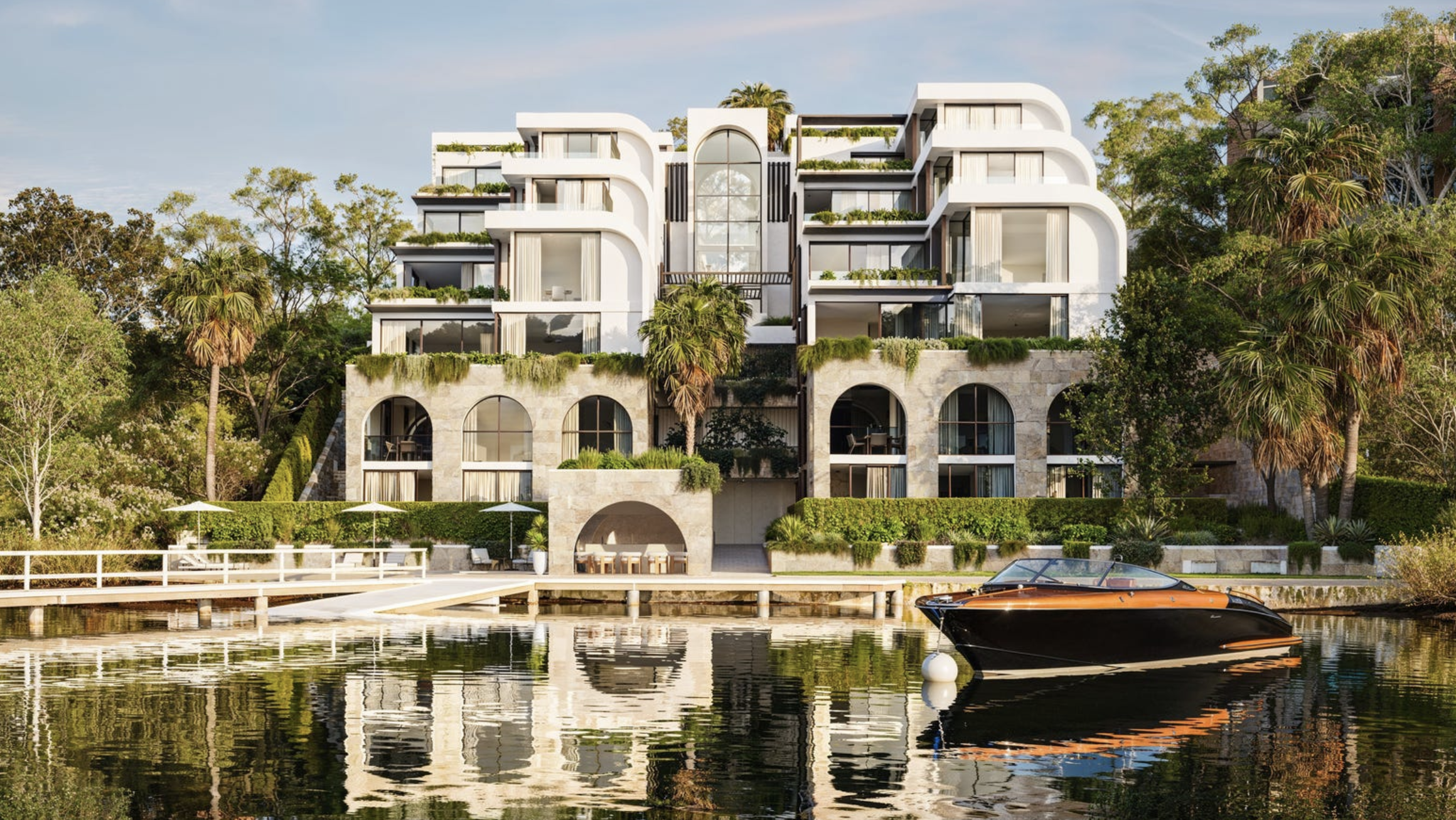
Advertising legend John Singleton unveils an exclusive 16-residence Caroline Bay development, marking his latest high-end property play on the Central Coast.

Porsche has revealed a one-off 911 GT2 RS that brings the extraordinary silhouette of its 935/78 “Moby Dick” racing car onto the road. Created by Porsche Sonderwunsch with Manthey, the commission began with a near-new GT2 RS. The owner requested greater performance, a Slantnose profile and a rear wing influenced by the limited 911 GT3 …
Continue reading “Porsche Builds a Road-Going “Moby Dick” From a 911 GT2 RS”