SINGO RETURNS WITH LUXURY WATERFRONT APARTMENTS IN GOSFORD
Advertising legend John Singleton unveils an exclusive 16-residence Caroline Bay development, marking his latest high-end property play on the Central Coast.
 2 min
2 min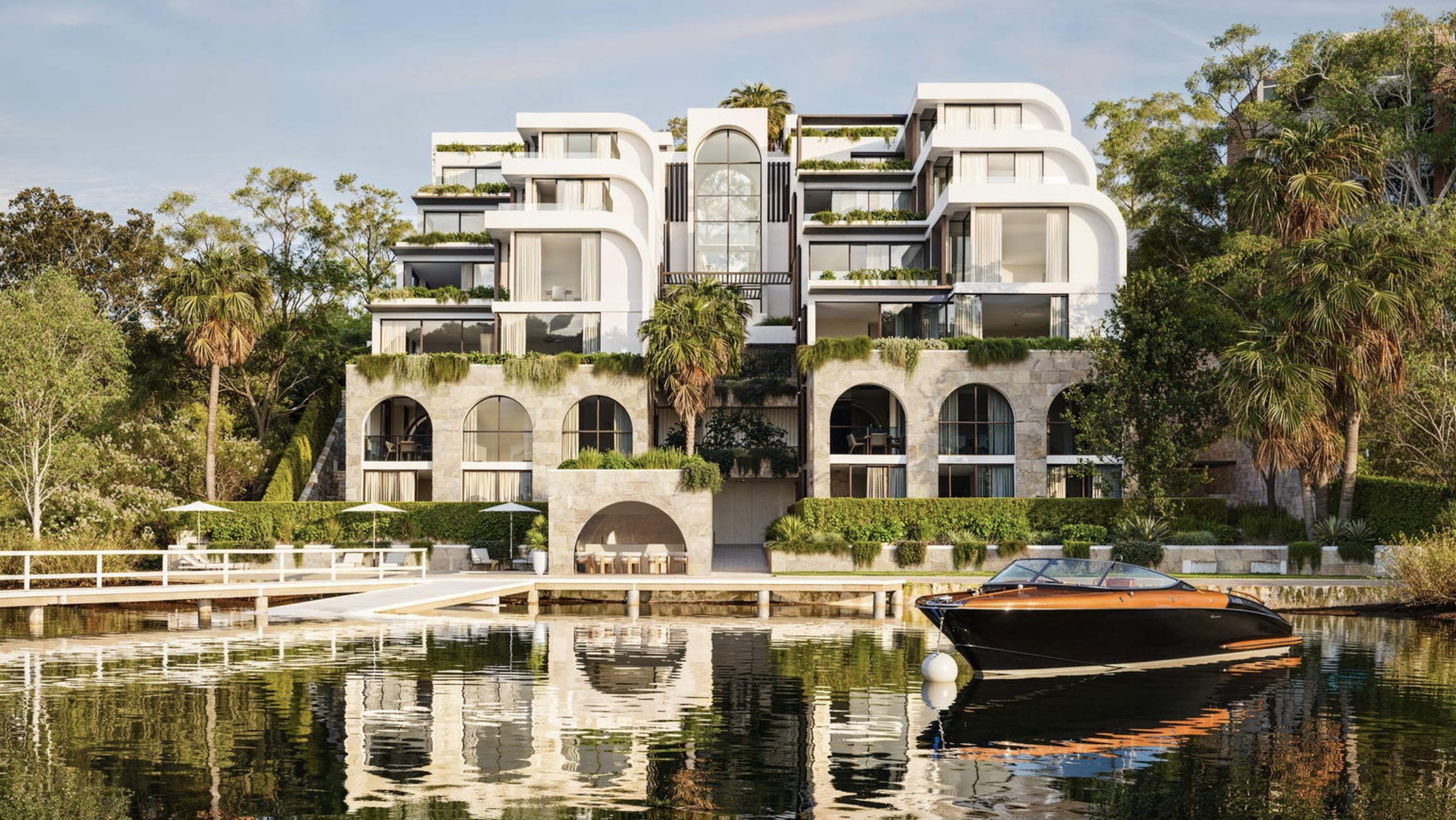
Legendary adman John ‘Singo’ Singleton has unveiled the newest project under his John Singleton Group development company.
The new project, 49Caroline, named after its location at 49 Caroline Street, will deliver just 16 luxury apartments to the Caroline Bay foreshore.
It is being developed in partnership with privately owned financier Alceon, which has a strong track record in the area, having recently completed Rumbalara Residences, a gated community comprising four buildings and 188 apartments. The project recently set a Gosford record with the sale of a penthouse for $7 million.
The 16 apartments at 49Caroline will comprise a mix of three- and four-bedroom residences, priced from $2,295,000.
The absolute waterfront development on Caroline Bay has been designed by Mosman-based architect Enrique Blanco de Cordova of deBlanco Studio.
Gittoes agents Stephen Gittoes and Richard Faulkner are marketing the project as a “once-in-a-lifetime offering on the Central Coast”.
They say each residence is “shaped by an architectural philosophy that balances timeless elegance with contemporary coastal living.
“Expansive interiors, generous outdoor terraces and floor-to-ceiling glazing invite the water into every moment. From the private jetty to the pool glistening over the bay, life here unfolds with effortless beauty and ease,” Gittoes says.
Resident amenities include a waterfront spa, pool and cabana, landscaped gardens, indoor-outdoor entertaining spaces, and a firepit alcove designed for golden-hour gatherings.
Construction firm JDC Property has been appointed to build the project.
The John Singleton Group website also references a previous project in Gosford, Bonython Tower, completed in 2019. The 56-apartment building is located on Mann Street in central Gosford.
The group has another project in the pipeline. The Lodge will be a luxury “10-star” lodge and restaurant complex at Mount White on the NSW Central Coast, adjacent to his successful Saddles restaurant and his former Strawberry Hills stud, which he sold in 2023 to John Magnier’s Coolmore Stud for more than $30 million.
The Lodge will feature a 17- to 20-room boutique hotel, designed as a series of pavilions offering premium accommodation.
Singleton is one of Australia’s most well-known advertising entrepreneurs.
e co-founded SPASM in the late 1960s. In the mid-1980s, after selling SPASM, he started John Singleton Advertising, which went on to create the campaign for Bob Hawke’s successful 1987 federal election.
He has long had an affinity with property, both commercial and residential
He owned his Paddington office compound, The Bonython (unrelated to his Gosford tower project), for five decades before selling the former art gallery space in 2024 for $33 million to Annie Cannon-Brookes, the former wife of Atlassian billionaire Mike Cannon-Brookes.

Technology and semiconductor shares fell sharply as investors questioned the debt financing the AI infrastructure boom and confronted higher rates and Chinese competition.
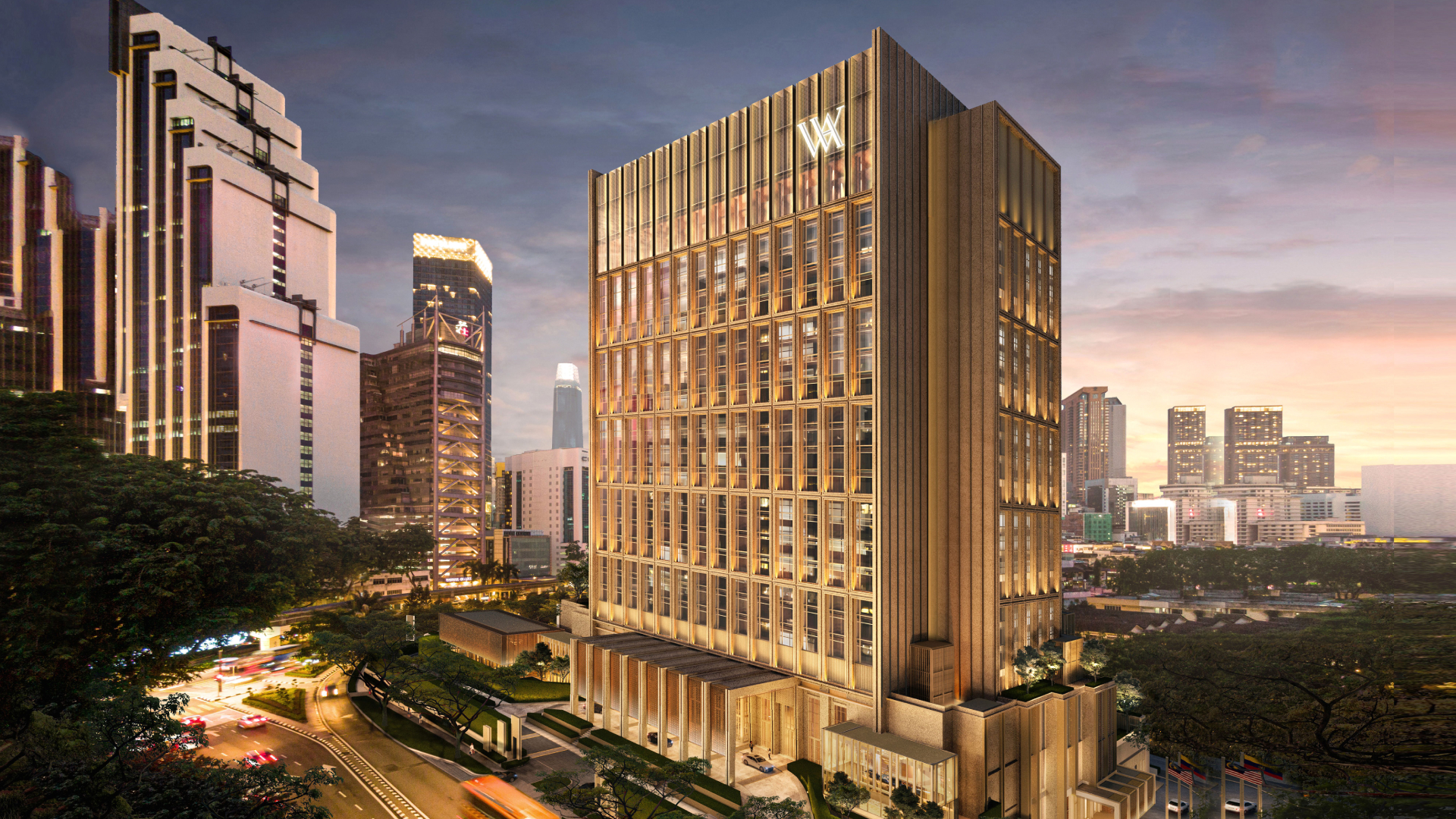
Waldorf Astoria Kuala Lumpur is scheduled to open on 30 October, introducing the Hilton luxury brand to Malaysia with an all-suite hotel in the city’s Golden Triangle.
Employment fell by 39,300 and unemployment held at a revised 4.7 per cent, giving the RBA more room to pause in November.
2 min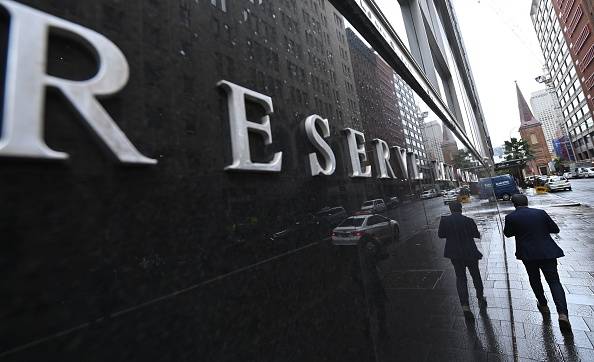
Australia’s labour market weakened in September, reducing—but not eliminating—the case for another Reserve Bank rate rise in November.
The seasonally adjusted unemployment rate was 4.7 per cent, according to the Australian Bureau of Statistics. August was revised to the same level, while September employment fell by 39,300 people. The number of unemployed Australians increased by 8,900 to 732,000.
The weakness extended beyond the headline rate. The employment-to-population ratio fell 0.3 percentage points to 63.6 per cent, participation declined 0.2 points to 66.8 per cent and underemployment edged up to 6.3 per cent. Part-time employment fell by 73,700, partly offset by a 34,400 increase in full-time work.
For the RBA, this is a clearer sign that restrictive monetary policy is cooling demand. Higher unemployment and falling employment reduce wage pressure over time and increase the risk that another rate rise would push the economy harder than necessary.
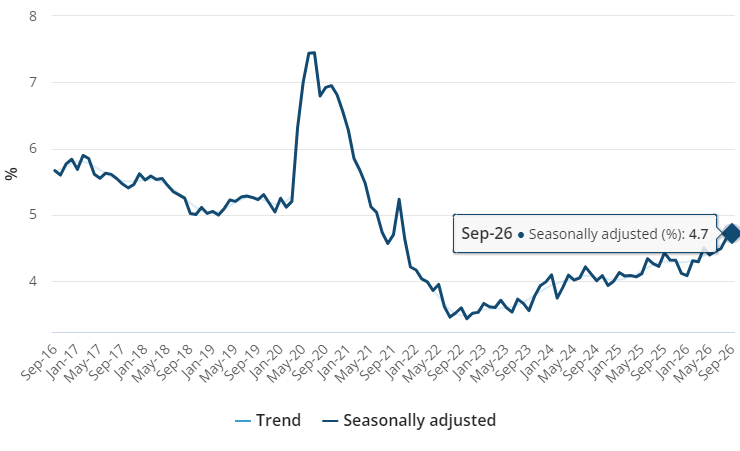
That makes a November increase less certain. It does not make a hold inevitable. The RBA must balance labour-market softness against inflation, and the September-quarter consumer price index due later in October will carry more direct weight in the decision.
For mortgage holders and property investors, the practical conclusion is not to trade one data release. Borrowers should continue testing repayments at higher rates, preserve liquidity and avoid basing a purchase on an assumed near-term reversal. Refinancing decisions should be assessed against total cost, not simply the advertised rate.
Property markets may initially welcome a reduced probability of another increase because borrowing capacity and sentiment are highly rate-sensitive. But a weakening labour market is not unambiguously positive for housing: job security supports mortgage serviceability, rental demand and buyer confidence.
The September numbers have given the RBA a credible reason to wait. Inflation will determine whether it can use it.

From farm-to-table Thai to fairy-lit mango trees and Coral Sea vistas, Port Douglas has award-winning dining and plenty of tropical charm on the side.

The Perpetual Padellone draws its name from the coveted reference 8171 while introducing an instantaneous complete annual calendar to Rolex’s modern Perpetual collection.