Americans Are All Over Europe This Summer. Here’s How to Outsmart the Crowds.
Expect even more tourists than usual in the U.K., Italy, France and wherever Taylor Swift is performing

 3 min
3 min
Who’s headed to Europe this summer? You and everybody else.
This year is shaping up to be a record one for American tourism to the Continent. The first five months of this year saw nearly 7% more trips by U.S. citizens to Europe compared with 2023, according to air traffic data from the International Trade Administration.
The crowds have continued as summer has officially kicked off. The top destinations from the U.S. to Europe this season are London, Rome, Paris, Athens and Amsterdam, according to ticket-sale data from Airlines Reporting Corp.
The European leg of Taylor Swift’s Eras tour and the Summer Olympics in Paris have given U.S. travellers extra reasons to visit. And airlines have added dozens of nonstop flights as travellers prioritise vacations abroad.
Travel executives and advisers gave the following tips to save money and headaches this summer:
Forget spontaneity
To combat the influx of visitors, major attractions like the Louvre museum have set daily visitor limits. Venice charges a five-euro fee for day-trippers on certain days through July 14, and the Acropolis in Athens now requires travellers to purchase tickets with predetermined entry times.
Travellers who don’t plan ahead can miss out on these sites, says Nora Blum, vice president at Travel Leaders in Maple Grove, Minn. “People love thinking they want to be free and to go with the flow,” but that’s inadvisable, she says.
While you’re purchasing ahead of time, Blum suggests looking into skip-the-line passes for popular attractions. They cost more but save time.
Don’t give up if the biggest draws are sold out. Instead, check for promotions from the city. In Spain, passes to the Alhambra fortress in Granada sell out quickly. But the city sells a tourist pass that guarantees entry to some of the most popular monuments, as well as trips on public transit.
Barcelona, Rome and the Greek island of Santorini are among the destinations with popular cruise ports. They list scheduled cruise arrivals and the number of passengers on board. Checking the schedule, even if you’re not on a cruise, can help you plan your day to avoid long waits and big crowds, says Margi Arnold, owner of Creative Travel Adventures in Denver.
She suggests getting up early to visit the most popular attractions or traveling to areas that are harder to reach during day trips.
Dinner reservations often make sense in crowded tourist cities, especially for families or larger groups. Some veteran travelers recommend downloading WhatsApp. Many restaurants will correspond over the free messaging app regarding reservations.
Prep for disruptions
It’s common for rail and airport workers to strike . These actions are announced in advance, so travel advisers suggest checking schedules ahead of time to see how you might be affected.
Regardless of strikes, delays can occur because of air-traffic control, weather or other scheduling issues. Before you depart, download relevant apps for flights and trains and sign up for alerts so schedule changes don’t catch you off-guard.
International airports are no place for cutting it close, since options for expedited security screening are limited. Travellers can reserve a time to go through security at six international airports through Clear Reserve , a free service. London Heathrow and Frankfurt Airport in Germany are some of the airports that take reservations.
And read up on rules for liquids. Heathrow requires travellers to remove liquids and put them in clear, resealable bags provided at the checkpoint.
When you return to the U.S., try using mobile passport control , a free app that lets you speed up entry into the country. Travel advisers also recommend taking photos of your passport in case it gets lost.
Keep the heat in mind
Europe is facing another scorching summer. Check whether your lodging has air conditioning—it isn’t a standard offering in many regions, says Arnold, the travel adviser.
Travellers should also bring water bottles and plan breaks indoors during the hottest parts of the day, she says.
Check your health insurance policy
Medicare and Medicaid don’t cover international medical bills. Some private insurances won’t cover all expenses, either.
Before you depart, check your policy and consider buying travel health insurance to avoid pricey charges in a medical emergency.
Bring the right credit card
Travel with a credit card that doesn’t charge foreign transaction fees. Many cards can add charges of 3% or 4% per transaction.
Not every vendor accepts American Express , though it is becoming more available in Europe.
Consider the Olympics
It isn’t too late to attend the Paris Olympics, though it’s not necessarily a cheap ticket. About 30% of hotel rooms in Paris are still available, according to Hotels.com, with the average rate of $455 a night during the Olympics. In Paris, available nightly rates for short-term rentals are averaging $481 a night during that stretch, according to AirDNA, a market-research firm.
Each Thursday, new Olympics event tickets go on sale at 10 a.m. local time—yes, that’s 4 a.m. Eastern—as part of a promotion called Ticketing Thursday. There are also official resale tickets available .
 Copyright 2020, Dow Jones & Company, Inc. All Rights Reserved Worldwide. LEARN MORE




From making unpopular decisions to learning when to listen, leaders from five businesses reveal what nobody prepared them for — and how running a company has challenged their expectations.

Technology and semiconductor shares fell sharply as investors questioned the debt financing the AI infrastructure boom and confronted higher rates and Chinese competition.
From candy corn and licensed costumes to pop-up Halloween shops and haunted houses, some of October’s most iconic traditions began as simple ideas from entrepreneurs and small businesses before evolving into major commercial phenomena. In 2025, Halloween grew into a $13.1 billion consumer business, driven in part by these innovations.
6 min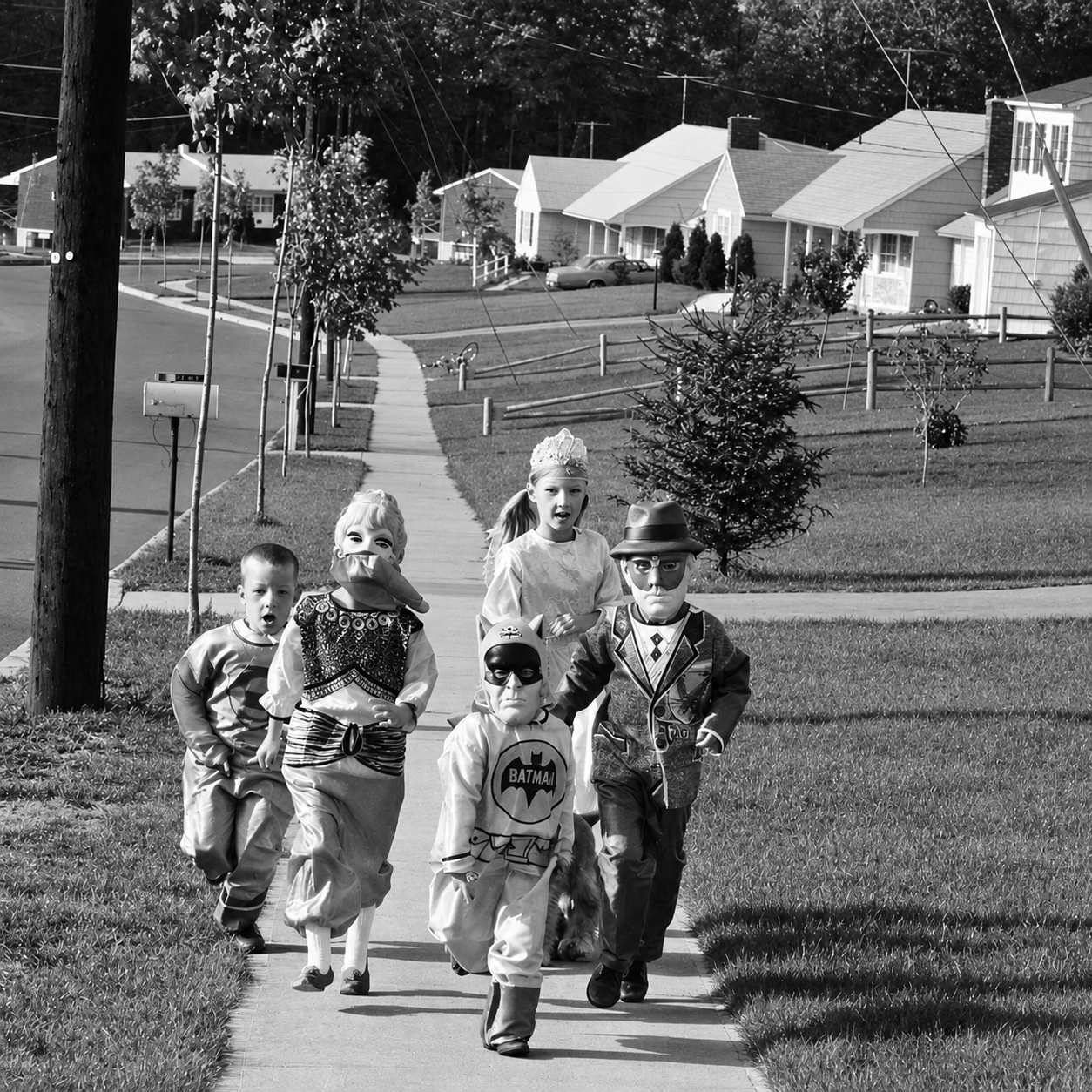
Candy Corn. Haunted houses. Seasonal spectacles that now seem inseparable from October.
Many of Halloween’s biggest mainstays started much more modestly—as ideas from entrepreneurs and small businesses that caught on, spread and eventually became traditions. Along the way, they helped turn Halloween into a $13.1 billion consumer business in 2025.
Here is a look at four of the most popular creations, and how they got their start.
Candy Corn
One of the most inescapable Halloween treats—Candy Corn—wasn’t marketed as a Halloween goody at first. In fact, it was marketed as a whimsical candy version of chicken feed.
It was created back in the 1880s in Philadelphia, which was then a candy-making hub. One popular trend among candy companies was nature: treats inspired by the agricultural world, like pumpkins, leaves and chestnuts.
Among those businesses was Wunderle Candy, owned by a family of German immigrants. (Milton Hershey worked there before he founded his chocolate business.) One Wunderle employee, George Renninger, came up with the idea of a candy shaped like corn kernels—but also took the innovative step of applying different layers of colors to the treats.
The process involved pouring layers of hot liquid sugar into tiny molds by hand. “It was laborious,” says Beth Kimmerle, founder and chief executive of Attribute Analytics and author of three books about candy.
The unusual color scheme gave the candy instant appeal. And, yes, it was marketed as faux chicken feed at the start: “an agricultural-themed novelty and penny candy that appeared throughout the year,” Kimmerle says.
How did the corn get associated with Halloween? At the turn of the last century, another candy company, Goelitz Confectionery, also began selling the treat. Kimmerle says it isn’t clear what kind of arrangement—if any—the two companies had about the rights to the candy. But, in the end, Goelitz usually gets the credit for scaling the candy and branding it as a Halloween product.
As for Wunderle, Kimmerle says, the business wound down in the 1980s, while Goelitz was eventually renamed Jelly Belly in 2001, and acquired by Ferrara Candy in 2023. (Another Ferrara brand, Brach’s, has also been selling candy-corn treats since the 1920s; Ferrara says that it doesn’t have information showing a licensing agreement between the companies.)
Candy Corn has not only become immensely popular in itself, but also has lent its colors and flavors to countless other products. This year, Brach’s launched a limited-edition fragrance, Ode to Candy Corn, which “smells exactly like how candy corn tastes,” according to the company.
Licensed costumes
Dressing up as your favorite fictional figure is a Halloween tradition. Entrepreneur Ben Cooper made it a lot easier for people to get into character—by making licensed costumes a big business.
In the 1930s, Cooper sold costumes for vaudeville, says Rob Caprilozzi, founder of the Horror News Network website, who recently made a documentary about Cooper. In 1937, the entrepreneur—whose company was simply called Ben Cooper Inc.—bought another company, A.S. Fishbach, which had the license to manufacture costumes of Disney characters.
Cooper added more costumes as new Disney movies came out, as well as updating the old ones, Caprilozzi says. In the 1960s, he expanded his line to superheroes—including Spider-Man and Batman—and then turned to “Sesame Street” and “Star Wars” characters in the 1970s.
“At its height, the company controlled 80% of the licensed custom characters,” says Caprilozzi.
And it wasn’t just fictional heroes, either: Cooper had a line of costumes based on U.S. presidents. (The company destroyed its JFK inventory after the assassination, says Caprilozzi.)
One of the selling points of Cooper’s costumes was simplicity. The costumes were just plastic masks and tarps costing a few dollars apiece, and you could toss them out after the big night—no need to hang onto them year-round.
The company lasted until 1992, when it filed for bankruptcy and was then acquired by competitor Rubie’s Costume. (The company, now known as Rubies, didn’t respond to requests for comment.)
Halloween pop-up shops
Joseph Marver didn’t change what we wear for Halloween, the candy we eat or the type of decorations we put up. But he revolutionized where we buy all that stuff.
Marver was running an apparel store called Spirit Women’s Discount Apparel in Castro Valley, Calif. October sales were historically slow, but he noticed sales booming at a costume shop across the street. According to media accounts, the other store changed locations, and Marver in 1983 decided to get into the Halloween business himself. He put his usual wares into storage and turned his store into an emporium for Halloween merchandise.
“I went to a trade show in Chicago, picked up everything I could that had to do with Halloween, and put it in my store, and it was amazing,” Marver told San Francisco Bay Area radio station KQED in July 2024. (He died in 2025.)
“His sales went through the roof,” says Lisa Morton, author of “Trick or Treat: A History of Halloween” and “The Halloween Encyclopedia.”
Marver doubled down on the gambit the following year—renting out a temporary space in a local mall to sell all types of Halloween products for eight to 10 weeks, from costumes to decorations to face paint. At the time, retail leases typically lasted a decade, and it was difficult for newcomers to land a lease, let alone a temporary one, says Barbara Kahn, a professor at the University of Pennsylvania’s Wharton School.
In the interview with KQED, Marver described his initial difficulties. “Some of the people in the strip centers wanted to have the big boxes come in, but then, some of them realized it [was] not going to happen,” he said. So the malls agreed to take on the pop-ups, figuring, “‘Let’s do Halloween. Let’s get something going. Maybe it’ll bring business to the other tenants.’”
Over the next 16 years, Marver grew his business to 60 temporary retail outlets and changed its name to Spirit Halloween. His company spent the rest of the year preparing for the season, handling jobs like sourcing costumes and identifying potential real estate.
In 1999, Spencer Gifts bought the company; Marver stayed on as a consultant, then opened a hotel. Today, Spirit Halloween operates about 1,500 seasonal stores across the U.S. and Canada.
“I didn’t invent temporary sales,” Marver told the Seattle Times in October 2022, “but I feel like I invented temporary Halloween.”
Haunted houses
Walter Knott became famous as the founder of amusement park Knott’s Berry Farm, which has been in operation for about 80 years. But he and his marketing team also invented the large-scale, commercial haunted house.
People had been putting up private, informal haunted houses for years. Charitable organizations also set up the houses to raise funds, says Benjamin Gagne, president of the Haunted Attraction Association and owner of the Thirteenth Hour haunted attraction in Indianapolis.
But Knott’s Scary Farm Halloween event in 1973 was a first, a large-scale commercial setup designed to boost ticket sales during an otherwise slow season, says M. Stang, Ainsworth Visiting Scholar of American Culture at Randolph College in Lynchburg, Va.
Full-page advertisements flooded Orange County and Los Angeles County newspapers, promising entry to the “spookiest, ghouliest place in Southern California” for just $4. The print ads promised “bizarre, spooky antics,” a “fun-tingling plunge through Satan’s sawmill,” and “LIVE MONSTERS,” Stang wrote in a paper about the attraction.
The park also distinguished itself by having people in costumes provide the scares, says Gagne. Previously, amusement parks, including Disney, had what Gagne calls “dark carny rides,” where patrons rode around in carts, and mirrors and lighting created the mood.
The Scary Farm turned into an annual tradition. Knott’s is still running the Halloween attraction—which is open for 26 nights this season.

Pure Amazon has begun journeys deep into Peru’s Pacaya-Samiria National Reserve, combining contemporary design, Indigenous craftsmanship and intimate wildlife encounters in one of the richest ecosystems on Earth.

The PG rating has become the king of the box office. The entertainment business now relies on kids dragging their parents to theatres.