The significant retirement cost awaiting more Australian homeowners
Experts say it’s the reason additional superannuation payments are so important
 2 min
2 min
An increasing number of Australians expect to still be paying off a mortgage or renting in retirement, a new survey by superannuation provider Vanguard shows. The findings mirror trends revealed by the Australian Institute of Health and Welfare last year. The AIHW says homeownership rates are gradually decreasing among people nearing retirement. Since 1996, homeownership among 50 to 54-year-olds has fallen from 80 percent to 72 percent in 2021, according to Census data. The number of people aged 55 or older who are renting also rose from 17.5 percent in 1996 to 20.6 percent in 2021.
Vanguard’s How Australia Retires report shows nearly one in three working Australians today expect they will still be paying off their home loans in retirement. The expectation is higher among younger generations, with 45 percent of Gen Zs (aged 18 to 27 years) expecting to be doing so compared to 29 percent of millennials (aged 28 to 42), 32 percent of Gen Xers (aged 43 to 57) and 17 percent of baby boomers (aged 58 to 77).
Vanguard says almost one in five retirees today are renting and 8 percent are still paying off a home loan. The likelihood of retiring with a mortgage or renting is significantly higher for those who are not in a relationship compared to those with a partner, at 31 percent and 8 percent, respectively.
Achieving debt-free home ownership is especially important given so many Australians intend to remain in their homes as long as possible. The survey found 56 percent of retired Australians and 46 percent of workers want to remain in their family home for life and/or want to pass it on to relatives in their Wills. This suggests holding onto the family home in retirement is a priority, even if that means continuing to pay interest on debt.
Daniel Shrimski, Managing Director of Vanguard Australia, said housing tenure was a “sleeper issue”in retirement.
“Housing is either the largest or second largest asset held by Australian households, so it’s also one of the most important contributors to a secure retirement,” he said. “We tend to presume we’ll be homeowners and mortgage free – but having unresolved debt or needing to draw down on savings to pay rent is likely to be a big financial burden for many, especially if full-time paid work is no longer an option.”
Mr Shrimski said this is why it’s so important for Australians to prioritise superannuation savings, yet 49 percent of workers have not made additional contributions to their superannuation and 27 percent have no intention of doing so, despite the generous tax concessions available. The report also found less than one–third of workers felt confident in their understanding of superannuation.
Many Australians intend to use at least part of their super to pay off mortgage debt. The survey asked Gen Xers – the next generation to retire – about their plans to pay off their mortgage. About 38percent said they intend to keep paying their mortgage through retirement, while 25 percent intend to use their super to pay it off in one hit.

From making unpopular decisions to learning when to listen, leaders from five businesses reveal what nobody prepared them for — and how running a company has challenged their expectations.

Technology and semiconductor shares fell sharply as investors questioned the debt financing the AI infrastructure boom and confronted higher rates and Chinese competition.
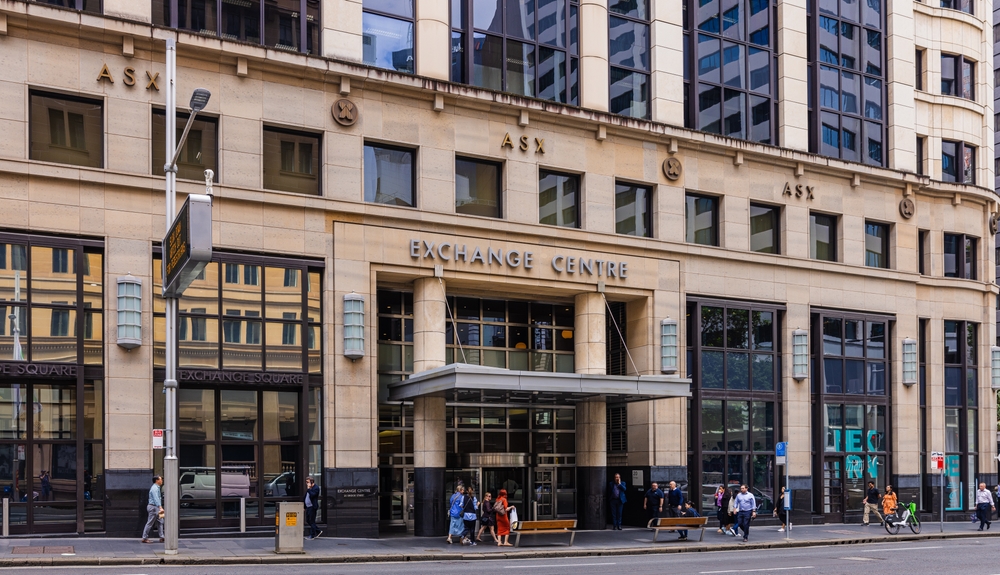
Mirvac’s 45-level Trielle has topped out at Yarra’s Edge, pairing riverfront apartments with wellness facilities, private dining and resident services.
3 min
Mirvac has topped out Trielle at Melbourne’s Yarra’s Edge, with more than 70 per cent of the riverfront development sold and approximately 80 per cent of purchasers intending to make their apartment a home.
The figures, released on September 22, point to an owner-occupier audience for one of the precinct’s final residential towers. Mirvac began developing Yarra’s Edge in 2003, and its latest addition occupies one of the remaining absolute riverfront sites.
Mirvac CEO of Development Stuart Penklis said existing residents were among those moving up within the neighbourhood.
“Many purchasers already have a connection to Yarra’s Edge,” Mr Penklis said, describing buyers whose changing needs were encouraging an upgrade within the precinct.
“As one of the final residential towers within Yarra’s Edge, Trielle represents the culmination of more than two decades of creating one of Melbourne’s most established and sought-after waterfront communities,” Penklis said.
“Positioned on the Collins Street axis with absolute river frontage, Trielle offers residents a rare opportunity to enjoy sweeping views across the Yarra River, Melbourne skyline and Port Phillip Bay, while remaining seamlessly connected to the CBD. With Trielle now more than 70 per cent sold, we’re continuing to see strong demand from buyers seeking quality homes in established locations.”
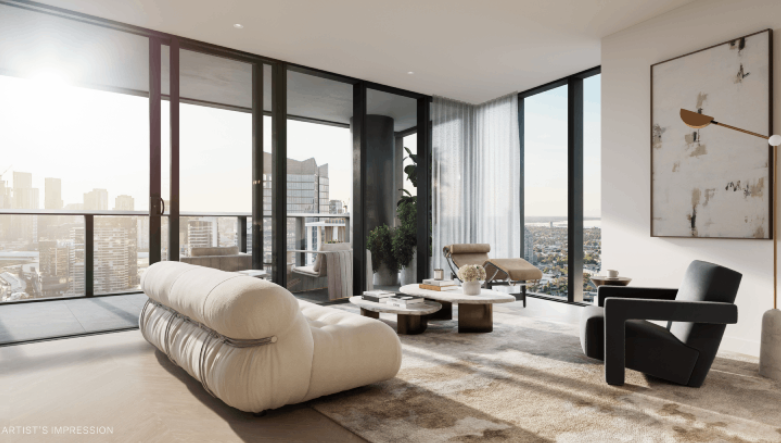
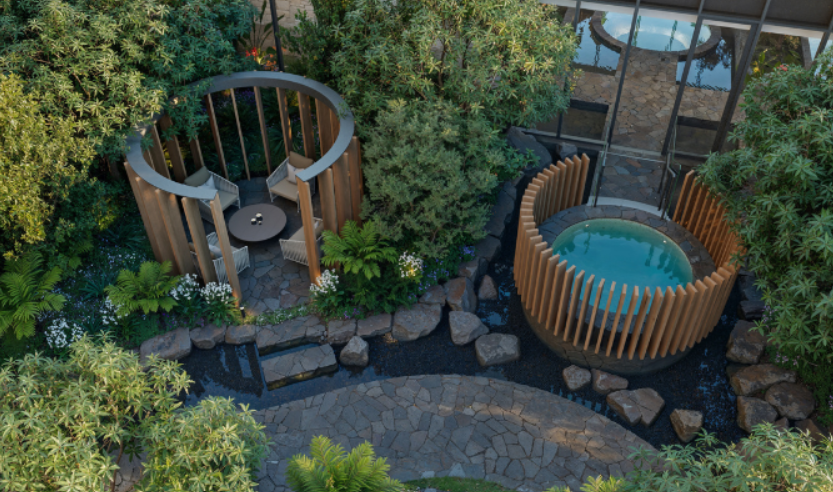
The developer also flagged a penthouse and sub-penthouse collection with larger layouts, premium finishes and broad outlooks. The planned wellness centrepiece, The Oasis, encompasses a 900-square-metre elevated urban rainforest.
Mirvac General Manager Residential Development Victoria Elysa Anderson said Trielle had resonated strongly with buyers seeking a rare lifestyle offering in Melbourne.
“Opportunities to secure a new luxury residence on a riverfront site of this calibre are incredibly rare, particularly within a community like Yarra’s Edge,” Anderson said.
“What makes Trielle unique is the combination of exceptional views, world-class residential facilities and the lifestyle that already exists around it. Residents are buying into a mature waterfront community with parks, promenades, dining, wellness and strong community connections already in place.”
The 45-level tower brings a substantial new presence to that waterfront. Its residential offering spans one-, two-, three- and four-bedroom apartments, with Signature, Prestige and Sub-Penthouse collections accommodating different household sizes. The north-facing position connects the apartments visually to the river and city beyond.
Seven storeys above the promenade, the planned Oasis combines planting and a running stream with a Scandinavian-inspired wellness club developed with spa specialist Naomi Gregory. Facilities include a 25-metre lap pool, hot magnesium pool, sauna, hydrotherapy, a gym, yoga and Pilates room, and treatment spaces.
The amenity extends beyond exercise. Residents will have access to The Biblioteca library and workspaces, ground-floor work pods, and The Salone piano lounge. A private Chef’s Table dining room offers a setting for larger gatherings, while a cinema, games room and sports lounge broaden the entertaining options. Concierge services and a dog-wash area support everyday routines.
Trielle comprises a collection of one, two, three and four-bedroom residences. Reflecting strong demand from owner occupiers, approximately 80 per cent of purchasers to date intend to live in their homes, highlighting the project’s appeal to those seeking a long-term waterfront lifestyle.
Mirvac has recently delivered The Albertine, a premium apartment development on the edge of Melbourne’s CBD, and is nearing completion of Prince & Parade in Brunswick, further strengthening its portfolio of thoughtfully designed apartment communities in some of Melbourne’s most sought-after urban locations.

Odd Culture Group brings a new kind of after-dark energy to the CBD, where daiquiris, disco and design collide beneath the city streets.

Margot Robbie and Jacob Elordi star in an adaptation of the classic novel that respects the romance’s slow burn.