The surprising impact of southern buyers on the Gold Coast property market
The national hotspot for pandemic migration, expectations on the Gold Coast have now risen as newly settled southern buyers seek high-calibre homes with luxury features and next-level amenities
 5 min
5 min
From the Winter 2024 issue of Kanebridge Quarterly magazine. Order your copy here.
Thirty years ago, the idea that South East Queensland — and in particular the Gold Coast — would be one of the hottest prestige property markets in the country would have raised more than a few eyebrows.
But a new level of affluence led by the post-COVID domestic migration from the southern states means the cultural cringe once associated with the region is all but gone, with a deluge of luxury developments complete with top-end features and inclusions creating what is fast becoming a high-end, high-median market.
Figures from the Australian Bureau of Statistics show that between June 2020 and June 2021 — the height of COVID lockdowns in the southern states — more than 90 percent of net interstate migration (or around 31,000 people) was to Queensland. And the population growth is showing no signs of slowing down. Queensland’s Department of State Development and Infrastructure expects the state’s population to boom during the next 20 years, from 5.4 million to an estimated 8 million by 2046.
This influx of people has, unsurprisingly, meant a distinct change in the state’s property market with research from Ray White showing the top five percent of Brisbane’s housing market – homes priced at $1.8 million or more – have grown by 213 per cent in the past 10 years, outperforming the growth of an average-priced house in that time.
An hour down the Pacific Motorway, things aren’t much different. In the space of a generation, the Gold Coast has gone from quaint (and quiet) beachside strip to family holiday destination and now, according to the figures from the Real Estate Institute of Queensland (REIQ), one of SEQ’s million-dollar addresses.
Previously only a position held by Brisbane and Noosa, the Gold Coast took its place on the podium late last year, hitting the million-dollar median mark for house prices for the first time in the December 2023 quarter.
“In lifestyle locations like the Gold Coast, that just surpassed a $1 million house median, most of the stock coming to market is set to cater to luxury living, further perpetuating a high-end, high median market,” says REIQ CEO Antonia Mercorella.
“Interstate buyers are moving to Queensland to chase a better lifestyle and as such, they’re seeking homes that are reflective of the outdoor Queensland lifestyle, with exterior living areas such as balconies, patios and verandas, ideally with the property having a pool on site.”
The Gold Coast is home to Queensland’s three most expensive streets with data from Ray White revealing Hedges Avenue in Mermaid Beach (nicknamed Multimillionaire’s Row by locals), Edgecliff Place in Hope Island and Admiralty Drive in Surfers Paradise, hold the top three spots with median buy-ins of $10.5 million, $6.675 million, and $6.119 million respectively.
Following significant gains during the pandemic, the belief was the South East Queensland property market would tail off significantly, as demand, particularly from the southern states, waned.
But contrary to expectations, there’s no sign of demand slowing down, with interstate buyers still heading north in droves, enticed by five-star features and a beach lifestyle, as Sydney and Melbourne luxury beachfront properties are perceived as increasingly high-cost options. SEQ and northern NSW developers and architects have responded in kind with some of the country’s most exciting and luxurious new residences popping up along the glitter strip including the billion-dollar Jewel Residences at Broadbeach; Burleigh Heads’ much-anticipated Mondrian Residences, and the 38-level Royale in the heart of Surfers Paradise, due for completion in 2025 and featuring six-star lifestyle amenities across the first two floors of the development.
Brent Thompson’s Siera Property Group, who have projects on Chevron Island and further south in Bilinga, are developing Enderley which features 54 apartments across a 25-level, BDA Architecture-designed tower in Surfers Paradise, with a maximum of three apartments per floor.
“The forecast for 2024 in the Gold Coast looks promising, as there is a projected sustained demand,” says Thompson.
“This surge is fuelled by a specific demographic: homeowners aiming to enrich their way of life. These buyers typically seek hassle-free accommodation, like premium apartments, that complement their pursuit of a higher quality of living.

“The allure of the Gold Coast lies in its abundant natural attractions such as beaches, eateries, and seamless transportation options, combined with artificial amenities like wellness centres, rooftop pools, and exclusive dining venues, making it an enticing choice for these purchasers.”

On the Gold Coast’s northern fringe, veteran developer Lewis Land Group are behind Harbour Shores, a $1.5 billion masterplan in Biggera Waters which has already secured a 6 Star Green Star Communities V1.1 rating from the Green Building Council of Australia, making it the Gold Coast’s highest-rated Green Star Community.
“There’s more cranes on the Gold Coast at the moment than I’ve ever seen before,” says Amir Mian, principal and managing director of Gold Coast-based luxury real estate agency Amir Prestige.
Mian, who recently sold a $24 million tri-level penthouse in Burleigh Heads’ Glasshouse development, says buyers — particularly those moving to the region from Sydney and Melbourne — are increasingly looking for high-end inclusions such as wellness features and work-from-home amenities that go beyond a spare bedroom-turned-office space.
“What we’re finding is that buyers coming into the northern NSW and Gold Coast markets are looking for those luxury inclusions, whether they’re buying an apartment or a house,” he says.
“In homes, we’re seeing Palm Springs and Hamptons-inspired designs with amazing gardens, high-end finishes and, of course, pools and huge outdoor entertaining areas to take advantage of our climate.”
Adrian Parsons, managing director of Gold Coast-based project marketing firm Total Property Group (TPG), has seen buyer demand for high-calibre luxury homes erupt recently.
He says the post-COVID migration has had a dramatic effect on the quality of properties coming to market in SEQ and, for developers, has even changed the direction of their development, with a focus on more space.
“Traditionally developers would be building smaller apartments here to suit investors, but we’ve well and truly transitioned from that with spacious, high-end luxury apartments designed for interstate residents and their families moving here permanently,” he says.

“One of the things we’re seeing in new developments are these next level work-from-home facilities — we’re talking co-working spaces and business centres so people can still work from home, but they’re not confined to a home office space or spare bedroom.”
Not surprisingly, wellness features such as pools, saunas, steam rooms, gymnasiums and cold plunge pools are also on the must-have list.
“Many of these new leading landmark developments in SEQ are taking a lot of their cues from luxury hotels when it comes to amenities — think wellness zones, private dining rooms, residents’ bar areas and rooftop pool and BBQ areas,” says Parsons.
“The Gold Coast is maturing; it’s not embarrassing to want to live here anymore.”
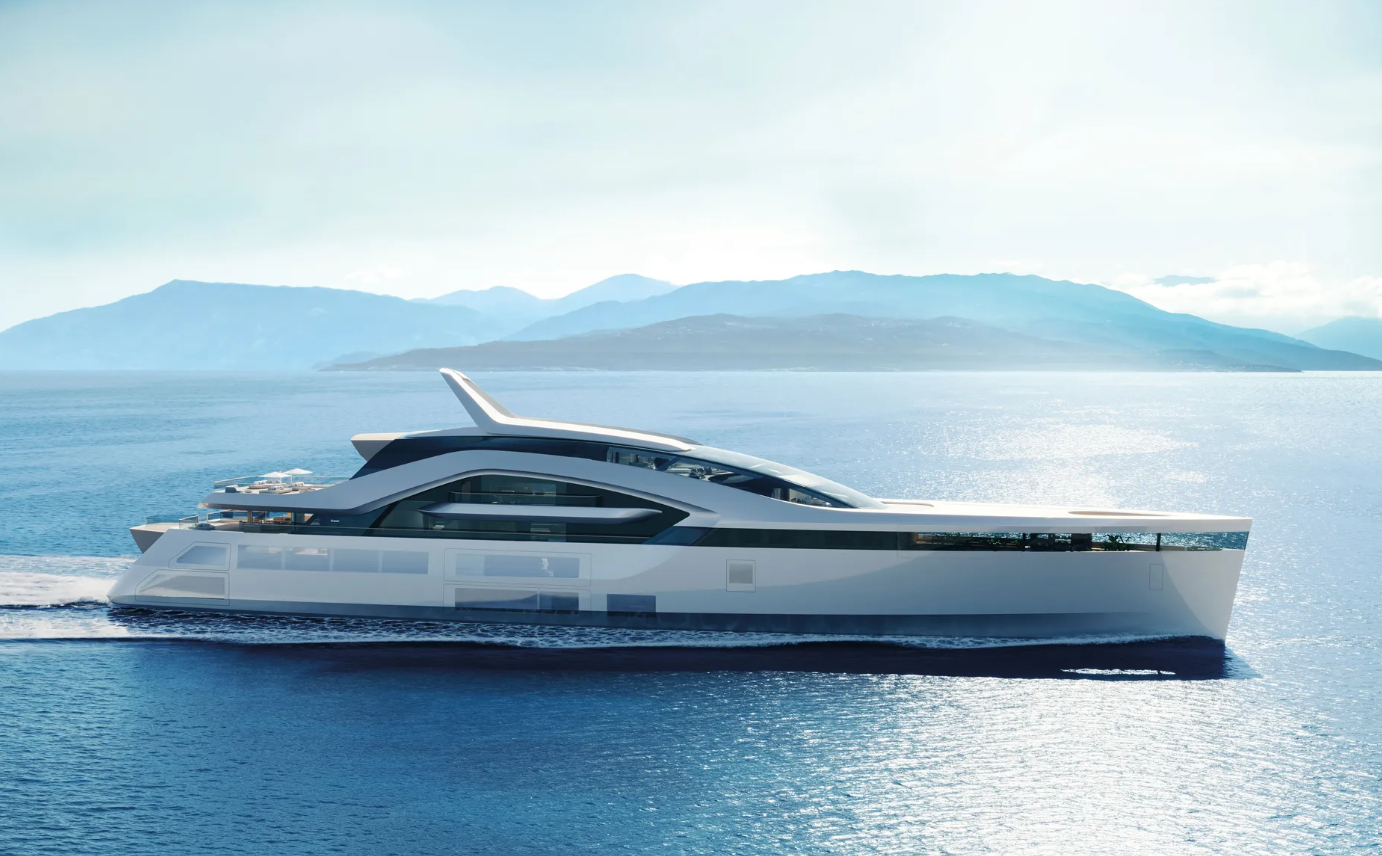
On the owner’s deck, a 20-metre swimming pool incorporates Feadship’s patented ContraWave technology and extends indoors as a suspended, glass-bottomed infinity pool.

Automobili Lamborghini is turning its attention to something considerably more difficult to define: what makes Italian excellence uniquely Italian?

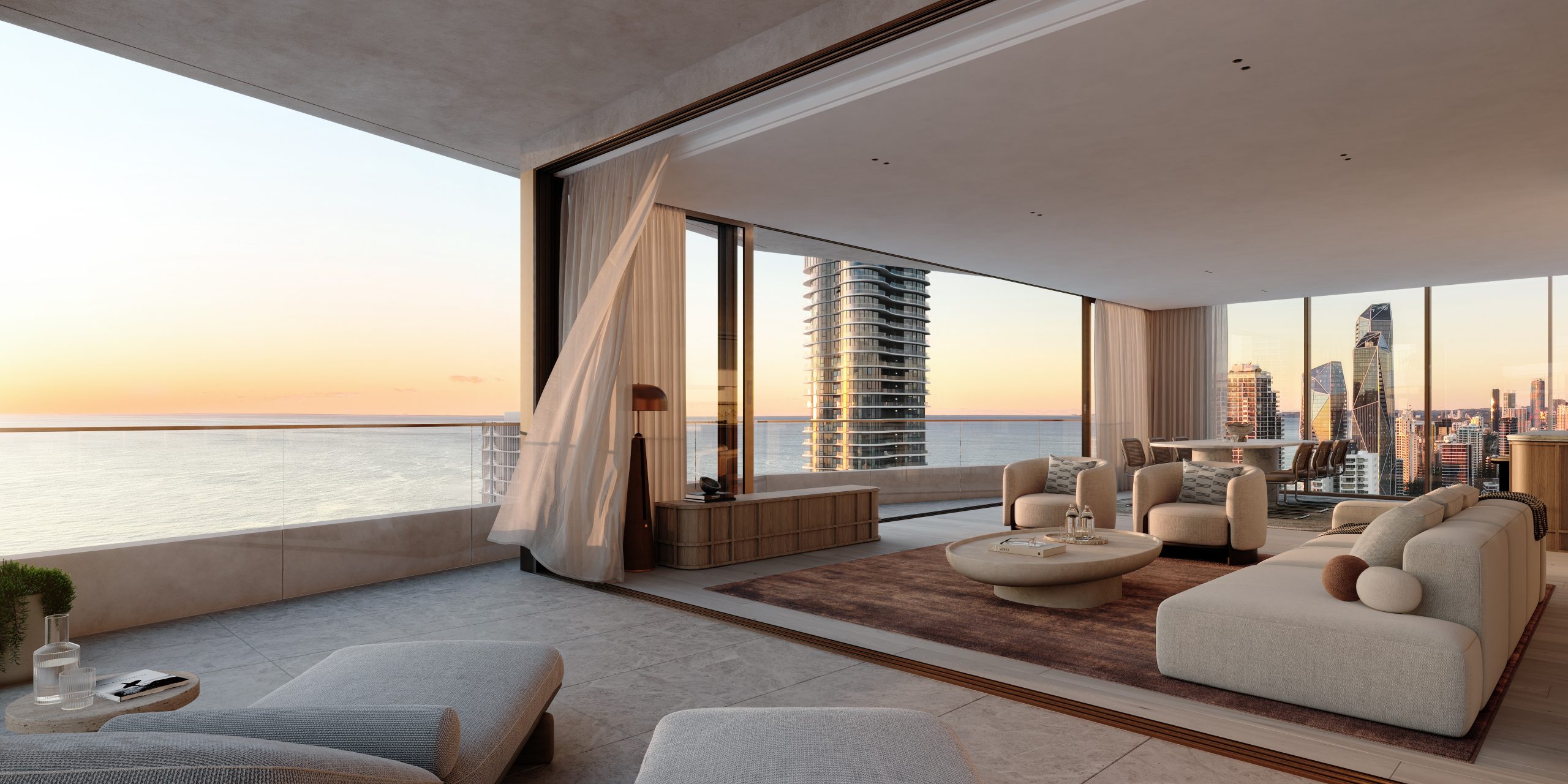
Mirvac’s 45-level Trielle has topped out at Yarra’s Edge, pairing riverfront apartments with wellness facilities, private dining and resident services.
3 min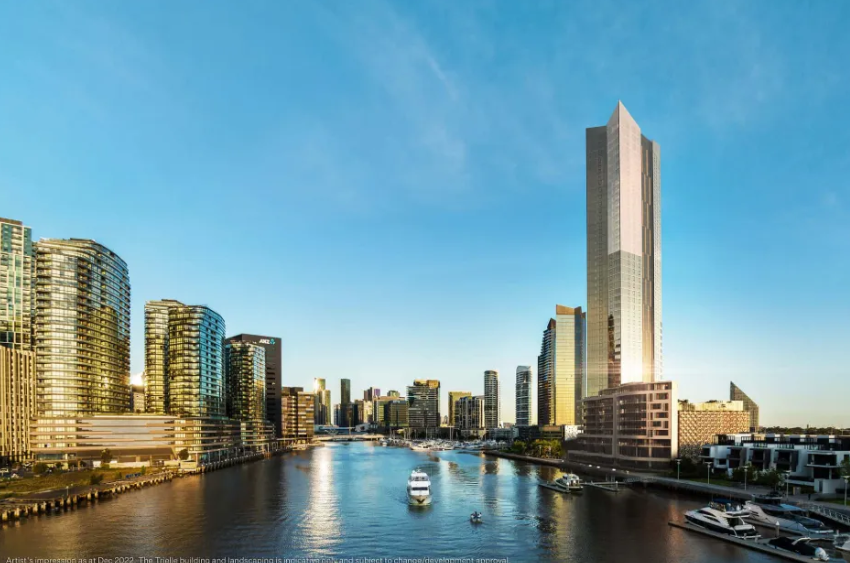
Mirvac has topped out Trielle at Melbourne’s Yarra’s Edge, with more than 70 per cent of the riverfront development sold and approximately 80 per cent of purchasers intending to make their apartment a home.
The figures, released on September 22, point to an owner-occupier audience for one of the precinct’s final residential towers. Mirvac began developing Yarra’s Edge in 2003, and its latest addition occupies one of the remaining absolute riverfront sites.
Mirvac CEO of Development Stuart Penklis said existing residents were among those moving up within the neighbourhood.
“Many purchasers already have a connection to Yarra’s Edge,” Mr Penklis said, describing buyers whose changing needs were encouraging an upgrade within the precinct.
“As one of the final residential towers within Yarra’s Edge, Trielle represents the culmination of more than two decades of creating one of Melbourne’s most established and sought-after waterfront communities,” Penklis said.
“Positioned on the Collins Street axis with absolute river frontage, Trielle offers residents a rare opportunity to enjoy sweeping views across the Yarra River, Melbourne skyline and Port Phillip Bay, while remaining seamlessly connected to the CBD. With Trielle now more than 70 per cent sold, we’re continuing to see strong demand from buyers seeking quality homes in established locations.”
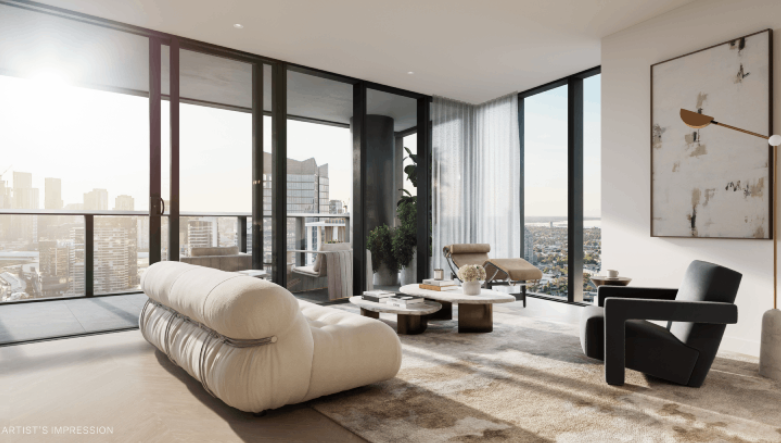
The developer also flagged a penthouse and sub-penthouse collection with larger layouts, premium finishes and broad outlooks. The planned wellness centrepiece, The Oasis, encompasses a 900-square-metre elevated urban rainforest.
Mirvac General Manager Residential Development Victoria Elysa Anderson said Trielle had resonated strongly with buyers seeking a rare lifestyle offering in Melbourne.
“Opportunities to secure a new luxury residence on a riverfront site of this calibre are incredibly rare, particularly within a community like Yarra’s Edge,” Anderson said.
“What makes Trielle unique is the combination of exceptional views, world-class residential facilities and the lifestyle that already exists around it. Residents are buying into a mature waterfront community with parks, promenades, dining, wellness and strong community connections already in place.”
The 45-level tower brings a substantial new presence to that waterfront. Its residential offering spans one-, two-, three- and four-bedroom apartments, with Signature, Prestige and Sub-Penthouse collections accommodating different household sizes. The north-facing position connects the apartments visually to the river and city beyond.
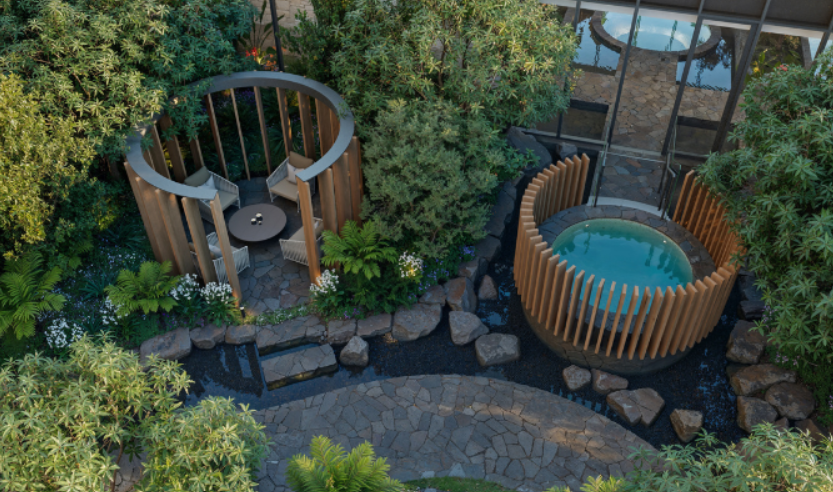
Seven storeys above the promenade, the planned Oasis combines planting and a running stream with a Scandinavian-inspired wellness club developed with spa specialist Naomi Gregory. Facilities include a 25-metre lap pool, hot magnesium pool, sauna, hydrotherapy, a gym, yoga and Pilates room, and treatment spaces.
The amenity extends beyond exercise. Residents will have access to The Biblioteca library and workspaces, ground-floor work pods, and The Salone piano lounge. A private Chef’s Table dining room offers a setting for larger gatherings, while a cinema, games room and sports lounge broaden the entertaining options. Concierge services and a dog-wash area support everyday routines.
Trielle comprises a collection of one, two, three and four-bedroom residences. Reflecting strong demand from owner occupiers, approximately 80 per cent of purchasers to date intend to live in their homes, highlighting the project’s appeal to those seeking a long-term waterfront lifestyle.
Mirvac has recently delivered The Albertine, a premium apartment development on the edge of Melbourne’s CBD, and is nearing completion of Prince & Parade in Brunswick, further strengthening its portfolio of thoughtfully designed apartment communities in some of Melbourne’s most sought-after urban locations.

Borrowers cannot control the Reserve Bank, but they can control how exposed their household budget is to its next decision. The RBA meets on 29 September with inflation concerns still elevated and major-bank economists increasingly bringing forward their rate-rise calls. Fixed mortgage rates have also been moving, reducing the value of waiting for perfect certainty. …
Continue reading “What mortgage holders should do before the next RBA decision”

The PG rating has become the king of the box office. The entertainment business now relies on kids dragging their parents to theatres.