





Their Offer Was Accepted. The Only Problem—the House Wasn’t for Sale.
One real-estate agent almost got scammed, while another broker discovered his client murdered someone in the house he was trying to sell

 4 min
4 min
Q: Have you ever found yourself in a real-estate deal with a stone-cold criminal?
Katin Reinhardt, real-estate agent, The Oppenheim Group, Orange County, Calif.
My client was looking for a house in Floral Park. We struck out on a couple, and then one pops up on the market. He sends me the listing and says, “I absolutely love this house.” It’s big, it’s got a pool—everything he wanted. It needs some work, but for $2 million it was pretty darn good.
I contact the agent, from a reputable company, and he says there are no open houses for the weekend. My buyer wants to put in an offer on the house so no one takes it, contingent on inspection, and the agent is like, “Fine. You guys come here, we’ll do the inspection on Monday.”
We drew up an offer and they accepted in four hours. It was an all-cash offer, with a 10-day contingency. I kind of knew something was weird when I got a text from the listing agent saying, “Hey, would you mind wiring the money directly to my seller’s account?”
It was a $2 million house; the deposit on it was about $70,000. I say, “Absolutely not—let’s all get on the phone.”
The seller sounds absolutely normal, like, “Hey, I’ve been burned before when someone has backed out.” We said it had to be a verified escrow account, and the seller says, “OK, that’s fine, I don’t mind.”
On Monday, we get to the house for the 5 p.m. inspection, knock on the door, and some guy comes out in his underwear. No shoes on. I’m like, “Hello, sir, we’re here to do the inspection.”
And he says, “What are you talking about?”
I said, “Didn’t your agent inform you? We’re in escrow with you guys.”
I pull out the contract—it had his name and everything—and he was like, “What in the actual hell? You guys gotta leave. I’ve never listed the house. I just bought it two years ago, and I’m not planning on selling.”
We called the agent, like “What’s the deal, bro? Did you ever go inside the property and verify the seller?”
So what happened was, the scam guy called the broker’s assistant and said, “I’ve worked with you guys before. I’m out of town. I need to sell my house. Let’s put a listing together.”
The agent’s only contact with him had been via email and one or two phone calls. The guy sent pictures from the last time the house was listed, doctored to look brand-new. The agent calls the seller—this scam artist—and can’t get hold of him. No communication. My guy was ready to wire $70,000 to this escrow. Thank God he didn’t.
I had to do a full police report. I went over to the house and apologised. I said, “We had no clue, and my client absolutely loved your place, yada, yada. I know you’re not trying to sell your house but If you ever want to, we got somebody here that would pay cash for it.”
Scott McManaway, broker, The Agency, Denver
I got a call, this couple wanted to sell their house. I went over there and met with the husband; the wife was out of town. We toured the house, had some good conversations and he said, “OK, you’re the guy for the job, let’s do it.”
One of his caveats was, no sign in the yard. He was like, “My neighbors hate me and I hate my neighbors. I don’t want them to know my business.”
We get it on the market, get the ball rolling, get it under contract fairly quickly. The buyers are going through inspections, when the title company calls me and says, “Scott, we have a problem—there’s a bond lien on the property.”
I call my client, and he goes, “Oh [expletive], they put a bond on the house.” And then, as simple as you and I are talking now, he goes, “I’m out on bond for murder. I didn’t realize they put that on my house.”
It turns out he had killed a guy in the house. Later, I googled the address of the property, and it had been all over the news. I tried to keep my composure. I said, “All right, we can get through this. We’ve got to figure out what the bond is worth. Do we have court dates we have to worry about?”
Then, unbeknown to me, he takes a plea deal and gets locked up right away. It turns out his wife, who was somehow involved in this, had fled the state. She got arrested and was brought back to Colorado. So both of my clients—the husband and the wife—end up in jail at the same time during our transaction.
They got shifted around to different correctional facilities. There was delay after delay. I finally had to let the buyers know what was going on, like, “Crazy scenario! Both my clients are in jail, but I promise we are going to get this closed.”
Two different jails, two completely different processes. I called in some favours from attorneys. I’m able to get the wife’s side of the paperwork signed, but I had to wait till the husband got to his final spot, if you will. I brought a mobile notary with me to the prison. We did the whole walk-into-prison, empty-your-pockets, walk-through-the-X-ray-machine.
We go into the visitation room and two minutes later, this big metal door buzzes open and in comes my client, big smile on his face. He says, “Hey Scott! You got it done!” Comes over, gives me a big bear hug. We signed the closing docs and he stood up and hugged me
again and said, “When I get out of prison, I’m going to reach out to you. I want to do real estate.”
—Edited from interviews
 Copyright 2020, Dow Jones & Company, Inc. All Rights Reserved Worldwide. LEARN MORE





From making unpopular decisions to learning when to listen, leaders from five businesses reveal what nobody prepared them for — and how running a company has challenged their expectations.

Technology and semiconductor shares fell sharply as investors questioned the debt financing the AI infrastructure boom and confronted higher rates and Chinese competition.


Mirvac’s 45-level Trielle has topped out at Yarra’s Edge, pairing riverfront apartments with wellness facilities, private dining and resident services.
3 min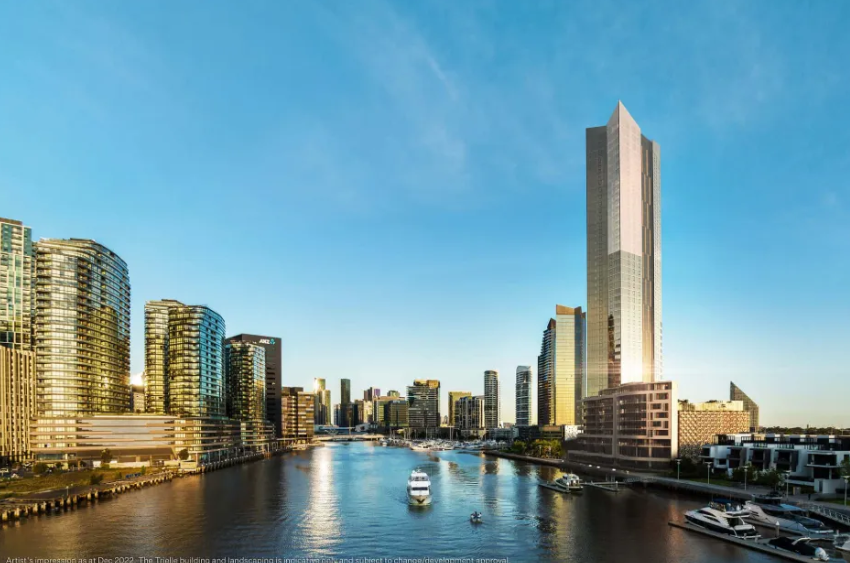
Mirvac has topped out Trielle at Melbourne’s Yarra’s Edge, with more than 70 per cent of the riverfront development sold and approximately 80 per cent of purchasers intending to make their apartment a home.
The figures, released on September 22, point to an owner-occupier audience for one of the precinct’s final residential towers. Mirvac began developing Yarra’s Edge in 2003, and its latest addition occupies one of the remaining absolute riverfront sites.
Mirvac CEO of Development Stuart Penklis said existing residents were among those moving up within the neighbourhood.
“Many purchasers already have a connection to Yarra’s Edge,” Mr Penklis said, describing buyers whose changing needs were encouraging an upgrade within the precinct.
“As one of the final residential towers within Yarra’s Edge, Trielle represents the culmination of more than two decades of creating one of Melbourne’s most established and sought-after waterfront communities,” Penklis said.
“Positioned on the Collins Street axis with absolute river frontage, Trielle offers residents a rare opportunity to enjoy sweeping views across the Yarra River, Melbourne skyline and Port Phillip Bay, while remaining seamlessly connected to the CBD. With Trielle now more than 70 per cent sold, we’re continuing to see strong demand from buyers seeking quality homes in established locations.”

The developer also flagged a penthouse and sub-penthouse collection with larger layouts, premium finishes and broad outlooks. The planned wellness centrepiece, The Oasis, encompasses a 900-square-metre elevated urban rainforest.
Mirvac General Manager Residential Development Victoria Elysa Anderson said Trielle had resonated strongly with buyers seeking a rare lifestyle offering in Melbourne.
“Opportunities to secure a new luxury residence on a riverfront site of this calibre are incredibly rare, particularly within a community like Yarra’s Edge,” Anderson said.
“What makes Trielle unique is the combination of exceptional views, world-class residential facilities and the lifestyle that already exists around it. Residents are buying into a mature waterfront community with parks, promenades, dining, wellness and strong community connections already in place.”
The 45-level tower brings a substantial new presence to that waterfront. Its residential offering spans one-, two-, three- and four-bedroom apartments, with Signature, Prestige and Sub-Penthouse collections accommodating different household sizes. The north-facing position connects the apartments visually to the river and city beyond.
Seven storeys above the promenade, the planned Oasis combines planting and a running stream with a Scandinavian-inspired wellness club developed with spa specialist Naomi Gregory. Facilities include a 25-metre lap pool, hot magnesium pool, sauna, hydrotherapy, a gym, yoga and Pilates room, and treatment spaces.

The amenity extends beyond exercise. Residents will have access to The Biblioteca library and workspaces, ground-floor work pods, and The Salone piano lounge. A private Chef’s Table dining room offers a setting for larger gatherings, while a cinema, games room and sports lounge broaden the entertaining options. Concierge services and a dog-wash area support everyday routines.
Trielle comprises a collection of one, two, three and four-bedroom residences. Reflecting strong demand from owner occupiers, approximately 80 per cent of purchasers to date intend to live in their homes, highlighting the project’s appeal to those seeking a long-term waterfront lifestyle.
Mirvac has recently delivered The Albertine, a premium apartment development on the edge of Melbourne’s CBD, and is nearing completion of Prince & Parade in Brunswick, further strengthening its portfolio of thoughtfully designed apartment communities in some of Melbourne’s most sought-after urban locations.

An opulent Ryde home, packed with cinema, pool, sauna and more, is hitting the auction block with a $1 reserve.

ABC Bullion has launched a pioneering investment product that allows Australians to draw regular cashflow from their precious metal holdings.


