

Only 5% of U.S. Foundations Invest for Impact, Study Finds

 4 min

Few of the U.S.’s philanthropic foundations invest their endowment assets—totalling an estimated US$1.1 trillion—to create positive social and environmental change in addition to high returns, potentially limiting or even counteracting the good such organisations do.
Exactly how few isn’t precisely known. But Bridgespan Social Impact, a subsidiary of the New York-based Bridgespan Group along with the Capricorn Investment Group, a Palo Alto, Calif.-based investment firm founded by Jeff Skoll , the first president of eBay, and the Skoll Foundation, also in Palo Alto, attempted to “get the conservation started,” with a study of 65 foundations with a total of about US$89 billion in assets, according to Mandira Reddy, director at Capricorn Investment Group.
The top-line conclusion: 5% of the primarily U.S.-based foundations surveyed invest their assets for impact. Most surprising is that 92% of these organisations, which have assets ranging from US$11 million to US$16 billion, are active members of impact investing groups, such as the Global Impact Investing Network and Mission Investors Exchange.
“If there’s any pool of capital that is best suited for impact investing, it would be this pool of capital along with family office money,” Reddy says.
The study was also conducted “to draw attention to the opportunity,” she said.
“We want to redefine what philanthropy can achieve. There is massive potential here just given the scale of capital.”
Foundations are required by the U.S. Internal Revenue Service to grant 5% of their assets each year to charity; in practice they have granted slightly more in the last 10 years—an average of 7% of their assets, according to Delaware-based FoundationMark, which tracks the investment performance of about 97% of all foundation assets.
The remaining assets of these foundations are invested with the intention of earning the “highest-possible risk-adjusted financial returns,” the report said. Those investments allow these organizations to grant funds often in perpetuity.
Capricorn and Bridgespan argue that more foundations, however, need to “align their capital with their missions,” and that they can do so while still achieving high returns.
“Why wait to distribute resources far into the future when there are numerous urgent issues facing the planet and communities today,” argue the authors of a report on the research, which is titled, “Can Foundation Endowments Achieve Greater Impact.”
The fact most of the foundations surveyed are very familiar with impact investing and yet haven’t taken the leap “highlights the persistently untapped opportunity,” the report said. It details some of the barriers foundations can face in shifting to impact, and how and why to overcome them.
Hurdles to making a shift can include “beginner’s dilemma”—simply not knowing where to start—and a misperception on the part of large foundations that impact investing is “too niche,” offering opportunities that are too small for the amount of capital they need to allocate. Other foundations are too stretched and don’t have the resources to add capabilities for making impact investments, the report said.
One of the biggest concerns is financial performance. Some foundation leaders, for instance, worry impact investments lead to so-called concessionary returns, where a market rate of return is sacrificed to achieve a social or environmental benefit. Those investments exist, but there are also plenty of options that offer financial returns.
The authors make a case for foundations to “go big,” into impact to realize the best outcomes, and to take a portfolio approach, meaning integrating impact principles into how they approach all investments. To make this happen, foundations need to incorporate impact into their investment policy statements, which determine how they allocate assets.
It will be difficult for foundations that want to shift their assets to impact to pull out of investments such as private-equity or venture-capital funds that can have holdings periods of a decade. But with a policy statement in place, a foundation’s investment team can reinvest this long-term capital once it is returned into impact investing options, she says.
“The transition doesn’t happen overnight,” Reddy says. “Even if there is a commitment for an established foundation that is already fully invested, it takes several years to get there.”
The Skoll Foundation, established in 1999, revised its investment policy statement in 2006 to incorporate impact. According to the report, the foundation initially divested of investments that were not in sync with its values, and then gradually, working with Capricorn Investment, began exploring impact opportunities mostly in early-stage companies developing solutions to climate change.
“As the team gained more knowledge and experience in this work, and as more investment opportunities arose, the impact-aligned portfolio expanded across different asset classes, issue areas, and fund managers,” the report said.
As of 2022, 70% of the Skoll Foundation’s assets are in impact investments addressing climate change, inclusive capitalism, health and wellness, and sustainable markets.
Capricorn, which manages US$9 billion for foundations and institutional investors through impact investments, constructs portfolios across asset classes. In private markets, this can include venture, private equity, private credit, real estate, and infrastructure. There are also impact options in the public markets, in both stocks and bonds.
“Across the spectrum there are opportunities available now to do this in an authentic manner while preserving financial goals,” Reddy says.
Of the foundations surveyed, about 15, including Skoll, have 50% or more of their assets invested for impact. Others include the Lora & Martin Kelley Foundation, the Nathan Cummings Foundation, the Russell Family Foundation, and the Winthrop Rockefeller Foundation.
Though not part of the study, the California Endowment just announced it was going “all in” on impact. The organisation has US$4 billion in assets under management, which likely makes it the largest foundation to undergo the shift, according to Mission Investors Exchange.
Although the researchers looked at a fairly small sample set of foundations, Reddy says it provides data “that is indicative of what the foundation universe” might look like.
“We cannot tell foundations how to invest and that’s not the intent, but we do want to spread the message that it is quite possible to align their assets to impact,” she says. “The idea is that this becomes a boardroom conversation.”
 Copyright 2020, Dow Jones & Company, Inc. All Rights Reserved Worldwide. LEARN MORE


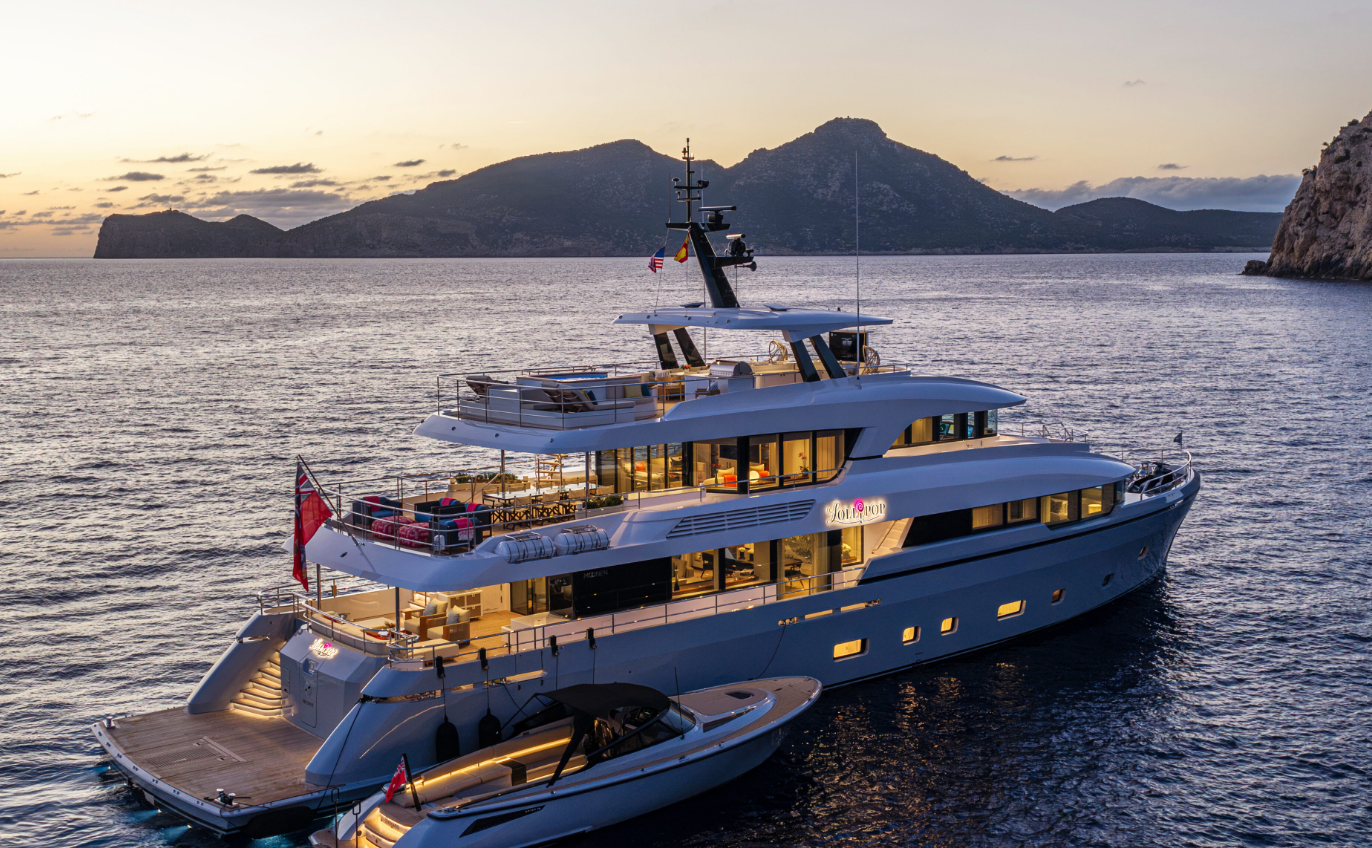
Dutch studio Vripack took cues from a Shirley Temple song for Lollipop, a 37.4-metre Moonen superyacht built for long-range cruising.

A Sydney couple has paid $15.5 million for the Grand Penthouse at Marquee’s $285 million La Belle Residences beachfront development which is nearing completion at Palm Beach, eclipsing the record for an off-the-plan apartment sale on the southern Gold Coast. The sprawling single level 640 sqm beachfront residence, with sweeping views of the Gold Coast …
Continue reading “$15.5m La Belle Penthouse eclipses southern Gold Coast record”

Dutch studio Vripack took cues from a Shirley Temple song for Lollipop, a 37.4-metre Moonen superyacht built for long-range cruising.
2 minOn the 37.4-metre Lollipop, a Shirley Temple song gave Dutch design studio Vripack a brief that runs from the cocktail bar to the guest cabins.
From the water, Lollipop gives little away. Its silvery hull and white superstructure look restrained enough. Head up to the sun deck, though, and there are sweets suspended in the transparent bar top. The owners helped position them before they were set in resin. Pastel lights run across the front of the bar, and the spa has a curved glass panel that continues the theme.
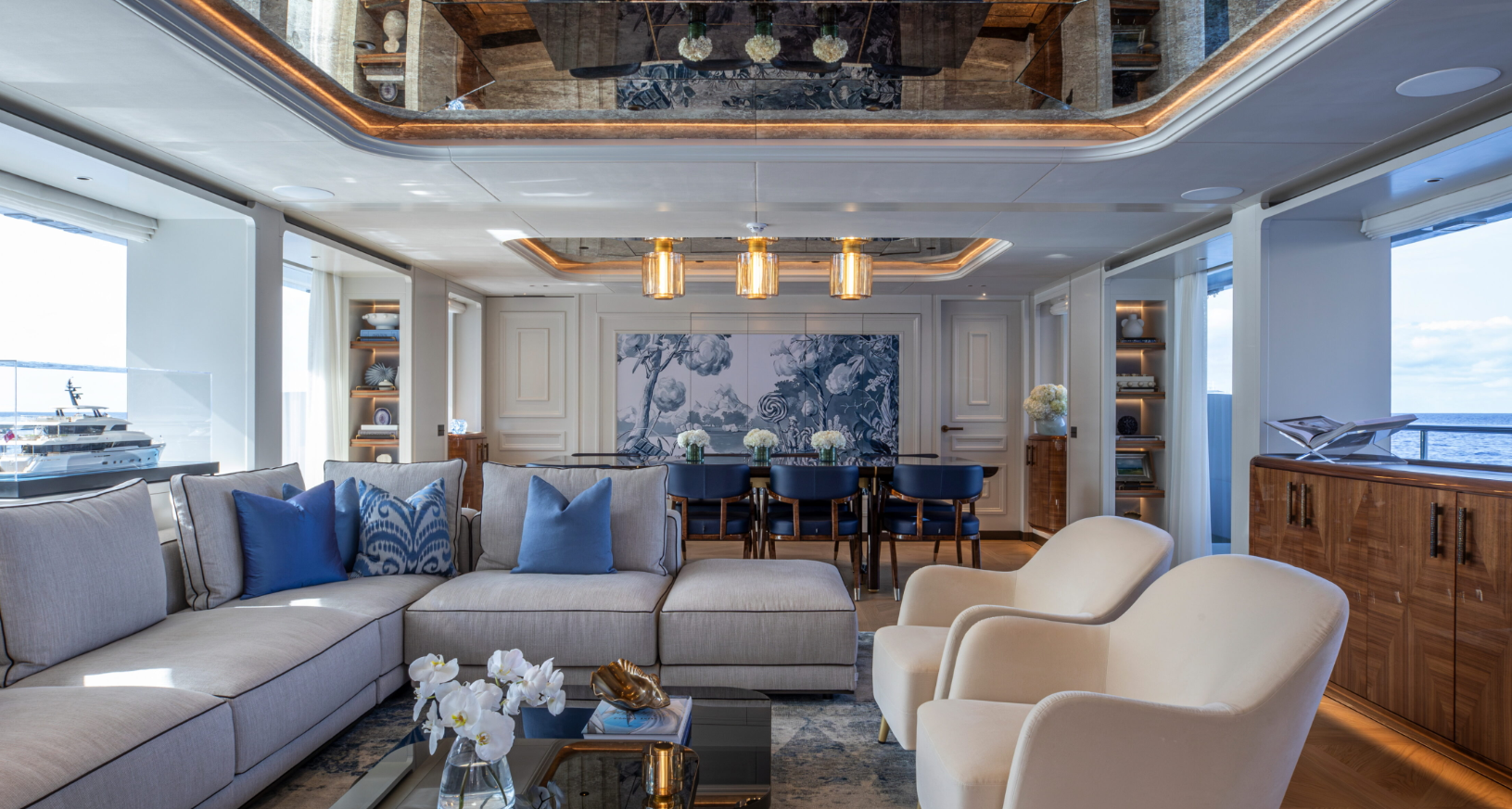
The yacht takes its name from Shirley Temple’s On the Good Ship Lollipop, a favourite of its American owners. Vripack used the song as a starting point for details that reward a closer look. In the main saloon, a blue-and-white mural borrows the look of Delft pottery. Look again and there are lollipops and lemon drops in the scene. Below deck, sweets including peppermints and gummy bears informed the guest cabins’ palettes.
From a sailing catamaran to a steel yacht
Before Lollipop, the owners spent much of a decade sailing a 17-metre performance catamaran around the Caribbean and the east coast of the United States. They were accustomed to spending about eight months a year aboard with their two dogs. Moving to a 37.4-metre motor yacht meant living with full-time crew for the first time. They came across the Moonen project in Monaco while the yacht was still under construction, and the layout already appealed to them.
By the time the owners joined the project, the floors and built-in furniture were already in place. Vripack kept the white panelling and walnut, then worked their ideas into the surfaces and fittings. The Delft-style mural behind the dining table doubles as the front of a cupboard for tableware. A child modelled on the owners’ daughter appears in the scene holding an oversized lollipop.
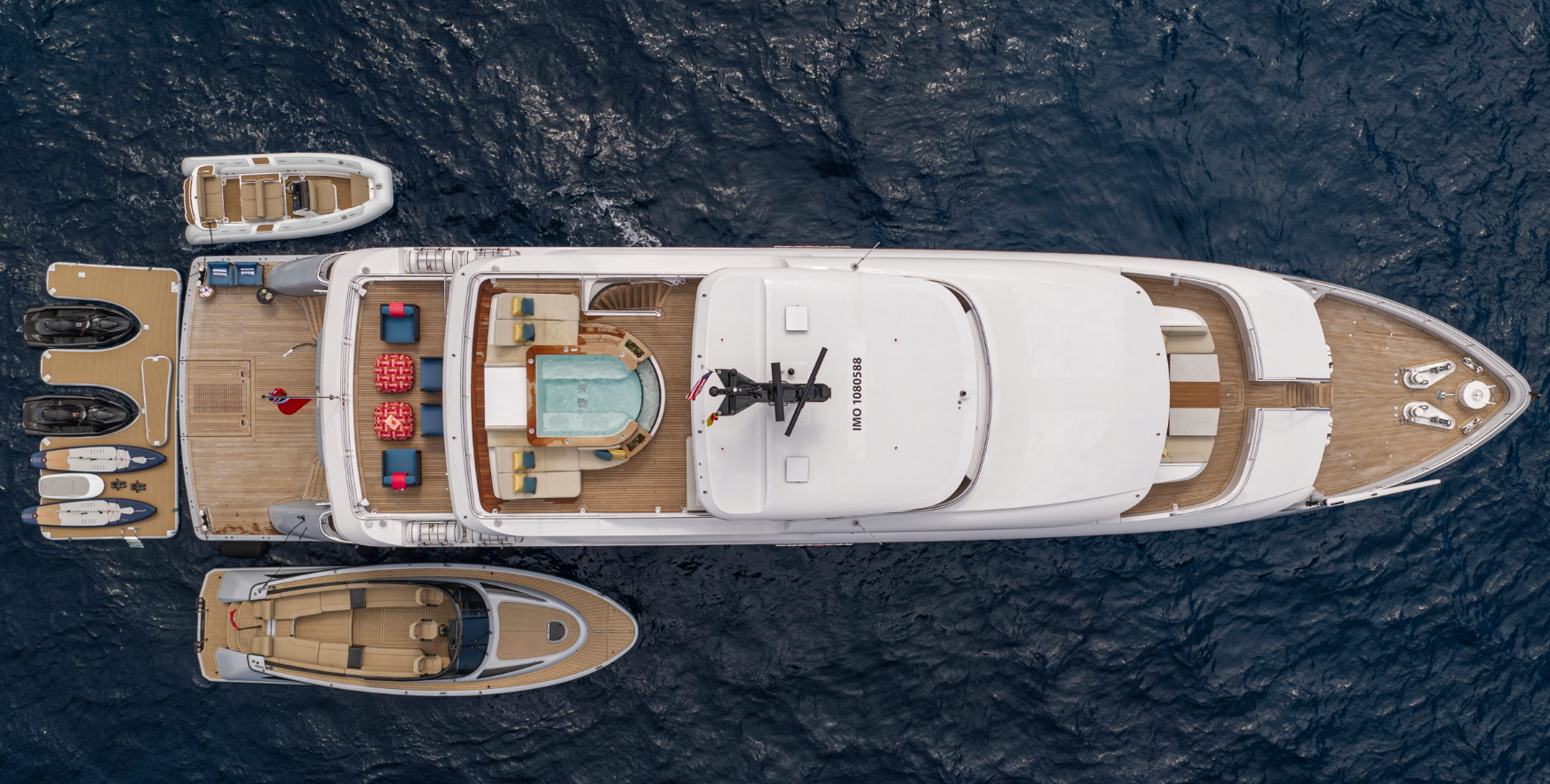
In the owner’s suite, the swirl of a lollipop becomes a pattern in the leather ceiling. Up on deck, a thin waterfall runs over Murano glass sweets set against the spa’s curved front. Even the tenders carry the theme out onto the water. The Wajer 38 is called BonBon and the crew tender is CrackerJack.
Lollipop is the eighth yacht in Moonen’s 122 Martinique series. René van der Velden drew the exterior and Diana Yacht Design handled naval architecture. The steel-hulled yacht accommodates up to 12 guests and seven crew, with a range of 4,000 nautical miles at 10 knots, according to the builder. Moonen announced delivery in June and selected it to showcase the series at September’s Monaco Yacht Show.
The owners wanted a boat they could spend long stretches aboard. The white panelling, walnut and Delft blue give them a saloon to live in day after day. The sweets in the bar can wait until cocktail hour.
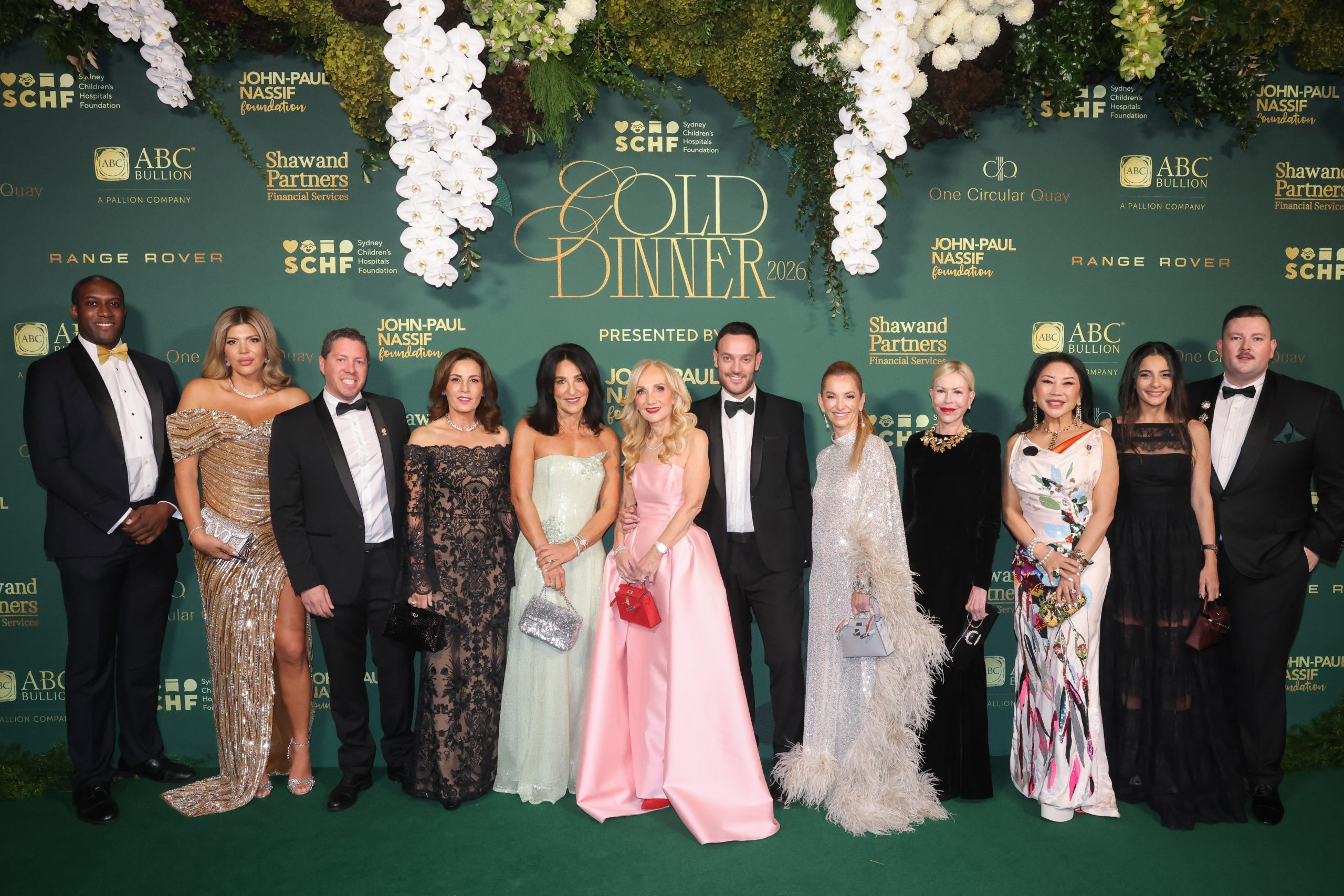
Sydney Children’s Hospitals Foundation CEO Kristina Keneally says Australia’s culture of large-scale philanthropy is becoming more sophisticated as Gold Dinner raises $75.5 million for children’s health, research and innovation.

From snow-dusted valleys to festival-filled autumns, Bhutan reveals itself as a rare destination where culture, nature and spirituality unfold year-round.