

What Nobody Tells You About Being a CEO | Five minutes on leadership
From making unpopular decisions to learning when to listen, leaders from five businesses reveal what nobody prepared them for — and how running a company has challenged their expectations.
 8 min
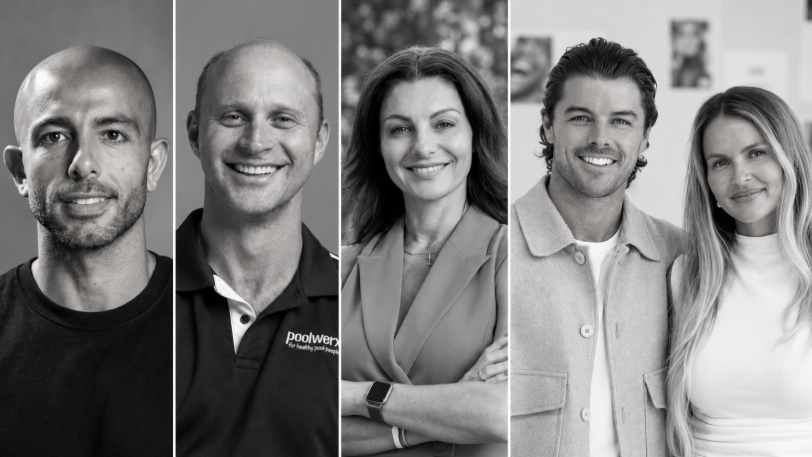
Leaders from five businesses share what running a company has taught them — and why the reality hasn’t always matched their expectations.
Leadership can look very different from the outside. Behind the title are difficult decisions, competing demands and the challenge of knowing when to speak, when to listen and when to change course.
From digital marketing and wearable technology to property, pool care and dental technology, these business leaders share the lessons nobody prepared them for.
Sabri Suby, King Kong
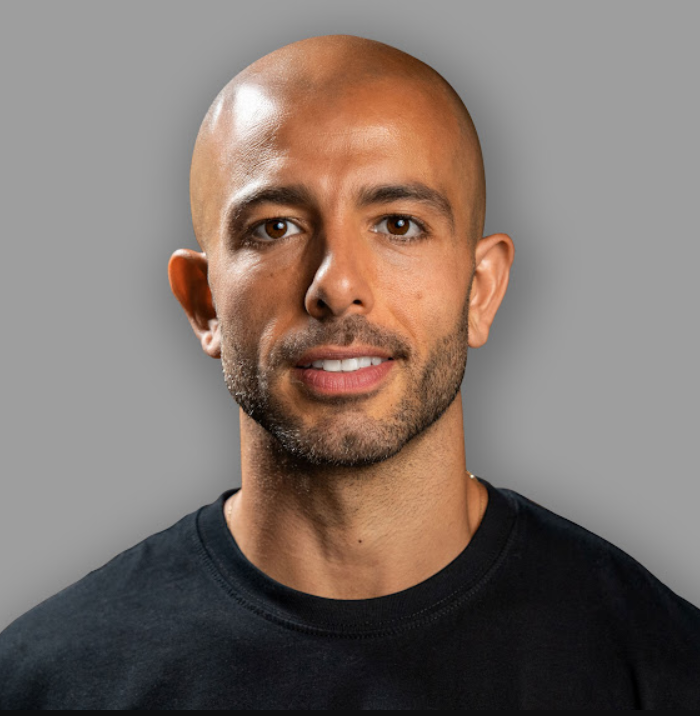
Sabri Suby launched digital marketing agency King Kong in 2014 with $50 and a laptop, working from his home in Byron Bay. A regular on the Australian Financial Review’s Young Rich List, he is also a bestselling author, a former Shark Tank Australia investor and a father of three.
“The biggest misconception about being a CEO is that you won’t have a boss. People think, ‘I want to start my own company so I can be the CEO and be my own boss.’ Little do they know that you start working for 10, 20, sometimes hundreds of bosses. Nothing is more important than delivering for your client, and you’re held accountable to them every single day.
“With my team members, I never refer to them as employees. They don’t work for me; they work with me. The whole idea of the CEO as the big boss at the top is completely false.
“Company building is one of the most creative endeavours there is. If you’re a builder, and you love building systems, teams, products and services — all the things I love to do — then it’s the ultimate canvas.
“Great leaders think of their company as a living organism. You have to do what’s best for the whole organisation. That means making the hard, unpopular decisions. As a leader, you have to zoom out and optimise for the overall health of the organisation, and then sometimes carry the weight of being misunderstood while you do it.
“The lid on any organisation is the founder’s ability to think big. You can point to countless businesses in the smallest, boring niches that became enormous, billion-dollar companies purely because the founder was able to conceive it before they could achieve it.
“Early in my career, I had a bad case of shiny object syndrome. I was under the false belief that the more opportunities I pursued and said yes to, the more I’d increase my surface area of luck. It’s actually the opposite. Focus is what increases your luck: your ability to concentrate on the few things that really matter and say no to everything else.”
Nicky Zhu, Dymesty
Growing up, Nicky Zhu wanted to be an archaeologist. Instead, her career in wearable AI has involved digging through layers of technological complexity. At smart-glasses company Dymesty, she has learned that leadership requires conviction, honest feedback and the courage to be challenged.
“Nobody tells you that leadership at a startup means making decisions with conviction while privately questioning every single one of them. The hardest part of leadership isn’t the technology, the fundraising or the competition. It’s the loneliness of being the person who has to project certainty when certainty doesn’t exist.
“Your team doesn’t need you to be right. They need you to be decisive. I’ve made calls that turned out wrong — killing a product feature three weeks before launch, restructuring our supply chain partnership mid-production — and the team recovered. What they couldn’t recover from was the quarter I hesitated.
“I delayed a critical hiring decision for six weeks because I wasn’t sure we could afford the role. That hesitation cost us a product development cycle and sent a signal to the team that I didn’t trust our own trajectory. The damage from indecision was worse than any bad decision I’ve made.
“As CEO, you will often be the last person to hear the truth. The day you take on that role, the quality of honest feedback you receive drops by half. People filter. They soften. They tell you what’s working and route around what isn’t.
“I learned to build what I call ‘truth channels’ — one-on-one check-ins where I explicitly ask each team member to tell me one thing that’s broken and one thing I’m wrong about. The first two months, I got polite deflections. By month four, I was getting the kind of direct feedback that saved us from shipping a product with a critical UX flaw nobody had escalated.
“Your job isn’t to be the smartest person in the room. It’s to make the room safe enough for the smartest person to speak up. I’ve watched technically brilliant engineers sit silent in meetings because the culture rewarded agreement over dissent.
“The moment I started publicly rewarding the person who challenged my thinking — not just tolerating it, but thanking them in front of the team — the quality of our product decisions improved measurably.
“Leadership isn’t a skill you develop and then possess. It’s a practice you repeat daily while constantly discovering new ways you’re getting it wrong. I genuinely love that there’s no finish line. It keeps the work alive.”
Nic Brill, Poolwerx
Nic Brill began competitive swimming at six in his home country of South Africa. Perhaps fittingly, his career eventually led him to Poolwerx, the pool and spa maintenance business founded in Queensland. He became its Australia and New Zealand CEO in 2022 and global CEO in October 2025.
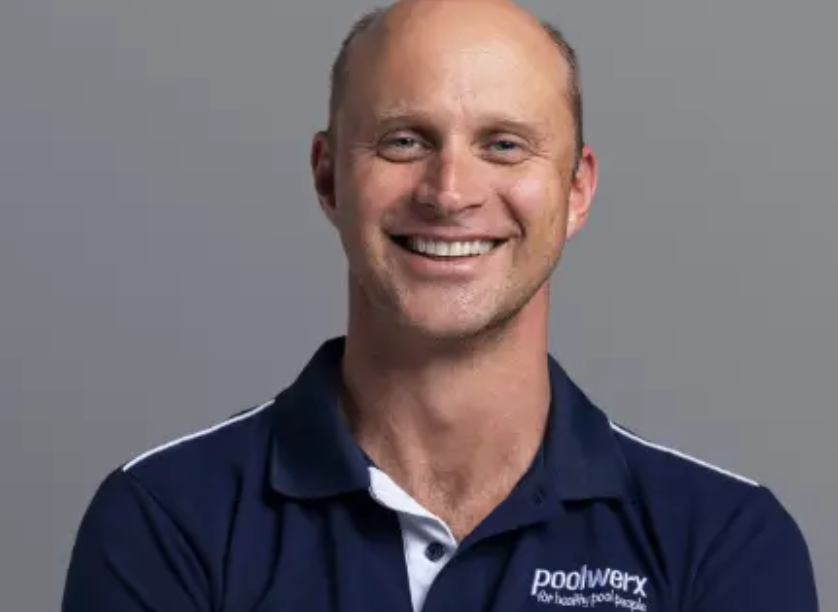
“My background in swimming meant I learned early on that while individual discipline and pushing beyond your limits are essential, you cannot achieve sustainable global scale alone. One of the toughest lessons I’ve learned in business is that you can have the most brilliant strategy in the world, but if you don’t cultivate the right culture and build a capable, resilient team around you, execution will falter.
“Resilience isn’t just about enduring tough times — such as navigating pandemics or economic downturns — it’s about having the humility to listen to your network and the agility to pivot when necessary.
“People often assume a CEO has all the answers and makes every important decision. The reality is very different. My role isn’t to have all the answers. Leadership is about listening, learning and continually adapting, not having all the answers from day one.
“As a leader, particularly within a franchise model, my job is to clear the path for others to succeed. At Poolwerx, our number one KPI is franchisee profitability. The biggest misconception is that the CEO is at the centre of the business, when in truth, our franchise partners and clients are at the centre.
“I’ve never felt that people work for me — people work with me. And because they work with me, that doesn’t mean that I’m ultimately the person who makes the call. I genuinely want to hear their views because I do believe that if we’re in it together, everyone’s combined input will make for a better outcome.
“What I love most about what I do is the impact we get to have on people’s lives. On one hand, I get to see our franchise partners build thriving businesses, and on the other, we help families everywhere safely enjoy their backyards and create lifelong poolside memories together.
“Understanding your purpose in life — not just work — and genuinely knowing you’re not the star of the show are things I try to value every day.”
Nat Gordon, Propoholic
Nat Gordon co-founded her first real estate agency at 21 and owned and operated a boutique Sydney agency for two decades. Today, as founder and CEO of independent property advocacy business Propoholic, she guides clients through buying, selling and renovating.
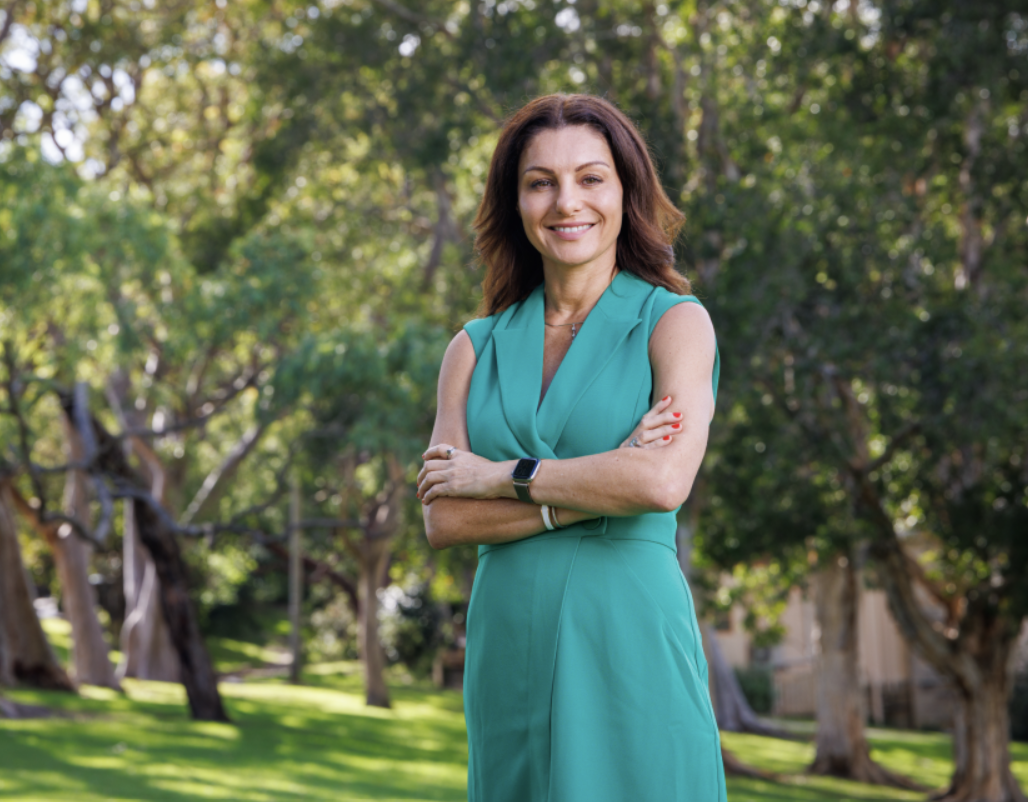
“I’ve owned real estate and construction businesses for 30 years, and I still make decisions every day without knowing how people will respond. In property, nothing is guaranteed, so you consider everything you know, trust your instinct and make the best decision you can.
“The hardest part of leading people is that no two people are wired the same way, so your approach is constantly changing. Every person — whether a team member or a client — is going through something different, even if the situation on paper looks the same. Listening well and genuinely caring change the quality of every conversation and always improve the outcome.
“The ideas that come to me in the peace of the night are often far better than those from the noise of the day. Our clients are trusting us with their biggest financial asset, and I don’t take that lightly. If lying awake thinking through another scenario helps them achieve a better outcome, I don’t see that as a bad thing.
“One lesson I’ve learned is that you won’t make everyone happy, and trying to do so will make you unhappy. Early on, I wanted every client to leave the conversation happy. Now I understand the right advice is sometimes advice nobody wants to hear.
“I think good leaders don’t pretend to know everything. It’s OK to admit that you aren’t sure about something, and people respect you more for acknowledging that. You have to seek answers and be willing to learn, often from the smart people you surround yourself with.”
Alexis and Luke Withers, Aalto
Husband-and-wife team Alexis and Luke Withers are co-CEOs of Australian dental technology company Aalto, whose clear aligners are manufactured in Sydney. They set out to make orthodontic treatment simpler and more accessible — and along the way discovered what it takes to lead a business together.

Alexis: “Nobody ever told me that leadership often means walking away from things that are working. One of the biggest decisions we made as founders was to step away from a successful business model despite achieving 312% revenue growth between 2020 and 2025.
“On paper, it made very little sense. But after thousands of patient interactions, we could see where customer expectations and the industry were heading. Leadership isn’t just protecting what you’ve built; sometimes it’s having the conviction to disrupt yourself before somebody else does.
“Another thing no one tells you is that being right matters less than listening. Some of our biggest strategic decisions came directly from customer feedback. Founders can become attached to their original vision, but customers often spot changes in the market before you do. Leadership is having the humility to listen when the evidence tells you your assumptions are wrong.”
Luke: “The traditional sole-CEO structure dominates the corporate landscape, so there weren’t many places to look for examples. What I have come to realise is that your co-founder should challenge you, not validate you.
“On paper, we probably shouldn’t work as founders. Alexis is analytical, methodical and naturally risk-aware. I am instinctive, ambitious and like to move quickly. We rarely approach problems the same way, but over time we’ve realised that tension is one of our biggest strengths. The best decisions usually happen somewhere in the middle of our opposing viewpoints.
“And nobody tells you that running a company with your spouse means there is no off switch! People love the idea of building a business with their partner, but nobody talks about the fact that board meetings happen over dinner and strategy conversations happen on holidays.
“We’ve had to become very intentional about separating founder time from husband-and-wife time, which we still struggle with to the detriment of our friends and family!”
From making unpopular decisions to learning when to listen, leaders from five businesses reveal what nobody prepared them for — and how running a company has challenged their expectations.

Technology and semiconductor shares fell sharply as investors questioned the debt financing the AI infrastructure boom and confronted higher rates and Chinese competition.
Rugby league and rugby union have rallied around Jai Arrow and Nathan Charles following their MND diagnoses. Now Western Sydney can show its support at a charity gala at Club Marconi on 4 December.
5 min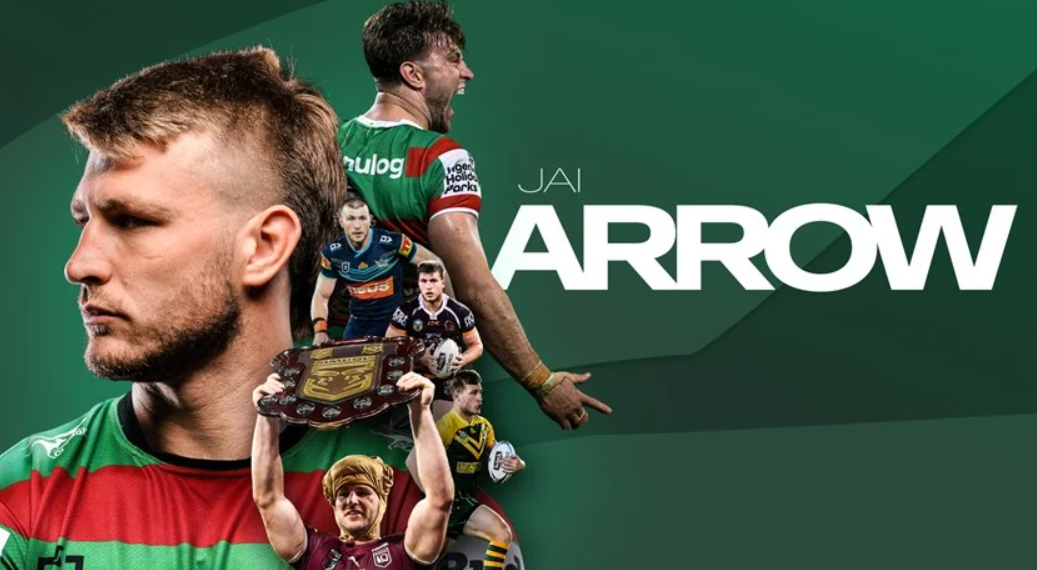
Rabbitohs forward Jai Arrow and former Wallabies hooker Nathan Charles were both diagnosed with motor neurone disease this year. Rugby league and rugby union have rallied behind them. On 4 December, Western Sydney gets its chance to do the same.
The first sign was a chin-up.
Last November, during pre-season training with the South Sydney Rabbitohs, Jai Arrow found he couldn’t pull himself up to the bar — something he had done thousands of times.
Then his arm and shoulder began twitching, and his voice started to sound slightly nasal. He kept it to himself. He was 29, one of the fittest men in a demanding sport and an optimist by nature.
In January, his physio raised concerns about his speech. Nerve testing followed, and the next day the physio told him what he suspected.
After months of further testing and treatment, Arrow announced on 20 May 2026 that he was retiring from rugby league, effective immediately. Shortly afterwards, he spoke publicly about his diagnosis: motor neurone disease (MND), a progressive, incurable condition that gradually takes away the ability to move, speak and breathe.
A career built on effort
Arrow retired after 178 NRL games with the Brisbane Broncos, Gold Coast Titans and South Sydney Rabbitohs, along with 12 State of Origin appearances for Queensland.
His 2025 season may have been his best. He won the George Piggins Medal as Souths’ player of the year, the Bob McCarthy Clubperson of the Year award and the Souths Cares Award for his community work.
Rabbitohs coach Wayne Bennett has described him as honest, genuine and hard-working — someone who puts family and team first.
Arrow has carried that determination into life after his diagnosis. He has said he wants to try “any trial, any medication” that could help, and hopes to inspire others who receive the same news.
A wedding in Sicily
This month, Arrow and his long-time partner, Berina Colakovic, celebrated their wedding in Sicily, where they became engaged in 2024.
On 10 October, 65 family and friends gathered at Borgo del Carato in the island’s south-east for a ceremony at the estate’s 19th-century farmhouse. Guests travelled from Australia and Canada, where Colakovic is from.
The bride wore a strapless gown, lace veil and Christian Dior heels before changing into a sequined halterneck by Australian label Dio Official for the reception. Arrow wore a cream dinner jacket and bow tie.
The night before, guests attended a mafia-themed rehearsal dinner. The couple had already married in a civil ceremony in Sydney in July; Sicily was the celebration.
Speaking to Vogue about their choice of location, Colakovic described its “almost timeless romance”. She said there was a moment on the day when she wished she “could stop time”.
The couple, who have a one-year-old daughter, Ayla, are honeymooning in Bodrum on Turkey’s Aegean coast.
Nathan Charles: a Wallaby who defied the odds
Nathan “Cheezy” Charles is used to defying expectations.
As a child with cystic fibrosis, he was given a prognosis suggesting he might not live past 11. He went on to become the first person with cystic fibrosis known to play a contact sport professionally.
The hooker played Super Rugby for the Western Force and Melbourne Rebels, had stints in England and France, and earned four Test caps for the Wallabies in 2015.
After retiring in 2018, he built a career off the field, serving as chief executive of Rugby WA and later taking on roles at Sydney University Football Club.
Earlier this year, he began experiencing symptoms that led him to a neurologist in March. His condition worsened through winter. On 13 September, after extensive testing, his diagnosis was confirmed: motor neurone disease. He is 37.
“My first question was, ‘How long have I got?’”
— Nathan Charles, speaking to Stan Sport
Charles has spoken candidly about the challenges he now faces. He describes the disease as “overwhelming” and “at times quite cruel”, with everyday tasks such as putting on shoes and socks becoming difficult.
He has said that, as far as he knows, there is no link to his cystic fibrosis, describing the second diagnosis as “absolute rotten luck”.
Above all, he worries about the impact on his family and his fiancée, Steph.
Two sports rally around their own
Rugby league moved quickly to support Arrow.
At Accor Stadium, he walked through a guard of honour formed by Rabbitohs and Broncos players and rang South Sydney’s Legacy Bell. Messages reading “Thank you Jai #1166” filled the ground, and players wore white-out jerseys.
Clubs including the Sea Eagles and Dragons held 50–50 raffles in his name, while the Leeds Rhinos raised funds on the other side of the world.
The NRL and the players’ association also approved two special appearances to allow Arrow to reach 100 games for South Sydney.
In Round 26, he led the Rabbitohs out against his former club, the Titans, at Cbus Super Stadium on the Gold Coast, where he grew up. He played the opening seconds before leaving the field.
The “Stand with Jai” weekend raised more than $325,000. Sales of a limited-edition jersey brought in more than $130,000, with all proceeds going to the official Family of League fundraiser. A luncheon at his junior club, the Burleigh Bears, raised about $100,000 for MND Queensland.
“Jai’s courageous fight is both humbling and inspiring.”
— Steve Mitchell, Gold Coast Titans CEO
Rugby union has rallied around Charles, too.
Family and friends established a GoFundMe campaign to help cover his care, respiratory equipment and home modifications. It has raised more than $170,000.
Charles visited the Wallabies before their Bledisloe Cup Test at Eden Park. Captain Harry Wilson said he was “joking with the boys” and that it was “great to have him around the group”.
At this year’s NRL Grand Final, the two codes came together to honour Charles and Arrow side by side.
Western Sydney’s turn
On Friday 4 December, the Marconi Mustangs will host a Charity Gala Night for Jai Arrow and Nathan Charles at Doltone House Western Sydney, Club Marconi, in partnership with Kanebridge Finance.
Proceeds will support MND Australia, the national peak body working for people living with motor neurone disease and supporting research towards a cure.
The black-tie evening will feature entertainment and a live auction, with Arrow attending in person.
More than 37 tables have already been sold, and bookings remain open.
Be part of the night
Charity Gala Night for Jai Arrow and Nathan Charles
- When: Friday 4 December 2026, from 7pm
- Where: Doltone House Western Sydney at Club Marconi, 121–133 Prairie Vale Road, Bossley Park NSW
- Dress code: Black tie
- Tickets: $150 per person or $1,500 for a table of 10
- Supporting: MND Australia
- Presented by: Marconi Mustangs, in partnership with Kanebridge Finance
Become a sponsor
Businesses can support the night through one of three sponsorship packages, with opportunities for recognition among an expected audience of more than 400 guests from rugby league, rugby union and the Western Sydney business community.
Bronze sponsorship — $3,000
- One table of 10
- Business name and logo on the TryBooking page
Silver sponsorship — $6,000
- One table of 10
- Business name and logo on the TryBooking page
- Social media recognition
- MC acknowledgement
- Promotional material at the event
Gold sponsorship — $9,000
- Two tables of 10 with premium placement
- Major logo placement on the official poster
- Social media recognition
- MC acknowledgement
- Promotional material and gifts
To become a sponsor, contact Hymel Hunt at Kanebridge Finance on 0478 179 379 or 1300 526 327, or select a sponsorship package at checkout on the TryBooking page.
Whether you book a seat, bring a table or become a sponsor, you’ll be standing with two men who have given their sports everything — and supporting the wider fight against MND.
Sponsorship places are limited. Book early to be part of the night.

From reworked homes to remote retreats, designers are prioritising warmth and a deeper connection to landscape.
Powerhouse real estate couple Avi Khan and Kaylea Sayer welcome their daughter while balancing record-breaking careers, proving success and family can grow side by side.