Their Client Was Ready to Buy the Home. Then Came the Curveball.
How last-minute demands almost derailed these deals

 3 min
3 min
Q: Has a buyer ever thrown a curveball at a deal, making a request that almost derailed the sale?
Frances Katzen, broker and head of the Katzen Team, Douglas Elliman Real Estate, New York City
I had a buyer who was adamant about having a very quiet apartment. He was a nice guy, very smart, but he had an issue with noise. He didn’t want to have any kind of impact from the city once he stepped into his home.
I worked with him for nine months. We found an apartment on the East Side, a one-bedroom on a side street that we visited 12 times. He wanted to know what day the garbage trucks came and where the building’s mechanicals were, like for the elevator. He wanted to understand what time of day the street got busiest and what kind of riffraff was there. The apartment wasn’t on a particularly high floor, and he wanted to know how noise carried.
We went back during business hours. Normally, we stop showing at 6 at night, but we went back on a Saturday at 8 p.m. to hang out and see what was going on. After that, he asked if he could come back on a weekend morning. He asked people in the lobby of the building what they thought. The seller’s broker was getting pissed off.
After going back and forth, we struck a deal. We had an accepted offer. Then at the 11th hour, he turned around and said he would like the seller to install soundproof windows.
The seller was like, “You know what? I’ve bent over giving you access, you jackass.” But eventually they decided to do it. We all had to chip in for the windows. I threw in a little bit to show my support. It was like $12,000. We were doing a triple-glaze and my client wanted them to be attractive. It took weeks.
We’re at the closing, and he says, “After further consideration, I just feel like I’m rushing into this.”
I said, “Stop—you’ve been trying to do this with me for nine months.”
He said, “I just feel like maybe I should wait.”
Finally, I said, “Do you really want to be out there paying rent?”
And he said, “OK.” He has been happy since, but it’s always such a bloody process.
Peter Torkan, founder and managing partner, The Agency Toronto, Toronto
It was a 26,000-square-foot home: 10 bedrooms, 16 bathrooms, an indoor swimming pool, indoor spa, a tennis court and a beautiful water fountain in the backyard—you name it. I represented the seller, who was a billionaire.
I showed the house to a billionaire couple. They went through the house and absolutely fell in love with it. They went back for a second visit, and then they went for a third time with a feng shui master. The feng shui master went through the whole house and approved it. The tour took about 1½ hours, at least. While they were in the house, the buyers ran into the housekeeper and started talking to her. She had been there three or four years and was extremely familiar with the house.
They submitted an offer. We went back and forth, and finally an offer of $15.888 million was accepted. There were two hooks. The seller had over $1 million in furniture in the house, and the buyer wanted every piece of furniture to be included—free of charge. The second hook was a nut-job clause: The housekeeper to stay with the house. They made it a contingency of the sale.
I told the agent, “You want over $1 million worth of furniture. If the seller is willing to sell it to you, maybe we can negotiate. But this condition that the
housekeeper stays in the house—I can’t demand that.”
If the seller had signed the offer and the housekeeper refused to stay, the whole deal would have fallen apart because of that stupid contingency. It took 31 days of back and forth and back and forth. The buyer wanted the furniture in the main bedroom, the dining room, the family room.
We decided to give them a few things to make them happy, throw in certain pieces of furniture. But the buyer was adamant: The lady had to stay.
Finally, I lost it. I told the buyer’s agent, “It’s impossible. How can you demand somebody stay? Maybe they don’t like your face. Let’s cancel the deal. You go ahead and buy something else.”
This was just a bluff, but I’m a good poker player. The next day the agent called me and said, “We are going to remove that condition.”
Afterward, I found out that the housekeeper actually did stay. I assume they made a deal. And funny enough, the sellers left behind a $100,000 Bang & Olufsen sound system and TV. It was humongous.
 Copyright 2020, Dow Jones & Company, Inc. All Rights Reserved Worldwide. LEARN MORE





From making unpopular decisions to learning when to listen, leaders from five businesses reveal what nobody prepared them for — and how running a company has challenged their expectations.

Technology and semiconductor shares fell sharply as investors questioned the debt financing the AI infrastructure boom and confronted higher rates and Chinese competition.

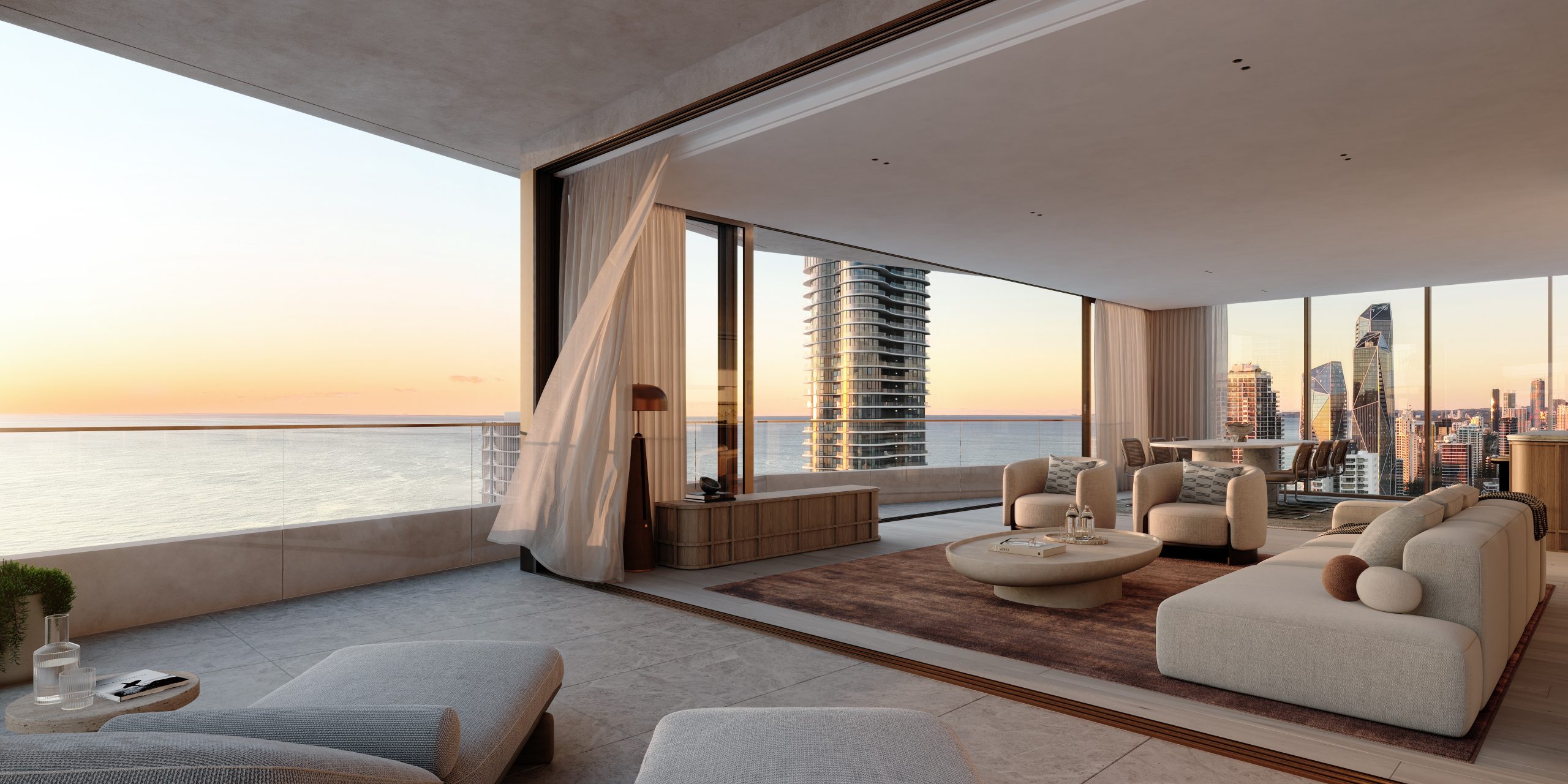
Mirvac’s 45-level Trielle has topped out at Yarra’s Edge, pairing riverfront apartments with wellness facilities, private dining and resident services.
3 min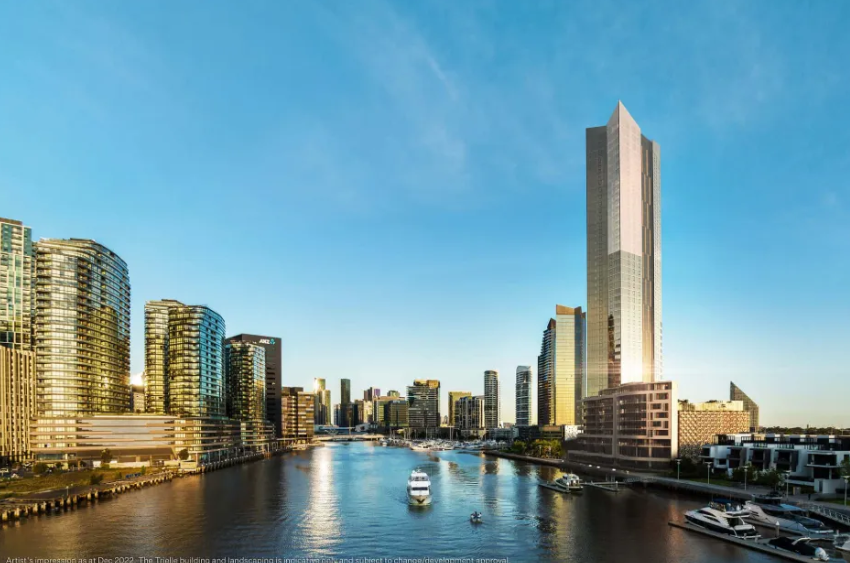
Mirvac has topped out Trielle at Melbourne’s Yarra’s Edge, with more than 70 per cent of the riverfront development sold and approximately 80 per cent of purchasers intending to make their apartment a home.
The figures, released on September 22, point to an owner-occupier audience for one of the precinct’s final residential towers. Mirvac began developing Yarra’s Edge in 2003, and its latest addition occupies one of the remaining absolute riverfront sites.
Mirvac CEO of Development Stuart Penklis said existing residents were among those moving up within the neighbourhood.
“Many purchasers already have a connection to Yarra’s Edge,” Mr Penklis said, describing buyers whose changing needs were encouraging an upgrade within the precinct.
“As one of the final residential towers within Yarra’s Edge, Trielle represents the culmination of more than two decades of creating one of Melbourne’s most established and sought-after waterfront communities,” Penklis said.
“Positioned on the Collins Street axis with absolute river frontage, Trielle offers residents a rare opportunity to enjoy sweeping views across the Yarra River, Melbourne skyline and Port Phillip Bay, while remaining seamlessly connected to the CBD. With Trielle now more than 70 per cent sold, we’re continuing to see strong demand from buyers seeking quality homes in established locations.”
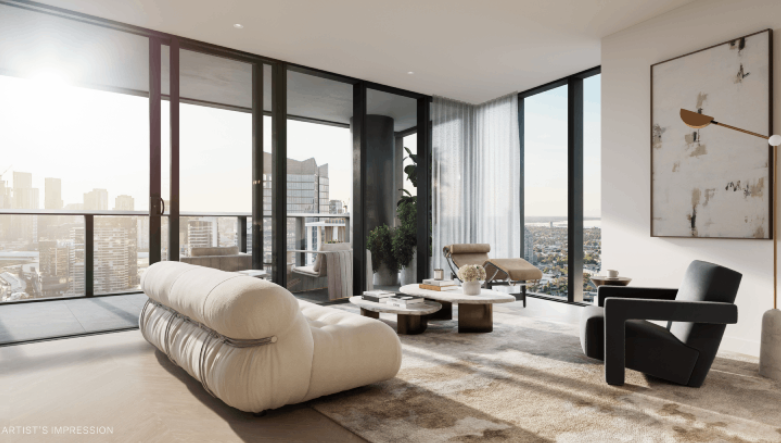
The developer also flagged a penthouse and sub-penthouse collection with larger layouts, premium finishes and broad outlooks. The planned wellness centrepiece, The Oasis, encompasses a 900-square-metre elevated urban rainforest.
Mirvac General Manager Residential Development Victoria Elysa Anderson said Trielle had resonated strongly with buyers seeking a rare lifestyle offering in Melbourne.
“Opportunities to secure a new luxury residence on a riverfront site of this calibre are incredibly rare, particularly within a community like Yarra’s Edge,” Anderson said.
“What makes Trielle unique is the combination of exceptional views, world-class residential facilities and the lifestyle that already exists around it. Residents are buying into a mature waterfront community with parks, promenades, dining, wellness and strong community connections already in place.”
The 45-level tower brings a substantial new presence to that waterfront. Its residential offering spans one-, two-, three- and four-bedroom apartments, with Signature, Prestige and Sub-Penthouse collections accommodating different household sizes. The north-facing position connects the apartments visually to the river and city beyond.
Seven storeys above the promenade, the planned Oasis combines planting and a running stream with a Scandinavian-inspired wellness club developed with spa specialist Naomi Gregory. Facilities include a 25-metre lap pool, hot magnesium pool, sauna, hydrotherapy, a gym, yoga and Pilates room, and treatment spaces.
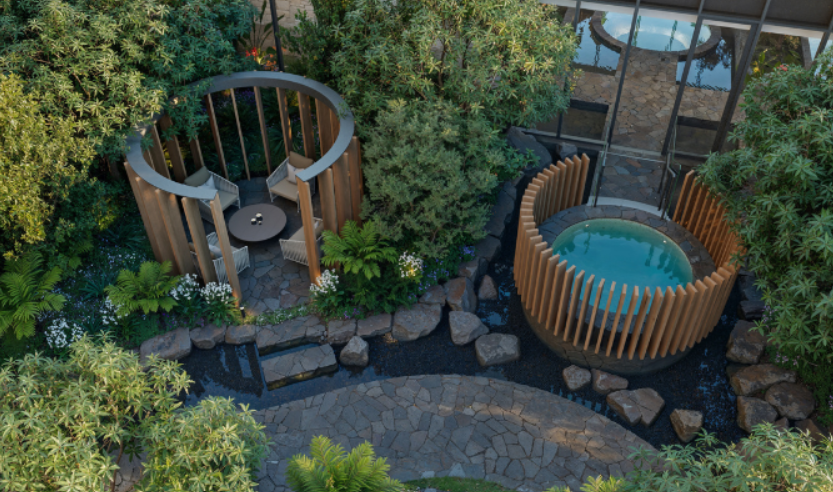
The amenity extends beyond exercise. Residents will have access to The Biblioteca library and workspaces, ground-floor work pods, and The Salone piano lounge. A private Chef’s Table dining room offers a setting for larger gatherings, while a cinema, games room and sports lounge broaden the entertaining options. Concierge services and a dog-wash area support everyday routines.
Trielle comprises a collection of one, two, three and four-bedroom residences. Reflecting strong demand from owner occupiers, approximately 80 per cent of purchasers to date intend to live in their homes, highlighting the project’s appeal to those seeking a long-term waterfront lifestyle.
Mirvac has recently delivered The Albertine, a premium apartment development on the edge of Melbourne’s CBD, and is nearing completion of Prince & Parade in Brunswick, further strengthening its portfolio of thoughtfully designed apartment communities in some of Melbourne’s most sought-after urban locations.

BMW has unveiled the Neue Klasse in Munich, marking its biggest investment to date and a new era of electrification, digitalisation and sustainable design.

The Swiss watchmaker’s first collaboration with Atlassian Williams F1 Team produces two sporting Laureato models inspired by the team’s 2026 racing car.