Joby Aviation’s NYC Air Taxi Test Flight Is Proving Flying Cars Are Real
Joby Aviation has completed its first New York City air taxi test, signalling that flying cars are moving closer to reality.

 2 min
2 min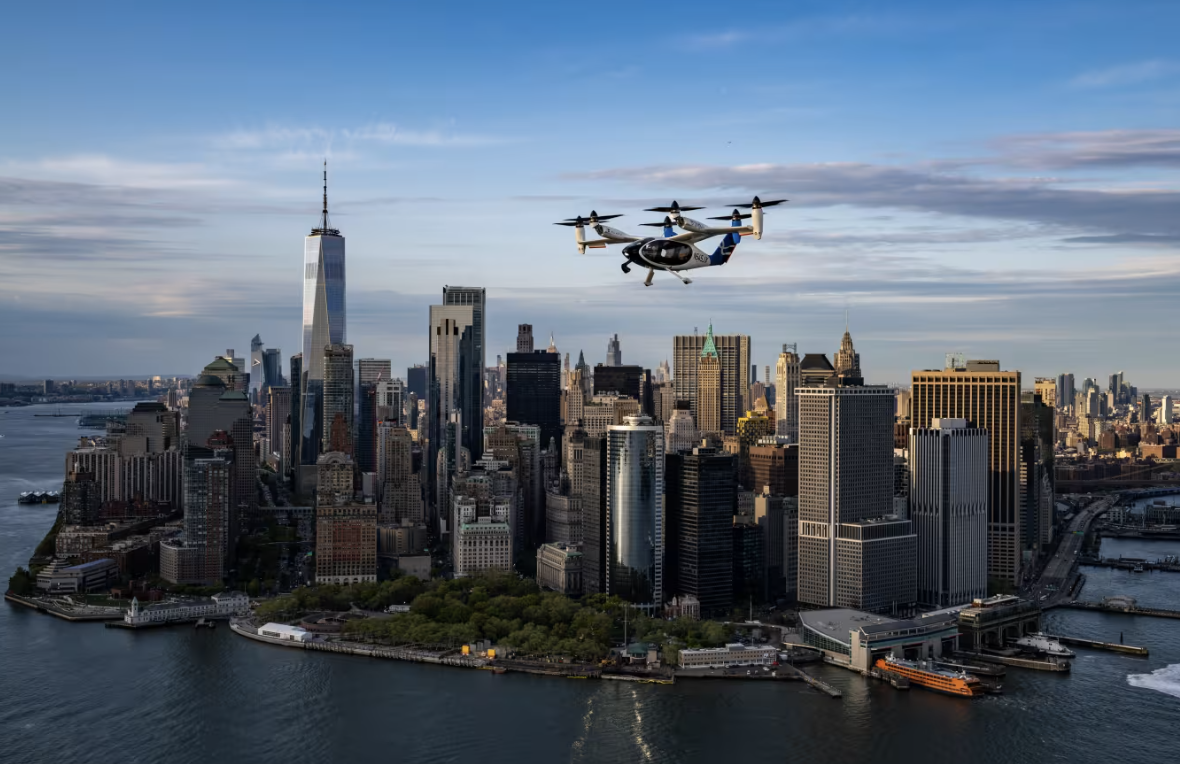
As the song “New York, New York” made famous by Frank Sinatra puts it, if you can make it there, you can make it anywhere.
That’s what Joby Aviation is hoping. Its stock is rising in early trading on Monday following Joby’s announcement that it had completed the first point-to-point air taxi demonstration in New York City. The flight was the first in a week-long series of test flights.
Joby stock rose 6.4% on Monday, closing at $9.04, while the S&P 500 rose 0.1% and the Dow Jones Industrial Average fell 0.1%.
Joby’s aircraft left JFK Airport and landed at multiple sites across the city’s existing heliport network, including Downtown Skyport and the West 30th Street and East 34th Street heliports in Midtown, according to the news release.
The flights are part of the electric vertical takeoff and landing, or eVTOL, Integration Pilot Program, or eIPP, launched by the Transportation Department in 2025 to accelerate the development and adoption of air taxis.
Joby and its peers are working on eVTOLs, which are quieter and easier to operate than traditional helicopters, opening up potential urban air taxi markets. Urban air taxis are why Joby’s products are sometimes called flying cars.
Coming into Monday trading, Joby stock was down 36% year to date, but up 31% over the past 12 months.
Shares have been volatile . Joby doesn’t generate sales yet and trades largely on news flow related to aircraft certification and the start of commercial service in the Middle East. Both are expected in late 2026.
Middle East sentiment appears to be weighing on shares. Joby stock was down about 16% since fighting broke out in Iran.
Wall Street expects the company to post roughly $110 million in sales in 2026. Sales are projected to rise to $1.1 billion by 2029 and $2 billion by 2030. Predicting aircraft certification and demand has been hard for analysts. Three years ago, the 2029 sales estimate was closer to $3 billion.
 Copyright 2020, Dow Jones & Company, Inc. All Rights Reserved Worldwide. LEARN MORE





From making unpopular decisions to learning when to listen, leaders from five businesses reveal what nobody prepared them for — and how running a company has challenged their expectations.

Technology and semiconductor shares fell sharply as investors questioned the debt financing the AI infrastructure boom and confronted higher rates and Chinese competition.
Tesla’s new Roadster used suction technology and SpaceX-derived thrusters to jump and flip—but production, price and road legality remain unresolved.
3 min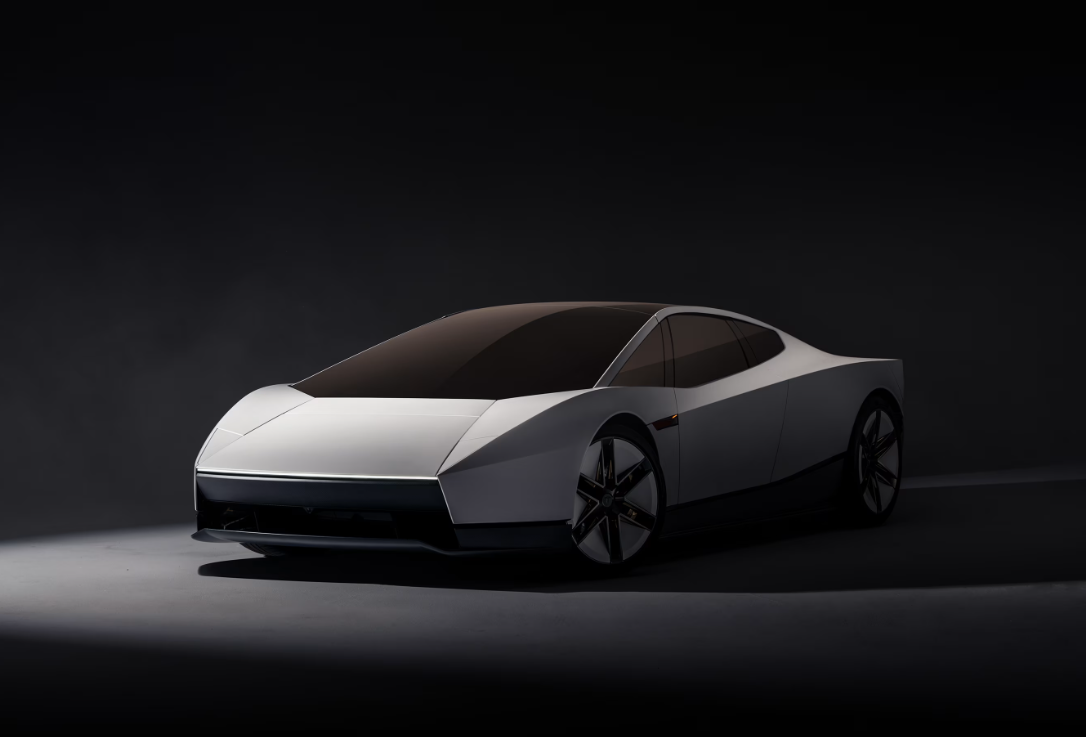
Tesla has finally revealed its radically redesigned Roadster—and delivered the airborne spectacle Elon Musk has been promising for years.
Unveiled at a SpaceX testing facility near Waco, Texas, the new electric supercar drove onto a steeply curved ramp, used a suction system to cling to its underside and launched into the air. Cold-gas thrusters stabilised the vehicle as it rotated and returned to the ground.
In another demonstration, the Roadster cleared a line of Tesla vehicles that included a Semi, Cybertruck, Cybercab, Model Y and Model 3.
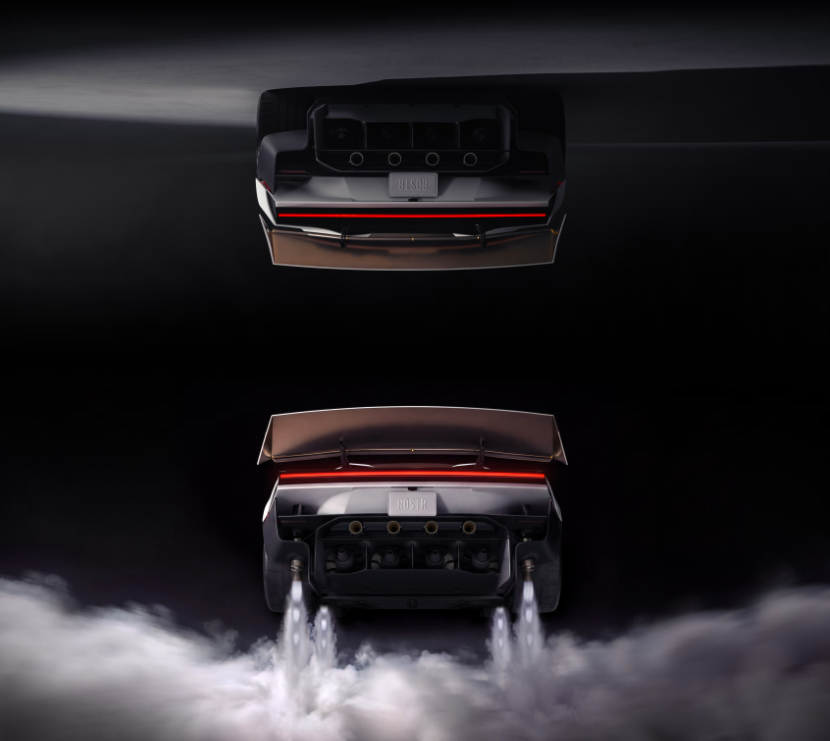
It was an extraordinary stunt. Whether it proved Tesla has created a genuine flying car is another matter.
The vehicle did not demonstrate sustained, controlled flight of the kind associated with an aircraft or electric vertical take-off and landing vehicle. Its thrusters instead produced brief powered leaps, rotation and landing control.
“We’re not talking about sustained flight,” Smithsonian National Air and Space Museum curator Roger Connor told CNN. “We are literally talking about hopping.”
How does it work?
Tesla has outlined three intended Roadster configurations.
The two-seat Performance model is the comparatively conventional version, although little about it sounds ordinary. It uses active aerodynamics and what Tesla calls a multi-mode suction system to increase downforce and allow the car to adhere to steep or inverted surfaces.
The two-seat Thrust adds rear-mounted cold-gas thrusters, designed to deliver acceleration from zero to 60mph—approximately 97km/h—in less than one second.
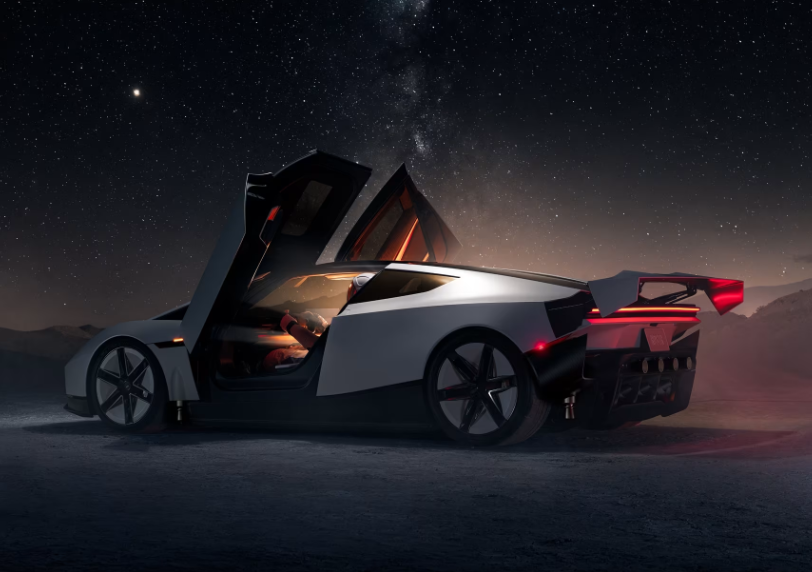
At the top is the single-seat Rocket, equipped with 10 thrusters positioned around the vehicle. This is the version intended to perform the airborne manoeuvres demonstrated in Texas.
Tesla engineering vice-president Lars Moravy said the system uses approximately 600 litres of compressed air. Carbon-fibre-wrapped pressure vessels occupy available spaces throughout the car, supplying the thrusters used for acceleration, lift and directional control.
The technology is more closely related to a rocket reaction-control system than a conventional flying-car powertrain. Rather than producing continuous lift through wings or propellers, it releases highly pressurised gas to generate short bursts of thrust.
Tesla says all three versions will offer approximately 300 miles—or 483 kilometres—of driving range and a top speed exceeding 230mph, equivalent to about 370km/h.
These remain company claims rather than independently verified production specifications.
Can buyers order one?
Reservations have reopened in selected markets. According to reporting from the launch, Tesla is seeking US$50,000 to reserve the Performance variant and US$250,000 for the Thrust. Access to the Rocket is described as invitation-only.
No final purchase price was announced, and Tesla has not confirmed Australian pricing, delivery timing or regulatory approval.
Musk said production would begin in 2028. That should be treated as an ambition rather than a settled delivery date.
The second-generation Roadster was originally unveiled in 2017 and was expected to reach customers within several years. The program was subsequently delayed in 2020, 2021, 2023 and 2024. Some customers have consequently held substantial reservations for close to a decade.
There are also formidable regulatory questions. A road-registered vehicle capable of deliberately leaving the ground, rotating and landing among other traffic does not fit neatly within existing vehicle standards. Its compressed-air system, pressure vessels and unconventional manoeuvres would require extensive safety assessment.
The more plausible outcome is that Tesla produces the Performance and perhaps Thrust versions for road and track use, while tightly restricting the Rocket’s airborne functions—or reserving them for controlled environments.
Tesla has produced a genuine moving prototype capable of remarkable stunts. It has not yet demonstrated that customers will be permitted to repeat them on public roads.
For now, the Roadster is real enough to jump. Whether it becomes a car people can buy, register and use as demonstrated remains the more consequential test.

A long-standing cultural cruise and a new expedition-style offering will soon operate side by side in French Polynesia.

A thoughtful timber-led renovation in Byron Bay has reimagined an existing house as a warm, resort-style family sanctuary grounded in natural materials.