5 ‘Dream Kitchen’ Upgrades That Homeowners Tend to Regret
Are you lusting over the costly custom features that are flooding social media—from pot-fillers to library ladders? According to design pros, many are just plain silly.

 3 min
3 min
A YEAR AGO I found myself teetering demi-pointe on the soapstone counter of my newly renovated kitchen wondering why I had asked for cupboards up so high.
Why had I fallen prey to the Instagram Reels and TikTok videos that malign the gap between cabinets and ceiling? My top cupboards, which hiked the cost of my cabinets about 35%, finished the millwork handsomely, but they were basically unusable.
Before you, too, succumb to custom-kitchen lust, here are five “must-haves” that design pros, and some reality-checked clients, say you almost certainly don’t need.
1. Continent-Sized Kitchen Islands
When rapper Cardi B revealed her new New Jersey kitchen island on Twitter, now X, she strutted across its surface—and got quite a ways without even nearing the edge of what appears to be a six-slab marble behemoth. In marginally less flamboyant kitchens across America, islands of 15 to 18 feet, roughly the size of SUVs, roost.
Debbie Travis, a veteran host of home-design TV, wanted one for a villa in Tuscany where she welcomes guests for retreats. Her self-described vision: a 16-foot counter surrounded by “a dozen women making pasta, drinking prosecco and laughing.” With the dishwasher and sink on one side and the stove on the other, she says she’s “constantly pushing the cutting board across the island and running left or right to the other side.”
Said Atlanta-based kitchen designer Matthew Quinn of these expansive surfaces, “You literally have to use a Swiffer to clean the middle.”
2. Pot Fillers
“A wall-mounted faucet near a range in theory is great because you can fill a big pot with water and not have to carry it from the sink,” says Christopher Peacock, owner of an eponymous luxury cabinet company in New York. “But it’s ridiculous,” he pointed out. After you’re done, say, boiling several pounds of pasta, you have to carry the pot to the sink to drain the water. “For $5,000, this one’s often a complete waste of time.”
If you don’t use the tap frequently enough, Quinn warns, “you have to open the valve, drain it into a vessel and dump out that water, which will be full of sediment.”
3. Over-Glowing Pantries
“LED-lit shelves and drawers are huge,” said Jaqui Seerman. The interior designer says her Los Angeles studio creates pantries in which everything is decanted and then lit like a boutique. “A surge of people are asking themselves, ‘If I’m creating a Reel of myself cooking, how does the olive oil look and how does its background look too,’ ” she said, “but it’s vanity, not utility.”
4. Workstation Sinks
Brands from Delta to the Galley, a high-end purveyor, offer workstation sinks—trough-size basins up to 7 feet long with myriad inset components, including cutting boards, colanders, dish racks and entertaining kits rife with metal ramekins. Moving the parts looks cool on video.
The drawbacks? De-gunking the slim horizontal ledges and tight corners that support the layers of add-ons, not to mention storing these accoutrements. And those cutting boards? Architect-builder Robert M. Berger, in Westport, Conn., says they’ll often discolour, stain and warp. He advises sanding and treating them with mineral oil pre-use.
Quinn objects to the ergonomics. “We designers create work zones and task areas for comfort and efficiency,” he said, “and now everyone’s jammed into the sink trying to cut and prep and wash.”
5. Library Ladders
They may evoke sweetly analog book stores and reading rooms, but in a kitchen, library ladders “are 98% charm, 2% utility,” said Peacock.
Colleen Silverthorn had designer Meredith Heron install a single ladder that hooks onto rails in the kitchen, laundry and family room in her Regina, Saskatchewan, home. “You need two hands to bring down anything, but you have to hang on while you’re up there, so you only have one,” she admits. “It’s absolutely beautiful [but] doesn’t work at all in the kitchen.” In the other rooms she uses it to retrieve wrapping paper or books, “anything you can toss down onto the floor.”
Sophie Donelson is the author of “Uncommon Kitchens: A Revolutionary Approach to the Most Popular Room in the House” (Abrams).
 Copyright 2020, Dow Jones & Company, Inc. All Rights Reserved Worldwide. LEARN MORE





The Swiss watchmaker’s first collaboration with Atlassian Williams F1 Team produces two sporting Laureato models inspired by the team’s 2026 racing car.

Victorian auction buyers will soon receive a piece of information that has traditionally been withheld until bidding reaches it: the vendor’s reserve price. Under new property-sale and underquoting laws, agents must publish the agreed reserve at least seven days before an auction or fixed-date sale. Most changes begin on 1 October 2026 and apply to …
Continue reading “Victoria’s New Auction Rules Will Force Reserve Prices Into the Open”
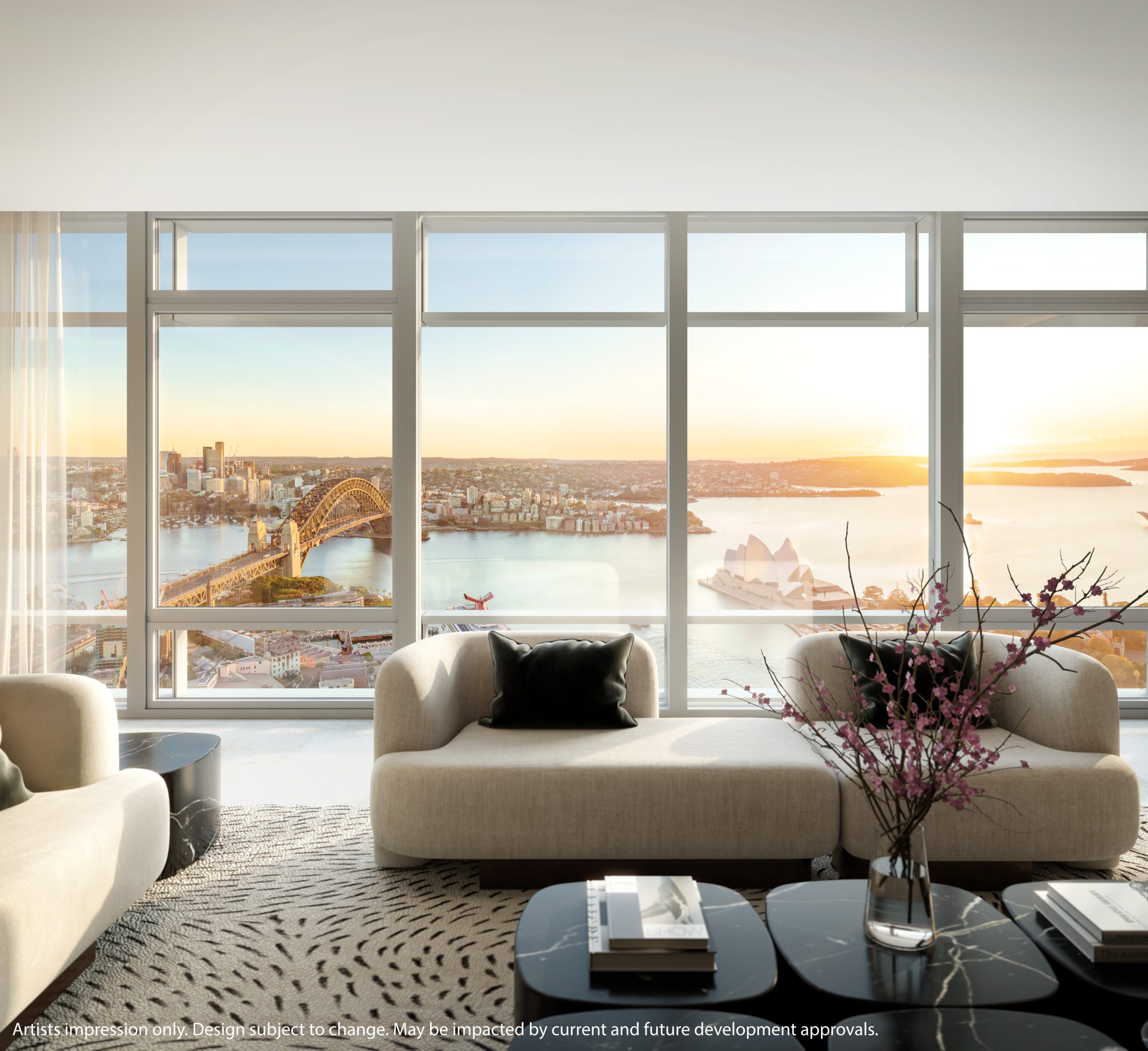

More than 10,000 homes, an expansive central park and a mix of hospitality, retail and wellness facilities will form Azizi Developments’ first master-planned community in the emirate.
2 min
Sharjah is set to receive one of its largest new residential communities, with Azizi Developments unveiling plans for a US$8.1 billion master-planned precinct containing more than 10,000 homes.
Named Azizi Florence, the freehold development will comprise 1,130 villas, more than 6,000 townhouses and 3,500 apartments. Three-bedroom townhouses will start from US$515,000, with an indicative rate of US$231 per square foot of saleable space.
The project marks the Dubai-based developer’s first move into Sharjah, expanding a portfolio that includes the planned Burj Azizi skyscraper and the Azizi Venice community in Dubai.
A park at the heart of the community
Rather than treating landscaping as an afterthought, Azizi Florence will be organised around a 1.7 million sq ft central park.
The wider precinct is planned as a self-contained neighbourhood combining homes with retail, hospitality, education, leisure and wellness facilities.
Six residential clusters will sit within the development, each with its own park, clubhouse, community centre and landscaped gardens. The approach reflects a broader shift across large Middle Eastern developments, where greenery, recreation and everyday convenience are increasingly central to the residential proposition.
The scale of Azizi Florence suggests it is intended to function as a neighbourhood rather than a collection of housing estates. Its mix of housing types should also give the project broader appeal, accommodating apartment buyers alongside families seeking townhouses or standalone villas.
Azizi expands beyond Dubai
Azizi Developments has delivered more than 45,000 homes to buyers from over 100 countries and says it has approximately 150,000 units under construction.
Much of its growth has been concentrated in Dubai, where its portfolio extends across Palm Jumeirah, Mohammed Bin Rashid City, Dubai South, Sheikh Zayed Road and Downtown Jebel Ali.
Its most prominent current project is Burj Azizi, which is intended to become the world’s second-tallest building. Azizi Florence represents a different type of undertaking: a low-rise, family-oriented community built around public space and daily amenity.
For company founder and chairman Mirwais Azizi, the Sharjah project also carries a personal connection. The emirate was his first home in the UAE more than three decades ago, adding a symbolic dimension to the developer’s expansion.
Sharjah’s residential ambitions grow
Although Dubai and Abu Dhabi have traditionally captured much of the international attention directed at the UAE property market, Sharjah has been steadily broadening its residential offering.
Large freehold communities such as Azizi Florence have the potential to attract both local families and international purchasers looking for comparatively accessible entry points into the Emirates’ property market.
At a starting price of US$515,000, the project’s three-bedroom townhouses will sit well below the cost of equivalent family homes in many of Dubai’s more established luxury communities.
The ultimate appeal, however, will depend on execution. At this scale, the quality of the public realm, connections between residential clusters and delivery of the promised supporting infrastructure will be as important as the homes themselves.
If those elements come together, Azizi Florence could help establish a new benchmark for large-scale residential development in Sharjah—and give buyers another option beyond the UAE’s better-known property markets.

Micro-needling promises glow and firmness, but timing can make all the difference.
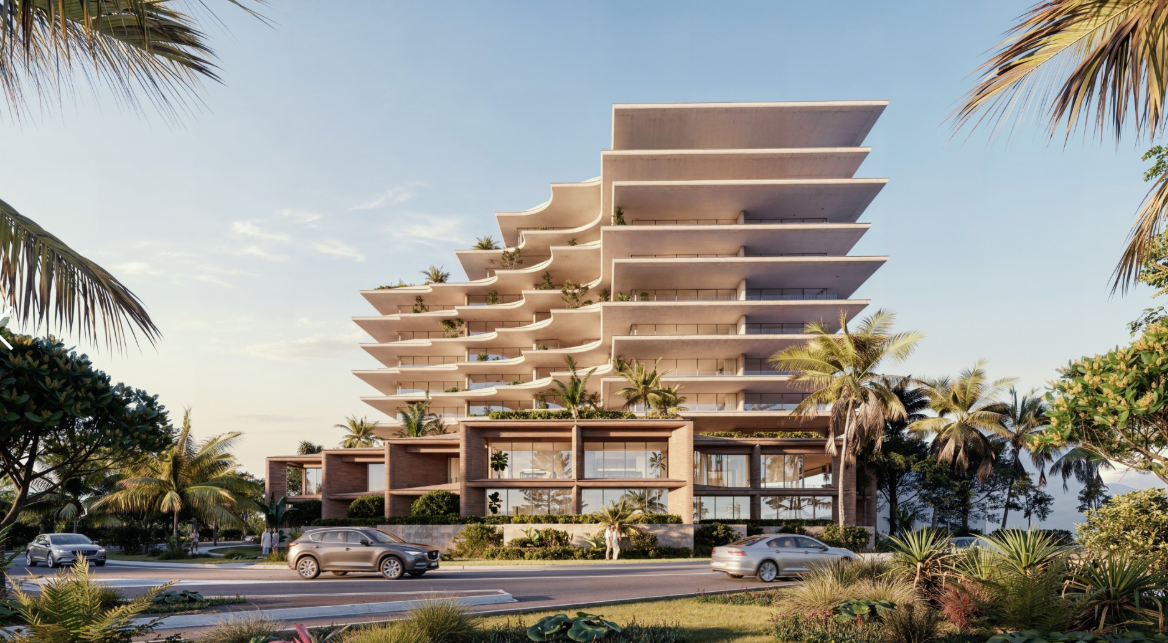
Queensland-based builder-developer MAYD has unveiled an exclusive first look at its anticipated ultra-luxury North Kirra mixed-use project as it lodges a minor amendment with the City of Gold Coast Council. The project sits across a 4,742sqm amalgamated landholding spanning seven parcels at 2–6 Pacific Parade and 27–33 Golden Four Drive, Bilinga, which MAYD secured in …
Continue reading “MAYD”s North Kirra Plans Unveiled Ahead of Early 2027 Launch”