Landslides Swallowed Up Houses in California. Owners Still Have to Pay.
Ongoing slides have caused devastating damage to homes on the Palos Verdes Peninsula, but owners remain on the hook for mortgages and other monthly fees—even if their properties are completely destroyed

 10 min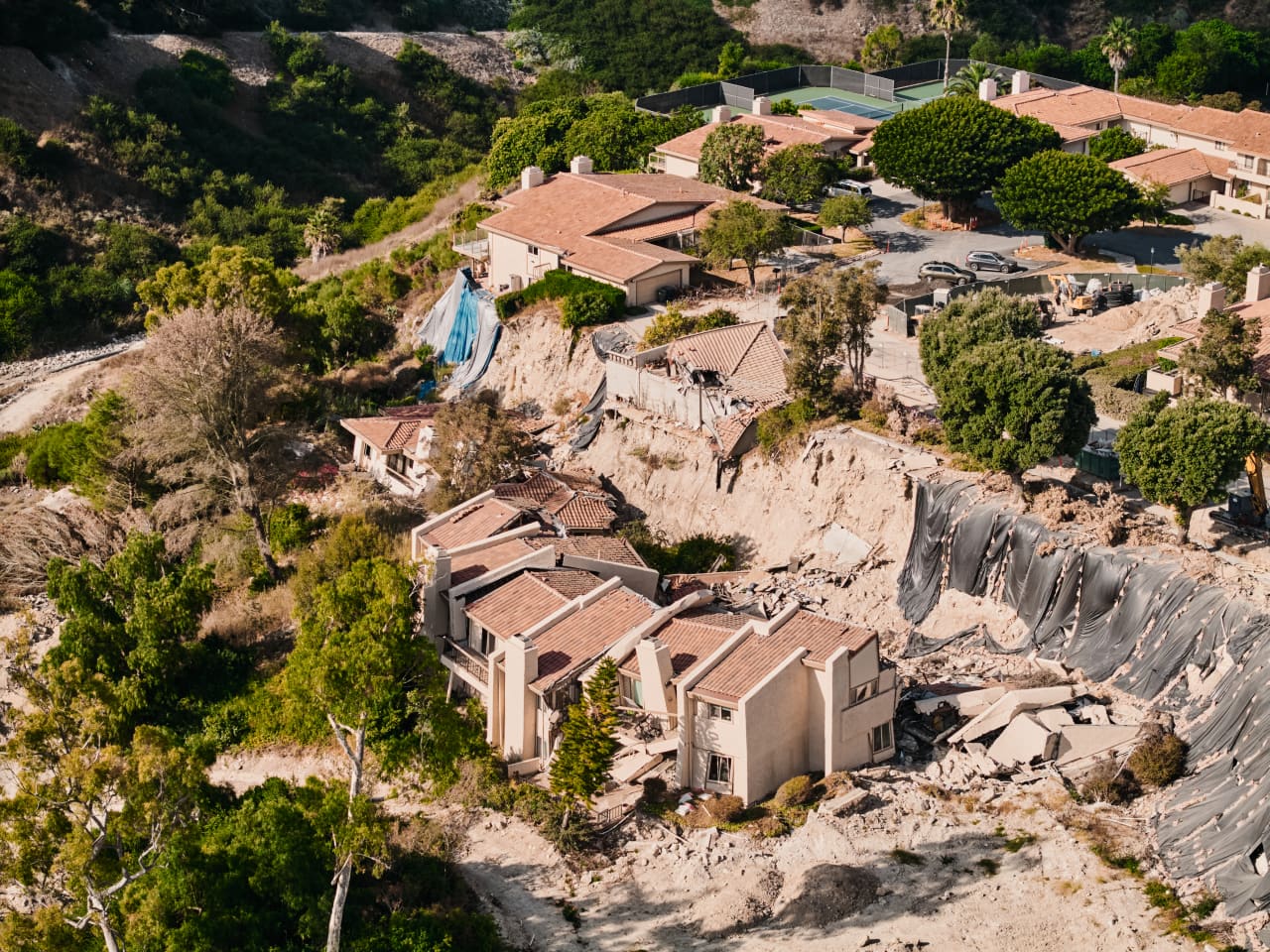
When Nic and Alison Grillo bought their home seven years ago in the Seaview neighbourhood of Rancho Palos Verdes, Calif., south of Los Angeles, Nic knew that the wider Palos Verdes Peninsula had multiple landslide zones. He grew up there.
But he had never heard of any issues happening in Seaview itself. An adjacent neighbourhood, called Portuguese Bend, is where there had been slides since the 1950s. Nic studied the geologist’s report he received and hired an inspector before closing on their four-bedroom, 1,800-square-foot, 1956 ranch house for $1.195 million. “I felt comfortable buying,” he says.
Then, in the summer of 2023, his neighbourhood started coming apart.
Today, there are foot-long cracks on the outside and inside of his house. Since June, two houses nearby have partially collapsed due to landslides and have been deemed unsafe; others were abandoned by owners spooked by the constant creaking of their houses as they were pulled apart by the ground crumbling beneath them. Power and gas were cut off in September, and some worry the sewage system will be next, which would mandate evacuation.
Nic, 45, estimates that he and Alison, a 42-year-old health clerk at an elementary school, have spent more than $25,000 over the past few months in an attempt to stay in their home. He bought a Tesla power wall and solar panels a few years ago, in case there were occasional power outages, but he never anticipated having to use them indefinitely. Now he’s added a generator, a propane tank, and a tankless water heater. They are using an REI solar camp stove to cook until they get hooked up to propane. They go days without showers.
Alison says they don’t want to leave, since two of their children are still in local schools. However, she says it has been hard not to get overwhelmed by it all. “This isn’t sustainable,” she says.
Nic, who works in medical-device sales, says he can’t afford to buy another house somewhere else because he doesn’t see any chance of selling the one he already owns, even at a discount, given what’s happening around it. His homeowners insurance doesn’t cover damages caused by land movement, which is standard for policies in the U.S.
“It’s scary. We are just taking it one day at a time,” he says.
Life in a Slide Zone
The roads on the Palos Verdes Peninsula, which juts into the Pacific Ocean south of Los Angeles, have been cracking for decades. A landslide in 1956 damaged over 100 houses in Portuguese Bend and has been moving ever since. In 1980, farther up in the city of Rolling Hills, a section known as the Flying Triangle started sliding. The movement was at a rate of 5 to 7 feet a year.
Now, triggered in part by periods of exceptionally heavy rainfall over the past two years, the rate of land movement has increased significantly. Some areas had reached a velocity of 7 to 13 inches a week and are currently averaging about 8 inches a week, or about 80 times faster than it was moving, on average, in October 2022, according to Mike Phipps, a geologist whose firm was hired by the City of Rancho Palos Verdes.
Geologists discovered a second slide this summer that is about twice as deep as the other tracked slides. That has been pushing out the slide area to almost double its size, from 380 acres to nearly 700 acres, says Phipps. A major concern is that it will continue to expand farther uphill, he says. Movement in another adjacent city, Rolling Hills, led SoCalGas to shut off gas on Sept. 16 to 37 homes, with a warning that power would follow in coming days.
About 44% of the country is at risk for a landslide, according to a new report by the United States Geological Survey. Homeowners in one of the Palos Verdes Peninsula slide areas, as in any of the areas across the U.S. that have been hit by landslides, such as Washington and western Pennsylvania, find themselves in a unique kind of financial hell. Insurance companies don’t write standard homeowner policies that cover landslide losses and surplus landslide policies aren’t available right now in California, according to the Insurance Information Institute. Mortgage companies expect loans to be paid, even if the underlying asset no longer exists or is damaged with no chance of repair; forbearance and forgiveness decisions are up to the individual bank, and they are loath to grant them.
Although some state legislatures, such as in Pennsylvania, are working to address the lack of financial recourse for slide victims, no measures are currently under way in California. If the area were declared a major disaster by President Biden, it would trigger access to emergency funds for individual homeowners via the Federal Emergency Management Agency, but the state of California hasn’t yet requested this declaration, saying the current situation doesn’t meet federal requirements for such action.
As a result, owners who don’t want to declare bankruptcy must still pay their mortgages, property taxes—barring a reassessment, which can sometimes take months—homeowner association and other fees, even if their home, and the land it sat on, no longer exists. For those whose homes are damaged, owners are left with few options except to either walk away or stay put and hope their home doesn’t sustain any further damage. Others believe the landslides will abate at some point in the future and trust that they will be able to sell their home when potential buyers simply forget about the landslide threat.
Wei Yen, 74, a retired finance officer, and his wife, Leesa Yen, 66, a teacher, owned one of eight homes that, in July 2023, slid off a cliff into a canyon in Rolling Hills Estates, in an area that had never had a landslide before. It is completely separate from the Portuguese Bend slide complex. The city has a mixture of townhomes and single-family homes that sell for anywhere from $1 million to $4 million. Five other homes were badly damaged.
The Yens bought their 2,000-square-foot, three-bedroom, three-bathroom townhome on Peartree Lane in Rolling Hills Estates in 2010 for $765,000. In early July 2023, Leesa noticed a skinny, 7-foot-long crack on the tiled patio outside the front door. A few days later, Wei noticed that the crack had expanded. The next day, one of their neighbors called the fire department over similar cracks. The department advised all the homeowners in the surrounding block to pack up essentials just in case. About six hours later, Wei was given 15 minutes to evacuate by the fire chief. By 9 a.m. the next day, the house, and the land on which it sat, started sliding into the adjacent canyon. “I was lucky to get out of there in time,” says Wei.
Now, a year later, the Yens’ home equity is gone. The property had been worth $1.55 million, according to Zillow , just before the slide. Now it is worthless, according to a letter from the city assessor’s office. They have a small mortgage, which they have no plans to ask the bank to modify because they worry their credit rating will be impacted and because they say they can afford it and feel responsible.
They are renting an apartment and had to buy new furniture and clothing, all of which is eating into their retirement savings. They lost what they estimate is around $500,000 worth of items that were precious to them, including antiques and art Wei collected throughout Asia in the 16 years he lived in Hong Kong. They are worried about looters, since the bottom of the slide is right next to a public trail. The danger of the collapsed structure has kept the Yens and public officials from going in.
“Mentally it’s very challenging,” he says. “I’m talking to a therapist for the first time in my life. I’m decimated by this. I see no way out. We asked for help and everyone said they’d do their best, but it’s been empty promises.”
“I didn’t realise I would have to start worrying again about finances in my 70s, ” he says. He says he might have to find a job.
Over in Seaview, Matt Stelwagen, 44, a supply-chain manager for a hospital, and his family moved out of their home in August. He bought his house in June 2022 for $2.5875 million. It was meant to be his forever home, where he and his wife could raise their son, who was 1 year old at the time. The pool cracked in July 2023. Over the next year, the floors started coming apart and the windows and doors would no longer shut. The floors became so uneven he could feel the house tilt, he says. The creaking noises at night from the moving and cracking were terrifying.
“We got to a point where mentally it was better for our stress levels and our son to get out,” he says. They are still paying the mortgage and taxes on the house, along with the rent on the house where they now live, a financial burden he says is staggering: His housing cost is now more than half his income. He’s paying for it through his salary and from savings. “We are stretched,” he says. “You make it work because you’re a parent and you want to provide a stable home life.”
He plans to get the house reassessed so he doesn’t have to pay such high taxes.
“We are exhausted,” says Stelwagen. He says he’s gone through stages, first feeling scared, then really upset and angry, and most recently putting his head down and trying to figure out what to do. “No one will come in with a cape and save me,” he says.
No One With a Cape
Efforts to stabilise the Portuguese Bend slide complex, moving for decades, stepped up in August 2023, when the city of Rancho Palos Verdes received a $23 million federal grant from FEMA. But the discovery this past summer of the deeper slide has made mitigation much more complicated. The project is being revised because of emergency work and the discovery of the deeper movement. Whether current attempts to slow the movement will be successful is still uncertain, says the geologist Phipps. The landslide velocity has decelerated since July, but it is still moving a foot a week in some areas. That means within a week of drilling a well to dewater the ground, that well could be damaged by the landslide. “It’s a Herculean task,” he says.
Lacking other financial recourse, dozens of residents affected by the slides in Seaview and Portuguese Bend have individually and jointly filed legal claims, alleging myriad failures that have contributed to the slide activity, including insufficient stormwater sewers and drains. Defendants include the city of Rancho Palos Verdes, the city of Rolling Hills, CalWater, Los Angeles County, and the Rolling Hills Community Association of Rancho Palos Verdes, exposing hundreds of homeowners in Rolling Hills to liability.
Rancho Palos Verdes mayor John Cruikshank says he fully understands why people are frustrated. He thinks Southern California Edison should be more open to alternative energy sources, such as power walls and solar; he’s working to get the state to expand its emergency declaration and to request FEMA funding so that both will also support individual homeowners who have been displaced. But suing the city doesn’t make sense, he says. Of its 15,000 homes, about 400 are in the landslide area. “Everyone’s tax dollars are going to help. Why are we being sued by people who we are trying to help?” he says.
These legal fights could take years to resolve and owners are in need of assistance now. Aside from some small local outreach efforts, not much has been forthcoming. One of the biggest supporters after the 2023 Peartree slide in Rolling Hills Estates was a local high-school student named Christian Yoshino, who lives down the street from where the houses collapsed. He went door to door asking for donations, raising about $5,300 that was distributed to affected homeowners, based on need, by the Rotary Club of Palos Verdes Peninsula for necessities such as medicine, clothing and beds.
A lack of help is the norm in many communities affected by landslides, which have been exacerbated in recent years due to extreme weather events such as heavy rainstorms and fires that destabilise soil. Some states are trying. In Pennsylvania, where a landslide outside Pittsburgh last January forced homeowners to evacuate, a bill to create a new state landslide-insurance program for homeowners is up for consideration by the House of Representatives.
After a landslide in the city of Ketchikan, Alaska, damaged homes and killed one person in August 2024, affected residents were allowed to apply for assistance and temporary housing programs. In Washington state, where a mudslide in 2014 east of Oso destroyed dozens of homes and killed more than two dozen people, the governor successfully got President Obama to declare a major disaster, opening up FEMA aid to homeowners and funding a one-time program to buy back properties in the Oso slide.
A Buying Opportunity?
Until the power was cut in September, homes were still selling in Portuguese Bend and Seaview, says Jason Buck, with Re/Max Estate Properties. A 1,834-square-foot house in Seaview sold for $1.78 million in July, not far off its listing price. A four-bedroom, 1,994-square-foot house in the heart of upper Portuguese Bend sold for $800,000 in May, 22% lower than its listing price. But, Buck says, news of the damage and gas and power cuts have started to affect prices on houses in areas near the slide zone.
Buyers are now backing out of deals. Charlie Raine, a real-estate agent for Coastal Legacy, currently has a listing for a four-bedroom, 4,000-square-foot house in Seaview. It first went on the market in June 2024 for $1.95 million. It is currently listed at $1.45 million. Raine says buyers terminated an agreement in August after they saw news-media images of the house in the same shot as a construction project that made it look like a disaster zone. A second buyer, five days into a 12-day escrow, backed out after the power was cut in September.
During showings, Raine uses a cardboard model he made to demonstrate how lifting a house and inserting steel I-beams can, he says, keep it from damage when the earth moves due to fissures. It is a technique his own parents used on their home in 1986 in the Flying Triangle in Rolling Hills and which other homeowners are spending hundreds of thousands of dollars to do now in Portuguese Bend.
The marketing for Raine’s listing now includes a note that warns that the home has been adversely affected by the land movement in Seaview, but assures potential buyers that “there are methods available to retrofit the foundation and isolate the affected portion of the home from the movement.”
Rancho Palos Verdes is currently waiving permit fees for what it calls “temporary solutions” such as placing homes on cargo structures and inserting I-beams. Amy Recenmacher, a professor of civil and environmental engineering practice at the University of Southern California, says even if horizontal beams under the house could stop the house from splitting apart, they wouldn’t stop it from moving in a big slide. Placing a reinforced house atop vertical footings to stop it from moving with the slide is impractical in many cases; to be effective, the footings would have to be set into stationary ground or bedrock below the active slide. The Portuguese Bend slide extends hundreds and hundreds of feet deep.
Alejandro Bustillos, president, AB Structural Design, who drew the plan for Raine, says the design isn’t aimed at big hillside collapses; he says it works when fissures appear under a house causing slow movement because adjustable supports allow the house to “follow the movement without breaking apart.”
The price on a house across the street from Raine’s listing just dropped to $999,000 on Sept. 12 from $1.39 million after an investment group backed out of a contract. The listing, advertised on Zillow as an “enchanting storybook home,” with three bedrooms, 1,800 square feet and a new renovation, now says: “Seller has found replacement home and is ready to move immediately. +Incredible Opportunity + NON CONTINGENT CASH OFFERS ONLY.” The listing also warns that gas and electricity have been disconnected by the city.
In the upper section of Portuguese Bend, an area full of artists and teachers where the damage is particularly bad, residents are thinking long term. Tyson Schilz, 40, an electrical contractor, spent $875,000 in 2014 building a 3,700-square-foot, five-bedroom home in an area called Monks Lots, where landowners won a lawsuit in 2008 to overturn a building moratorium put in place by the city in 1978 over landslide concerns.
In December, Schilz realized his house was ripping in two pieces, so he decided to finish the job, spending several hundred thousand dollars raising it and splitting the roof in two. He cut the utilities and reinstalled them into the two, separated halves, among other measures.
“We’re not crying crocodile tears,” says Schilz. “It was always in the back of my mind that it could slide one day.” He is renting a place in nearby Manhattan Beach for the next year while his son finishes high school. He is hoping that in 10 years or so the land will have settled and everyone will have forgotten what happened, at which time he will either move back or sell. “I’m long landslide,” he says.
Corrections & Amplifications undefined SoCalGas cut gas to 37 homes on Sept. 16. An earlier version of this article incorrectly said it had cut gas to 35 homes. (Corrected on Sept. 20)
 Copyright 2020, Dow Jones & Company, Inc. All Rights Reserved Worldwide. LEARN MORE





On the owner’s deck, a 20-metre swimming pool incorporates Feadship’s patented ContraWave technology and extends indoors as a suspended, glass-bottomed infinity pool.

Automobili Lamborghini is turning its attention to something considerably more difficult to define: what makes Italian excellence uniquely Italian?

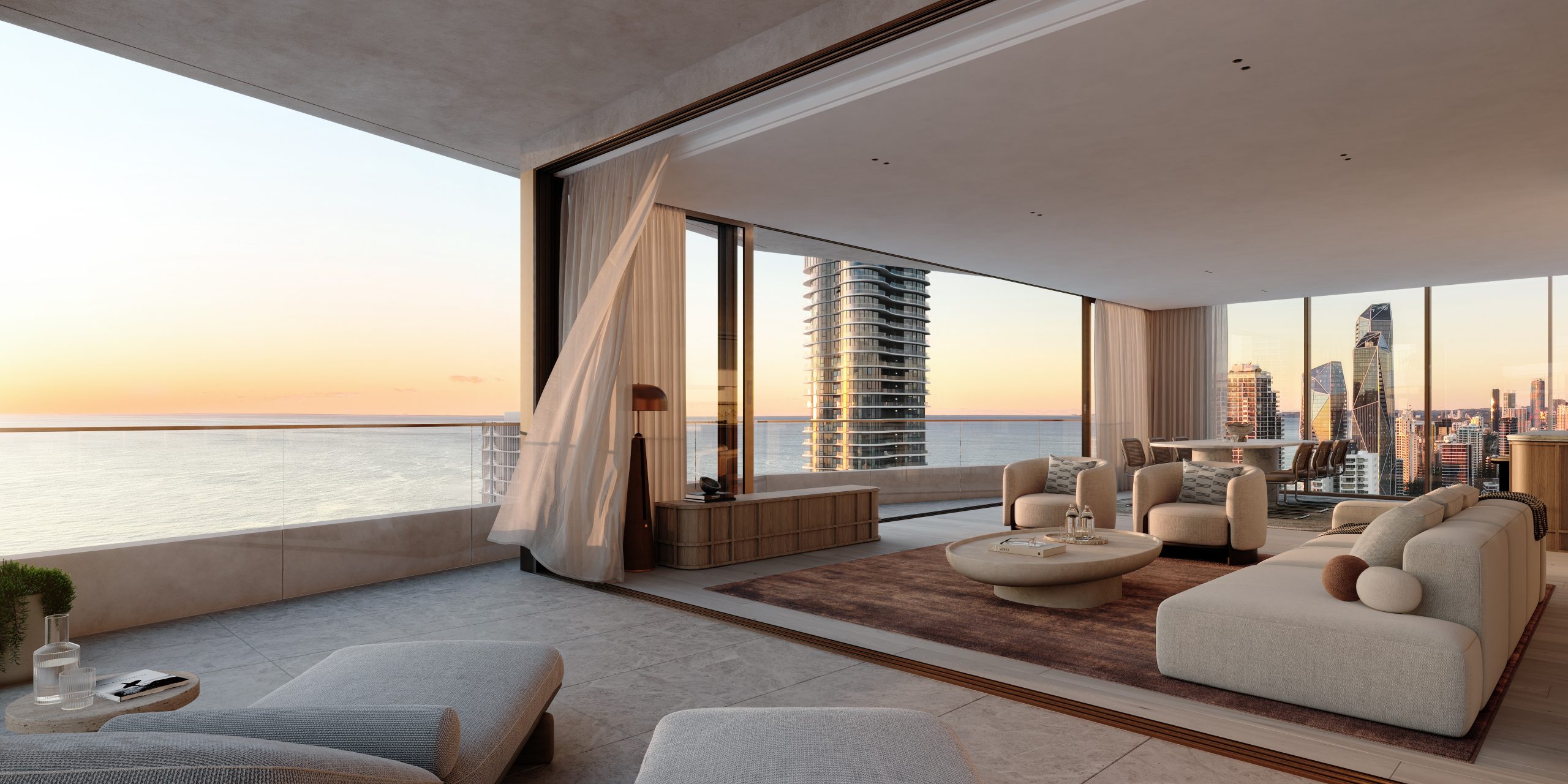
Mirvac’s 45-level Trielle has topped out at Yarra’s Edge, pairing riverfront apartments with wellness facilities, private dining and resident services.
3 min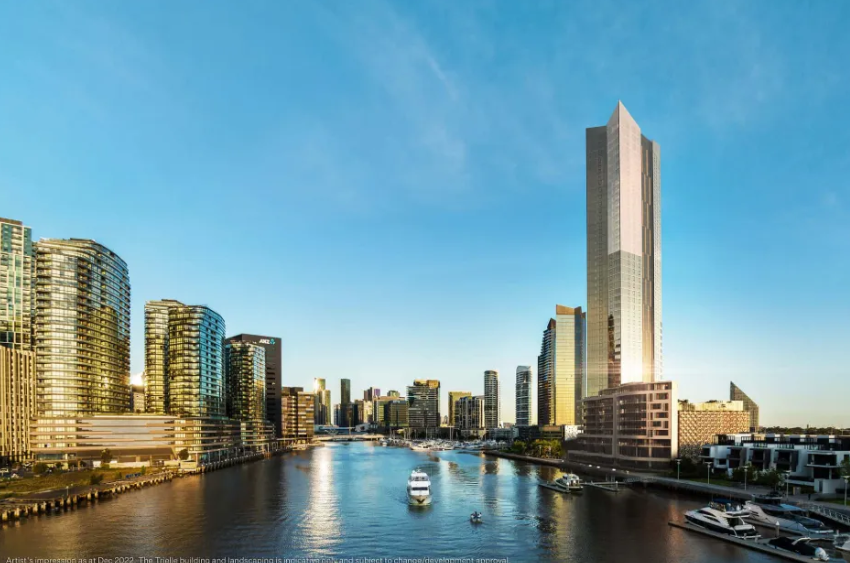
Mirvac has topped out Trielle at Melbourne’s Yarra’s Edge, with more than 70 per cent of the riverfront development sold and approximately 80 per cent of purchasers intending to make their apartment a home.
The figures, released on September 22, point to an owner-occupier audience for one of the precinct’s final residential towers. Mirvac began developing Yarra’s Edge in 2003, and its latest addition occupies one of the remaining absolute riverfront sites.
Mirvac CEO of Development Stuart Penklis said existing residents were among those moving up within the neighbourhood.
“Many purchasers already have a connection to Yarra’s Edge,” Mr Penklis said, describing buyers whose changing needs were encouraging an upgrade within the precinct.
“As one of the final residential towers within Yarra’s Edge, Trielle represents the culmination of more than two decades of creating one of Melbourne’s most established and sought-after waterfront communities,” Penklis said.
“Positioned on the Collins Street axis with absolute river frontage, Trielle offers residents a rare opportunity to enjoy sweeping views across the Yarra River, Melbourne skyline and Port Phillip Bay, while remaining seamlessly connected to the CBD. With Trielle now more than 70 per cent sold, we’re continuing to see strong demand from buyers seeking quality homes in established locations.”

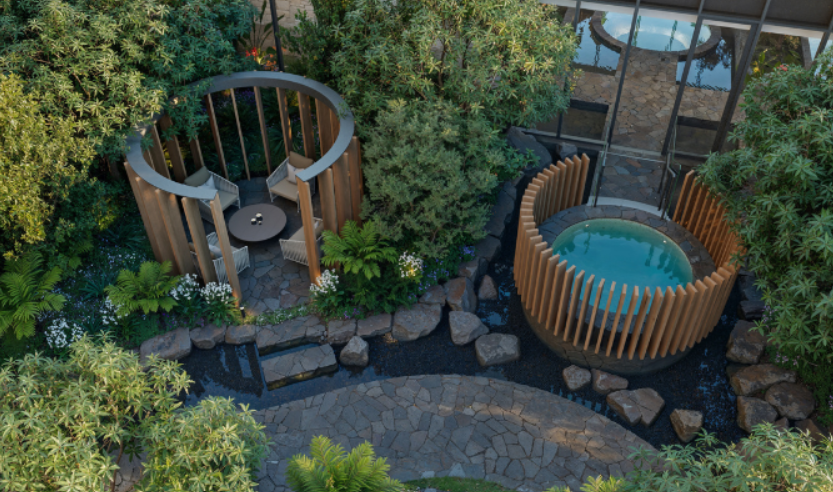
The developer also flagged a penthouse and sub-penthouse collection with larger layouts, premium finishes and broad outlooks. The planned wellness centrepiece, The Oasis, encompasses a 900-square-metre elevated urban rainforest.
Mirvac General Manager Residential Development Victoria Elysa Anderson said Trielle had resonated strongly with buyers seeking a rare lifestyle offering in Melbourne.
“Opportunities to secure a new luxury residence on a riverfront site of this calibre are incredibly rare, particularly within a community like Yarra’s Edge,” Anderson said.
“What makes Trielle unique is the combination of exceptional views, world-class residential facilities and the lifestyle that already exists around it. Residents are buying into a mature waterfront community with parks, promenades, dining, wellness and strong community connections already in place.”
The 45-level tower brings a substantial new presence to that waterfront. Its residential offering spans one-, two-, three- and four-bedroom apartments, with Signature, Prestige and Sub-Penthouse collections accommodating different household sizes. The north-facing position connects the apartments visually to the river and city beyond.
Seven storeys above the promenade, the planned Oasis combines planting and a running stream with a Scandinavian-inspired wellness club developed with spa specialist Naomi Gregory. Facilities include a 25-metre lap pool, hot magnesium pool, sauna, hydrotherapy, a gym, yoga and Pilates room, and treatment spaces.
The amenity extends beyond exercise. Residents will have access to The Biblioteca library and workspaces, ground-floor work pods, and The Salone piano lounge. A private Chef’s Table dining room offers a setting for larger gatherings, while a cinema, games room and sports lounge broaden the entertaining options. Concierge services and a dog-wash area support everyday routines.
Trielle comprises a collection of one, two, three and four-bedroom residences. Reflecting strong demand from owner occupiers, approximately 80 per cent of purchasers to date intend to live in their homes, highlighting the project’s appeal to those seeking a long-term waterfront lifestyle.
Mirvac has recently delivered The Albertine, a premium apartment development on the edge of Melbourne’s CBD, and is nearing completion of Prince & Parade in Brunswick, further strengthening its portfolio of thoughtfully designed apartment communities in some of Melbourne’s most sought-after urban locations.

Paine Schwartz joins BERO as a new investor as the year-old company seeks to triple sales.

The sports-car maker delivered 279,449 cars last year, down from 310,718 in 2024.