Taking stories as old as time to a contemporary setting in the heart of Sydney
It’s a part of Sydney traditionally associated with Australia’s colonial past, but a cultural shift signals a more layered approach to history through public art
 3 min
3 min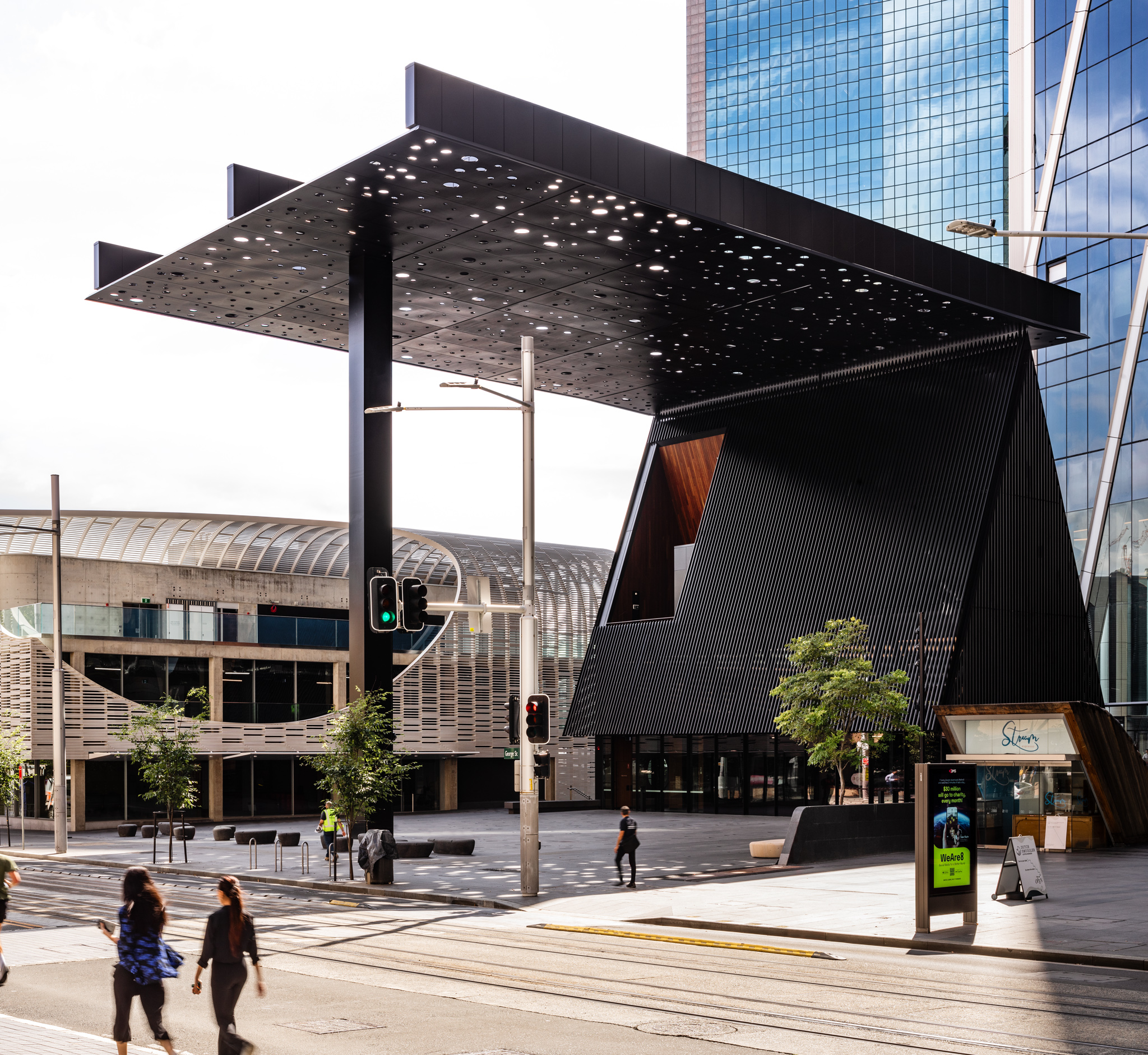
If Sydney is Australia’s premier destination, then Circular Quay is the gateway to the Emerald City. Best known for its access to the harbour, with the Sydney Opera House on one peninsular and the sandstone terraces of The Rocks on the other, it’s a hotspot for tourists and history buffs alike.
Unless, of course, your notion of history extends beyond the past 250 years.
In recent years, there’s been a move to reflect a more layered notion of the past that better reflects First Nations’ stories – a history that stretches back thousands of years. As this part of the city undergoes yet another renewal process, developers have taken the opportunity to engage with Indigenous artists to integrate stories that are thousands of years old into some of the newest buildings.
The latest edition are art installations that form part of Sydney Place, a new casual dining precinct connecting Pitt and George Streets near Circular Quay.
Following on from his success at the Venice Biennale, Indigenous artist Daniel Boyd was invited to create an interactive art installation as an entry point to the dining space at Sydney Place. Working with architect David Adjaye, Boyd has designed a soaring steel canopy on the George Street frontage featuring a roof punctuated with round holes to reflect the constellations of the night sky.
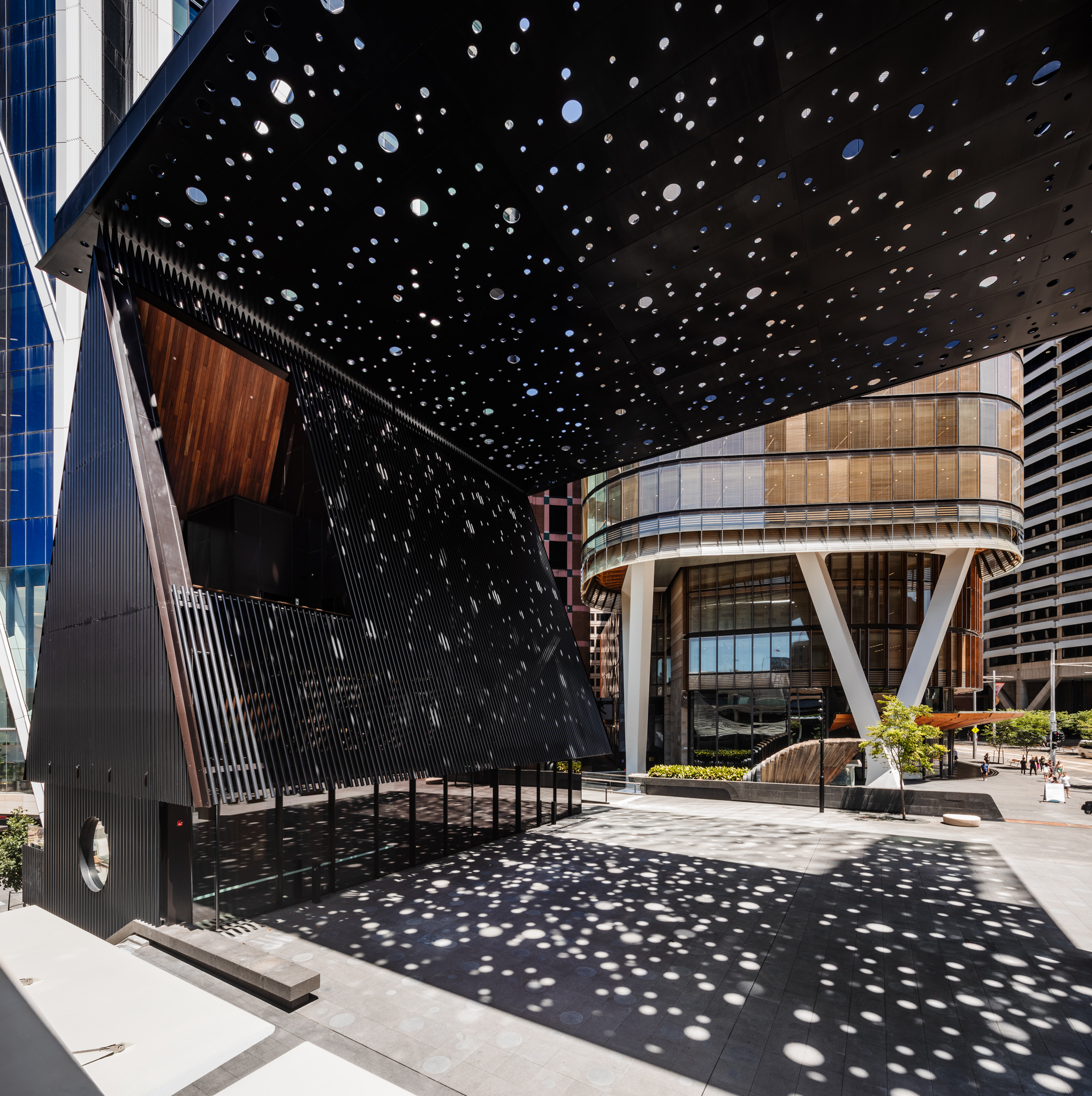
The full extent of Indigenous understanding of astronomy is only just beginning to be revealed but the artwork stands as a reminder that even in the centre of the CBD, there are larger forces at play.
“I was trying to create a building and space that wasn’t static and trying to use light to take the building into motion,” Boyd said. “It’s macro and micro at the same time, understanding that point in time and space.”
Boyd said the notion of layering histories over such a built-up site was one to be welcomed.
“It’s about acknowledging the history of the site in a more inclusive and equitable way,” Boyd said. “These opportunities to open spaces give First Nations people the chance to feel comfortable.
“They don’t have to grapple with the language of the built environment because it’s an open space that invites layers of association.”
Kamilaroi man Dennis Golding and fellow artist Louise Zhang also created work for Sydney Place in a collaboration using neon lights combined with traditional Chinese and Indigenous motifs.
Golding said both he and Zhang drew on their family experiences as migrants – Zhang’s from China and Golding’s from Gamilaroi and Biripi country – to create an artwork in the heart of Sydney.
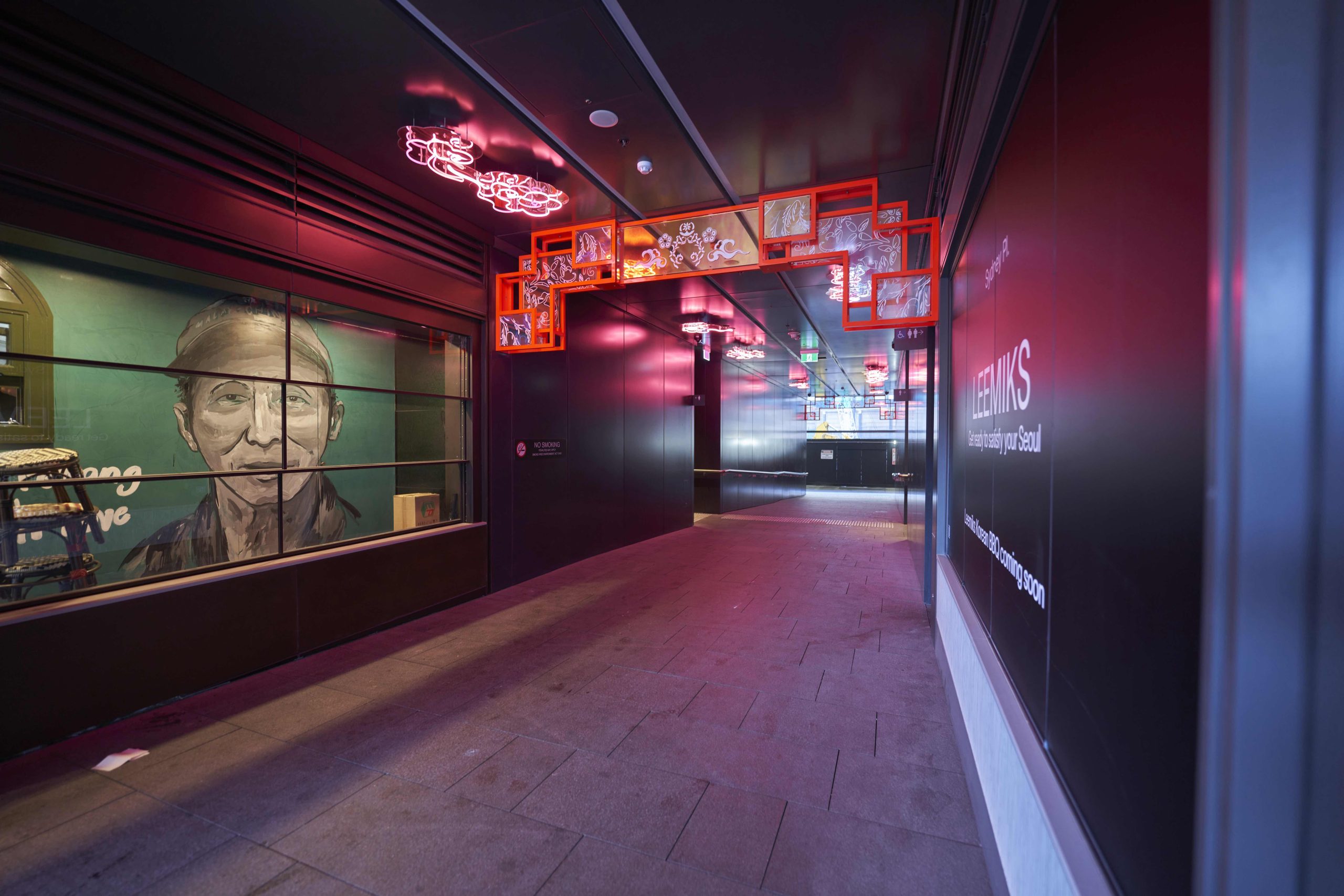
“My family moved to Redfern for affordable housing, work opportunities and education and that’s where that community grew from the late 60s as families moved into the city,” Golding said. “We all worked on the rails. It’s that shared experience of being from somewhere else and coming to Sydney for work.”
The latest works in Sydney Place are part of the growing Indigenous art presence, which includes five integrated artworks Wiradjuri/Kamilaroi man Jonathan Jones created for the nearby Quay Quarter Lanes redevelopment, as well as the bara, or fish hook sculpture, by Judy Watson on the Tarpeian Precinct Lawn on the edge of the Royal Botanic Gardens.
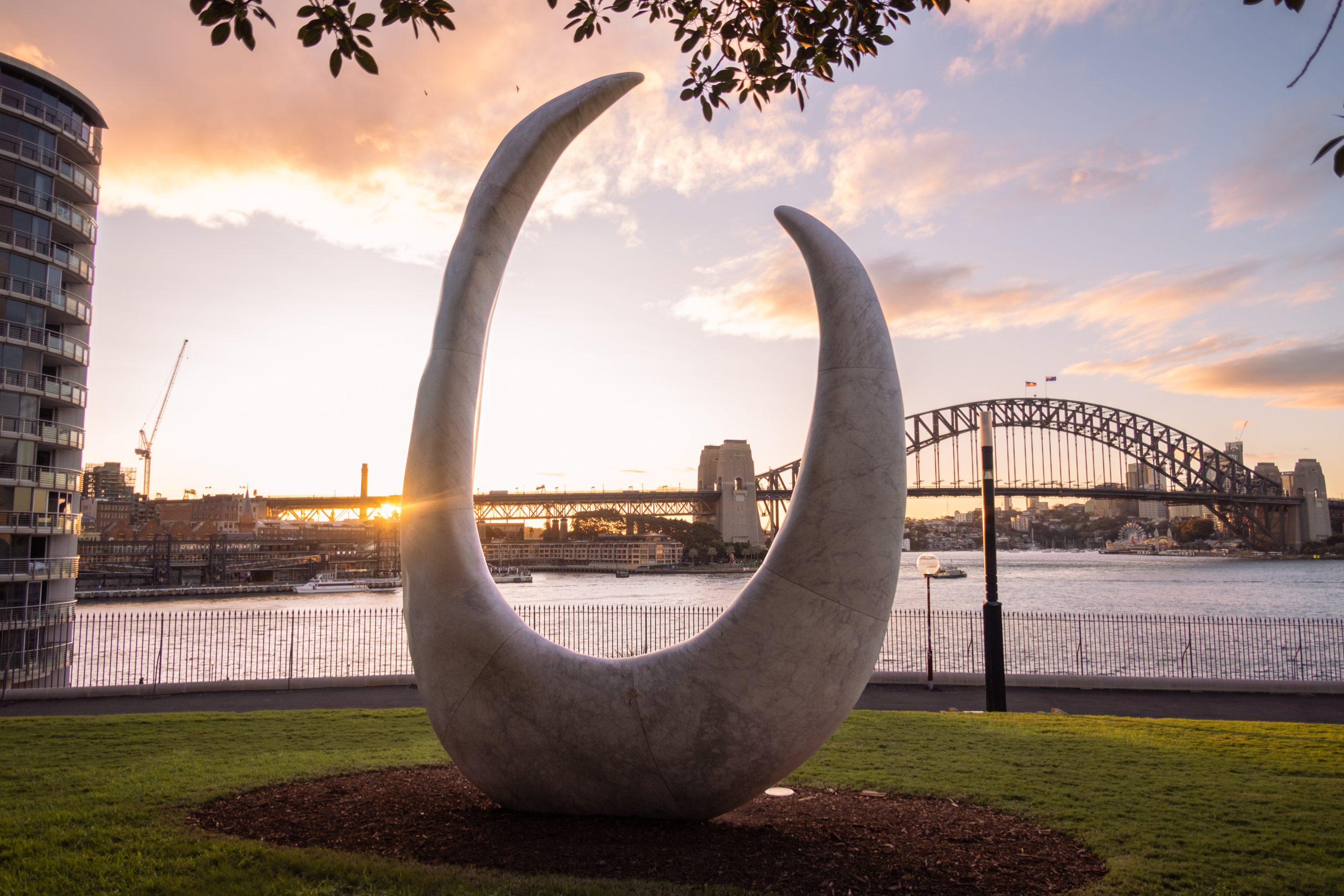
Curated by Hetti Perkins, bara is part of City of Sydney’s Eora Journey, and is designed to offer greater recognition of Indigenous culture and heritage.
It follows an international review of cultural interpretation undertaken by Perkins and architect Julie Cracknell in 2010. Public art is one of four components of the Eora Journey, which also includes access to education and employment and training opportunities.

From making unpopular decisions to learning when to listen, leaders from five businesses reveal what nobody prepared them for — and how running a company has challenged their expectations.

Technology and semiconductor shares fell sharply as investors questioned the debt financing the AI infrastructure boom and confronted higher rates and Chinese competition.
Elon Musk is exploring a potential merger between Tesla and SpaceX, a deal that could reshape the future of AI, robotics, autonomous vehicles and space technology. With a combined valuation potentially reaching $3.5 trillion, the move could bring Musk’s vision of an interconnected technology ecosystem closer to reality, although a deal remains uncertain.
5 min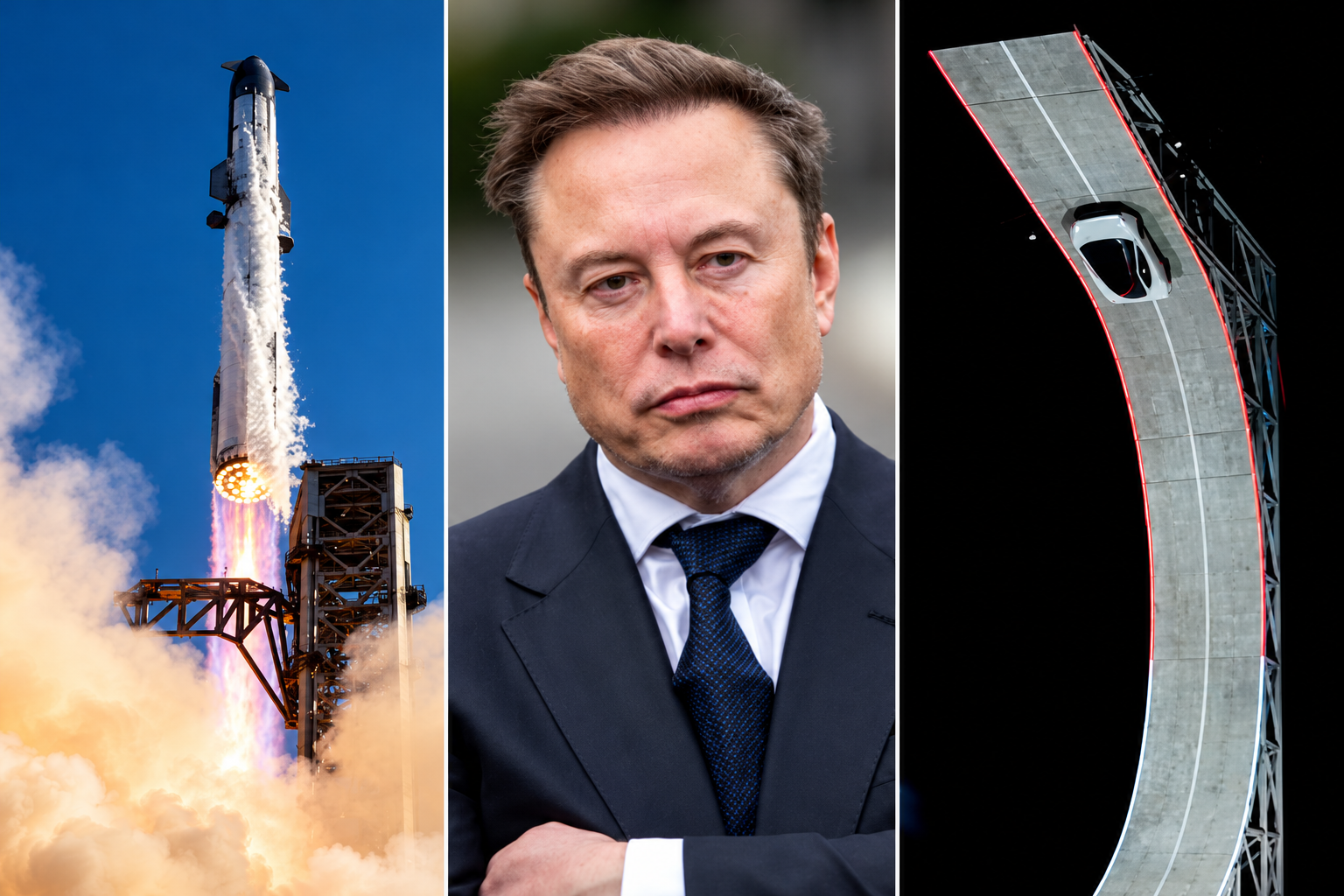
Elon Musk has engineered ties between Tesla TSLA 3.41%increase; up pointing triangle and SpaceX SPCX 7.79%increase; up pointing triangle that are hard to break, and now he wants to fuse them together permanently.
Musk has run both Tesla and SpaceX concurrently over the past two decades, using a schedule that dictated which days he spent focused on each business.
The companies have often shared resources and personnel, signaling their close ties. Last year, SpaceX looked into creating a spacesuit for Tesla’s humanoid robot Optimus, a person familiar with the matter said. Tesla last week showed off its new Roadster, a vehicle featuring SpaceX rocket thrusters that it hopes to soon bring to market.
And in recent months, Musk has repositioned both companies by expanding beyond their core operations toward a shared mission centered on artificial intelligence.
The world’s richest man on Tuesday signaled his interest in tying up SpaceX and Tesla, marking what would be the biggest corporate merger of all time. Because he serves as chief executive of SpaceX and Tesla, Musk said committees of independent directors at both companies are evaluating a possible deal, adding that a transaction might not come to fruition.
The committees will likely evaluate, with lawyers and bankers, how each company would fare in a potential deal and how a deal might best be structured. They then present their conclusions to their respective boards, who typically vote on whether to proceed.
“It’s an odd Kabuki dance where two groups of people are talking and I can’t be in the conversation,” Musk told SpaceX investors on Tuesday in response to an analyst’s question about a potential deal.
For Musk, the merger supports his vision of a world full of autonomous cars, humanoid robots and weekly rocket launches, as well as the data centers and satellites required to keep the whole thing running.
Some investors and analysts said they expect a transaction would be structured as an all-stock deal, with SpaceX potentially paying a modest premium for Tesla shares.
SpaceX, which has a market value of about $2 trillion, said it is seeing sharp growth in revenue across its businesses, which include operating data centers, launching rockets and operating satellite networks such as the internet service Starlink. Tesla is valued at about $1.5 trillion and is expanding its operations beyond its automotive and energy business. Shares in both companies traded higher following the news Tuesday.
Musk’s substantial ownership stakes in both companies, along with voting control at SpaceX, has enabled him to set the deal in motion. Analysts and investors said the deal will probably face regulatory scrutiny internationally, though some see Musk’s close relationship with the Trump administration as an asset to getting approval.
Blurred lines
The companies haven’t said which directors are on the special committees evaluating a potential deal. Several SpaceX and Tesla board members have either personal or business ties to Musk. And like Musk, venture capitalist Ira Ehrenpreis sits on both boards.
In a filing this week, Tesla outlined millions of dollars in business agreements with SpaceX and its subsidiaries last year, including $143 million in car sales to SpaceX, $3.3 million in advertising that it bought on the social-media platform X and $430 million in revenue from the sale of Megapack batteries for SpaceX’s data centers.
The companies also split the cost of resources including the use of Musk’s SpaceX jet and the bill for his personal security, which he runs through a private company.
Employees at both companies routinely move between companies to work on special projects, and some executives have dual roles, including Charles Kuehmann, vice president of materials engineering at both SpaceX and Tesla, and Ashok Elluswamy, the vice president of AI software at Tesla who runs a joint venture with SpaceX called Digital Optimus.
Over the years, Musk has launched new startups within his empire, including brain-implant company Neuralink, underground-tunnel developer the Boring Company and xAI, the AI startup that merged with SpaceX in February.
It is that AI business that Musk thinks can serve a market worth tens of trillions of dollars, justifying the need for a merger.
The business case goes like this: Tesla is developing robotaxis and robots, which it calls “physical AI.” SpaceX is working on the back end of physical AI: the data-center capacity and internet connection required for those robotaxis and robots to operate continuously.
“I don’t see what the value of Tesla is if it’s not merged with SpaceX,” said investment adviser Ross Gerber, a former Tesla bull turned critic invested in both companies. “If they don’t merge, the brains of everything that runs Tesla is owned by another company.”
On top of it all, both companies face constraints on the supply chains they need to make this world a reality, particularly when it comes to chips. To address this, Musk earlier this year announced a joint venture between Tesla, SpaceX and Intel to design and manufacture chips in Texas. “The most epic chip-building exercise by far,” he has said.
Musk at the wheel
For Musk, a merger would also solve two problems: demands on his attention and his lack of control at Tesla.
Tesla for years was Musk’s only public company, a status that came with greater scrutiny. There, Musk reports to a public board, as well as individual investors who make up around 30% of Tesla’s voting power, according to FactSet.
The question of Musk’s attention became a particular focus for investors and the board in recent years after he acquired Twitter in 2022 and launched xAI in 2023, and again in 2025 as he spent time in Washington, D.C., running the Department of Government Efficiency in the early months of President Trump’s second term.
As Tesla’s car business suffered in 2025, Musk threatened to take his AI ambitions outside the company if he wasn’t granted 25% voting control. Last November, Tesla shareholders approved a new pay package for Musk, which created a path for him to vastly expand his stake.
As of Sept. 30, Musk owned a roughly 20% stake in Tesla, according to the company’s proxy filing.
The SpaceX IPO gave Musk a different path. When SpaceX went public in June, the deal’s structure enabled him to have more than 80% voting power at the company—so much that he can’t be fired and decisions can’t be made without his support.
If SpaceX acquires Tesla, he will likely stay in control.
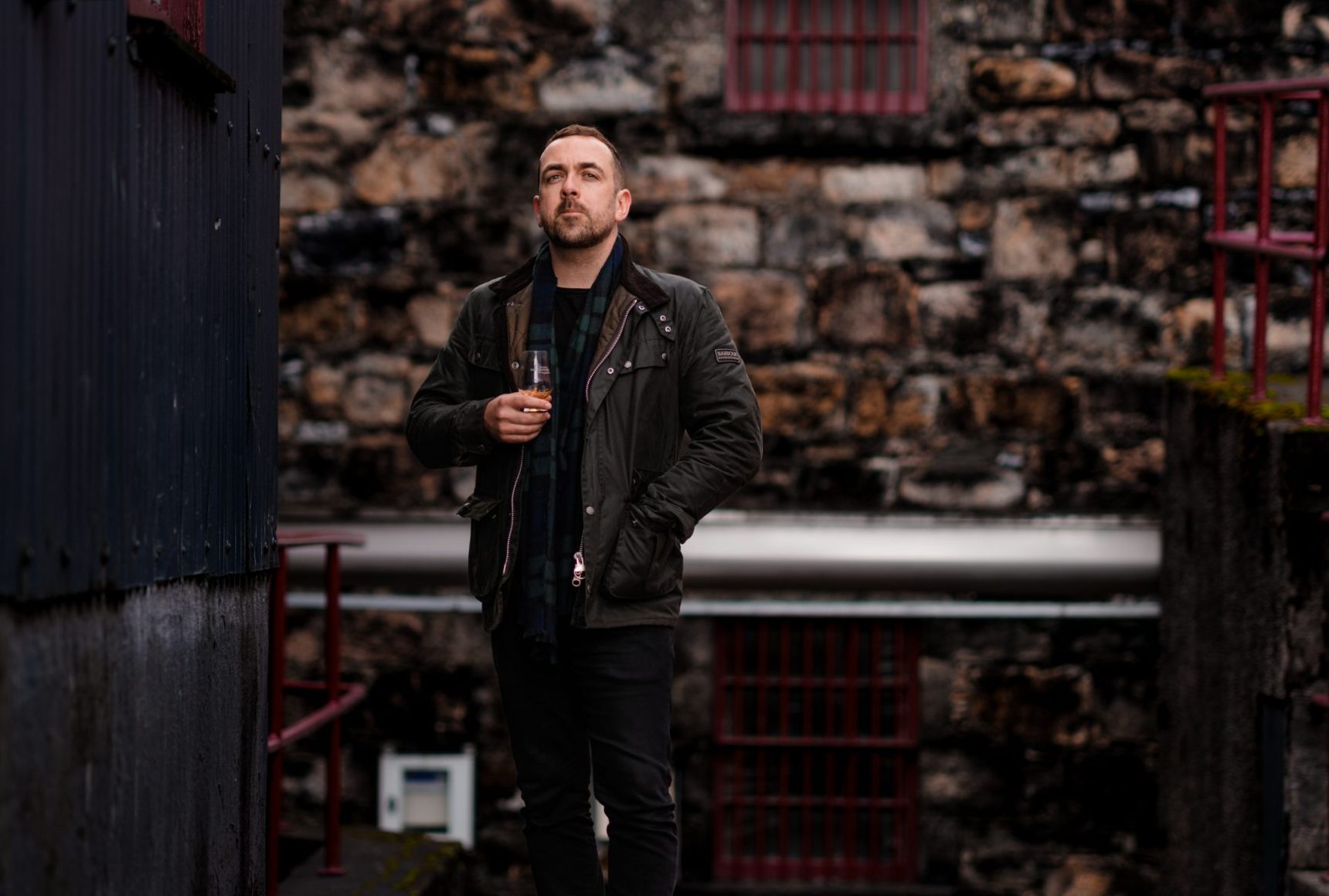
Scotch whisky expert, luxury hospitality strategist and Keeper of the Quaich inductee Ross Blainey is bringing a new philosophy of luxury experiences to Citizen Kanebridge.
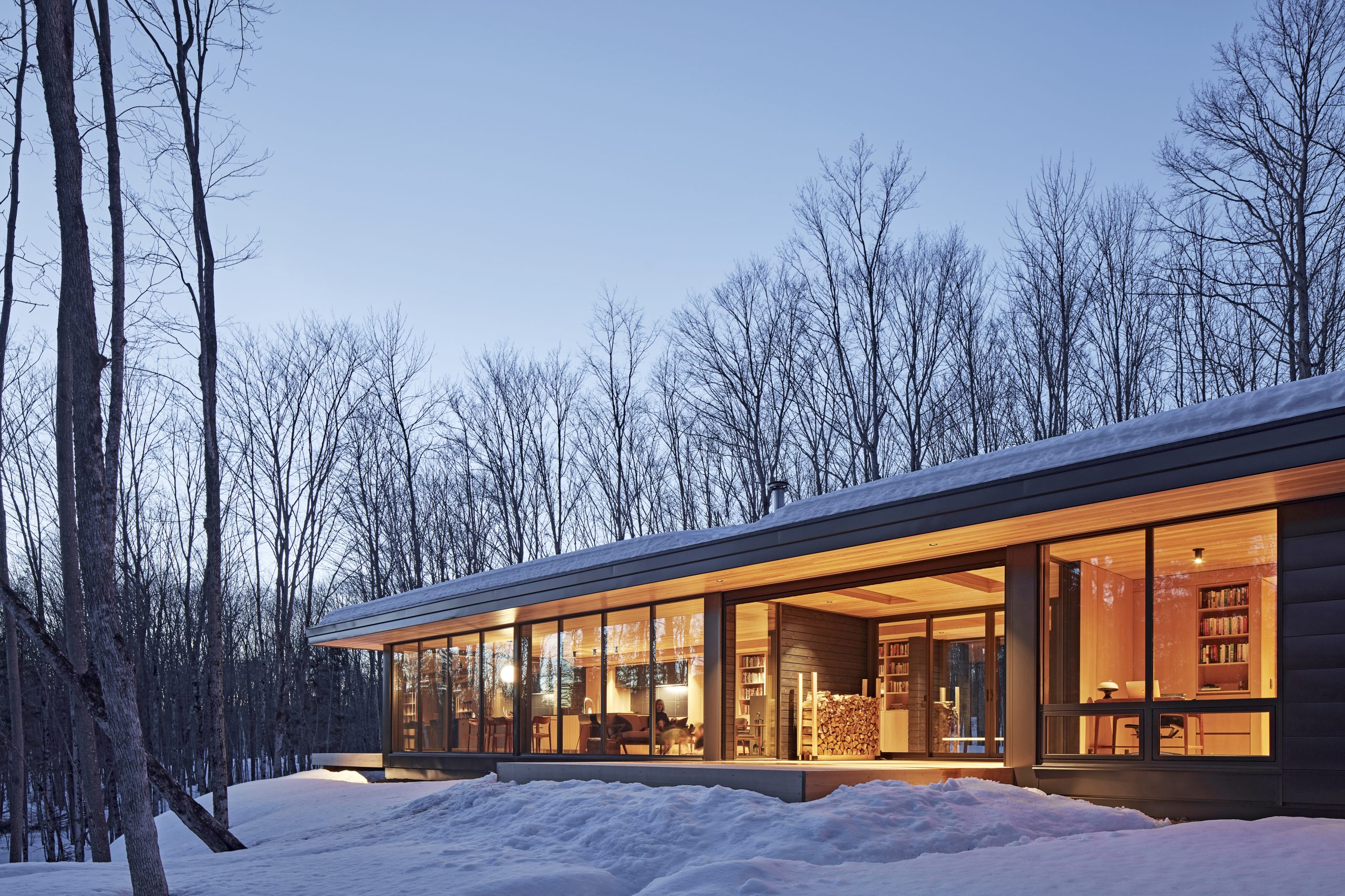
From reworked homes to remote retreats, designers are prioritising warmth and a deeper connection to landscape.