The crafty workarounds would-be buyers use to get into the market
First time buyers determined to enter the Australian property market are taking creative approaches as interest rates steady
 2 min
2 min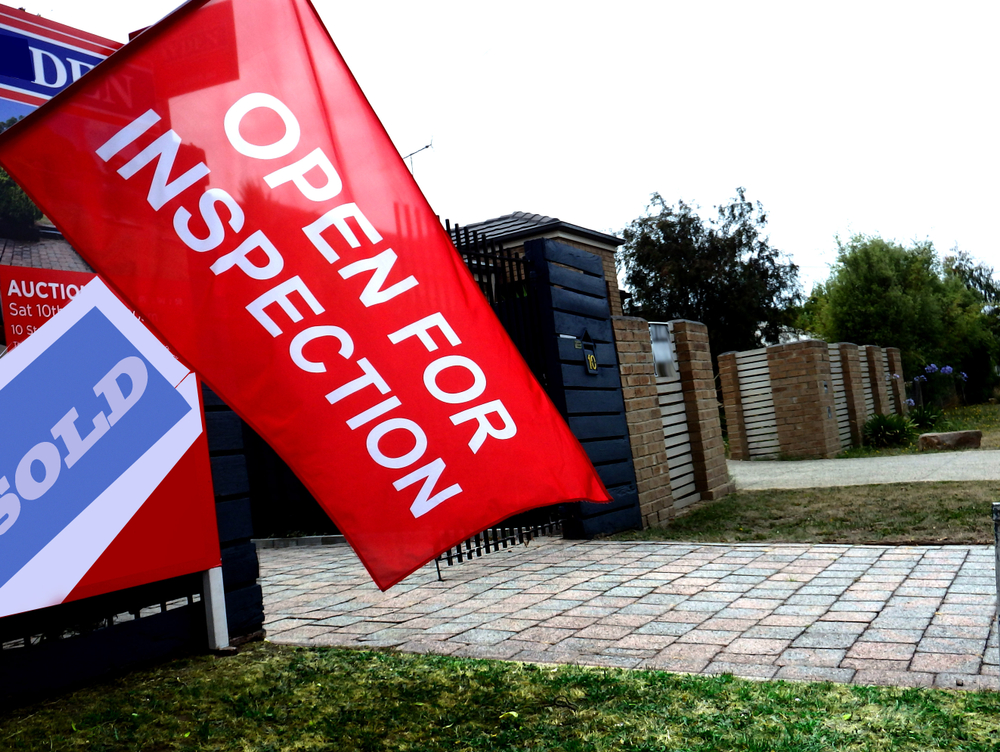
Aspiring first home buyers are increasingly pooling their resources, adopting new strategies and making compromises to get themselves onto the property ladder, according to research from Westpac. About 56 percent of buyers surveyed are planning to buy their first property jointly with their partner compared to 40 percent three years ago. Three in four buyers say they are willing to compromise on location, up nine percent from three years ago, and 47 percent are willing to pay lenders mortgage insurance to buy their first home sooner.
Additionally, one in two first home hopefuls are considering ‘rentvesting’, whereby they purchase an investment property first ahead of a home for themselves. In this scenario, buyers typically continue renting in expensive lifestyle locations where they want to live and buy an investment property in more affordable locations, often on the outskirts of major cities or in regional areas.
The 2024 Westpac Home Ownership Report, released this month, is based on a survey of 2,015 Australians conducted in January. The report revealed increasing intentions to buy among all types of buyers, with 44 percent intending to buy in the next five years, up from 35 percent in July 2023. This may reflect expectations that interest rates have peaked, with the Reserve Bank keeping rates on hold since December.
Among first home buyers specifically, there was a slight decline in purchasing intention over the next five years, with 86 percent delaying buying a home due to cost-of-living pressures. The survey also found that more people are planning to buy an investment property, which is reflected in recent finance data from the Australian Bureau of Statistics showing a 20 percent increase in the value of investor loans issued over the past year. Additionally, more people are planning to upsize their homes or renovate their existing homes.
Westpac managing director of mortgages Damien MacRae said first home buyers “are becoming more ruthless with their goals”. “They understand it’s a big task, but they are determined to break into the market and are willing to compromise to get there,” Mr MacRae said.
Buyers still prefer houses, but there has been a five percent decline in this preference since 2021 and a seven percent increase for apartments. Preference for a townhouse, or house and land packages, has increased markedly. “Buyers are casting their expectations wider, willing to compromise on location and are forgoing everyday luxuries like food delivery. They are also more inclined to relocate and move to apartment living.”
The latest Westpac-Melbourne Institute Consumer Sentiment Index released this week shows the ‘time to buy a dwelling’ index rose 4.9 percent to 77.8 out of 100 this month, which is a 15-month high, but still relatively weak overall. Buyer sentiment is notably stronger in Victoria at 84.3, with Westpac senior economist Matthew Hassan pointing to softening home values over the past four months.
In contrast, the NSW index is at 73.3 out of 100, likely reflecting affordability challenges in Australia’s most expensive market. “Nearly 70 percent of consumers expect housing prices to continue rising in the year ahead,” Mr Hassan added.
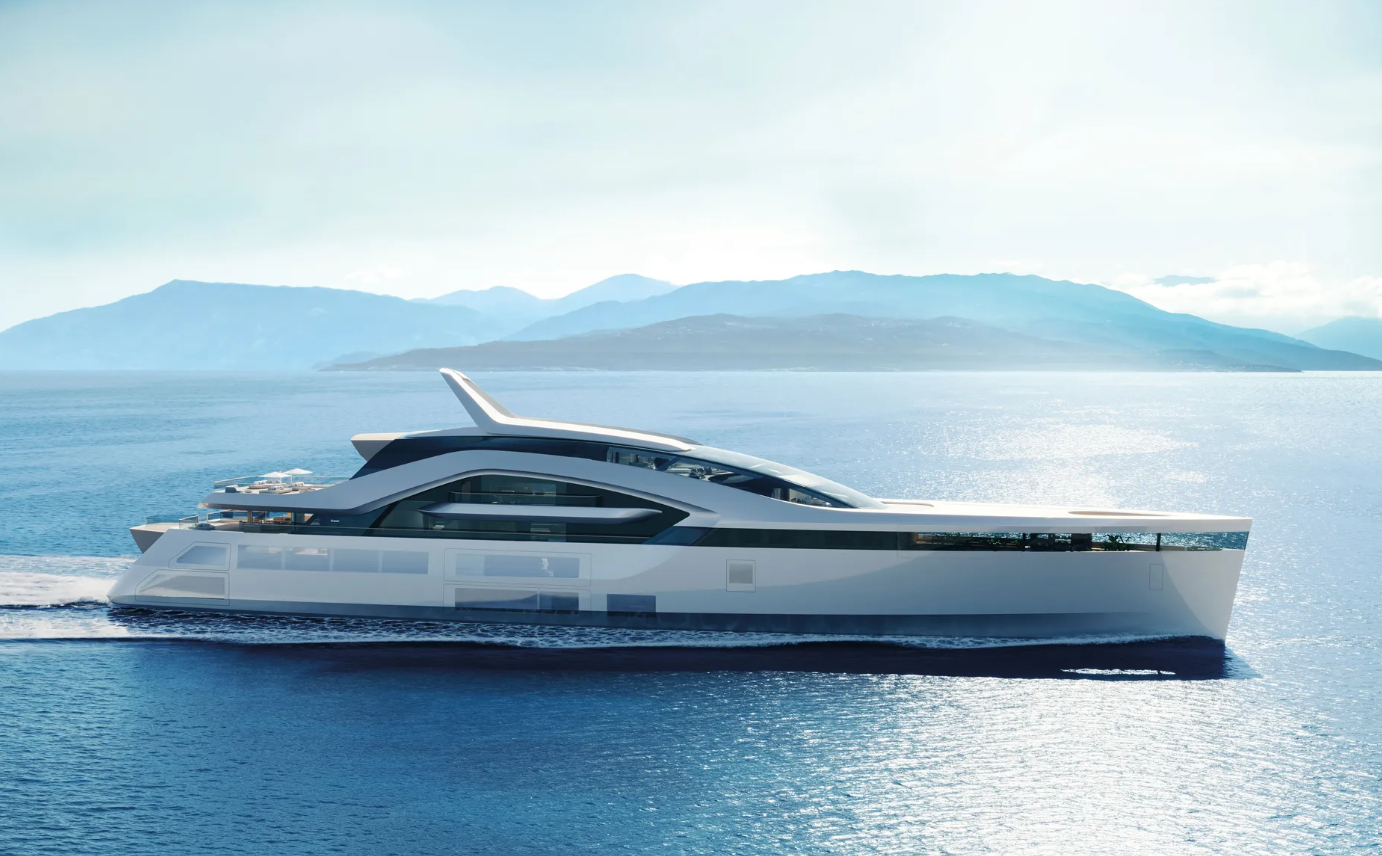
On the owner’s deck, a 20-metre swimming pool incorporates Feadship’s patented ContraWave technology and extends indoors as a suspended, glass-bottomed infinity pool.

Automobili Lamborghini is turning its attention to something considerably more difficult to define: what makes Italian excellence uniquely Italian?

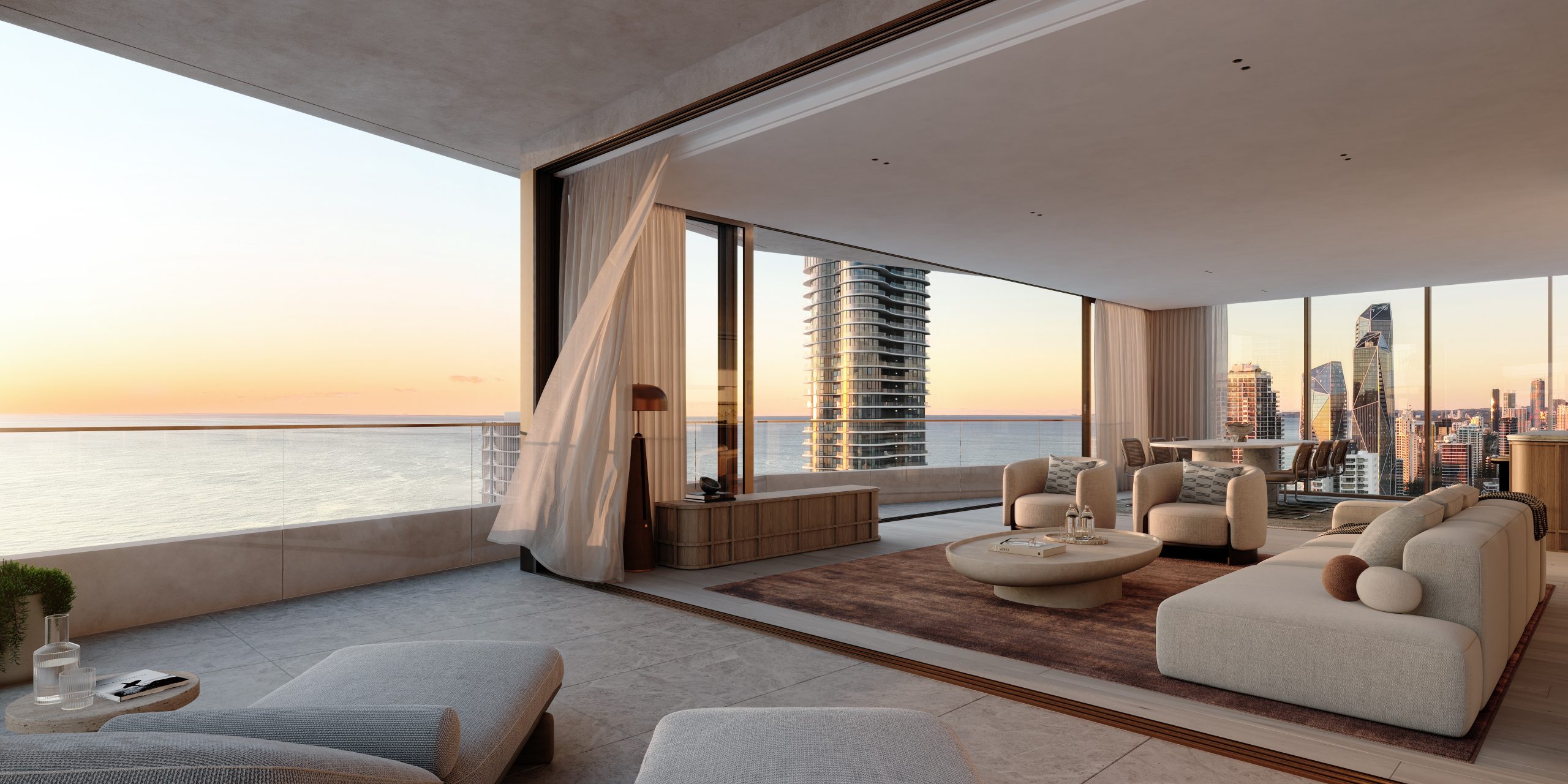
Mirvac’s 45-level Trielle has topped out at Yarra’s Edge, pairing riverfront apartments with wellness facilities, private dining and resident services.
3 min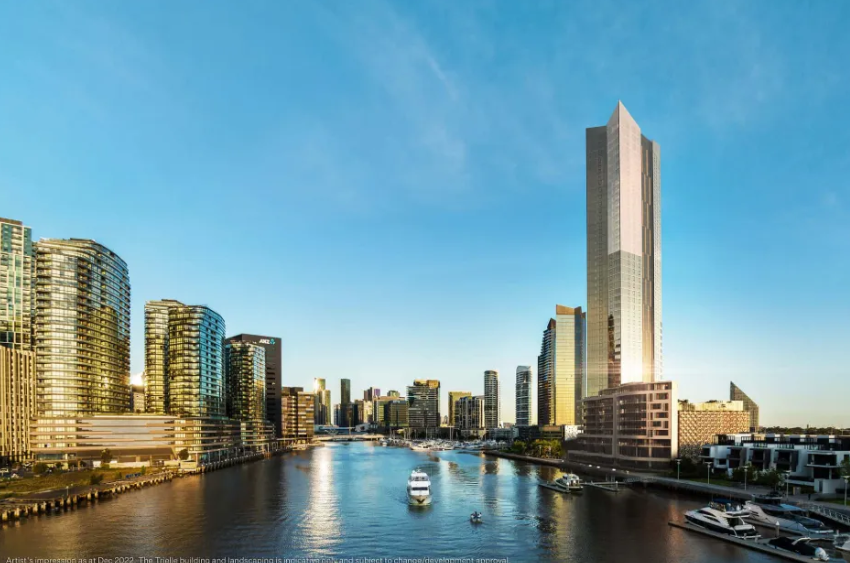
Mirvac has topped out Trielle at Melbourne’s Yarra’s Edge, with more than 70 per cent of the riverfront development sold and approximately 80 per cent of purchasers intending to make their apartment a home.
The figures, released on September 22, point to an owner-occupier audience for one of the precinct’s final residential towers. Mirvac began developing Yarra’s Edge in 2003, and its latest addition occupies one of the remaining absolute riverfront sites.
Mirvac CEO of Development Stuart Penklis said existing residents were among those moving up within the neighbourhood.
“Many purchasers already have a connection to Yarra’s Edge,” Mr Penklis said, describing buyers whose changing needs were encouraging an upgrade within the precinct.
“As one of the final residential towers within Yarra’s Edge, Trielle represents the culmination of more than two decades of creating one of Melbourne’s most established and sought-after waterfront communities,” Penklis said.
“Positioned on the Collins Street axis with absolute river frontage, Trielle offers residents a rare opportunity to enjoy sweeping views across the Yarra River, Melbourne skyline and Port Phillip Bay, while remaining seamlessly connected to the CBD. With Trielle now more than 70 per cent sold, we’re continuing to see strong demand from buyers seeking quality homes in established locations.”
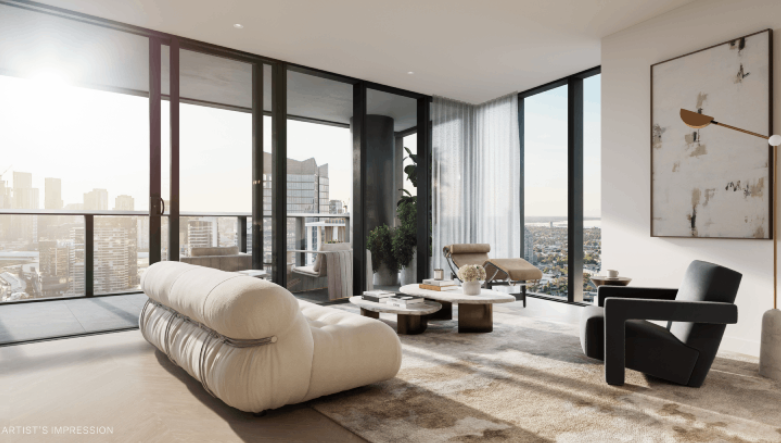
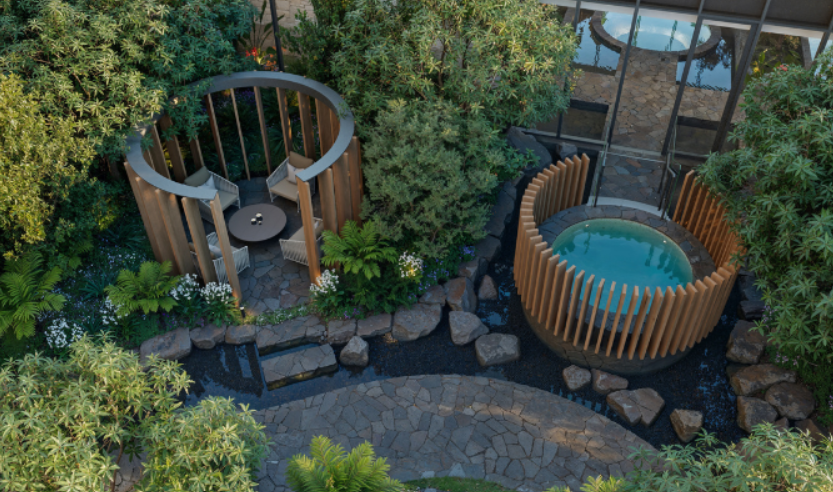
The developer also flagged a penthouse and sub-penthouse collection with larger layouts, premium finishes and broad outlooks. The planned wellness centrepiece, The Oasis, encompasses a 900-square-metre elevated urban rainforest.
Mirvac General Manager Residential Development Victoria Elysa Anderson said Trielle had resonated strongly with buyers seeking a rare lifestyle offering in Melbourne.
“Opportunities to secure a new luxury residence on a riverfront site of this calibre are incredibly rare, particularly within a community like Yarra’s Edge,” Anderson said.
“What makes Trielle unique is the combination of exceptional views, world-class residential facilities and the lifestyle that already exists around it. Residents are buying into a mature waterfront community with parks, promenades, dining, wellness and strong community connections already in place.”
The 45-level tower brings a substantial new presence to that waterfront. Its residential offering spans one-, two-, three- and four-bedroom apartments, with Signature, Prestige and Sub-Penthouse collections accommodating different household sizes. The north-facing position connects the apartments visually to the river and city beyond.
Seven storeys above the promenade, the planned Oasis combines planting and a running stream with a Scandinavian-inspired wellness club developed with spa specialist Naomi Gregory. Facilities include a 25-metre lap pool, hot magnesium pool, sauna, hydrotherapy, a gym, yoga and Pilates room, and treatment spaces.
The amenity extends beyond exercise. Residents will have access to The Biblioteca library and workspaces, ground-floor work pods, and The Salone piano lounge. A private Chef’s Table dining room offers a setting for larger gatherings, while a cinema, games room and sports lounge broaden the entertaining options. Concierge services and a dog-wash area support everyday routines.
Trielle comprises a collection of one, two, three and four-bedroom residences. Reflecting strong demand from owner occupiers, approximately 80 per cent of purchasers to date intend to live in their homes, highlighting the project’s appeal to those seeking a long-term waterfront lifestyle.
Mirvac has recently delivered The Albertine, a premium apartment development on the edge of Melbourne’s CBD, and is nearing completion of Prince & Parade in Brunswick, further strengthening its portfolio of thoughtfully designed apartment communities in some of Melbourne’s most sought-after urban locations.
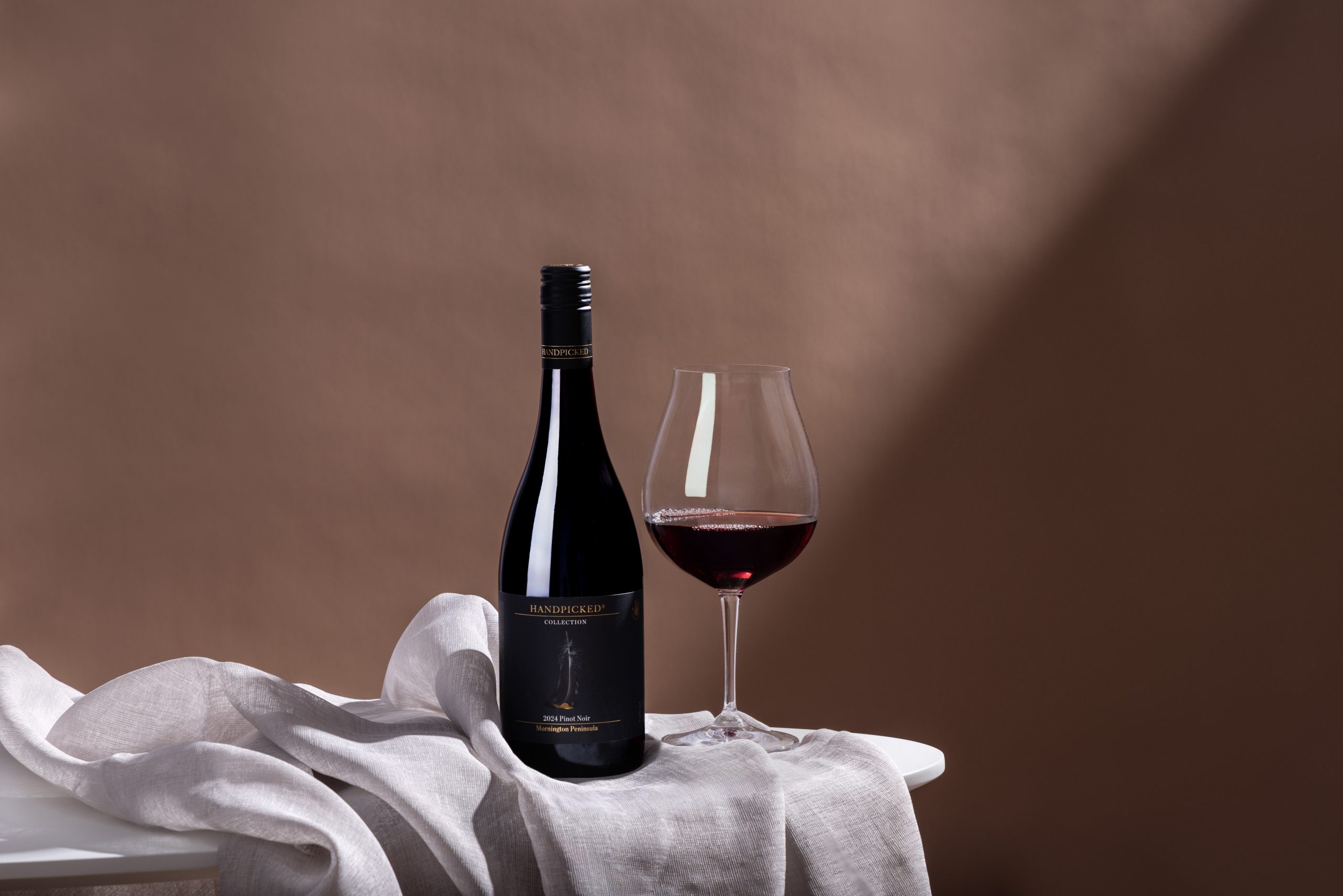
As the season turns, Handpicked Wines’ latest Pinot Noir and Chardonnay releases reveal how subtle shifts in place shape what ends up in the glass.

From Italian vegetable-tanned leather to real-world training insight, Australian brand PK9 Gear is redefining what luxury means for discerning dog owners.